

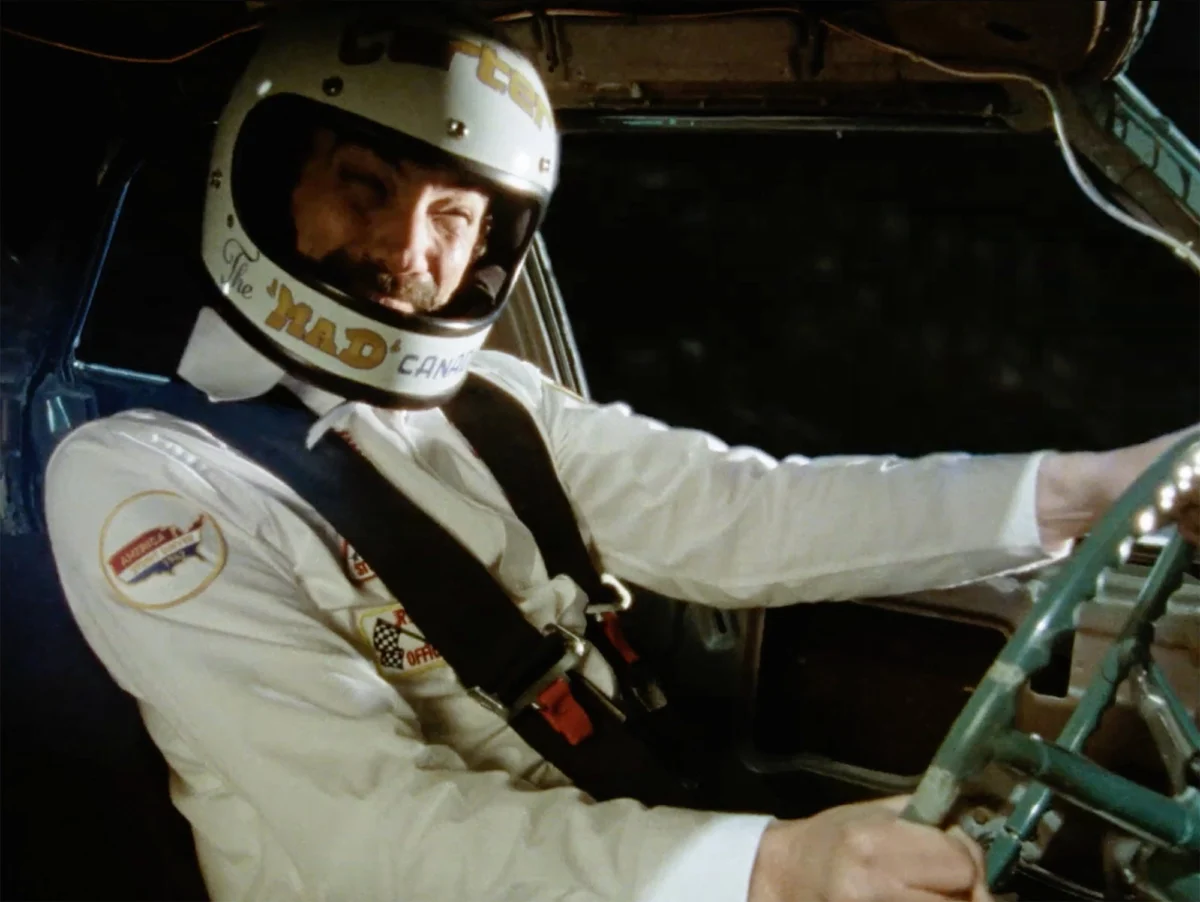
Mongrel Media has officially released the inaugural teaser trailer for The Stunt Driver, a forthcoming biopic comedy that delves into the extraordinary life and ambitions of Canadian daredevil Ken Carter. Directed by acclaimed Canadian filmmaker Michael Dowse, known for his distinctive blend of humor and heart in films like Fubar, Goon, and What If, this project marks a significant return to his national storytelling roots. The film stars Jay Baruchel as the titular Ken Carter, with Ben Foster portraying his iconic American rival, Evel Knievel. Ed Helms, Laurence Leboeuf, Dan Bakkedahl, Joe Cobden, and Marc Beaupré round out the ensemble cast. The teaser offers a compelling first look at a narrative centered on Carter’s audacious 1970s quest to execute a mile-long rocket car jump across the St. Lawrence River from Canada into the United States, a feat fraught with both engineering challenges and personal demons.
The unveiling of the teaser trailer on July 1, 2026, generated immediate interest, signaling the potential for a film that combines historical drama with Dowse’s signature comedic touch. The trailer itself adopts an "old school documentary format" featuring a "hilarious voiceover," effectively establishing the tone and introducing audiences to the eccentric world of Ken Carter. The voiceover snippet, "He is most active in summer months, when large crowds gather to watch him jump automobiles over buses, trucks and other obstacles," provides an early glimpse into the character’s public persona and the era’s fascination with daredevilry. Filmed on location at the actual St. Lawrence River jump point, the production promises an authentic portrayal of a truly remarkable and often overlooked chapter in North American stunt history.
Michael Dowse’s Return to Canadian Roots
Michael Dowse’s involvement in The Stunt Driver is particularly noteworthy, marking a deliberate pivot back to narratives deeply embedded in Canadian culture and history. Dowse has cultivated a diverse filmography that spans cult comedies and more mainstream productions, demonstrating a consistent ability to capture the idiosyncrasies of human ambition and camaraderie. His early successes, such as the Fubar films, resonated with Canadian audiences for their authentic portrayal of working-class life and distinctive humor. Later works like Goon, which explored the rough-and-tumble world of minor league hockey, further cemented his reputation for crafting character-driven stories with a strong sense of place.
With The Stunt Driver, Dowse is not merely telling a Canadian story but also revisiting a period of intense public fascination with larger-than-life figures. His experience in blending comedic elements with genuine dramatic stakes appears perfectly suited for the story of Ken Carter, a man whose grand ambitions were often met with both fervent support and considerable skepticism. The director’s approach is expected to balance the inherent absurdity of Carter’s quest with the genuine pathos of an individual pushing the boundaries of what is considered possible, often at great personal cost. This project aligns with Dowse’s career trajectory, which frequently explores themes of identity, perseverance, and the pursuit of unconventional dreams against overwhelming odds. His recent works, including Stuber, Coffee & Kareem, and 8-Bit Christmas, showcase his versatility, yet The Stunt Driver feels like a profound homecoming, allowing him to explore a subject deeply rooted in his national heritage.

Jay Baruchel and Ben Foster Lead a Star-Studded Cast
The casting of The Stunt Driver brings together a formidable ensemble, with Jay Baruchel taking on the demanding role of Ken Carter. Baruchel, a Montreal native, brings a unique blend of comedic timing and earnest intensity to his performances, making him an intriguing choice for a character as complex as Carter. His previous roles, often portraying endearing underdogs or quirky protagonists, suggest he will capably navigate the humor and inherent vulnerability of a man attempting such an extraordinary feat. Baruchel’s deep connection to Canadian culture and his ability to embody relatable, flawed characters are expected to lend authenticity and depth to his portrayal of "The Mad Canadian."
Perhaps one of the most intriguing casting decisions is Ben Foster as Evel Knievel, Carter’s famed American counterpart. Knievel, a global icon of daredevilry, represented the pinnacle of stunt performance in the 1970s, captivating millions with his motorcycle jumps. Foster, known for his intense and transformative performances in films like Hell or High Water and 3:10 to Yuma, is well-equipped to portray the magnetic yet often volatile personality of Knievel. His presence as an "American rival" not only provides a compelling narrative foil for Carter but also grounds the story within the broader cultural context of the era, where Knievel dominated headlines and television screens. The dynamic between Carter and Knievel is poised to add layers of competitive drama and character exploration, highlighting the contrasting approaches and personalities of these two stunt legends.
The supporting cast further strengthens the film’s potential. Ed Helms, known for his comedic roles in The Office and The Hangover franchise, steps into the role of Dick Keller, a character whose precise role remains to be fully revealed but is likely to contribute to the film’s comedic and dramatic fabric. Laurence Leboeuf, Dan Bakkedahl, Joe Cobden, and Marc Beaupré are also featured, promising a rich tapestry of supporting characters who will undoubtedly influence Carter’s journey and the complex logistics of his ambitious stunt.
Ken Carter: The Mad Canadian and His Impossible Dream
Ken Carter, affectionately known as "The Mad Canadian," was a figure of audacious ambition and relentless determination during the 1970s. Born in Montreal, Carter developed a reputation as a fearless stuntman, constantly pushing the boundaries of automotive performance and personal courage. His exploits ranged from jumping cars over rows of buses to engaging in spectacular crashes, all designed to entertain and thrill the burgeoning audiences of the era who flocked to witness his daredevilry. Carter was more than just a performer; he was an innovator, constantly tinkering with vehicles and engineering new ways to defy gravity and conventional wisdom.
His most iconic and enduring ambition, however, was the mile-long rocket car jump across the St. Lawrence River, a feat that captured the imagination of a nation and beyond. This specific stunt became the focal point of his career and, ultimately, his legacy. The scale of the attempt was unprecedented, involving custom-built rocket-powered vehicles and immense logistical challenges. Carter envisioned not just a jump, but a symbolic leap from Canada into the United States, embodying a blend of national pride and individualistic pursuit of the impossible.

The Audacious St. Lawrence River Jump
The proposed St. Lawrence River jump was not merely a stunt; it was an engineering marvel and a logistical nightmare. Ken Carter’s vision for the jump involved a specially constructed rocket-powered Lincoln Continental, which he famously dubbed the “Starship 1.” The objective was to launch the vehicle from a ramp on the Canadian side of the St. Lawrence River, near Montreal, and land it safely on the American side, covering a distance of approximately one mile (around 1.6 kilometers). This distance was substantially greater than any car jump attempted before, making it a monumental challenge in terms of propulsion, aerodynamics, and landing mechanics.
Carter’s initial attempts and preparations for the jump were chronicled in the 1981 documentary The Devil at Your Heels, which serves as a significant inspiration for Michael Dowse’s film. The documentary vividly captures the relentless effort, financial strain, and personal sacrifices involved in pursuing such an extreme dream. The project faced numerous setbacks, including technical failures, funding issues, and safety concerns. Public opinion was divided, with some hailing Carter as a visionary and others dismissing him as reckless. Despite the obstacles, Carter remained steadfast in his belief that the jump was achievable, driven by a desire to leave an indelible mark on history. The historical context of the 1970s, an era that celebrated individualism and spectacle, provided a fertile ground for figures like Carter to capture public attention, even as safety regulations and public perceptions began to shift. The St. Lawrence River jump became a symbol of human ambition against the forces of nature and the limits of technology.
A Legacy Beyond the Stunt
While Ken Carter’s St. Lawrence River jump is the centerpiece of The Stunt Driver, his legacy extends beyond this single, albeit monumental, endeavor. Carter embodied the spirit of the daredevil era, a time when individual courage and spectacle often overshadowed meticulous planning. His influence can be seen in the broader cultural landscape, inspiring subsequent generations of stunt performers and adventurers. The film’s reference to him as a potential inspiration for the character "Duke Caboom" in Toy Story 4 underscores the enduring appeal of his persona—a character driven by the thrill of performance, even if his actual capabilities sometimes fell short of his boasts. This comparison, while lighthearted, highlights Carter’s larger-than-life presence and the way his story has permeated popular culture, even if subtly.
Behind the Scenes: Authenticity and Craft
The production of The Stunt Driver has placed a strong emphasis on authenticity, a crucial element for a biographical film rooted in such a specific historical event. Director Michael Dowse, along with producers Jennifer Wilson and Dowse himself, committed to filming on location in Canada, including Montreal and at the St. Lawrence River between Boucherville and Varennes—the very points where Ken Carter envisioned and attempted his historic jump. This decision is vital for capturing the true scope and atmosphere of Carter’s endeavor, providing a tangible connection to the historical events and geographical challenges.
Shooting at the actual St. Lawrence River jump point not only enhances the visual realism but also imbues the film with a sense of historical weight and respect for its subject. The Canadian landscape itself becomes a character, mirroring the vastness of Carter’s ambition and the formidable obstacles he faced. This commitment to practical locations, as opposed to relying solely on studio sets or visual effects, is expected to give The Stunt Driver a grounded, gritty aesthetic that accurately reflects the mid-1970s setting. The film aims to transport audiences back to an era of raw, visceral stunt work, where the lines between engineering, entertainment, and sheer madness were often blurred.

The creative team behind the film has clearly invested in historical accuracy and visual fidelity. By drawing inspiration from The Devil at Your Heels, Dowse and his team are building upon an existing factual foundation, ensuring that while the film may incorporate comedic elements, it remains respectful of Carter’s true story. Mongrel Media’s role as the Canadian distributor signifies a strong commitment to bringing this national story to Canadian audiences, recognizing its cultural importance and popular appeal. The meticulous attention to detail in production design, costume, and historical recreation will be crucial in immersing viewers in Carter’s world, from the custom-built rocket car to the period-specific environments.
The Teaser Trailer: A Masterclass in Introduction
The recently released teaser trailer for The Stunt Driver has been widely praised for its ingenious approach to introducing Ken Carter and the film’s tone. Eschewing conventional rapid-fire action sequences, the teaser opts for an "old school documentary format," complete with archival-style footage and a gravelly, authoritative voiceover. This stylistic choice not only immediately establishes the 1970s setting but also cleverly positions Carter as a historical figure worthy of examination, even as the narrative promises comedic embellishment.
The voiceover, which describes Carter’s activities during summer months, humorously highlights the public spectacle of his stunts, painting him as a kind of seasonal phenomenon. This dry, almost anthropological description of a man jumping cars over buses and trucks creates an immediate sense of intrigue and amusement. The teaser effectively balances the gravity of Carter’s daredevilry with a lighthearted, almost whimsical, presentation, signaling that the film will likely blend biographical drama with a generous dose of Dowse’s characteristic humor. The visual snippets, though brief, hint at both the scale of the stunts and the character interactions, leaving audiences eager for more. This "genius teaser" sets a high bar, promising a film that is both informative and immensely entertaining.
Broader Context: The Golden Age of Stunt Performers
Ken Carter’s story, and indeed the entire premise of The Stunt Driver, is inextricably linked to the "golden age" of stunt performing that flourished from the 1960s through the 1970s. This era was characterized by a public hunger for spectacle and a fascination with individuals willing to push the limits of human endurance and mechanical possibility. Figures like Evel Knievel became household names, their motorcycle jumps and daring feats broadcast across television screens, turning them into bona fide celebrities. This period predated many of the stringent safety regulations and sophisticated CGI technologies that now define stunt work in cinema and live events.
Daredevils of this era often relied on raw courage, rudimentary engineering, and the inherent thrill of danger. They were showmen, engineers, and athletes rolled into one, captivating audiences with their audacious challenges to gravity and physics. The cultural landscape of the time, marked by a spirit of rebellion and a thirst for excitement, provided a perfect stage for these larger-than-life personalities. Ken Carter emerged from this milieu, distinguishing himself not only through his stunts but also through his singular focus on the St. Lawrence River jump, a challenge that even Knievel, his more famous contemporary, deemed too risky. The Stunt Driver promises to not only tell Carter’s individual story but also to offer a window into this bygone era of fearless showmanship and the societal forces that propelled these daredevils into the public consciousness.

Anticipation and Impact
The anticipation surrounding The Stunt Driver is considerable, particularly within Canada, where Ken Carter’s story holds a significant place in national folklore. The film is poised to reignite interest in a figure whose ambitions transcended mere entertainment, touching upon themes of national pride, individual perseverance, and the often-perilous pursuit of extraordinary dreams. For Canadian cinema, the film represents an opportunity to highlight a unique cultural narrative with a high-profile cast and a celebrated director. It could serve as a testament to the rich, untold stories within Canada’s history, showcasing that national tales can possess universal appeal and cinematic grandeur.
What "The Stunt Driver" Means for Canadian Cinema
The Stunt Driver carries the potential to be a landmark film for Canadian cinema, particularly as it combines a distinctly Canadian subject with an internationally recognized cast and a director known for his commercial and critical successes. The story of Ken Carter resonates deeply with themes of the underdog, the relentless pursuit of an unconventional dream, and the unique spirit of Canadian innovation and ambition. By bringing this historical narrative to the forefront, the film could foster a greater appreciation for Canadian history and its colorful personalities among both domestic and international audiences. Moreover, the decision to film on location in Canada further reinforces the commitment to showcasing the country’s diverse landscapes and production capabilities. Success for The Stunt Driver could pave the way for more investment in Canadian-centric stories, elevating the profile of national filmmaking on the global stage.
Future Outlook and Release Details
Mongrel Media has confirmed that Michael Dowse’s The Stunt Driver is slated for release in Canadian theaters on September 25th, 2026. This strategic fall release positions the film within a period often favorable for more character-driven dramas and comedies, potentially allowing it to gain traction with both critics and audiences. As of the teaser’s release, a United States distribution date has not yet been announced. However, given the film’s subject matter, the involvement of Hollywood talents like Ben Foster and Ed Helms, and Dowse’s existing international profile, it is highly probable that a US distribution deal will be secured in the coming months. The film is expected to generate significant buzz as its release approaches, with its unique blend of historical narrative, comedic flair, and thrilling action sequences positioning it as a standout release for the year.