


The intersection of decentralized finance and the attention economy has reached a contentious new milestone with the launch of Pump.Fun GO, a feature that allows users to post cryptocurrency bounties for real-world actions. Among the initial wave of challenges issued on the platform is a request for a participant to run into a crowded university lecture hall and shout "fartcoin" through a megaphone while recording the audience’s reaction. The reward for this specific stunt is approximately $1,000, denominated in "fartcoin," a meme-based cryptocurrency that, at the time of reporting, maintains a market capitalization of roughly $130 million and trades at approximately 10 cents per token.
This development marks a significant pivot for Pump.Fun, a platform that has already established itself as a dominant, albeit polarizing, force in the Solana-based memecoin ecosystem. By introducing a mechanism that "allows users to pay anyone to do anything," the platform has effectively gamified social disruption and personal risk, raising profound questions regarding the ethics of digital labor, the legality of incentivized harassment, and the potential for the exploitation of vulnerable populations.
The Mechanics of Decentralized Dares
The operational framework of Pump.Fun GO relies on a specialized escrow system designed to facilitate trustless transactions between "creators" (those who post the bounties) and "completers" (those who perform the tasks). When a bounty is initiated, the specified amount of cryptocurrency—often a volatile memecoin—is held by the platform. A countdown timer is set, and if a user successfully documents the completion of the task and submits evidence before the clock expires, the funds are released to their digital wallet. If no one meets the criteria, the funds are returned to the creator.
However, the process of verification remains opaque. While Pump.Fun has stated that it moderates and approves submissions, it has not publicly detailed the specific criteria used to judge "successful" completions. This lack of transparency has already led to friction within the community, particularly as the platform struggles with a surge of AI-generated content designed to mimic real-world task completion.
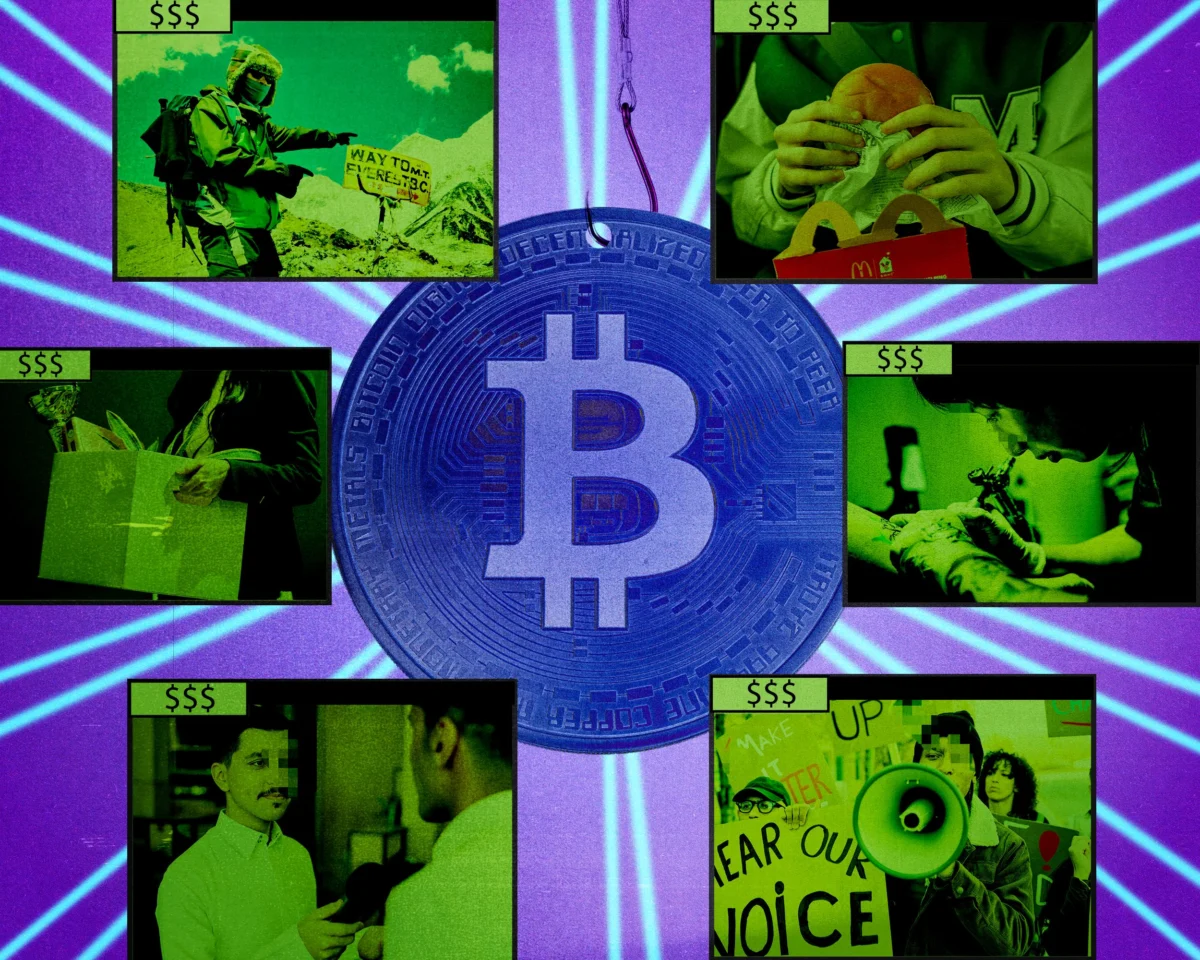
The financial stakes are often misrepresented by the headline figures. In one instance, a $215 bounty titled "Go to McDonalds and get a burger" was revealed in the fine print to be a prize split among the first 20 valid entries. After transaction fees and the cost of the meal itself, participants were left with a net gain of less than $10, illustrating a discrepancy between the platform’s "get rich quick" marketing and the reality of its micro-incentives.
A Chronology of the Pump.Fun Phenomenon
To understand the emergence of the GO feature, it is necessary to examine the rapid ascent of the parent platform. Launched in early 2024, Pump.Fun revolutionized the memecoin market by lowering the barrier to entry for token creation. By utilizing a "bonding curve" model, the platform allowed anyone to launch a new cryptocurrency for a nominal fee, bypassing the need for complex coding or deep liquidity pools.
By mid-2024, Pump.Fun had become one of the highest-grossing decentralized applications (dApps) in the crypto space, generating millions of dollars in daily fees. However, the platform’s success was shadowed by its reputation as a "rug pull factory," where the vast majority of launched tokens lost 99% of their value within hours of creation.
In late 2024, data indicated a sharp decline in user engagement, with some reports suggesting an 80% drop in active participants. Analysts suggest that the launch of Pump.Fun GO is a strategic attempt to recapture market attention by moving beyond digital tokens and into the realm of "In Real Life" (IRL) streaming and stunt culture. This transition follows a broader trend in the creator economy where shock value is directly correlated with financial liquidity.
Financial Data and Market Volatility
The economic engine of Pump.Fun GO is fueled by memecoins, a category of cryptocurrency characterized by extreme volatility and a lack of underlying utility. Fartcoin, the primary currency used in the university lecture hall bounty, is representative of this asset class. Its $130 million market cap is sustained almost entirely by social media sentiment and speculative trading.
The use of such assets for bounties introduces a unique form of financial risk. Because the value of the reward can fluctuate wildly between the time a task is started and the time the reward is claimed, a "thousand-dollar bounty" may be worth significantly less by the time it reaches the participant’s wallet. Furthermore, the terms of service for Pump.Fun GO explicitly state that rewards are "not guaranteed," leaving participants with little recourse in the event of a platform error or a sudden collapse in the token’s price.
Ethical Concerns and the Gamification of Poverty
The most significant criticisms of Pump.Fun GO center on the nature of the bounties themselves. While some are mundane or humorous, a growing number of requests are being described by human rights advocates and technologists as "dystopian" and "exploitative."
One bounty offered $3,000 to anyone who would quit their job on camera, framing the payment as a "severance package" for those willing to embrace "chaos." Other bounties have targeted vulnerable individuals, including requests to interview homeless people about their political affiliations for $700. In India, a man reportedly had a cryptocurrency name tattooed on his forehead in exchange for a $3,000 payout.
Andrew Ford Lyons, a technologist specializing in digital security and human rights, noted that the platform appears to be "leveraging inequality" for entertainment. By offering sums of money that are life-changing in developing economies but relatively small in Western markets, the platform incentivizes individuals to undergo permanent physical alterations or legal risks for the amusement of anonymous internet users.
The geographical distribution of participants further highlights this disparity. A significant portion of the video replies depicting the most degrading or physically demanding tasks originate from users in countries with lower average incomes, suggesting that the platform is facilitating a globalized form of "poverty tourism" through the lens of blockchain technology.
The AI Fraud Problem and Platform Governance
The integrity of the bounty system is currently under threat from the same technology that has disrupted other digital sectors: generative AI. Many of the more dangerous or expensive bounties, such as a request for footage of a memecoin-themed car exploding, have been met with a flood of AI-generated videos.
These deepfakes are often sophisticated enough to pass initial moderation, potentially allowing bad actors to claim rewards intended for real-world actions. This creates a "race to the bottom" where legitimate participants, who take actual physical and legal risks, are forced to compete with users who can generate "proof" of completion in seconds using software.
Pump.Fun’s governance model offers little protection for those who are defrauded or whose submissions are ignored. The platform’s terms of service place the entirety of the responsibility on the user, stating that individuals are responsible for their own "actions, decisions, wallet security, submissions, communications, and compliance with law." This "hands-off" approach is a hallmark of the decentralized finance (DeFi) philosophy but takes on a more predatory tone when applied to physical stunts and harassment.
Legal Liability and Regulatory Oversight
Legal experts warn that Pump.Fun GO may be treading into dangerous territory regarding criminal liability and tort law. By offering financial incentives for actions that could constitute disturbing the peace, trespassing, or harassment, the platform and the bounty creators could be viewed as accomplices or solicitors of illegal acts.
The "Fartcoin" lecture hall stunt, for example, could lead to charges of disorderly conduct or academic disruption. If a participant were to be arrested, Pump.Fun’s terms of service indicate that the platform would cooperate with third-party authorities, potentially providing the very evidence (the video submission and wallet address) needed to prosecute the user.
From a regulatory standpoint, the SEC and other financial watchdogs may view these bounties as "contracts for action," which could fall under existing securities or labor laws. If the bounties are seen as a form of employment or a "work-to-earn" scheme, the platform could be held liable for failing to provide workplace protections or for violating minimum wage requirements in certain jurisdictions.
Future Implications for the Digital Economy
The emergence of Pump.Fun GO represents a broader shift toward what some social critics call the "Digital Panopticon," where every action is a potential performance and every performance has a price tag. As the boundaries between digital assets and physical reality continue to blur, the potential for harm increases.
The platform’s success—or failure—will likely serve as a bellwether for the future of "SocialFi" (Social Finance). If Pump.Fun GO continues to grow despite the ethical outcry, it may encourage other platforms to adopt similar "bounty-for-action" models, further normalizing the idea that human dignity and social order are commodities to be traded on the blockchain.
For now, the platform remains a lightning rod for controversy, a place where the promise of decentralized freedom meets the reality of unregulated exploitation. As the countdown clocks on various bounties continue to tick down, the world watches to see just how far individuals are willing to go for a payout in "fartcoin."