

The Karlovy Vary International Film Festival (KVIFF), one of the world’s oldest and most prestigious cinematic events, is poised to celebrate a remarkable dual anniversary this year, marking its 60th edition within its 80th year of existence. From July 3 to 11, the spa town of Karlovy Vary will once again transform into a vibrant hub for filmmakers, industry professionals, and cinephiles, upholding its tradition of premiering world-class cinema, unearthing hidden gems, and showcasing highlights from the recent global festival circuit. Beyond the anticipated glitz and glamour, KVIFF, recognized as Central Europe’s foremost cinema celebration, is set to captivate audiences with a curated selection of offbeat, edgy, and sometimes provocatively unusual films, solidifying its reputation as a crucible for diverse and challenging narratives. This year’s program promises an immersive experience, inviting attendees to lean back, get comfortable, and brace themselves for a wild ride through the avant-garde and the profoundly human.
A Legacy Forged in Eight Decades: KVIFF’s Enduring Significance
Founded in 1946, KVIFF holds a distinguished place in cinematic history, predating many of its contemporary counterparts. Its establishment in the immediate post-World War II era, amidst a recovering Europe, underscored a deep-seated belief in the power of film as a cultural unifier and a mirror to society. Initially conceived as a showcase for films from Central and Eastern Europe, the festival quickly expanded its scope, eventually becoming one of the "A" category festivals recognized by FIAPF (International Federation of Film Producers Associations). Throughout the Cold War, KVIFF served as a crucial, albeit often politically nuanced, bridge between Eastern and Western cinematic traditions, offering a rare window into different cultural perspectives. Its ability to navigate complex geopolitical landscapes while maintaining a commitment to artistic excellence speaks volumes about its resilience and enduring relevance.
In the post-1989 era, KVIFF underwent a significant revitalization, shedding the constraints of state control and embracing a more independent, internationalist vision. Under the leadership of figures like Jiří Bartoška and artistic director Karel Och, the festival has blossomed, attracting major Hollywood figures, independent auteurs, and burgeoning talents from across the globe. Its curatorial philosophy balances commercial viability with artistic integrity, often spotlighting films that challenge conventions, explore complex social issues, or simply push the boundaries of storytelling. This commitment to diverse voices, particularly those from Central and Eastern Europe, remains a cornerstone of its identity, making it an indispensable platform for regional cinema to gain international recognition. The 60th edition, coinciding with its 80th year, is not just a numerical milestone but a testament to its consistent evolution and unwavering dedication to the art of film.

Spotlight on the Unconventional: A Glimpse into KVIFF’s Edgy Selections
This year’s programming, particularly the selection of films described as "unusual and outlandish," exemplifies KVIFF’s adventurous spirit. These cinematic offerings often venture into territories rarely explored by mainstream cinema, promising thought-provoking narratives and unique aesthetic experiences.
Black Money for White Nights (Cherni pari za beli noshti)
Directors: Kristina Grozeva, Petar Valchanov
Section: Crystal Globe Competition
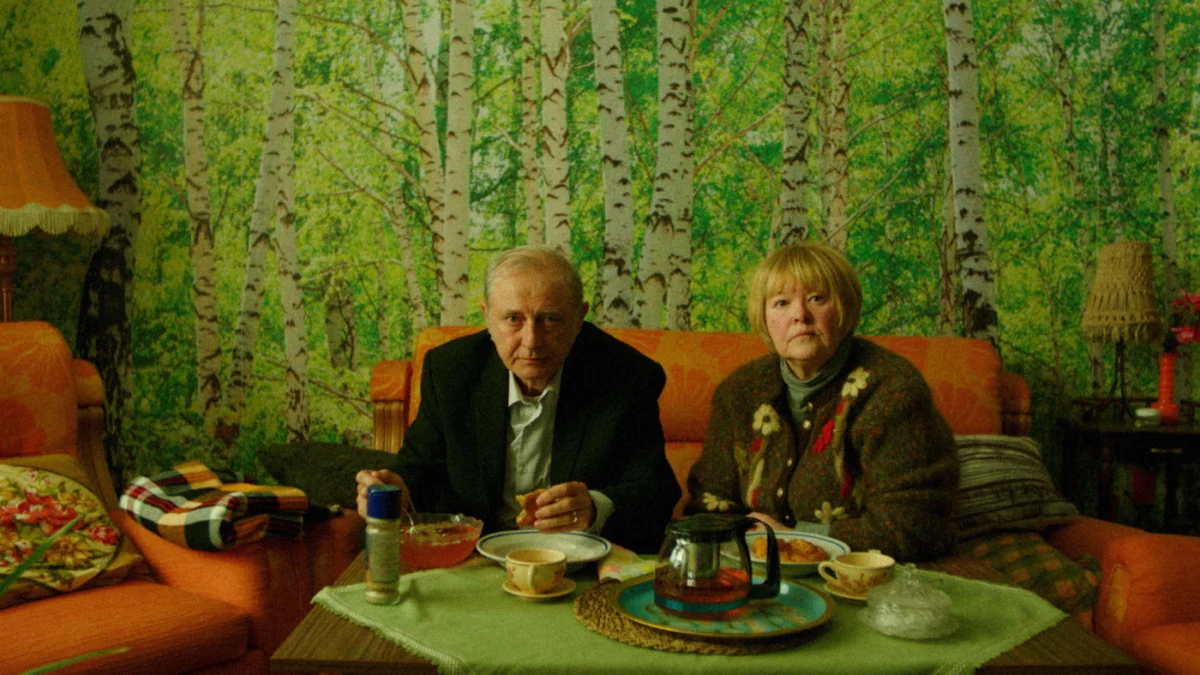
The Bulgarian director duo, Kristina Grozeva and Petar Valchanov, return to KVIFF, a festival where they previously achieved significant acclaim, winning the Best Film prize in 2019 for their poignant drama, The Father (Bashtata). Their latest offering, Black Money for White Nights, a world premiere co-written with Decho Taralezhkov, finds its place in the prestigious Crystal Globe Competition, signaling high expectations. The film stars Tanya Shahova, Ivan Savov, Margita Gosheva, Ivan Barnev, and Sibila Petrova, promising a nuanced tragicomic portrait of a generation grappling with profound societal shifts.
The narrative centers on Marina and Gosha, a 60-year-old Bulgarian couple whose dream of witnessing the fabled White Nights in St. Petersburg, funded by years of accumulated small bribes, shatters with Russia’s invasion of Ukraine. This external geopolitical catastrophe mirrors an internal collapse, forcing the couple to re-evaluate their moral principles, their relationship, and their illusion of control in a post-Soviet society still reeling from fundamental changes. Grozeva and Valchanov are renowned for their incisive social commentary and their ability to extract profound human drama from everyday struggles, often using a distinct, observational style. The Father, for instance, explored themes of grief, bureaucracy, and familial bonds with a raw authenticity that resonated deeply with critics and audiences. Black Money for White Nights appears to continue this tradition, offering a timely and deeply personal exploration of how global conflicts reverberate through the lives of ordinary citizens, forcing a reckoning with values once taken for granted. The "White Nights," a natural phenomenon where the sun barely dips below the horizon, traditionally symbolize endless possibility and romance, making their loss for Marina and Gosha a potent metaphor for lost dreams and the encroaching darkness of a fractured world.

My Friend the Porn Star (Mein Freund der Pornstar)
Director: Rosa Friedrich
Section: Proxima
Rosa Friedrich’s feature debut, My Friend the Porn Star, promises to be one of the most talked-about documentaries in the Proxima section, known for its bold and experimental programming. The premise itself is audacious: director Rosa Friedrich, initially disinclined towards porn, embarks on a journey with her friend Timo, who wishes to star in an erotic film. What begins as a supportive endeavor quickly evolves into a complex exploration of identity, vulnerability, and the evolving landscape of sexuality and technology.
As the production nears, Timo’s discomfort and embarrassment lead to an intriguing artistic choice: his face is replaced by AI-generated imagery. This decision propels the documentary into a deeper interrogation of authenticity, anonymity, and the blurring lines between reality and digital fabrication in the adult entertainment industry. Friedrich then broadens her lens, incorporating a diverse cast of characters including a dominatrix, three trans women, a food-porn creator, a sex coach, and even an individual known as Alice Moe alias Eric Big Clit. This eclectic ensemble suggests a multifaceted examination of sexual expression, gender identity, and the various professional and personal dimensions of sex work. The film promises to offer a fresh perspective on a frequently stigmatized industry, challenging preconceived notions and delving into the human stories behind the facade. By integrating AI and exploring a wide spectrum of sexual identities, Friedrich’s debut is poised to spark critical discussions about the future of porn, the ethics of representation, and the broader societal understanding of sexuality in the digital age.
City of Fathers (Město otců)
Director: Zdeněk Tyc
Section: Special Screenings
Veteran Czech director Zdeněk Tyc marks his return to feature filmmaking after a hiatus since his 2013 work, Never Ever. His latest, City of Fathers, a Special Screenings selection, promises a distinctive voice in exploring existential themes, a hallmark of his previous films. Starring Tomáš Vravník and Vladimír Javorský, the film delves into the intricate, often fraught, relationship between a father and son who, despite sharing the same first name, Richard, and an apartment, appear to inhabit entirely different worlds.

The son, a good-natured factory worker in his thirties, finds solace in heavy metal, representing a contemporary, perhaps more grounded, existence. His father, a frail, retired teacher, embodies a more traditional, nurturing presence, having raised his son after the mother’s departure. Their shared reality, a curious blend of "the hardcore band Našrot and [Ingmar] Bergman’s Cries and Whispers," highlights a fascinating cultural dichotomy and generational gap. This seemingly tranquil, if disparate, coexistence is abruptly shattered by the mother’s sudden death, serving as the catalyst for a bizarre and potentially transformative journey. Tyc’s films often explore the quiet desperation and profound emotional landscapes of ordinary lives, typically with a keen eye for character development and an understated yet powerful narrative style. City of Fathers is expected to continue this trend, using the shared grief and the ensuing disruption to explore themes of identity, legacy, and the complex bonds that define family, all set against a backdrop of seemingly mundane existence punctuated by unexpected tragedy.
The Ink-Stained Hand and the Missing Thumb
Director: Yashasvi Juyal
Section: Proxima
With a title as evocative as its premise, Yashasvi Juyal’s The Ink-Stained Hand and the Missing Thumb, co-written with Ankit Thapa, immediately captures attention. Programmed in the Proxima section, the film is subtly likened to an Indian Waiting for Godot, hinting at themes of existentialism, futility, and the human capacity for hope amidst despair. The narrative transports audiences to a remote corner of northern India, where Santosh and Rajji diligently collect highway tolls from dilapidated booths, their lives a monotonous blur of work and endless waiting.
This stark setting, described as resembling "the world’s edge," provides a powerful backdrop for a story that, despite its apparent stasis, promises dramatic upheaval. Bound by love and the perpetual need to migrate in search of work, the couple nurtures dreams of happiness in a new, elusive place. This fragile existence is violently disrupted by a "sudden tragedy," an event that irrevocably alters their lives. Juyal’s film, a debut feature, appears to be a poignant meditation on the lives of those marginalized by economic realities, exploring their resilience, their dreams, and the sudden, often brutal, turns of fate. The comparison to Beckett’s masterpiece suggests a narrative rich in symbolism and philosophical inquiry, delving into the nature of waiting, the search for meaning, and the impact of unforeseen circumstances on the human spirit, all within a uniquely Indian context.
Gregorius, the Chosen One (Vyvolený)
Director: Tomasz Mielnik
Section: Special Screenings

Polish writer-director Tomasz Mielnik, known for his distinct cinematic voice, brings a truly "wild, absurd comedy" to KVIFF with Gregorius, the Chosen One. This film serves as a follow-up to his 2015 feature debut, Journey to Rome, and draws profound inspiration from one of literature’s giants: Thomas Mann. Specifically, it is based on Mann’s novel The Holy Sinner, a work steeped in medieval legend, irony, and theological inquiry. The young Gregorius, portrayed by Jan František Uher (Winter Flies), embarks on a fantastical journey through mythical lands, encountering a series of extraordinary adventures.
The synopsis provided by KVIFF promises an utterly unconventional narrative: "‘Puppeteer, tell us a story we don’t know yet!’ the audience calls out to a traveling thespian. And so he starts to recount a story about a boy born of the forbidden love between brother and sister, who had many adventures, who spent 17 years tied to a rock, and who perhaps was also… a hedgehog? But that’s not as important as how, after overcoming all these obstacles, he ended up becoming the pope." This summary immediately signals Mielnik’s intention to blend historical and literary inspiration with a deeply absurdist and comedic sensibility. Mann’s The Holy Sinner itself is a masterful retelling of a medieval legend, exploring themes of sin, repentance, and divine grace with a characteristic blend of earnestness and sophisticated irony. Mielnik’s adaptation, by injecting elements like being tied to a rock for 17 years and the possibility of being a hedgehog, clearly aims to amplify the fantastical and satirical dimensions of the original, transforming it into a unique cinematic experience that challenges both narrative conventions and audience expectations of historical drama.
Chica Checa
Director: Šimon Holý
Section: Crystal Globe Competition
Czech director Šimon Holý is a familiar face at Karlovy Vary, having previously showcased his low-budget yet impactful films Mirrors in the Dark and And Then There Was Love… at the festival. This year, he returns to the prestigious Crystal Globe Competition with Chica Checa, an international co-production that promises a blend of intimate character study and burgeoning self-discovery. The film centers on Zdena, a widowed village mail carrier portrayed by Pavla Tomicová, who grapples with profound loneliness, often finding solace in mundane routines like eating cucumbers and watching television. Her primary motivation becomes fulfilling the last wish of her ailing mother.
The narrative takes an unexpected turn when a series of events brings Zdena closer to her son, Jan Cina, who resides in France. This reconnection sparks a longing for a different life within Zdena, hinting at a potential transformation from her solitary existence. The central mystery, encapsulated in the film’s enigmatic title, "Chica Checa," remains tantalizingly unexplained, prompting viewers to ponder its meaning throughout the unfolding drama. Holý’s previous works have demonstrated a talent for crafting compelling narratives from the lives of ordinary people, often exploring themes of human connection, societal pressures, and personal resilience. Chica Checa appears to delve into similar territory, using Zdena’s journey of self-reawakening to explore broader questions of identity, belonging, and the courage required to embrace change late in life. The international co-production aspect also highlights the growing collaborative spirit within European cinema, allowing stories to transcend national borders and resonate with a wider audience. The resolution of the "Chica Checa" puzzle is undoubtedly a key element that audiences will eagerly anticipate.

KVIFF’s Curatorial Vision: A Platform for Bold Storytelling
The selection of these "unusual" films underscores KVIFF’s consistent curatorial vision: to present a diverse and often challenging array of cinematic voices. This approach is not merely about novelty; it reflects a deeper commitment to the art form’s power to provoke thought, foster empathy, and illuminate untold stories. By embracing films that are offbeat, edgy, or bizarre, KVIFF actively champions artistic freedom and encourages filmmakers to push creative boundaries.
The festival’s long history has shown a pattern of identifying and nurturing talent, often giving early platforms to directors who later achieve international renown. The inclusion of multiple debut features within this particular selection highlights KVIFF’s role as a launchpad for emerging artists. Moreover, the geographic diversity of these films—from Bulgaria and the Czech Republic to Austria and India—reaffirms KVIFF’s global reach and its dedication to showcasing cinema from various cultural contexts, providing audiences with a truly international perspective on contemporary filmmaking.
Broader Implications and The Future of Film Festivals
In an increasingly saturated global entertainment landscape, film festivals face the ongoing challenge of maintaining relevance and distinctiveness. KVIFF’s strategy of spotlighting unconventional narratives is a testament to its understanding of this dynamic. By offering a meticulously curated selection that balances accessibility with artistic daring, it reinforces its unique identity in the festival circuit. This approach not only attracts dedicated cinephiles seeking fresh perspectives but also positions KVIFF as a vital barometer for emerging trends in global cinema.

The themes explored in these films—from geopolitical conflict’s personal impact (Black Money for White Nights) and the evolving ethics of digital identity (My Friend the Porn Star) to existential familial struggles (City of Fathers), the resilience of the marginalized (The Ink-Stained Hand and the Missing Thumb), satirical theological inquiry (Gregorius, the Chosen One), and late-life self-discovery (Chica Checa)—collectively paint a portrait of a world grappling with profound changes. KVIFF, through its selection, acts as a cultural mirror, reflecting these complexities while simultaneously offering avenues for discussion and introspection. As the festival celebrates its dual anniversaries, its continued commitment to bold, independent, and sometimes bewildering cinema ensures its place not just as a historical institution, but as a vibrant and indispensable force in the future of filmmaking.