



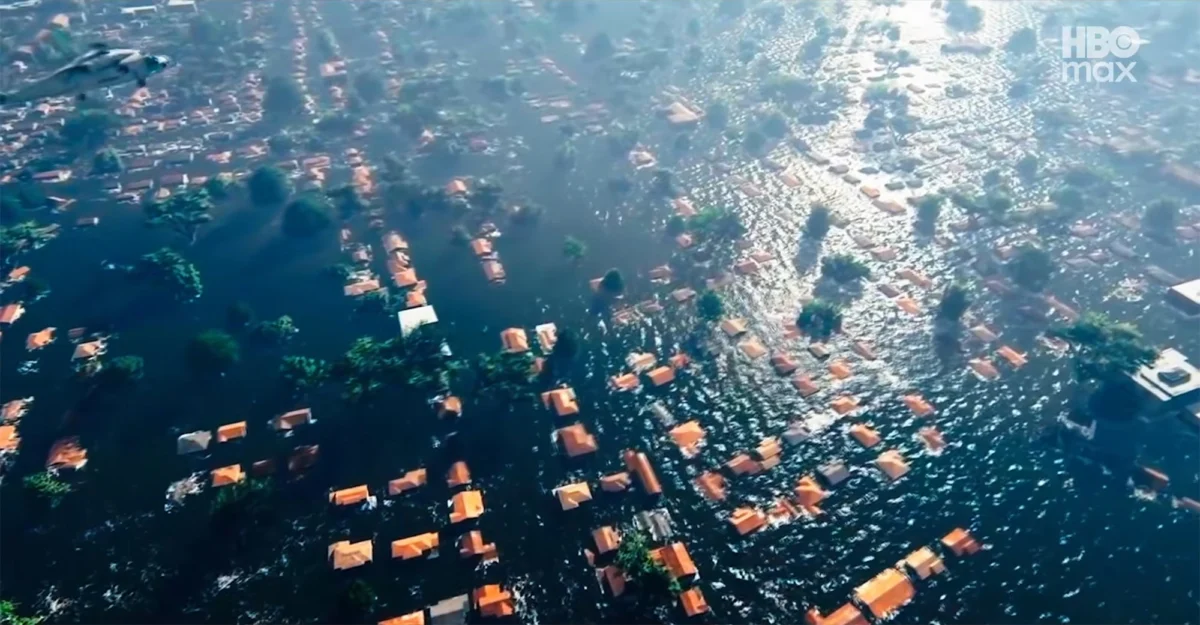
HBO Max has unveiled the official trailer for The Welcome Table, a poignant and timely documentary film from award-winning director Josh Fox. Scheduled to stream on the platform starting June 23rd, 2026, the film delves into the burgeoning crisis of climate displacement, spotlighting the resilience and stories of individuals forced from their homes by environmental calamities across six continents. This release underscores a critical moment in human history, as climate change accelerates mass migrations on an unprecedented scale.
The Urgent Narrative of Climate Displacement
The Welcome Table positions itself at the forefront of a global conversation, asserting that humanity is on the precipice of one of its largest mass migrations, a phenomenon already well underway for millions. The film highlights the stark reality that as many as one in three people could lose their homes due to the escalating impacts of climate change, making climate displacement a defining humanitarian challenge of our era. Director Josh Fox, known for his incisive exploration of environmental themes in previous works such as How to Let Go of the World: and Love All the Things Climate Can’t Change and The Edge of Nature, continues his commitment to humanizing complex ecological issues. His latest offering aims to transform abstract statistics into compelling personal narratives, fostering empathy and understanding.
The documentary’s central premise revolves around an ambitious gathering in New Orleans, a city itself profoundly marked by environmental upheaval. Here, climate-displaced individuals from diverse global backgrounds are invited to convene, share their experiences, and find solace and strength in collective celebration. This "welcome table" serves not merely as a physical setting but as a powerful metaphor for mutual aid, community building, and the urgent need for global solidarity in the face of increasingly dire climate consequences. The film’s message, encapsulated by the trailer’s impactful statement, "These people’s stories need to be told," advocates for a shift from exclusion to inclusion, particularly as nations grapple with the influx of environmental migrants.
Director Josh Fox’s Vision and Thematic Continuity

Josh Fox has established himself as a prominent voice in environmental documentary filmmaking, consistently bringing a blend of investigative journalism and deeply personal storytelling to his projects. His seminal 2010 film, GasLand, garnered an Academy Award nomination for its groundbreaking exposé on hydraulic fracturing. Subsequent works, including How to Let Go of the World: and Love All the Things Climate Can’t Change (2016) and The Edge of Nature (2021), have further cemented his reputation for tackling complex ecological issues with a distinctive blend of urgency and hope.
The Welcome Table represents a natural progression in Fox’s thematic exploration. While his earlier films often focused on the causes of climate change and environmental degradation, this documentary shifts its lens to the immediate and devastating consequences for human populations. Yet, consistent with his previous work, Fox seeks not merely to alarm but to inspire. The "optimistic and encouraging" tone noted by early viewers suggests a deliberate choice to highlight human resilience, community action, and the power of shared experience as antidotes to despair. The film aims to bridge divides, demonstrating that while climate change may force people apart from their homes, it can also unite them in shared purpose and mutual support. By centering the voices of those most affected—climate refugees, aid workers, community leaders, and activists such as Leo Farah, Chris Achilo, Nelton Yankur, Allie Stratta, Chris Obehi, and Pauleteh Araújo—Fox amplifies perspectives often marginalized in mainstream discourse. The inclusion of live musical performances by acclaimed New Orleans artist John Boutté further imbues the film with a sense of cultural richness and emotional depth, transforming potentially overwhelming subject matter into an accessible and moving narrative.
The Global Scope of Climate Migration: Data and Definitions
The phenomenon of climate migration is rapidly emerging as one of the most pressing humanitarian and geopolitical challenges of the 21st century. While the term "climate refugee" is widely used in common parlance, it lacks formal recognition under international law. The 1951 Refugee Convention primarily defines a refugee as someone fleeing persecution based on race, religion, nationality, political opinion, or membership in a particular social group. Climate migrants, conversely, are typically individuals compelled to move due to sudden or gradual environmental changes that undermine their livelihoods or safety, such as extreme weather events (floods, droughts, storms), sea-level rise, desertification, and resource scarcity.
Recent data underscores the escalating scale of this crisis. The Internal Displacement Monitoring Centre (IDMC) consistently reports millions of new internal displacements each year due to disasters, many of which are climate-related. In 2022 alone, an estimated 32.6 million new internal displacements were recorded due to disasters, with floods and storms being major drivers. Projections paint an even more alarming picture: the World Bank’s Groundswell report (2021 update) estimates that by 2050, over 216 million people could be internal climate migrants within their own countries across six regions if urgent climate action is not taken. This figure does not include those crossing international borders.
Regions particularly vulnerable to climate-induced displacement include small island developing states facing existential threats from sea-level rise; sub-Saharan Africa grappling with desertification, droughts, and food insecurity; South Asia experiencing severe monsoons and coastal erosion; and parts of Latin America confronting extreme weather and agricultural failures. The implications extend beyond immediate displacement, encompassing increased pressure on host communities, potential for social unrest, economic disruption, and significant challenges for international aid organizations and governments in providing protection and resources. The lack of a clear legal framework for "climate refugees" creates a significant protection gap, leaving many vulnerable individuals without the rights and assistance afforded to those displaced by conflict or persecution.

New Orleans: A Poignant Backdrop for Resilience
The choice of New Orleans as the culminating point for The Welcome Table is deeply symbolic and strategically resonant. The city serves as a powerful microcosm of global climate vulnerability and resilience. Catastrophic events like Hurricane Katrina in 2005 brought the fragility of coastal communities into sharp focus, revealing the devastating intersection of environmental disaster, socio-economic inequality, and inadequate infrastructure. More than two decades later, New Orleans continues to grapple with the ongoing impacts of sea-level rise, coastal erosion, and an increasing frequency of intense hurricanes, making it a front-line city in the climate crisis.
By inviting climate-displaced people from around the world to New Orleans, the film creates a profound connection between disparate experiences of loss and the universal human need for belonging and support. The city’s rich cultural heritage, its history of overcoming adversity, and its vibrant tradition of community and mutual aid (epitomized by concepts like "second lines" and neighborhood solidarity) provide a potent backdrop for the film’s message of hope. The massive singing celebration on the New Orleans levee, featuring a 1,000-foot table as a "powerful expression of connection and resistance," transforms a site of historical vulnerability into a symbol of collective strength and future-oriented action. This gathering implicitly challenges the notion of "building walls of exclusion," advocating instead for open tables of welcome and shared humanity.
The Role of Arts and Storytelling in Climate Advocacy
In an era saturated with information, the power of narrative to shape public opinion and drive action remains unparalleled. Documentaries like The Welcome Table play a crucial role in translating complex scientific data and policy debates into emotionally accessible human stories. By allowing the voices of climate migrants to be heard directly, the film bypasses abstract statistics and political rhetoric, offering a visceral understanding of the personal toll exacted by climate change.
Such artistic endeavors can stimulate empathy, foster a sense of shared responsibility, and potentially influence policy discussions. When individuals can see themselves or their communities reflected in the experiences of others, it can galvanize support for humanitarian efforts, inspire local climate action, and exert pressure on governments to implement more robust environmental policies and protection mechanisms for displaced populations. The film’s debut on HBO Max, a major streaming platform, ensures broad reach and accessibility, maximizing its potential impact on a global audience. It signals a growing recognition within the entertainment industry of the urgency and importance of addressing climate change through compelling storytelling.

Broader Implications and Future Outlook
The release of The Welcome Table arrives at a pivotal moment, as international bodies, national governments, and local communities increasingly confront the realities of climate-induced migration. The film’s narrative implicitly calls for a re-evaluation of current international legal frameworks, urging consideration for mechanisms that provide greater protection and rights to those displaced by environmental factors. Discussions within the United Nations Framework Convention on Climate Change (UNFCCC) and other international forums are ongoing, exploring avenues for addressing loss and damage, providing climate finance, and supporting adaptation and resilience efforts in vulnerable communities.
Furthermore, the film’s emphasis on "mutual aid" highlights a critical grassroots response to crises. As governmental and international responses often prove slow or insufficient, community-led initiatives and solidarity networks become vital lifelines for displaced populations. The Welcome Table celebrates these efforts, suggesting that localized, human-centric approaches are essential complements to broader policy changes. The film serves as a powerful reminder that the climate crisis is not merely an environmental challenge but a profound humanitarian and social one, demanding comprehensive, compassionate, and collaborative solutions. Its broadcast will undoubtedly contribute to the ongoing global dialogue, pushing for greater recognition, protection, and welcome for those on the front lines of climate change.
For more information and to engage with the film’s mission, interested individuals can visit The Welcome Table‘s official site. The documentary premieres on HBO Max on June 23rd, 2026.