



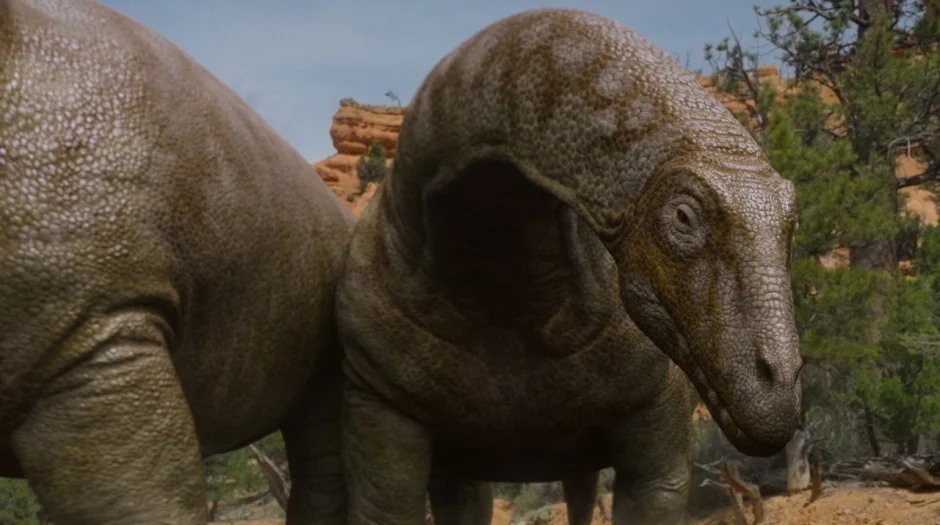
NBC’s groundbreaking eight-part docuseries, Surviving Earth, transports viewers across nearly half a billion years of our planet’s tumultuous history, showcasing the extraordinary resilience of life through Earth’s most devastating environmental catastrophes. From the producers behind the acclaimed Walking with Dinosaurs, this ambitious series, which premiered on June 11, utilizes cutting-edge visual effects and scientific data to bring to life never-before-seen creatures and the remarkable strategies they employed to not only endure but flourish amidst unimaginable planetary upheaval. An exclusive clip from the second episode, titled "When the Climate Broke," has been shared, offering a glimpse into the series’ visually stunning and scientifically rigorous approach.
A Journey Through Earth’s Cataclysms
Surviving Earth embarks on an epic narrative, tracing the evolution of life across geological epochs marked by dramatic climate shifts, mass extinction events, and geological upheavals. The series meticulously reconstructs ancient ecosystems, revealing creatures that adapted to extreme conditions, from the immense sea scorpions that dominated the oceans 450 million years ago to the iconic megafauna like mammoths and sabre-toothed cats that roamed the Earth just 450,000 years ago. These narratives unfold against backdrops sculpted by asteroid impacts, colossal volcanic eruptions, drastic fluctuations in sea levels, and intense heatwaves, painting a vivid picture of a planet in constant flux and life’s unyielding drive to persist.
The Science Behind the Spectacle
The visual realization of Surviving Earth is a testament to modern filmmaking technology and scientific collaboration. An estimated 75% of the series’ visuals are generated through sophisticated CGI. This allows for the scientifically accurate recreation of 74 distinct extinct creatures, each meticulously designed based on fossil evidence and advanced biomechanical modeling. For instance, the locomotion of the Dimetrodon, an early synapsid reptile, was informed by detailed studies conducted at Harvard University, ensuring an authentic portrayal of its movement.
Furthermore, the series leverages extensive climate simulation data to accurately depict the environments in which these creatures lived. This includes the depiction of volatile atmospheric conditions such as the widespread wildfires of the Carboniferous period and the ferocious hurricanes of the Cretaceous era. This commitment to scientific accuracy aims to provide viewers with a deeply immersive and educational experience, moving beyond mere speculation to present a grounded, albeit dramatized, account of prehistoric life.
Technological Innovations in Prehistoric Reconstruction
The production employed state-of-the-art tools to achieve its visual goals. The Unreal Engine was instrumental in creating photorealistic representations of ancient forests and coral reefs, bringing extinct flora and marine environments to life with unprecedented detail. For the on-location filming, the production team utilized the latest advancements in drone technology, capturing sweeping vistas and natural landscapes. The primary filming was conducted using the new 8K Red Raptor camera systems, paired with high-performance Prime lenses, ensuring exceptional image quality and clarity.

The Visual Effects Powerhouse: Milk VFX and its Partners
The monumental task of rendering Surviving Earth‘s visual landscape was spearheaded by Milk VFX, serving as the lead visual effects studio. Working in close concert with executive producer Tim Haines, production VFX supervisor Jean-Claude Deguara, VFX executive producer Kate Valley, and VFX producer Carrie Callender, Milk VFX orchestrated a complex collaborative effort. To meet the demands of the series, they partnered with other esteemed studios, including Lola Post, FIN VFX, and Floating Rock, pooling their expertise to deliver the extraordinary visual effects that are central to the series’ narrative.
This collaborative approach highlights the intricate ecosystem of high-end visual effects production, where specialized studios and individual artists converge to bring ambitious creative visions to fruition. The success of such a project relies not only on technical prowess but also on seamless integration and communication across multiple creative teams.
Co-Production and Distribution
Surviving Earth is a co-production between Universal Television Alternative Studio, a division of Universal Studio Group, and the UK-based production company Loud Minds. This transatlantic collaboration underscores the global appeal and ambition of the series, bringing together significant creative and financial resources to produce a documentary of this scale and scope. The distribution by NBC ensures a wide reach for this educational and visually compelling exploration of Earth’s past.
Historical Context: Earth’s Cycles of Catastrophe and Resilience
The narrative of Surviving Earth is deeply rooted in the scientific understanding of Earth’s geological and biological history. The planet has experienced numerous periods of dramatic environmental change, many of which led to mass extinction events, wiping out a significant percentage of species. These events, however, also cleared ecological niches, paving the way for the evolution and diversification of new life forms.
- The Ordovician-Silurian Extinction (circa 443 million years ago): This period saw two major extinction pulses, likely driven by glaciation and subsequent sea-level changes. Life in the oceans, which was dominant at the time, was severely impacted.
- The Late Devonian Extinction (circa 375-360 million years ago): A prolonged period of extinctions that primarily affected marine life, including reef-building organisms. The exact causes are debated but may include anoxia (lack of oxygen) and volcanic activity.
- The Permian-Triassic Extinction (circa 252 million years ago): The most severe extinction event in Earth’s history, often called the "Great Dying," which eliminated an estimated 96% of marine species and 70% of terrestrial vertebrate species. This was largely attributed to massive volcanic eruptions in Siberia, leading to extreme global warming, ocean acidification, and widespread anoxia. Surviving Earth‘s focus on "When the Climate Broke" likely delves into periods such as this.
- The Triassic-Jurassic Extinction (circa 201 million years ago): This event cleared the way for the rise of the dinosaurs, likely triggered by volcanic activity associated with the breakup of the supercontinent Pangaea.
- The Cretaceous-Paleogene Extinction (circa 66 million years ago): Famously known for wiping out the non-avian dinosaurs, this event is widely believed to have been caused by an asteroid impact, coupled with volcanic activity.
Surviving Earth‘s approach of highlighting not just survival but also thriving in the aftermath of these events provides a crucial perspective on evolutionary adaptation and the dynamic nature of life on Earth. It underscores that extinction events, while devastating, are also catalysts for evolutionary innovation.
Implications for Understanding Present-Day Environmental Challenges
The series’ exploration of past environmental crises carries significant relevance for contemporary concerns about climate change and biodiversity loss. By illustrating how life has navigated and recovered from extreme planetary shifts, Surviving Earth offers a long-term perspective on ecological resilience. It implicitly suggests that while the current rate of environmental change may be unprecedented in human history, Earth’s biosphere has a deep and complex history of adaptation.

However, the series also serves as a stark reminder of the fragility of ecosystems and the potential for catastrophic loss. The creatures and environments depicted in Surviving Earth are the products of millions of years of evolutionary processes. The rapid, human-induced changes occurring today pose a unique challenge, as the pace of alteration may outstrip the capacity for adaptation in many species.
The scientific accuracy employed in the series, from biomechanical modeling to climate simulations, reinforces the importance of evidence-based understanding when addressing environmental issues. The visual power of the series can serve to humanize abstract scientific data, making the consequences of environmental change more tangible and relatable to a broad audience.
Reactions and Expert Commentary (Inferred)
While direct quotes from involved parties beyond the production itself are not provided, the investment in scientific accuracy and cutting-edge CGI suggests a strong confidence from the producers and network in the series’ educational and entertainment value. Executive Producer Tim Haines, with his background in natural history documentaries, has consistently emphasized the importance of scientific rigor in making complex subjects accessible. The collaboration with academic institutions like Harvard further signals a commitment to presenting a credible and engaging narrative.
Industry professionals in the visual effects field would likely view Surviving Earth as a benchmark for the application of CGI in natural history documentaries. The scale of the project and the integration of diverse VFX studios point to a sophisticated production pipeline that pushes the boundaries of what is possible in digital reconstruction.
The series’ premiere on NBC, a major broadcast network, indicates an intent to reach a wide demographic, suggesting a belief that the subject matter, when presented in this visually compelling format, has broad appeal. This approach aims to foster public engagement with science and history, potentially inspiring a greater appreciation for the natural world and the challenges it faces.
The Future of Life on Earth: A Historical Perspective
Surviving Earth ultimately offers a profound reflection on the continuous narrative of life on our planet. It is a story of constant change, of devastating losses, and of remarkable, often unexpected, triumphs. By delving into Earth’s deep past, the series not only entertains but also educates, providing context for our present moment and prompting contemplation about the future of life, including our own, in the face of ongoing environmental transformations. The journey across 500 million years serves as a powerful reminder that life, in its myriad forms, is an enduring force, but its continued flourishing is inextricably linked to the health and stability of the planet it inhabits.