


The landscape of anime is known for its sprawling narratives, from the multi-episode sagas like "One Piece" to ambitious feature films that push the boundaries of animation. This week, we turn our attention to two distinct animated works that have recently become available online: "Milky Subway: The Galactic Limited Express" and "Nezumikozo Jirokichi." While both offer unique viewing experiences, they represent different facets of the animation industry and its evolving accessibility, prompting a discussion about what constitutes "anime" in the modern era.
The Rise of CG in Anime and the "Milky Subway" Phenomenon
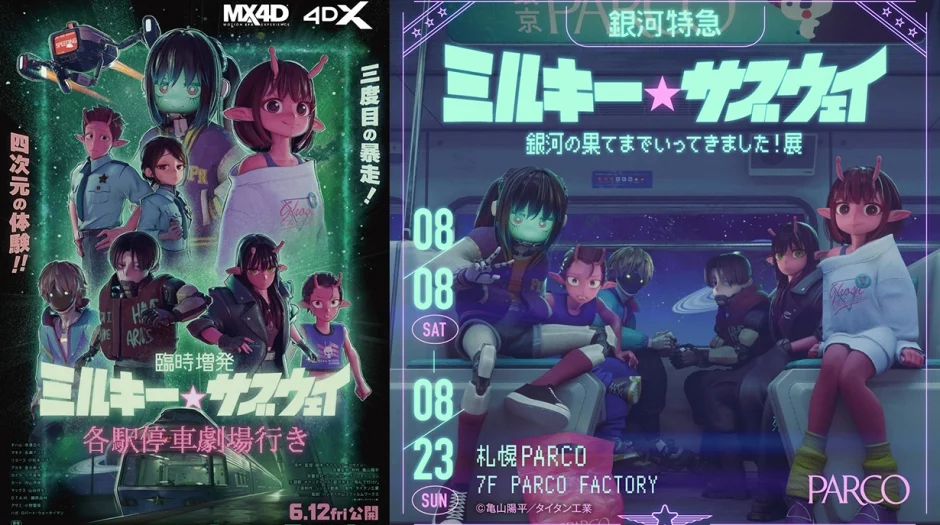
"Milky Subway: The Galactic Limited Express" is currently accessible on Netflix, marking a significant step for a project that began as a modest student graduation film. Its presence on a major streaming platform highlights the growing global demand for diverse animated content. The film’s CG animation style immediately draws a comparison to early ventures into computer-generated imagery within the anime industry. The year 2001 saw the release of "Final Fantasy: The Spirits Within," a CG-animated film that, despite its technical ambition, proved to be a commercial disappointment. This event is often cited as a turning point, leading many anime studios to shy away from full CG production, particularly as traditional 2D animation continued to achieve substantial success with franchises like "Neon Genesis Evangelion." The economic fallout from "The Spirits Within" contributed to a prevailing sentiment among some anime enthusiasts that the medium is intrinsically tied to its 2D roots.
However, "Milky Subway" emerges from a different, more independent trajectory. Its origins lie in a three-minute student short titled "Milky Highway," created by Yohei Kameyama, primarily using Blender. Released in 2022, the short garnered significant online traction, amassing nearly nine million views on its Japanese YouTube channel and an additional three million for the English-subtitled version. This viral success propelled Kameyama and his distinctive visual style into the spotlight.

The subsequent production, "Milky Subway," expanded upon the original short, initially released as a series of mini-episodes on YouTube last year. These episodes are still available for viewing in that format, with English subtitles accessible via the "settings" tab on the creator’s channel. The feature-length compilation, released in Japanese cinemas in February and later reissued with additional footage as "Extra Milky Subway," offers a cohesive narrative. The 47-minute version available on Netflix retains the simple charm of the original short, focusing on the relatable dynamic between its two main characters, Makina and Chiharu. These young protagonists, transplanted from a contemporary sitcom setting into a retro space fantasy, drive the film’s narrative.
Homage and Inspiration: Leiji Matsumoto and "Red Dwarf"
The conceptual framework of "Milky Subway" is deeply rooted in a rich tradition of space-themed storytelling, most notably the work of legendary manga artist Leiji Matsumoto. Matsumoto’s iconic creations, such as "Space Battleship Yamato" and "Captain Harlock," revolutionized the portrayal of interstellar travel in anime. His masterpiece, "Galaxy Express 999," which chronicles a journey aboard a steam train traversing the cosmos, serves as a direct inspiration for "Milky Subway’s" central premise of a spacefaring train. The film’s visual language and thematic elements pay clear homage to Matsumoto’s unique aesthetic and narrative sensibilities, which have profoundly influenced generations of animators and storytellers.
Beyond anime, "Milky Subway" also evokes comparisons to the British science-fiction sitcom "Red Dwarf." This live-action series, which premiered in the late 1980s, similarly juxtaposes ordinary characters with extraordinary, far-future settings. Both "Milky Subway" and "Red Dwarf" share a penchant for depicting a grounded, often mundane reality within a cosmic context, characterized by humor derived from anachronisms and the persistence of everyday life even in the distant future. "Red Dwarf" itself found a receptive audience in Japan, having been broadcast on the public service broadcaster NHK in the late 1990s, suggesting a cross-cultural appreciation for this blend of science fiction and character-driven comedy.
One notable, albeit controversial, scene in "Milky Subway" has been noted for its crude humor, which bears a resemblance to a particular joke from "Red Dwarf." This scene, involving a misunderstanding of a sexual nature, also touches upon themes relevant to fujoshi culture and the consumption of slash fiction, adding another layer of commentary on contemporary fan culture.

While "Milky Subway" maintains an endearing quality, its extended runtime compared to the original "Milky Highway" has led some to believe it dilutes the impact of the shorter, more focused predecessor. The original three-minute vignette successfully encapsulated teen archetypes, imbued them with unique humor and energy, and presented a concisely crafted world with comedic gags. The longer film, in contrast, is perceived by some as a more straightforward comedy about teenagers lost in space, potentially losing some of the distinctiveness that made the short so compelling.
Despite this critique, "Milky Subway" remains a likable and often humorous film. Its sweet-natured tone, punctuated by the aforementioned controversial scene, is likely to resonate with a broad audience. For viewers seeking a more aggressive, fast-paced sci-fi experience with a Tex Avery-esque sensibility, the 2004 film "Dead Leaves," directed by Hiroyuki Imaishi, offers a stark contrast. "Milky Subway’s" visual style, with its restricted facial expressions and reliance on dialogue, may align more closely with Western animated sitcoms for some observers, though its character designs are generally considered more appealing. The film’s humor, often derived from familiar comedic tropes, such as characters failing to maintain secret conversations, contributes to its accessible charm. Furthermore, it subtly conveys a moral message about youthful aggression and its equitable distribution between genders, culminating in a heartwarming scene where a conflict is resolved for a surprisingly sweet reason. The film’s anachronistic embrace of outdated technologies, from fax machines to vintage music, also serves as a point of connection with younger audiences, echoing a global trend towards appreciating retro aesthetics.
"Nezumikozo Jirokichi": A Tribute to Silent Cinema
The second film under consideration, "Nezumikozo Jirokichi," is directed by Rintaro, a seasoned animator whose career spans decades and represents a different generation of Japanese animation talent. Unlike the independent genesis of "Milky Subway," this film is a product of major studios, including Japan’s Studio M2 and France’s Miyu Animation. It has been featured in prominent animation festivals like Annecy, positioning it as a "festival short." This distinction, coupled with Rintaro’s extensive background in traditional anime, prompts discussions about its classification within the broader anime landscape.
Rintaro, whose real name is Shigeyuki Hayashi, began his career in animation in the 1950s, working on influential series such as Osamu Tezuka’s "Astro Boy" and "Kimba the White Lion." His directorial work includes the 2001 film "Metropolis," a lavish homage to Tezuka. The film "Nezumikozo Jirokichi" marks Rintaro’s return to directing after a 14-year hiatus.

The film’s central conceit is its reimagining of a lost Japanese live-action silent film, serving as a tribute to its original director, Sado Yamanaka. The titular character, Nezumikozo Jirokichi, is a celebrated Japanese folk hero, often depicted as a Robin Hood figure who stole from the wealthy to aid the poor during the Edo period. The name "Nezumikozo" translates to "rat kid," which is reflected in the recurring rat imagery throughout the short.
The production boasts impressive creative talent, with character designs by Katsuhiro Otomo, the visionary behind the seminal manga and anime film "Akira." The visual elements of "Nezumikozo Jirokichi" are striking, particularly in its opening sequences, which feature a charming dance between the thief and a rat. The film’s blue-toned compositions and the meticulously rendered Edo-era architecture contribute to its atmospheric quality. Audiences may also notice a subtle nod to folklore with the inclusion of a rabbit on the moon.
The character of Nezumikozo himself is portrayed with charisma and a relaxed demeanor, even when faced with peril. The musical score, composed by Toshiyuki Honda (who also scored "Metropolis"), enhances the film’s overall mood. However, despite these strengths, the 23-minute runtime has been found by some viewers to be somewhat engaging, with the climactic escalation not quite meeting expectations. The film’s evocation of silent comedy has been compared unfavorably to the Chaplinesque elements of the Pixar film "Wall-E."
A significant point of contention for some viewers has been the intrusive narration. In the tradition of silent films, where a benshi would provide live narration and commentary, "Nezumikozo Jirokichi" features narration by veteran voice actress Mami Koyama. Koyama’s extensive resume includes roles in "Akira," "Gundam," and "Black Lagoon." While her performance is acknowledged as skillful and reminiscent of the rakugo storytelling tradition, the frequent interjection of subtitle cards, mimicking the presentation of actual silent films, disrupts the flow of the on-screen action. The sheer volume of these interruptions is perceived by some as making the film more stilted than the performances themselves.

Furthermore, the film’s depiction of the filmmakers behind the camera is limited to brief glimpses at the beginning and end. This approach, while perhaps intended to honor the spirit of silent filmmaking, has led to speculation that a more dynamic narrative, incorporating the process of filmmaking, could have enhanced the viewer’s engagement. The influence of directors like Satoshi Kon, known for seamlessly blending reality and imagination in his works, is suggested as a potential avenue for a more multifaceted exploration of the film’s themes.
Broader Implications for the Animation Industry
The contrasting journeys of "Milky Subway" and "Nezumikozo Jirokichi" offer valuable insights into the contemporary animation landscape. "Milky Subway’s" success story, originating from a student project and achieving global distribution on Netflix, exemplifies the power of independent creators and digital platforms in democratizing content creation and dissemination. It challenges traditional industry gatekeepers and demonstrates that compelling narratives can emerge from unconventional sources.
Conversely, "Nezumikozo Jirokichi," while a product of established studios and a renowned director, highlights the enduring appeal of historical and artistic tributes within animation. Its festival run and availability on platforms like YouTube underscore the evolving distribution models for shorter animated works, catering to niche audiences and art-house enthusiasts.
The discussion surrounding the classification of these films as "anime" also reflects the ongoing evolution of the medium. As CG animation becomes more sophisticated and international co-productions become more common, the lines between traditional anime and other forms of animated storytelling continue to blur. This inclusivity, while sometimes debated, ultimately broadens the definition of animation and allows for a richer diversity of creative expression.

The success of independent creators like Yohei Kameyama, who achieve widespread recognition for their solo or small-team efforts, draws parallels to other animators who have made significant impacts with their early works. Figures such as Nick Park in Britain, Makoto Shinkai in Japan, and Gints Zilbalodis in Latvia have all achieved critical and commercial success through their distinct artistic visions. While expectations for Kameyama should be tempered to avoid undue pressure, the current attention his films have garnered suggests a bright future, with fans eager to witness his continued development. The enduring legacy of animators like Leiji Matsumoto and the innovative spirit of directors like Rintaro continue to shape the industry, inspiring new generations of creators to explore the boundless possibilities of animated storytelling.