

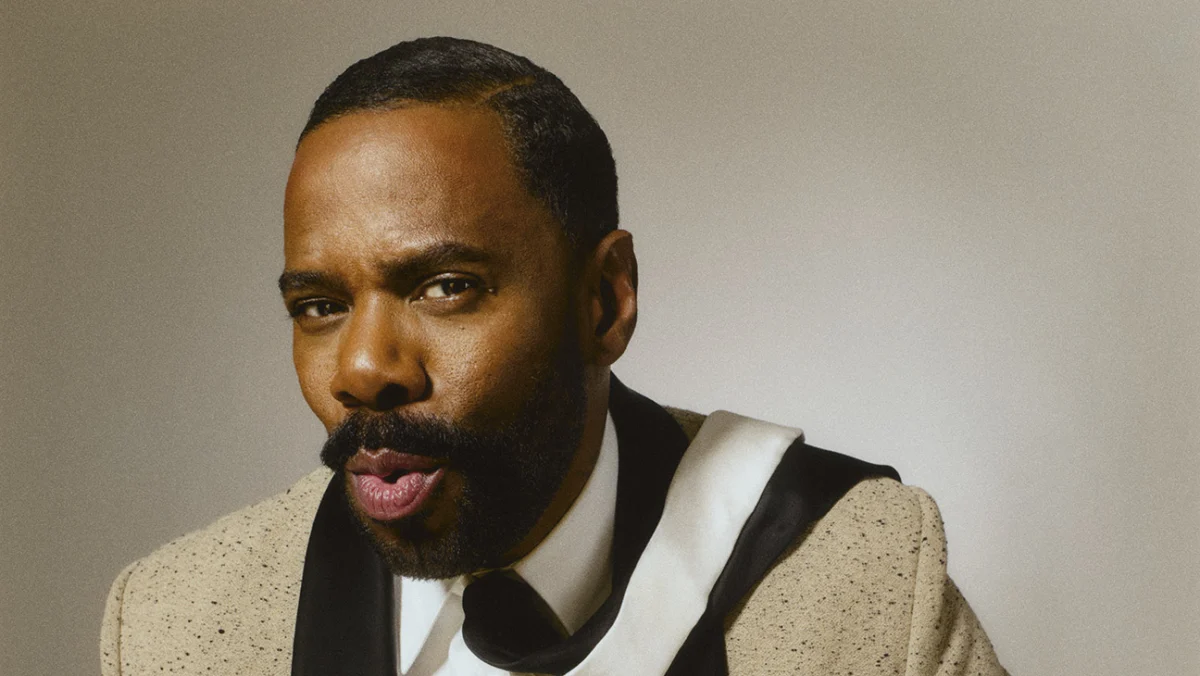
Colman Domingo, an artist renowned for his captivating and often complex portrayals across stage and screen, is currently navigating a pivotal phase in his illustrious career, seamlessly transitioning into the director’s chair while simultaneously delivering a career-defining performance that brought HBO’s critically acclaimed series Euphoria to its dramatic conclusion. His directorial philosophy, forged under the guidance of cinematic legends like Steven Spielberg, Ava DuVernay, George C. Wolfe, and Steven Soderbergh, centers on an unwavering belief in trust and empowerment—a principle he is now applying to his own sets, most notably in his recent work on Netflix’s The Four Seasons. This dual capacity as both a seasoned performer and an emerging auteur marks Domingo as one of Hollywood’s most versatile and influential figures.
The Genesis of a Director: Trust, Collaboration, and Necessity
Colman Domingo’s journey to directing is rooted in both passion and pragmatism. An actor by training, his decades-long career in theater frequently saw him take on multiple roles, from performer to producer, driven by a determination to create opportunities where none existed. "I had to figure out how to get into the room when I had no access to being in a room, when people wouldn’t allow me to be in the room," Domingo reflects on his early career. This entrepreneurial spirit, born out of necessity, laid the groundwork for his eventual transition behind the camera. His early forays into directing, often mounting his own theatrical productions, honed his understanding of every facet of storytelling, from creative vision to logistical execution. This hands-on experience provided him with a holistic perspective, shaping a directorial style deeply empathetic to the entire cast and crew.
His philosophy, refined through observing the industry’s greats, emphasizes the critical importance of fostering an environment where talented individuals are encouraged to bring their full expertise to the table. "That’s what I want to do with my entire cast and crew," Domingo asserts. "I want people to make choices and come with ideas and decisions." This approach, often characterized by a "yes, and…" mentality, seeks to inspire innovation and creativity rather than stifle it with immediate limitations. Domingo articulates this vision, stating, "I’m always a ‘yes, and…’ kind of person. I’m like that as an actor, but also as a director. I don’t like to hear the word ‘no’ that often, because I feel like I’m very pragmatic when it comes to budgets and to scope and scale and the size of what’s achievable. I also want people to start with that spirit of ‘yes’ before we’re bogged down with ‘no’s and what we can’t do." This positive, solution-oriented leadership style cultivates a dynamic set where every voice is valued, a stark contrast to more hierarchical traditional models.
Directing The Four Seasons: Crafting Connection and Comedy
Domingo’s on-screen directorial credits have steadily grown, including episodes of his long-running AMC horror series Fear the Walking Dead and a previous episode in the first season of The Four Seasons. Now, he takes the helm for the highly anticipated second-season premiere episode of The Four Seasons, titled "Hiking." The Netflix comedy-drama, co-created by and starring Tina Fey, reunites its core ensemble of middle-aged friends, including Will Forte, Marco Calvani, Kerri Kenney-Silver, and Domingo himself. The episode picks up after a dramatic season one finale, where Erika Henningsen’s Ginny reveals her pregnancy by Steve Carell’s recently deceased character, Nick, who was also the soon-to-be ex-husband of Kenney-Silver’s Anne. Despite the seemingly dark premise, the show masterfully blends humor with heartfelt moments, a balance Domingo was keen to maintain and enhance in his direction.
The season opener centers on the friend group’s poignant, yet often comical, attempt to spread Nick’s ashes in upstate New York. A standout moment, meticulously crafted by Domingo, occurs early in the episode as the group gathers at a rustic barbecue joint. The camera executes a sweeping circular motion around the table, intimately capturing the characters laughing, bonding, and sharing a meal. This deliberate staging, inspired by iconic shots like the intro to Roseanne and the dinner scenes in Woody Allen’s Hannah and Her Sisters, serves a profound purpose. Domingo explains that the shot was designed to evoke a sense of "family – and family is what you want to always get back to, no matter what complicated things may happen." It instantly re-establishes the deep connection among the friends, drawing viewers back into the heart of the ensemble that captivated them in the first season.
A Director’s Empathy: Insights from Tina Fey
Working under Domingo’s direction, series creator and co-star Tina Fey offered glowing praise for his leadership style. Fey, a veteran of both comedy and drama production, noted Domingo’s exceptional rapport with the entire crew. "He’s wonderful with the crew in their entirety," she remarked. "He really understands, having worked so long as an actor, how much everyone on set is doing." This deep empathy, stemming from his extensive experience in front of the camera, allows Domingo to appreciate the intricate contributions of every department, fostering an environment of respect and mutual understanding.

Fey further highlighted how Domingo’s performance background uniquely informs his directorial approach, particularly in his interactions with actors. "A lot of times in TV direction, you don’t really get to kind of talk about the acting choices that you’re making, because the days go so quickly," Fey observed. "But he’s always, in that way, an actor first, and taking care of making sure everyone feels like they’ve had enough takes." This commitment to ensuring actors feel creatively fulfilled and supported is a testament to Domingo’s "captain of the ship" mentality, where inspiration and collaboration are paramount. His ability to guide performances while managing the demanding pace of television production showcases a rare blend of artistic sensibility and practical efficiency.
Colman Domingo’s Ascendance: From Stage to Acclaimed Screen Presence
Before his current directorial ventures, Colman Domingo had already cemented his reputation as one of Hollywood’s most compelling actors. His career trajectory has been marked by a gradual but undeniable rise, beginning in the vibrant world of New York theater where he earned critical acclaim for roles in productions like Passing Strange and The Scottsboro Boys, the latter earning him a Tony Award nomination.
His transition to film and television saw him take on a diverse range of roles, showcasing his incredible versatility. Early television work on series such as The Knick and a recurring role on Fear the Walking Dead brought him wider recognition. However, it was his profoundly moving performances in films like Barry Jenkins’ If Beale Street Could Talk (2018), Nia DaCosta’s Candyman (2021), and particularly George C. Wolfe’s Rustin (2023) that truly elevated his status. His portrayal of civil rights activist Bayard Rustin in the Netflix biopic garnered him an Academy Award nomination for Best Actor, a testament to his ability to embody complex historical figures with depth and authenticity. On the television front, his work as the enigmatic Victor Strand in Fear the Walking Dead earned him a dedicated fanbase and critical praise for his nuanced portrayal of a morally ambiguous survivor in a post-apocalyptic world.
These accolades underscore a career built on consistent excellence and a dedication to his craft, preparing him for the intense spotlight that would accompany his role in Euphoria.
The Transformative Arc of Ali in Euphoria Season 3
Concurrent with his directorial duties, Domingo recently delivered a tour-de-force performance as Ali, the unwavering sponsor and moral compass in HBO’s groundbreaking drama Euphoria. For much of the series’ three-season run, Ali primarily existed within the intimate confines of a diner booth, dispensing hard-won wisdom and providing a crucial anchor for Zendaya’s protagonist, Rue, as she grappled with addiction. Ali was the show’s conscience, a steady voice of reason amidst the chaotic and often destructive lives of its teenage characters.
However, the final two episodes of the series, which HBO initially refrained from confirming as the show’s last until after the finale screened, saw Ali take center stage in an unprecedented and profoundly impactful manner. While Ali had alluded to his tumultuous past throughout the series, these culminating episodes offered audiences an unflinching look into his previous life as an addict. Flashbacks revealed a man consumed by his struggles, shown using, betraying his wife, and exhibiting abusive tendencies toward his loved ones. This raw exploration of his past served to deepen his character, illustrating the arduous journey of recovery and the profound cost of addiction.
In the present day narrative, Ali is confronted with his greatest challenge yet: helping Rue navigate the truly untenable position she finds herself in, caught between rival drug lords. The quiet, philosophical mentor transforms into a figure of unexpected action. When Rue suffers a fentanyl-laced overdose, Ali’s transformation becomes complete. He tracks down the season’s primary antagonist, the formidable Alamo (portrayed by Adewale Akinnuoye-Agbaje), challenging him to a harrowing, old-fashioned duel, armed with a sawed-off shotgun. This shocking turn saw Ali, the series’ resident mentor and confidant, evolve into an unlikely action hero, driven by a fierce, paternal instinct to protect Rue. In a dramatic climax, it is Colman Domingo’s Ali who ultimately brings down the final curtain on Euphoria, delivering a resolution that was both cathartic and viscerally impactful.

Reflecting on this evolution back in April, as the season began to air, Domingo told THR, "We wanted to unpack a little bit more about Ali and his survival mechanisms, and really see it put to work. Instead of him just being philosophical and talking about it, he’s actually going to be more actionable about it." This statement proved to be an understatement, as Ali’s journey from a stationary sage to a dynamic force of justice provided one of the most memorable and fitting conclusions to the series. Domingo’s portrayal garnered him a Primetime Emmy Award for Outstanding Guest Actor in a Drama Series in 2022 for his earlier work on Euphoria, a testament to the profound impact of his character.
Euphoria‘s Conclusion and Lingering Impact
The conclusion of Euphoria had been a subject of much speculation. As the final episodes rolled out, HBO and creator Sam Levinson maintained a veil of secrecy regarding the show’s ultimate fate. It was only after the series finale had screened that the network and Levinson officially acknowledged the show’s conclusion, bringing an end to one of television’s most visually distinctive and culturally resonant dramas of the past decade.
For Colman Domingo, the ending felt earned and complete. Levinson had consistently asked his cast to approach each season, including two hour-long specials, as if it could be the finale. This approach fostered a sense of urgency and commitment, ensuring that every performance was delivered with maximum impact. Domingo expressed his satisfaction with the journey, stating, "I know that I gave it my all."
Euphoria was not without its controversies, often drawing criticism for its explicit content and dark themes, but it was also widely lauded for its raw portrayal of teenage life, addiction, mental health, and complex relationships. Its innovative cinematography, compelling soundtrack, and powerful performances, particularly from Zendaya and Domingo, garnered numerous awards and a devoted global fanbase. Ali’s arc in the final season provided a grounding, redemptive narrative, offering a sense of closure and justice within the often-bleak world of the series.
Colman Domingo’s Evolving Legacy: A Visionary in Front and Behind the Camera
Colman Domingo’s current trajectory underscores his position as a multifaceted talent in Hollywood. His ability to seamlessly transition between demanding acting roles, such as the emotionally complex Ali and the Oscar-nominated Bayard Rustin, and significant directorial endeavors like The Four Seasons, speaks volumes about his artistic ambition and technical prowess. His philosophy of fostering trust and collaboration on set positions him as a leader who prioritizes creative freedom and mutual respect, attributes that are increasingly valued in the fast-paced and demanding production environment.
As he continues to expand his footprint behind the camera, Domingo’s unique perspective as a seasoned actor will undoubtedly inform his directorial choices, allowing him to elicit authentic performances and craft compelling narratives. His work on The Four Seasons serves as a clear indication of his ability to imbue comedy with emotional depth, leveraging specific cinematic techniques to enhance storytelling.
The culmination of his work on Euphoria, where he evolved a beloved supporting character into the driving force of the series’ finale, further solidifies his reputation as a performer capable of immense impact. This period of his career, marked by both a significant directorial turn and a definitive acting triumph, positions Colman Domingo not merely as an actor or a director, but as a true visionary who is actively shaping the landscape of contemporary storytelling, both in front of and behind the lens. His commitment to empowering his teams and delivering profound artistic statements ensures that his influence in the entertainment industry will only continue to grow.