

An Unprecedented Venue: The White House as an Octagon
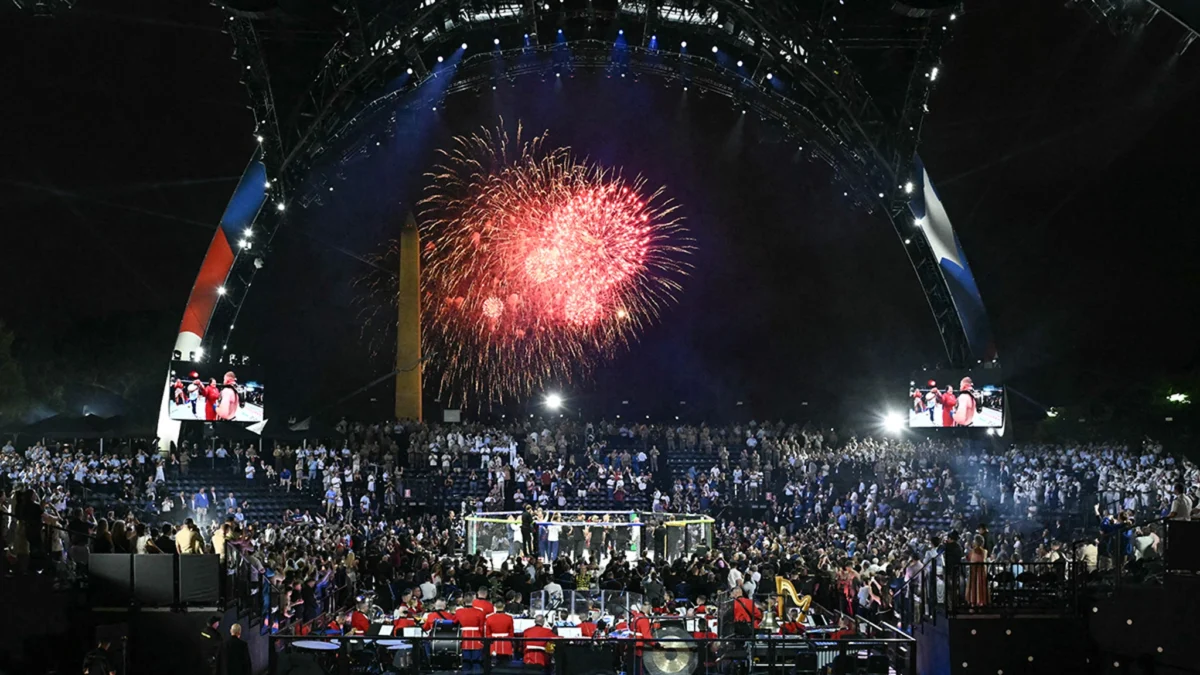
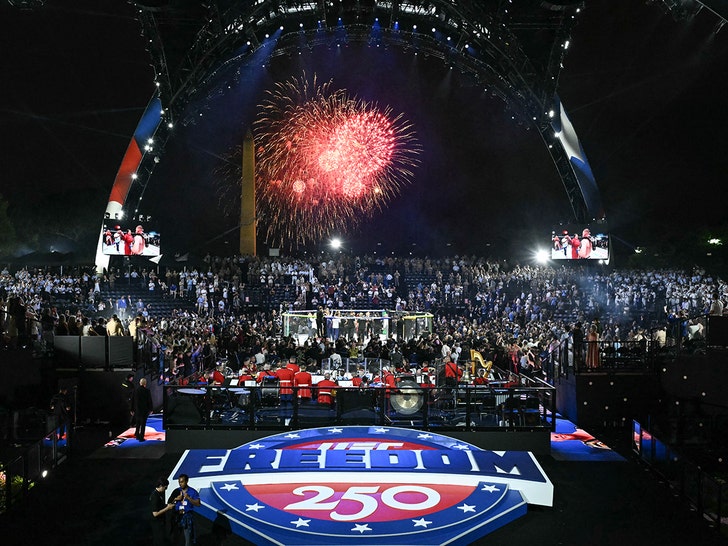
The decision to host a full-fledged Ultimate Fighting Championship event at the White House was, by all accounts, a logistical marvel and a bold political statement. President Donald Trump, a vocal admirer of combat sports and a close associate of UFC President Dana White, had long expressed a desire to bring the organization to the nation’s most iconic residence. UFC Freedom 250 materialized as the culmination of years of discussions and intricate planning, transforming the verdant South Lawn into a temporary arena capable of housing thousands of spectators, an elaborate production setup, and a regulation Octagon.
Security concerns were paramount, requiring unprecedented coordination between the Secret Service, various law enforcement agencies, and UFC’s event management teams. Temporary structures, enhanced screening protocols, and restricted airspace were all part of the extensive preparations. The event aimed to project an image of American strength and resilience, weaving patriotic elements seamlessly into the fabric of a brutal, yet celebrated, sport. This unprecedented convergence of the highest office and a premier combat sports organization sparked widespread debate in the weeks leading up to the event, with proponents hailing it as a testament to American freedom and entrepreneurship, while critics voiced concerns over the politicization of the White House and the potential for perceived impropriety. Despite the discourse, the event proceeded as planned, drawing a global audience eager to witness history unfold.
A Grand Overture: Patriotism on Display
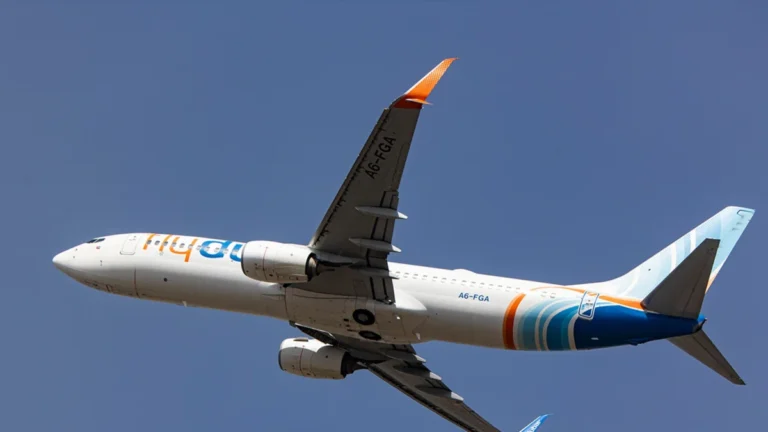
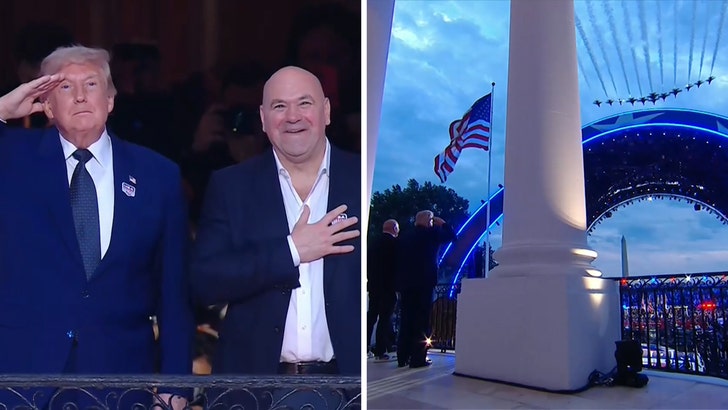
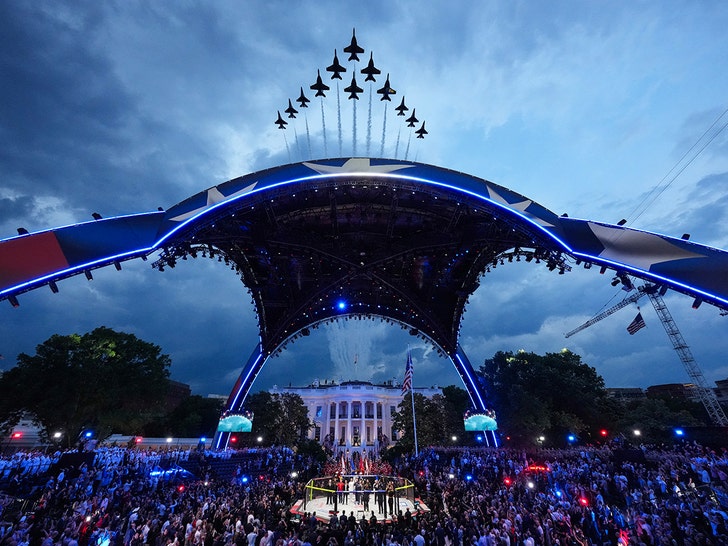
The evening’s proceedings commenced with a spectacle designed to evoke powerful nationalistic sentiments. President Trump, accompanied by UFC President Dana White, emerged from the Oval Office, making a stately walk to a specially constructed balcony overlooking the Octagon. The crowd, a mix of invited guests, political figures, and prominent figures from the sports world, erupted in cheers. As the National Anthem resonated across the historic grounds, a formation of ten fighter jets, believed to be the U.S. Navy Blue Angels, executed a precision flyover directly above the White House. The roar of the engines combined with the visual grandeur created a breathtaking moment, setting a tone of patriotic fervor for the fights that followed. This elaborate opening sequence was not merely ceremonial; it served as a powerful framing device, reinforcing the event’s "Freedom" moniker and its implicit connection to American values, as envisioned by its organizers.
A Night of Finishes: The Judges Stayed Home
The fights themselves delivered an extraordinary string of definitive conclusions. In a rare occurrence for a UFC event, every single bout on the seven-fight card ended via knockout or technical knockout, rendering the judges’ services entirely unnecessary. This statistic alone cemented UFC Freedom 250 as a remarkable night for pure combat, showcasing the elite skill and raw power of the athletes involved.
The undercard was a relentless procession of decisive finishes. Bouts that typically go the distance were cut short by explosive striking and submission attempts. Early stoppages characterized the preliminary fights, with fighters aggressively pursuing finishes, perhaps fueled by the historic setting and the unique energy of the crowd. While specific names from the preliminary card were not highlighted, the collective performance painted a picture of fighters rising to the occasion, delivering high-impact, crowd-pleasing action. Each rapid conclusion built anticipation for the main event, promising a climax worthy of the historic stage. This unbroken chain of KOs served as a testament to the aggressive matchmaking and the high stakes involved, leaving spectators exhilarated and critics marveling at the sheer brutality and efficiency displayed inside the Octagon.
The Main Event: Gaethje’s Underdog Triumph
The crescendo of the night arrived with the highly anticipated lightweight championship bout between reigning champion Ilia Topuria and challenger Justin Gaethje. Topuria, known for his precision striking and undefeated record, entered the Octagon as a formidable favorite. Gaethje, however, was a seasoned veteran, celebrated for his relentless pressure, devastating leg kicks, and an iron will. Despite being a significant 6-to-1 underdog, Gaethje delivered a career-defining performance that captivated the audience.
From the opening bell, Gaethje initiated a high-pressure assault, repeatedly landing punishing blows and disrupting Topuria’s rhythm. The first two rounds saw both fighters exchange heavy strikes, but Gaethje’s output and durability began to wear down the champion. By the third round, Topuria’s movements appeared less fluid, and his face showed the effects of Gaethje’s relentless attack. Gaethje continued to press, utilizing his signature leg kicks to further impede Topuria’s mobility. The fourth round was a dominant display from Gaethje, who systematically broke down Topuria with a barrage of punches and elbows, leaving the champion visibly hurt and struggling to defend himself.
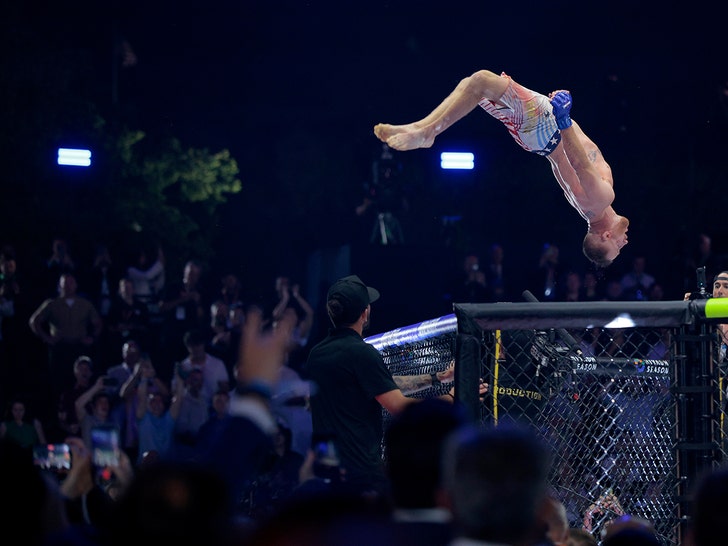
Between the fourth and fifth rounds, Topuria’s corner, recognizing the severity of the punishment and fearing for their fighter’s long-term health, made the difficult decision to stop the fight. The technical knockout (TKO) victory was awarded to Justin Gaethje, who, against all odds, became the new UFC Lightweight Champion. The crowd erupted in a mixture of shock and admiration for Gaethje’s incredible performance. His triumph was a powerful narrative of perseverance and skill, resonating deeply within the combat sports community.
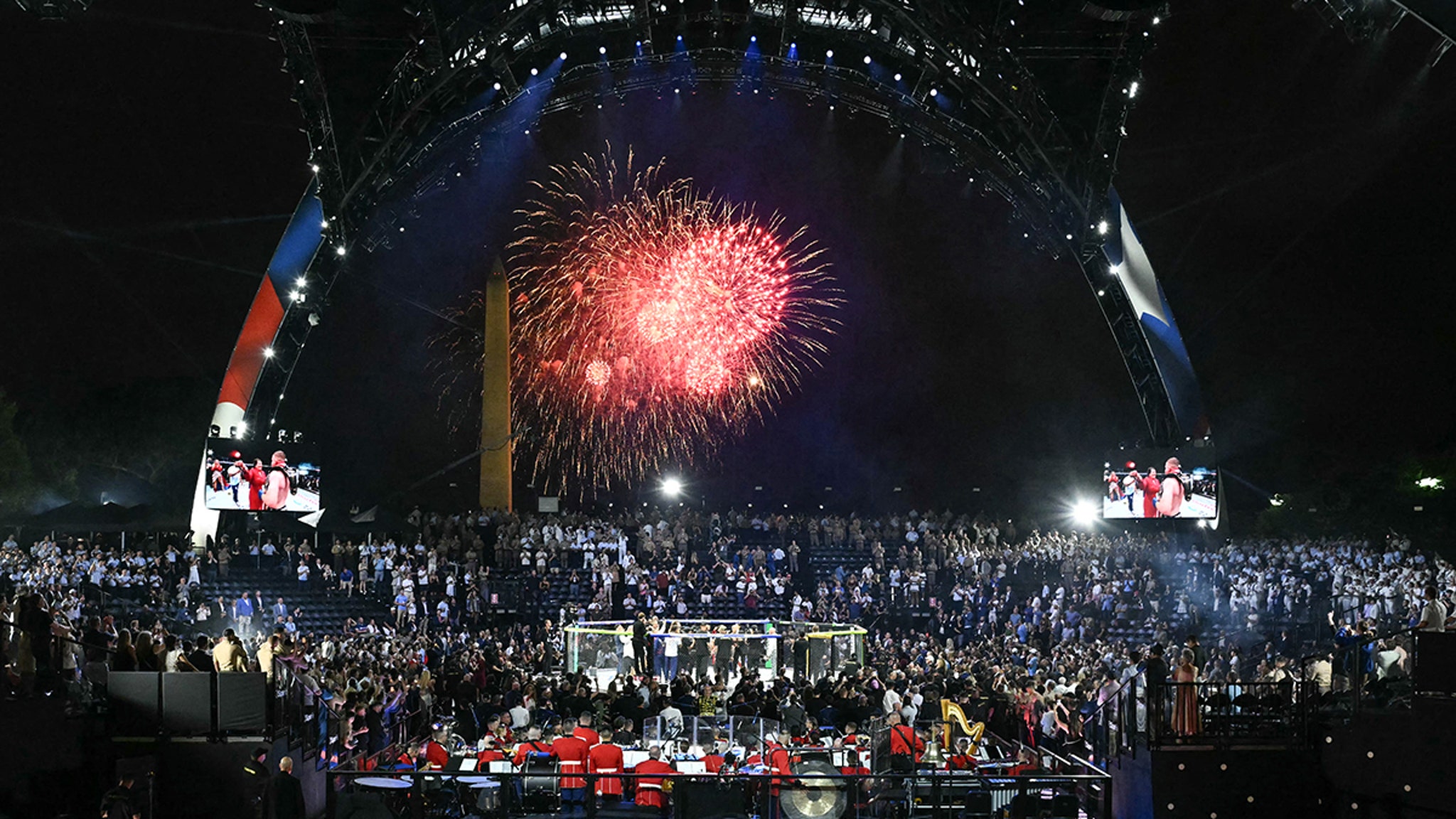
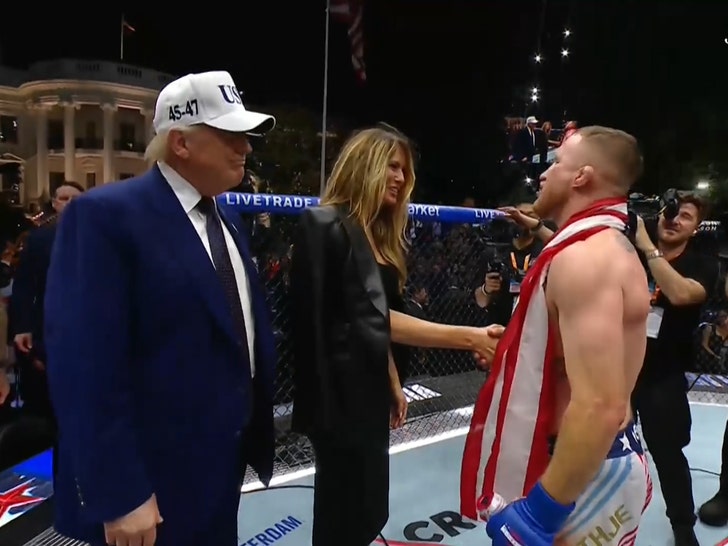
Following the championship presentation, President Trump, accompanied by First Lady Melania Trump, entered the Octagon to congratulate Gaethje and his family. The President engaged in a brief, cordial conversation with the new champion, a moment that further underscored the unique blend of sports and politics at the event. As the celebrations unfolded, a spectacular fireworks display erupted over the Washington Monument, illuminating the night sky and providing a fittingly grand finale to the sporting aspect of UFC Freedom 250.
The Firestorm: Josh Hokit’s Controversial Remark
However, the patriotic displays and thrilling knockouts were soon overshadowed by a moment of profound controversy. Heavyweight contender Josh Hokit, who had earlier secured a dominant knockout victory over fan-favorite Derrick Lewis, took center stage for his post-fight interview with veteran commentator Joe Rogan. Hokit, a powerful and often outspoken fighter, had just delivered a highlight-reel finish, further solidifying his position as a top contender in the heavyweight division.
During the live interview, as adrenaline still coursed through his veins, Hokit veered sharply from discussing his victory into a politically charged and deeply offensive statement. Looking directly into the camera, Hokit declared, "Michelle Obama is a man. Am I right, America?" The remark hung in the air, eliciting a mixture of gasps and a smattering of cheers from certain sections of the audience. Rogan, visibly uncomfortable, attempted to steer the conversation back to the fight, but the damage was already done.
The immediate aftermath saw an explosion of online activity. Social media platforms, including Twitter (now X, which had been generating considerable buzz around the event even before the controversy), were flooded with reactions. The "fast and furious" condemnation mentioned in initial reports barely captured the scale of the outrage. Hashtags related to Hokit’s comment quickly trended globally, dominating discussions and eclipsing all other aspects of UFC Freedom 250.
Reactions and Implications: A Divided Response
The backlash against Josh Hokit was swift and multifaceted. Civil rights organizations and prominent political commentators immediately decried the statement as homophobic, transphobic, and deeply disrespectful to a former First Lady. Many called for severe repercussions from the UFC, ranging from substantial fines to outright suspension or even termination of his contract. Critics argued that such remarks had no place in professional sports, especially on a stage as prominent as the White House, and that they fueled a dangerous climate of misinformation and hate speech.
Conversely, a segment of the online community, primarily aligned with certain conservative viewpoints, rallied to Hokit’s defense, framing his comment as an exercise of free speech and a challenge to perceived political correctness. This divide highlighted the deep ideological rifts prevalent in contemporary American society, with sports once again becoming a battleground for cultural and political wars.
UFC officials, including Dana White, faced immediate pressure to issue a statement. While no official disciplinary action was announced immediately after the event, sources close to the organization indicated that a formal review was underway. The UFC has a history of both embracing outspoken personalities and, at times, imposing penalties for behavior deemed to be outside the bounds of professional conduct or harmful to the brand. The White House itself, having hosted the event, remained publicly silent on Hokit’s comment, choosing instead to focus on the overall success of the unique event, though behind-the-scenes discussions were undoubtedly tense.
The incident cast a long shadow over the impressive athletic performances of the night. It forced a critical examination of the responsibilities of athletes as public figures, the boundaries of free speech in professional settings, and the potential pitfalls of aligning a sports organization so closely with a political administration. For Josh Hokit, his career trajectory, which had seemed destined for a heavyweight title shot, now hung in the balance, entangled in a web of controversy and public scrutiny. Sponsors, always sensitive to public image, would likely be reviewing their relationships with the fighter, potentially leading to significant financial repercussions.
Legacy of Freedom 250: A Complex Tapestry
UFC Freedom 250 will undoubtedly be remembered as one of the most polarizing and historic events in combat sports. It successfully brought the raw excitement of mixed martial arts to the heart of American political power, creating unforgettable images of patriotism and athletic prowess. The spectacle of fighter jets soaring over the White House, the relentless series of knockouts, and Justin Gaethje’s improbable championship victory all contributed to a night of unparalleled drama and sporting achievement.
However, the lasting legacy of Freedom 250 is inextricably linked to the controversy ignited by Josh Hokit’s comment. The incident served as a stark reminder that even in moments of grand spectacle, the complexities of political and social discourse can quickly erupt, transforming a celebration into a debate. From the triumphant flyovers to the political fires ignited by a single remark, UFC Freedom 250 will forever be etched in history as a night of extraordinary contrasts – a testament to the power of sport, the potency of patriotism, and the enduring, often contentious, nature of public commentary in the modern era. The event undeniably pushed boundaries, both in its execution and its aftermath, ensuring its place in the annals of combat sports and American cultural history.