
In an unprecedented fusion of sports and state, President Donald Trump and Ultimate Fighting Championship (UFC) President Dana White made a highly anticipated grand entrance at "UFC Freedom 250" on the South Lawn of the White House on June 14, 2026. The historic event marked the first time a professional sporting competition of this magnitude had ever been hosted at the nation’s most iconic residence, drawing a 4,000-strong crowd, predominantly comprised of military personnel, veterans, and their families. The spectacular arrival of the two prominent figures, just moments before the first bout, set an electrifying tone for an evening that defied conventional expectations.
An Unforgettable Walkout on Hallowed Ground
The air on the South Lawn, initially thick with anticipation and the lingering humidity from an earlier rain delay, crackled with energy as President Trump and Dana White emerged from the White House’s West Wing. Their appearance on a specially constructed balcony overlooking the Octagon was met with a thunderous roar from the assembled spectators. The brief but dramatic rain delay, caused by scattered thunderstorms in the Washington D.C. metropolitan area, only amplified the excitement, making the subsequent clear skies feel like a timely blessing.
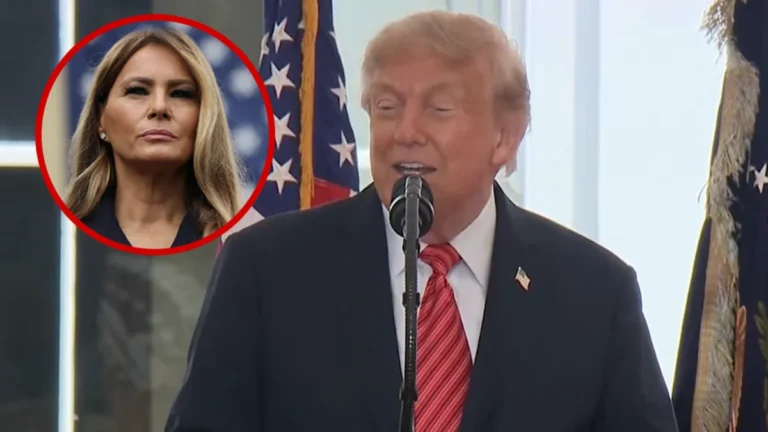
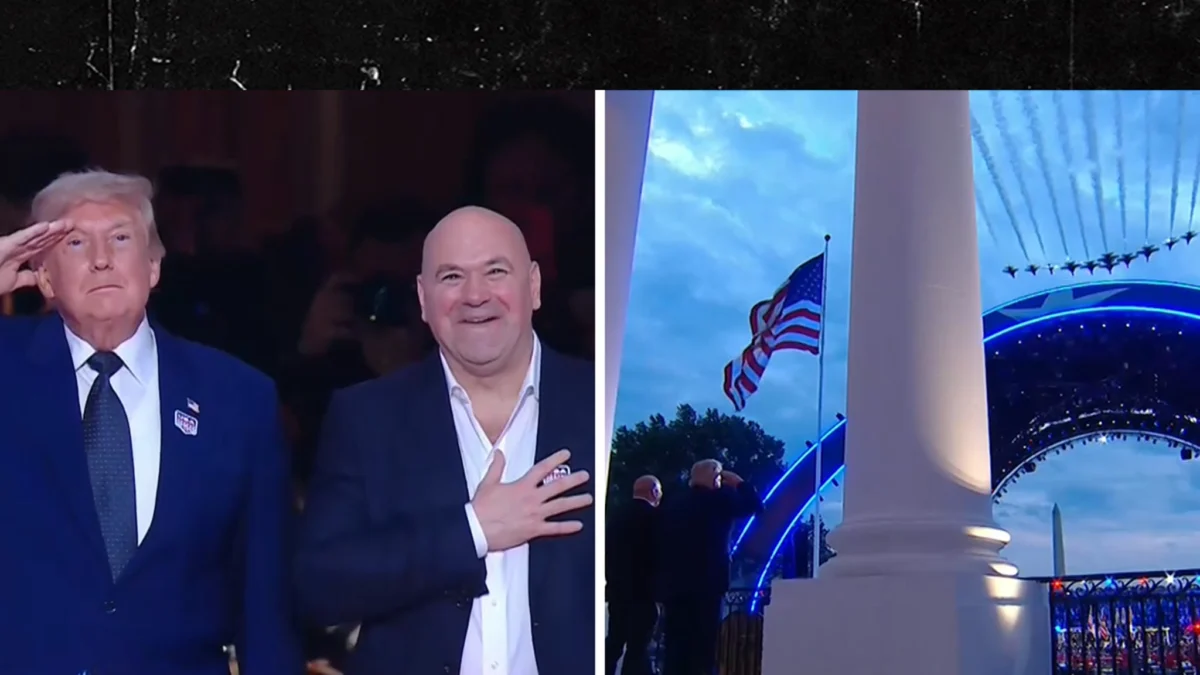
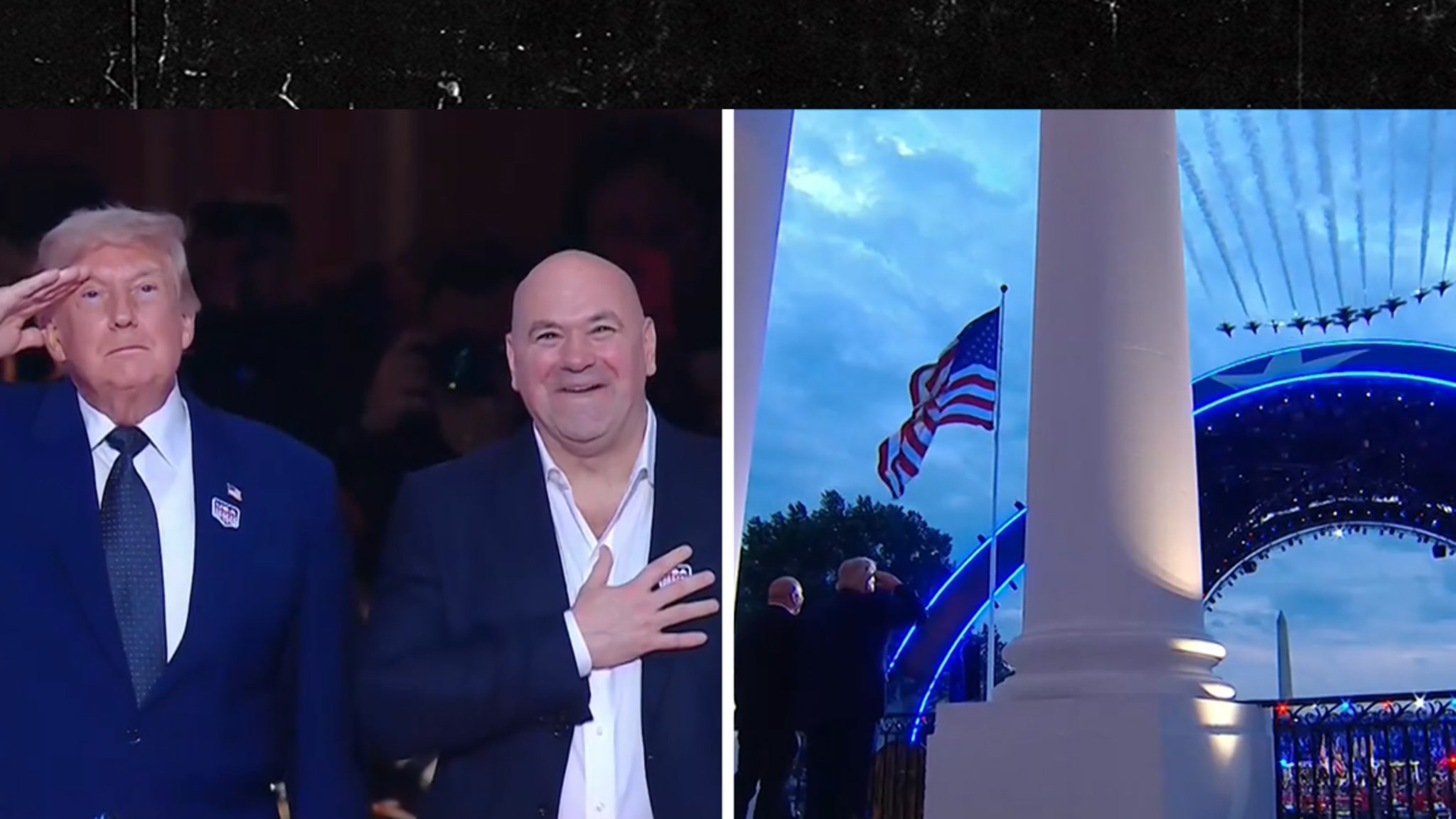
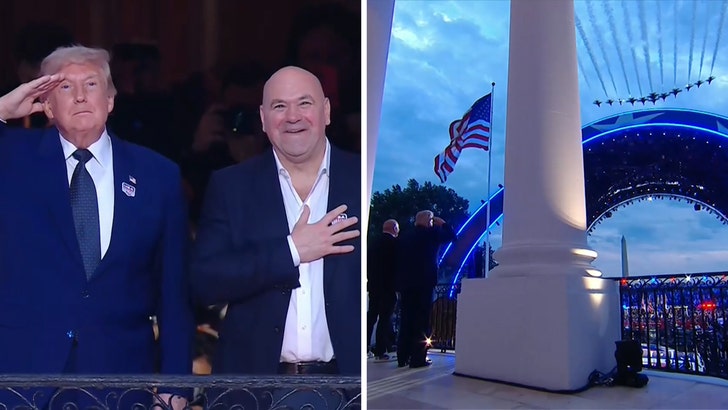
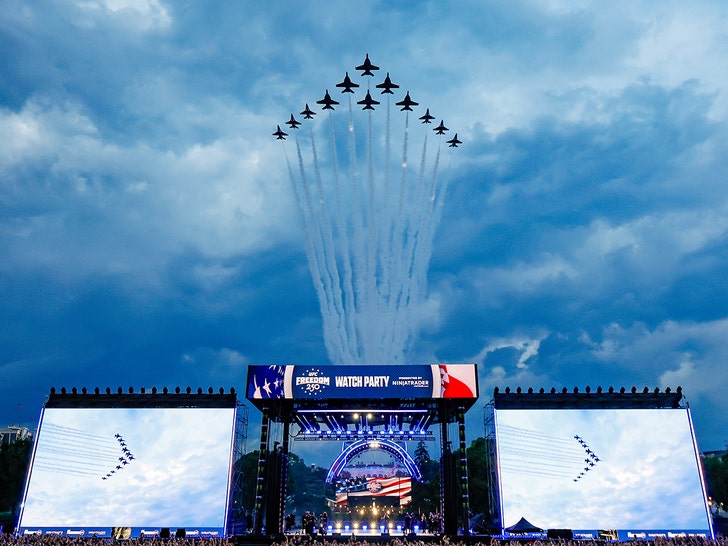
As the National Anthem commenced, President Trump rendered a sharp salute, while Mr. White stood with his hand over his heart, both men facing the unfurled American flag against the backdrop of the illuminated White House. The solemnity of the moment was underscored by a breathtaking flyover performed by a squadron of U.S. military jets, their powerful engines echoing across the capital. This patriotic display, a staple of major American sporting events, took on an amplified significance within the hallowed grounds of the presidential residence. Following the anthem and flyover, the President and Mr. White descended from the balcony, walking a specially laid red, white, and blue carpet to their ringside seats, positioned mere feet from the Octagon, ensuring an unparalleled view of the night’s action.
The Vision Behind Freedom 250: A Historical Context
The concept of hosting a major UFC event at the White House had been a topic of discussion for several years, primarily championed by President Trump, a long-time supporter of the UFC and a personal friend of Dana White. Sources close to the administration indicated that the President viewed the event as a powerful symbol of American resilience, strength, and an innovative way to honor military personnel. The "Freedom 250" moniker itself was chosen to reflect these ideals, tying the athletic prowess of the fighters to a broader narrative of national pride and liberty.
Planning for an event of this scale within the secure perimeter of the White House was an undertaking of immense complexity. Discussions reportedly began in earnest following President Trump’s re-election in 2024, with various federal agencies, including the Secret Service, Department of Defense, and National Park Service, collaborating with UFC’s logistics and production teams. The challenges ranged from constructing a temporary, state-of-the-art fighting arena and spectator stands on the South Lawn, typically reserved for ceremonial events, to managing unprecedented security protocols for a public-facing event of this nature. Environmental impact assessments and historical preservation considerations also played a significant role in the meticulous planning process.
White House Press Secretary, Evelyn Hayes, in a pre-event briefing, emphasized the administration’s commitment to making the event accessible and meaningful for its primary audience. "This is more than just a fight night; it is a profound gesture of gratitude to our brave men and women in uniform," Hayes stated. "By bringing world-class entertainment directly to them, on grounds that symbolize their service and sacrifice, we aim to create an unforgettable experience that celebrates American spirit and unity."
Logistical Marvels and Security Tightropes
Transforming the South Lawn into a functional sports arena required weeks of covert construction and intricate planning. Specialized crews worked overnight to erect a modular Octagon, tiered seating, broadcast infrastructure, and temporary facilities, all designed to be rapidly deployed and dismantled with minimal impact on the historic landscape. Security was paramount, with a multi-layered approach involving the Secret Service, uniformed police, and specialized tactical units. Airspace restrictions were imposed over downtown Washington D.C. for the duration of the event, and a robust perimeter defense system was activated.
Attendees underwent rigorous security screenings, mirroring those typically seen at high-profile presidential events. Despite the challenges, the execution was flawless, a testament to the coordination between federal agencies and UFC’s event management expertise. The temporary structures, designed to blend aesthetically with the White House architecture, featured state-of-the-art lighting and sound systems, ensuring a premium experience for both the live audience and the millions watching globally.
Global Broadcast and Cultural Impact
The "UFC Freedom 250" was broadcast live to an estimated audience of over 50 million households worldwide, making it one of the most-watched UFC events in history. The unique backdrop of the White House added an unparalleled layer of spectacle, captivating viewers beyond the traditional mixed martial arts fan base. Commentator Joe Rogan, known for his enthusiastic and often philosophical observations, perfectly encapsulated the atmosphere during his initial remarks: "It’s such a scene. It’s so surreal. It’s so amazing. The energy is in the air. We’re outside. We thought it might be called off for rain, but we’re good. The whole thing is nuts!" Rogan’s sentiments echoed the collective awe felt by many witnessing the convergence of combat sports and presidential prestige.
The event’s cultural implications are expected to be far-reaching. It further solidifies the UFC’s position as a mainstream global sports phenomenon, capable of transcending traditional venues and audiences. For the White House, it represents a bold departure from traditional presidential engagements, potentially setting a precedent for future, non-traditional public events aimed at connecting with specific demographics or showcasing American soft power. Analysts suggest the move was a strategic play by the Trump administration to appeal to a demographic known for its strong patriotic sentiments and affinity for robust competition, further cementing the President’s image as a disruptor of conventional norms.
Statements and Reactions: A Spectrum of Views
Following his entrance, Dana White expressed profound gratitude and excitement. "This is truly a historic night for the UFC, for sports, and for our country," White remarked in a brief statement to embedded media. "To bring the best fighters in the world to the White House, to entertain our military heroes – it’s an honor beyond words. President Trump made this vision a reality, and we couldn’t be prouder to be a part of it."
While the event garnered widespread enthusiasm from the fighting community and many patriotic citizens, it also sparked a predictable range of reactions from political commentators and cultural critics. Some lauded the initiative as an innovative way to engage with the public and honor the military, while others questioned the appropriateness of using the White House, a symbol of national governance, for a commercial sporting event. Dr. Eleanor Vance, a political science professor at Georgetown University, commented, "This event undoubtedly merges the political and entertainment spheres in an unprecedented manner. It raises questions about the evolving role of the presidency in cultural life and the potential blurring of lines between state functions and private enterprises, even with the noble intention of honoring service members."
Conversely, Senator Marcus Thorne (R-TX) praised the event, stating, "President Trump once again demonstrates his commitment to our military and his willingness to think outside the box. This sends a clear message of appreciation and provides a much-needed morale boost to those who serve our nation."
The Card: A Showcase of Elite Talent
Beyond the spectacle of the venue and the presidential presence, "UFC Freedom 250" delivered a robust fight card, designed to captivate even the most discerning fight fans. The evening featured seven compelling bouts across various weight classes, culminating in a highly anticipated main event.
The headline bout pitted two of the lightweight division’s most explosive strikers against each other: Justin Gaethje and Ilia Topuria, vying for the interim lightweight championship. Gaethje, known for his relentless pressure and knockout power, faced Topuria, an undefeated phenom with a devastating mix of striking and grappling. The stylistic clash promised fireworks, and the unique atmosphere of the White House only heightened the stakes for both competitors. Their training camps had been extensively covered, with both fighters expressing immense pride at the opportunity to compete on such hallowed ground.
The undercard also featured several high-stakes matchups, including a bantamweight contenders’ clash and a light heavyweight showcase, ensuring that the athletic competition remained at the forefront of the evening’s narrative. Fighters uniformly expressed a sense of awe and privilege at the opportunity to compete in such a unique setting, with many dedicating their performances to the military personnel in attendance.
Broader Implications and Future Precedents
The successful execution of "UFC Freedom 250" at the White House is poised to leave a lasting legacy. It underscores a growing trend of major sporting leagues and cultural events seeking unique, high-profile venues to enhance their global appeal and narrative. For the UFC, it represents a crowning achievement in its journey from a niche combat sport to a global entertainment powerhouse.
Politically, the event could reshape how future administrations consider leveraging national landmarks for public engagement. While it undoubtedly generated significant publicity and goodwill among a specific segment of the population, it also ignited a debate about the sanctity and appropriate use of presidential grounds. The precedent set on June 14, 2026, will likely be analyzed and discussed for years to come by historians, political scientists, and sports industry professionals alike.
Economically, while direct ticket sales were limited and primarily allocated to military families, the indirect impact through broadcast rights, merchandising, and the global exposure for Washington D.C. as a dynamic event host is substantial. Early estimates from economic analysts suggest a significant, albeit indirect, boost to local tourism and service industries in the surrounding metropolitan area.
As the final fights concluded and the temporary structures on the South Lawn began their systematic deconstruction, the enduring image remained: the White House, illuminated against the night sky, having played host to a spectacle unlike any other. "UFC Freedom 250" will be remembered not just for the athleticism displayed within the Octagon, but for its bold statement on the evolving intersection of sports, politics, and national identity in the 21st century.