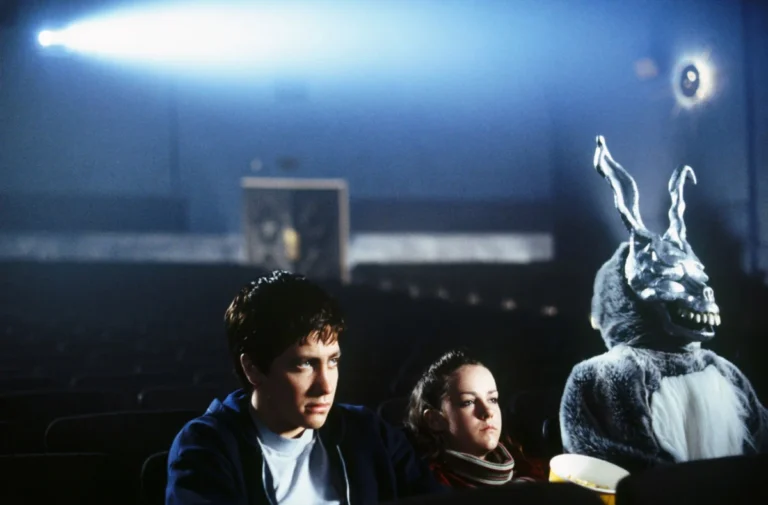




The release of Steven Spielberg’s latest cinematic venture, Disclosure Day, scheduled for June 12, has reignited a global conversation regarding the possibility of extraterrestrial life and the transparency of government institutions. The film, a fictionalized exploration of a massive government cover-up and the eventual revelation of alien contact to the world’s eight billion inhabitants, mirrors a decades-old obsession within the UFO community. However, as the film prepares to captivate audiences with a singular, world-altering moment of "disclosure," scientists and policy experts suggest that the reality of such a discovery will likely follow a much slower, more methodical, and less cinematic path.
The concept of a "Disclosure Day"—a specific date on which the veil is lifted and the truth of non-human intelligence is revealed—has been a cornerstone of ufology since the mid-20th century. Yet, when analyzed through the lens of modern scientific history, the identification of a significant cosmic truth rarely occurs as a sudden "blockbuster" event. Instead, monumental discoveries, such as the detection of the Higgs boson or the confirmation of gravitational waves, provide a more accurate blueprint for how humanity might eventually confirm the existence of extraterrestrial intelligence: through years of rigorous research, peer-reviewed data, and incremental consensus.
The Legislative Push for Transparency
The momentum for disclosure has shifted from the fringes of internet forums to the halls of the United States Congress. Since 2023, a bipartisan coalition of lawmakers has actively pursued answers regarding Unidentified Anomalous Phenomena (UAP). This movement reached a fever pitch during a landmark House Oversight Committee hearing in July 2023, where whistleblowers provided sworn testimony regarding alleged government programs involving the recovery of "non-human biologics" and craft of unknown origin.
Among the witnesses was Ryan Graves, a former Navy F/A-18 pilot, who testified that his squadron frequently encountered objects off the U.S. East Coast that exhibited flight characteristics far beyond the capabilities of any known human technology. Graves, who has since founded the nonprofit Americans for Safe Aerospace, emphasizes that the conversation has evolved from speculative fantasy to a matter of national security and flight safety. According to Graves, the "institutionalization" of UAP reporting is a significant victory, as pilots who once feared professional repercussions for reporting anomalies now have formal channels, such as the Pentagon’s All-domain Anomaly Resolution Office (AARO), to document their encounters.
Despite this progress, the "smoking gun" remains elusive. In May 2024, the Pentagon initiated the release of a significant volume of UFO files under a new program titled PURSUE: the Presidential Unsealing and Reporting System for UAP Encounters. While the program represents a step toward transparency, early tranches of data have largely consisted of declassified reports and sensor footage that, while intriguing, do not provide definitive proof of extraterrestrial origin.
Scientific Rigor vs. Cinematic Revelation
The primary friction between the UFO community and the scientific establishment lies in the quality of evidence. Adam Frank, a Carl Sagan Medal-winning astrophysicist at the University of Rochester, argues that current evidence—often characterized as "fuzzy blob videos" and "unverifiable testimony"—falls short of the threshold required for a paradigm-shifting scientific claim.
Frank points to the discovery of the Higgs boson in 2012 as the gold standard for disclosure. The existence of the particle was theorized in 1964, but it took nearly 50 years of theoretical development, the construction of the Large Hadron Collider (the most complex machine ever built), and the collaboration of thousands of scientists to confirm its existence. The discovery was announced only when two independent teams reached a "five-sigma" level of statistical confidence, meaning there was only a 1-in-3.5-million chance the result was a fluke.
Similarly, the confirmation of gravitational waves in 2016 followed a century of searching. Predicted by Albert Einstein in 1916, these ripples in spacetime were finally detected by the Laser Interferometer Gravitational-Wave Observatory (LIGO). The detection involved two separate observatories in Louisiana and Washington picking up the same signal simultaneously—the result of a black hole collision a billion light-years away. Like the Higgs boson, this discovery was the result of multi-sensor, replicable data that the scientific community could analyze and verify.
For Frank and many of his peers, "disclosure" of alien life would require a similar release of raw data—measurements, sensor logs, and physical samples—that independent researchers can scrutinize. "If a fraction of what these guys claim is true, there should be terabytes of data from experiments," Frank notes. "Since those things aren’t being released, I don’t think they exist."
A Chronology of Modern UAP Discourse
To understand the current state of disclosure, one must look at the timeline of events that transitioned the topic from tabloid fodder to serious legislative inquiry:
- 1947: The modern UFO era begins with the Kenneth Arnold sighting and the Roswell incident.
- 1952–1969: Project Blue Book, the U.S. Air Force’s official investigation into UFOs, concludes that no sightings posed a threat to national security or showed evidence of extraterrestrial technology.
- 2017: The New York Times publishes a seminal report on the Advanced Aerospace Threat Identification Program (AATIP), revealing a secret Pentagon office dedicated to UAP research.
- 2021: The Office of the Director of National Intelligence (ODNI) releases a preliminary assessment on UAPs, stating that many sightings remain unexplained.
- 2023: Former intelligence officer David Grusch testifies before Congress, alleging that the U.S. has a secret "crash retrieval" program.
- 2024: The Pentagon’s AARO releases a report stating it found no evidence that any UAP sightings represented extraterrestrial technology, attributing many cases to misidentified conventional objects or secret government projects.
The Search for Anomalous Transients
While the government continues its internal reviews, some members of the scientific community are taking a proactive, data-driven approach to the search for anomalies. Beatriz Villarroel, an astronomer at the Nordic Institute for Theoretical Physics, leads the VASCO (Vanishing and Appearing Sources during a Century of Observations) project.
Villarroel’s team recently published a peer-reviewed study in Scientific Reports that analyzed photographic plates of the night sky from the 1950s—a period before the launch of Sputnik and the proliferation of human-made satellites. The study identified brief flashes of light, or "transients," that appeared and disappeared within minutes. Interestingly, the study found a statistically significant correlation between these flashes and the dates of mid-century nuclear weapons tests.
While Villarroel remains cautious, stopping short of identifying these transients as alien craft, her work represents the "unglamorous" version of disclosure: the slow accumulation of evidence through the peer-review process. "In reality, we just need evidence," Villarroel says, suggesting that disclosure will not be a single "day" but a gradual "accretion of papers, critiques, and replications."
Broader Implications and National Security
The push for UAP disclosure is not merely a matter of scientific curiosity; it carries significant national security implications. Lawmakers are increasingly concerned that if UAPs are not extraterrestrial, they may represent advanced "leap-ahead" technology from foreign adversaries like China or Russia. The ability of objects to operate in restricted airspace with impunity is a direct challenge to North American aerospace defense.
Furthermore, the social and cultural impact of a confirmed non-human intelligence would be profound. Sociologists and historians, such as Greg Eghigian of Penn State, suggest that such a revelation would challenge religious, philosophical, and political frameworks globally. Eghigian notes that the historical reaction to the "flying saucer" phenomenon has always been a mix of anxiety and hope, reflecting the cultural climate of the time.
Conclusion: Beyond the Popcorn
As Steven Spielberg’s Disclosure Day hits theaters, it will undoubtedly provide a thrilling "what if" scenario for audiences. The film taps into a deep-seated human desire for answers to the universe’s greatest mystery. However, the true path to disclosure appears to be far more arduous than a two-hour screenplay.
Real-world disclosure is currently being built on the foundations of pilot reports, legislative pressure, and rigorous astronomical surveys. It is a process defined by the tension between whistleblowers making explosive claims and scientists demanding "terabytes of data." While the public may hold out hope for a singular moment where a spacecraft is "wheeled out" for the world to see, the scientific community is preparing for a longer journey—one where the truth is found not in a press conference, but in the meticulous analysis of the stars.
Until that day comes, the cinematic version of disclosure remains the most accessible way for the public to engage with the phenomenon. Whether viewed as a cautionary tale of government secrecy or an optimistic vision of first contact, the myth of "Disclosure Day" continues to shape how humanity looks at the night sky. In the meantime, as the credits roll and the lights come up, the search for verifiable, five-sigma evidence continues in laboratories and observatories around the globe.