


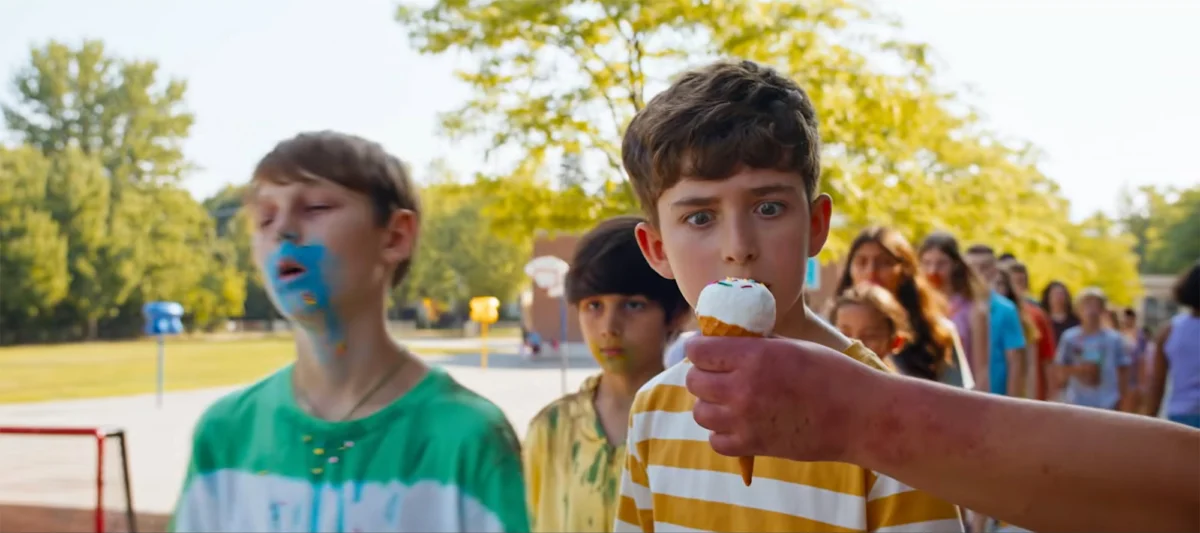
The horror landscape is poised for a chilling disruption with the official red band trailer release for Eli Roth’s highly anticipated feature film, Ice Cream Man, scheduled to hit theaters nationwide on August 7th, 2026. This cinematic venture, which began as a concept reminiscent of Roth’s earlier faux grindhouse trailers, has solidified into a full-length cinematic nightmare promising to redefine suburban terror. The newly unveiled trailer, released on June 3, 2026, by The Horror Section, offers a visceral glimpse into an idyllic community’s descent into madness, catalyzed by a mysterious ice cream man whose frozen treats transform children into homicidal maniacs. The tagline, "They’re not trying to kill us, they’re trying to turn us," hints at a sinister, transformative horror rather than mere slaughter, elevating the narrative beyond conventional slasher tropes.
Eli Roth’s Evolving Legacy in Horror
Eli Roth, a name synonymous with visceral, often controversial horror, continues to push boundaries with Ice Cream Man. Known for his pioneering work in the "torture porn" subgenre with films like Hostel (2005) and Hostel: Part II (2007), Roth first gained widespread attention with his directorial debut, Cabin Fever (2002), a gruesome take on a flesh-eating virus. His filmography, which also includes the divisive cannibal horror The Green Inferno (2013), the psychological thriller Knock Knock (2015), and the action remake Death Wish (2018), showcases a director unafraid to confront extreme violence and explore the darker aspects of human nature.
Roth’s career trajectory has seen him oscillate between direct, gut-wrenching horror and projects that blend genre elements with a more satirical or family-friendly tone, such as The House with a Clock in Its Walls (2018). However, his return to pure, unadulterated horror with Thanksgiving (2023) marked a significant moment. Thanksgiving famously originated as a mock trailer within Quentin Tarantino and Robert Rodriguez’s Grindhouse double feature in 2007. Its transformation into a critically and commercially successful feature film demonstrated Roth’s ability to translate an exaggerated, B-movie concept into a compelling, full-length narrative that resonated with both critics and audiences. This success paved the way for Ice Cream Man, which similarly sprang from the fertile ground of Roth’s creative concepts for short, shocking trailers, including "Don’t Go in That House, B*tch!" and "The Piano Killer." The strategic decision to develop these high-concept, stylized horror vignettes into full features capitalizes on existing fan anticipation and leverages the nostalgic appeal of grindhouse cinema while delivering contemporary horror thrills.
The Genesis of Ice Cream Man: From Concept to Feature
The journey of Ice Cream Man from a fleeting idea to a major theatrical release mirrors the path taken by Thanksgiving, illustrating a new creative model for Roth. The initial buzz surrounding a potential "Ice Cream Man" project had circulated within horror fan communities for some time, fueled by Roth’s known penchant for subverting innocent childhood symbols. The confirmation that this concept would indeed become a full feature was met with considerable excitement, particularly given the success of Thanksgiving.

This approach allows Roth to test extreme premises in a condensed format before committing to a full production, effectively gauging audience interest and refining the core concept. For Ice Cream Man, the shift from a potentially simple premise of a killer ice cream man to a more complex narrative involving children being "turned" into homicidal maniacs suggests a deeper exploration of themes beyond mere slasher violence. This evolution speaks to Roth’s artistic growth, indicating a move towards psychological and body horror elements within his signature ultra-violent framework. The premise taps into a primal fear: the corruption of innocence and the subversion of trust figures, transforming a beloved childhood icon into an agent of terror.
Plot Unveiling and Thematic Undercurrents
The central premise of Ice Cream Man is deceptively simple yet profoundly disturbing: an idyllic suburban town, a picture of American tranquility, is shattered when a mysterious ice cream man begins serving frozen treats that induce a horrifying transformation in children. The seemingly innocent pleasure of an ice cream cone becomes a conduit for a terrifying contagion, turning the town’s youth into murderous automatons. This narrative taps into a rich vein of horror tropes, particularly the subversion of childhood and the domestic sphere. Films like Children of the Corn, The Omen, and The Good Son have long explored the unsettling concept of children as antagonists, but Roth’s approach promises a more visceral and perhaps satirical take.
The trailer emphasizes the chilling statement, "They’re not trying to kill us, they’re trying to turn us." This shifts the horror from external threat to internal corruption, hinting at themes of identity loss, forced conformity, and psychological manipulation. It suggests a form of parasitic horror or a mind-altering substance that robs victims of their autonomy, forcing them to commit unspeakable acts. This could be interpreted as a commentary on societal pressures, consumerism, or even the loss of individuality in modern suburban life, all wrapped in Roth’s signature package of extreme gore and dark humor. The idea of a contagion spread through something as innocuous as ice cream also plays on contemporary anxieties about purity and safety in everyday life. The "idyllic suburban town" setting serves as a perfect canvas for this kind of horror, contrasting surface-level perfection with a horrifying underbelly, a common motif in American genre cinema.
The Ensemble: Ari Millen and Beyond
The titular "Ice Cream Man" is portrayed by Ari Millen, an actor known for his roles in genre productions, particularly his multiple character portrayals in the sci-fi series Orphan Black. Millen’s ability to embody distinct personalities within a single narrative suggests a capacity for the nuanced menace required for a character who transitions from a seemingly benign figure to a harbinger of terror. His casting implies a performance that will likely blend eerie charm with chilling malevolence, making the character both alluring and terrifying.
The supporting cast features a mix of Roth’s regular collaborators and new faces, including Eli Roth himself, Benjamin Byron Davis, Karen Cliche, Dylan Hawco, Sarah Abbott, Shiloh O’Reilly, Charlie Zeltzer, Kiori Mirza Waldman, and Charlie Storey. Roth’s own appearance in his films, often in smaller, impactful roles, adds a meta-textual layer for his fans, further cementing his authorial presence within the work. The presence of "tons of kids" in the cast is crucial to the film’s premise and raises the stakes, promising a disturbing portrayal of corrupted innocence that is central to the film’s horror. Directing child actors in such intense scenarios presents unique challenges, requiring careful ethical considerations and a precise directorial hand to achieve the desired effect without crossing into exploitation.

Creative and Production Insights
The screenplay for Ice Cream Man is credited to Eli Roth and Noah Belson, from a story conceived by Roth. This collaborative writing process suggests a refining of Roth’s initial vision, with Belson potentially contributing to character development or narrative structure to flesh out the high-concept premise into a full-bodied script. Roth’s screenwriting is often characterized by sharp dialogue, escalating tension, and a willingness to explore uncomfortable truths, elements likely to be present in Ice Cream Man.
Behind the scenes, the film boasts a producing team comprising Kate Harrison Karman, Eli Roth, Raj Brinder Singh, and Christopher Woodrow. This collective brings a wealth of experience in independent and genre filmmaking. Karman, with her background in producing various film and television projects, likely provides logistical and creative oversight. Singh and Woodrow, often associated with financing and executive production roles, signify the film’s robust backing and commercial aspirations within the genre market. Their involvement underscores the film’s potential to be both a critical conversation starter and a box office contender in the horror space.
The Unique Soundscape: Snoop Dogg and Brandon Roberts
One of the most intriguing aspects of Ice Cream Man is its musical score, featuring original music by legendary Grammy-nominated rapper/actor Snoop Dogg and Emmy-winning composer Brandon Roberts. Snoop Dogg’s involvement, particularly given his previous collaboration with Roth on the "Don’t Go in That House, Btch!" fake trailer, highlights a fascinating crossover between hip-hop culture and horror. His musical contribution could infuse the film with a unique, perhaps satirical or even unsettling urban edge, blending traditional horror scoring with unexpected sonic elements. This unconventional pairing could create a distinct atmosphere, distinguishing Ice Cream Man* from other genre films.
Brandon Roberts, known for his work on horror and thriller scores like The Grudge (2020) and The Purge series, brings a proven track record in crafting suspenseful and terrifying soundscapes. His expertise in orchestral and electronic scoring will likely anchor the film’s more traditional horror elements, while Snoop Dogg’s input could provide a fresh, perhaps even ironic, layer to the film’s auditory experience. The synergy between these two artists promises a score that is both terrifying and unexpectedly memorable, contributing significantly to the film’s overall impact.
Marketing and Anticipated Release
The release of the red band trailer on June 3, 2026, marks the official commencement of the marketing campaign for Ice Cream Man. Red band trailers, by their nature, are unfiltered and uncensored, signaling that the film will contain explicit violence, gore, and potentially disturbing content. This immediately sets audience expectations for an uncompromising horror experience, aligning with Roth’s reputation. The trailer’s rapid dissemination across social media platforms and horror news outlets generates significant buzz, leveraging Roth’s dedicated fanbase and the inherent curiosity surrounding a project of this nature.

The distribution by The Horror Section, a label dedicated to genre films, further solidifies the film’s targeted marketing strategy. This specialized distributor understands the horror demographic and is adept at reaching audiences eager for new and extreme content. The August 7th, 2026, release date positions Ice Cream Man as a late-summer horror offering. While October is traditionally associated with horror, August has proven to be a successful month for genre releases, often providing less competition from major blockbusters and allowing horror films to capture audiences looking for a thrilling escape before the fall season. This strategic timing could maximize its box office potential and allow it to stand out.
Broader Implications and Genre Resonance
Ice Cream Man arrives at a time when the horror genre is diverse, encompassing everything from elevated psychological thrillers to nostalgic slasher revivals. Roth’s film, with its explicit violence and satirical undertones, appears to lean into the more extreme and audacious end of the spectrum, possibly contributing to a renewed interest in practical effects and unbridled gore, reminiscent of 1980s grindhouse cinema. The success of Thanksgiving demonstrated that audiences are receptive to well-executed, high-concept horror that doesn’t shy away from its B-movie roots.
However, the film’s premise—particularly the depiction of children as homicidal maniacs—is likely to spark considerable debate. While fictional, such portrayals often tread a fine line, demanding careful consideration from filmmakers to avoid gratuitousness and ensure the violence serves the narrative’s thematic goals. Roth, known for his controversial artistic choices, is no stranger to such discussions, and Ice Cream Man is poised to be another conversation starter regarding the limits of cinematic horror. Critics and audiences will undoubtedly scrutinize its execution: whether the "disgusting and depraved" violence serves a purpose beyond shock value, or if it indeed veers into the "entirely too ridiculous" as suggested by early trailer reactions. Regardless of critical consensus, the film’s unique concept, Roth’s directorial vision, and the unconventional creative team ensure that Ice Cream Man will be one of the most talked-about horror releases of 2026, solidifying Eli Roth’s ongoing legacy as a provocateur and innovator in the genre.