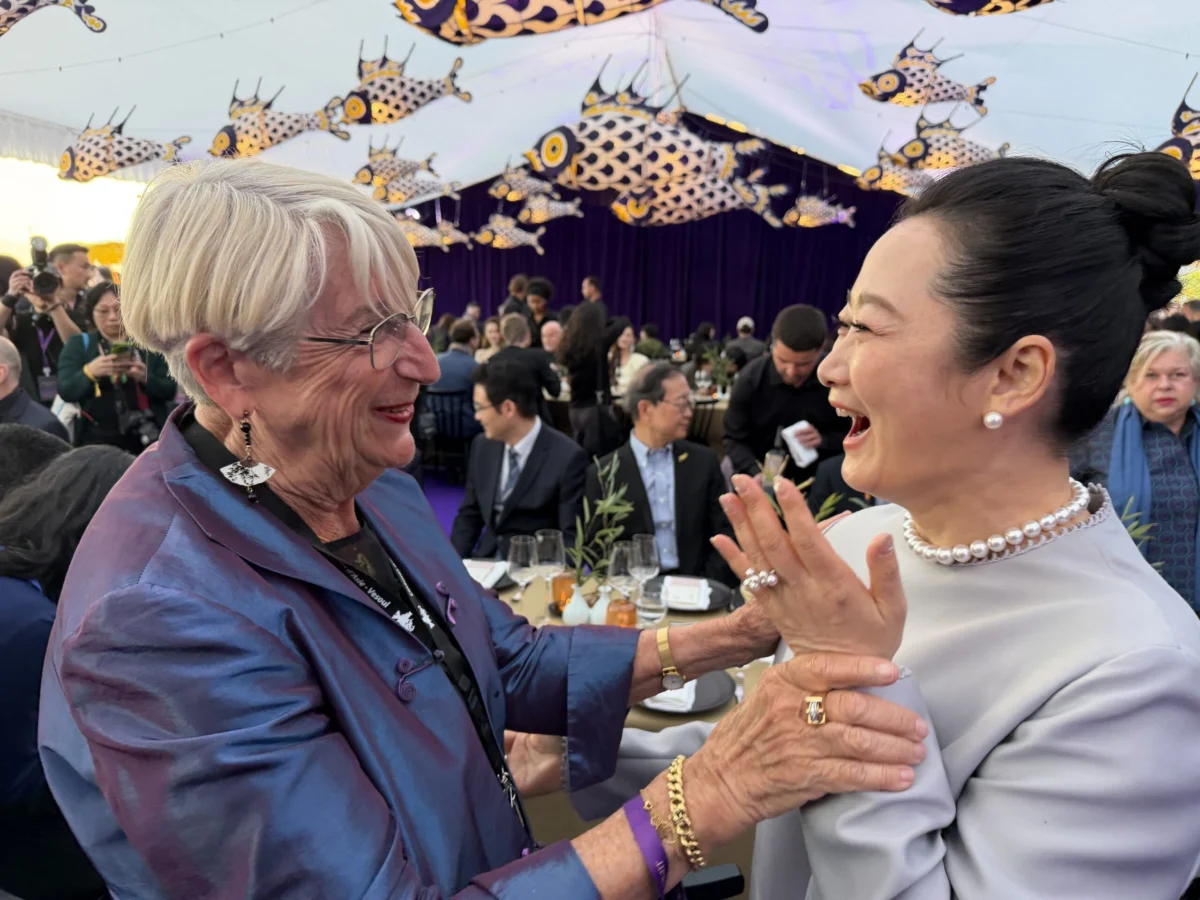
The 79th edition of the Cannes Film Festival, held from May 12th to May 23rd, 2026, concluded with its customary grandeur, solidifying its position as the paramount global hub for cinematic innovation, distribution, and critical discourse. For representatives of the Vesoul International Film Festival of Asian Cinemas (FICAV), the festival served as a vital platform for forging new alliances, nurturing established connections, and scouting compelling cinematic works destined to grace future editions of their own esteemed event. This year’s festival, marked by a robust return to pre-pandemic levels of international participation, underscored the enduring power of cinema to transcend borders and foster cross-cultural understanding.
The Marché du Film: A Global Marketplace for Cinematic Endeavors
The beating heart of the Cannes Film Festival’s commercial and networking activities lies within the Marché du Film, the world’s largest and most influential film market. Over its eleven-day duration, this sprawling marketplace buzzed with activity, drawing thousands of industry professionals from every corner of the globe. Representatives from FICAV, including Jean-Marc Thérouanne, navigated this bustling ecosystem, covering an estimated 12 kilometers daily across the expansive pavilions situated in the International Village. This vibrant hub is strategically divided into two primary zones: Pantiero, hosting delegations from China, Egypt, Iraq, and Palestine, among others, and Riviera, a more extensive area featuring national pavilions from France (Film France/CNC), Georgia, Hong Kong, India, Israel, Japan, the Philippines, Saudi Arabia, Singapore, South Korea, Thailand, and Turkey.
Beyond the International Village, the Marché du Film’s reach extends to the Palais, Riviera, and Lérins areas, all intimately connected to the iconic Palais des Festivals. This architectural marvel houses the festival’s prestigious screening venues, including the Grand Théâtre Lumière, and the Debussy, Buñuel, Bazin, and Agnès Varda theatres, alongside a multitude of smaller screening rooms dedicated to market activities. The sheer scale of the event is staggering, with countless production companies, professional associations, and national film institutions renting booth spaces to showcase their cinematic offerings.
During their extensive exploration, FICAV delegates engaged with a diverse array of organizations, each representing a distinct facet of the global film industry. Notable participants included 1001/Iraqi Cinema, the Arab Cinema Center, China Film, the Cinema Agency of the Republic of Azerbaijan, CJ ENM, Écran Total, Edko Films Ltd, the Federation of Indian Chambers of Commerce and Industry, Finecut, Gaga Corporation, the Indonesia/Jakarta Pavilion, the Iranian Independent Filmmakers Association, the Japan External Trade Organization, Kazakfilm, the Kurdistan Film Commission, Kyrgyzcinema, Le Pacte, Les Films du Losange, Mandarin Motion Pictures Limited, M-Line Distribution, the Mongolian National Film Council, Nikkatsu Corporation, Nippon TV, Parallax Films, Pyramide International, SACD, Shochiku Co. Ltd, Showbox, the Taipei Film Commission, TOEI Company Ltd, Toho Global Inc, and the Tokyo Film Commission.
The primary objectives of these interactions were manifold: to meticulously gather industry-specific documentation, to distribute comprehensive catalogues highlighting past FICAV editions, and to disseminate promotional materials, including postcards and bookmarks, announcing the upcoming 33rd edition of the festival, scheduled to take place from February 2nd to 9th, 2027. This sustained communication effort is deemed indispensable for maintaining and fortifying the crucial ties between FICAV and the international film community, ensuring its continued relevance and visibility.
Strategic Networking: Cultivating Relationships in the Cinematic Sphere
The Marché du Film’s opening nights and subsequent social events provided fertile ground for cultivating vital professional and personal relationships. The 2026 festival saw Japan honored as the Guest of Honor, a designation that undoubtedly amplified the presence and activities of Japanese cinema. The festival calendar was replete with specific national and regional film nights, including Taiwan Film Night, Indonesian Cinema Night, Japan Night, K-Movie Korean Night, Hong Kong Cinema Night, and Beijing Film Festival Night. These were complemented by numerous high-profile dinners and receptions, such as the China Film Night Gala organized by the Wu Tianming Foundation, the Festival Directors’ Dinner, the Screen International / Imagica Grove Film luncheon, the Condor Distribution Grill Party, the CNC Rendez-vous, the Festival Hub Mixer breakfasts, and the El Gouna Festival Happy Hours.
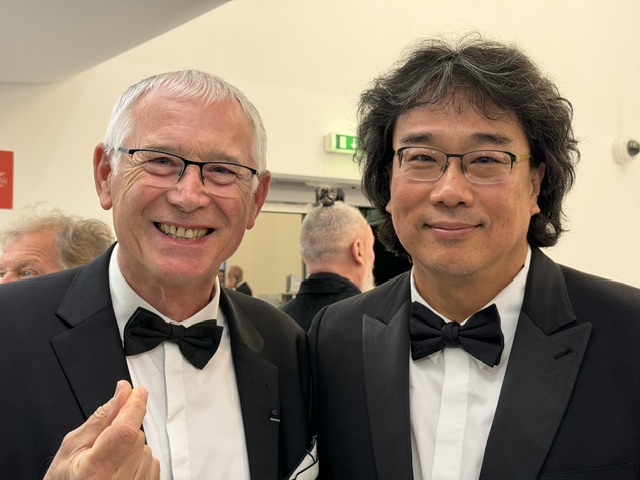
These carefully curated events facilitated invaluable encounters with a spectrum of influential figures in the global film landscape. Among the distinguished personalities met by FICAV representatives were the iconic French actress Isabelle Huppert, Jury President Park Chan-wook, Cannes Film Festival General Delegate Thierry Frémaux, and French Minister of Culture Catherine Pégard.
Furthermore, these gatherings offered a poignant opportunity to reconnect with leading figures of Asian cinema who have previously graced the FICAV festival in Vesoul. This included the celebrated Chinese actress Zhao Tao and her husband, the acclaimed director Jia Zhang-ke. Japanese directors Kore-eda Hirokazu and Koji Fukada, along with Japanese producer Tatsutaka Watanabe, were also present. Watanabe, who produced Akio Fujimoto’s films Along the Sea (recipient of the Vesoul Jury Prize in 2022) and Lost Land (a project initially conceived in Vesoul in 2022), exemplified the enduring collaborative spirit fostered by festivals like FICAV. The cultivation of these relationships, spanning nearly three decades of FICAV’s existence and thirty years of consistent attendance at Cannes, has resulted in an extensive and invaluable network of professional and personal connections.
Working Sessions: Collaborative Forays and Future Initiatives
The Cannes Film Festival serves as an indispensable catalyst for strategic working sessions, enabling FICAV representatives to engage in in-depth discussions with a diverse array of industry stakeholders. These sessions included vital dialogues with producers, directors, fellow festival directors, distributors, institutional representatives, and cultural advisors from French embassies across Asia.
A significant meeting took place at the Egyptian Pavilion, which represented both the Cairo International Film Festival and the El Gouna Film Festival. Approximately fifteen members of NETPAC (Network for the Promotion of Asia-Pacific Cinema) convened, including NETPAC Vice-President Bina Paul and Board of Directors members Martine Thérouanne (European Representative) and Ed Lejano (Executive Committee Member). Discussions focused on charting the future direction of NETPAC, emphasizing its role in fostering and promoting Asian cinema globally.
A particularly moving moment occurred at the Palestine Pavilion with the presentation of a new film school project in Gaza, spearheaded by Palestinian director Rashid Masharawi. Masharawi, who has a notable history with FICAV, having attended both the 25th edition in 2019 and the 32nd edition in 2026, shared his vision for nurturing the next generation of Palestinian filmmakers. This initiative resonated deeply within the context of the 79th Cannes Film Festival, highlighting the power of cinema to inspire and empower even in challenging circumstances.
Hope for future programming emerged from a working meeting between a team of Vietnamese filmmakers, their German producer, and the FICAV delegation. Discussions centered on the potential establishment of a comprehensive Vietnamese cinema retrospective at the 33rd edition of FICAV, a project that promises to illuminate a vital but often underrepresented cinematic tradition.
Similarly, discussions involving an Indian academic and a French producer concerning an upcoming Indian film project underscored potential avenues for FICAV’s meaningful involvement. These collaborations underscore FICAV’s commitment to actively participating in the development and promotion of diverse cinematic voices.
Film Scouting: Navigating the Labyrinth of Screenings
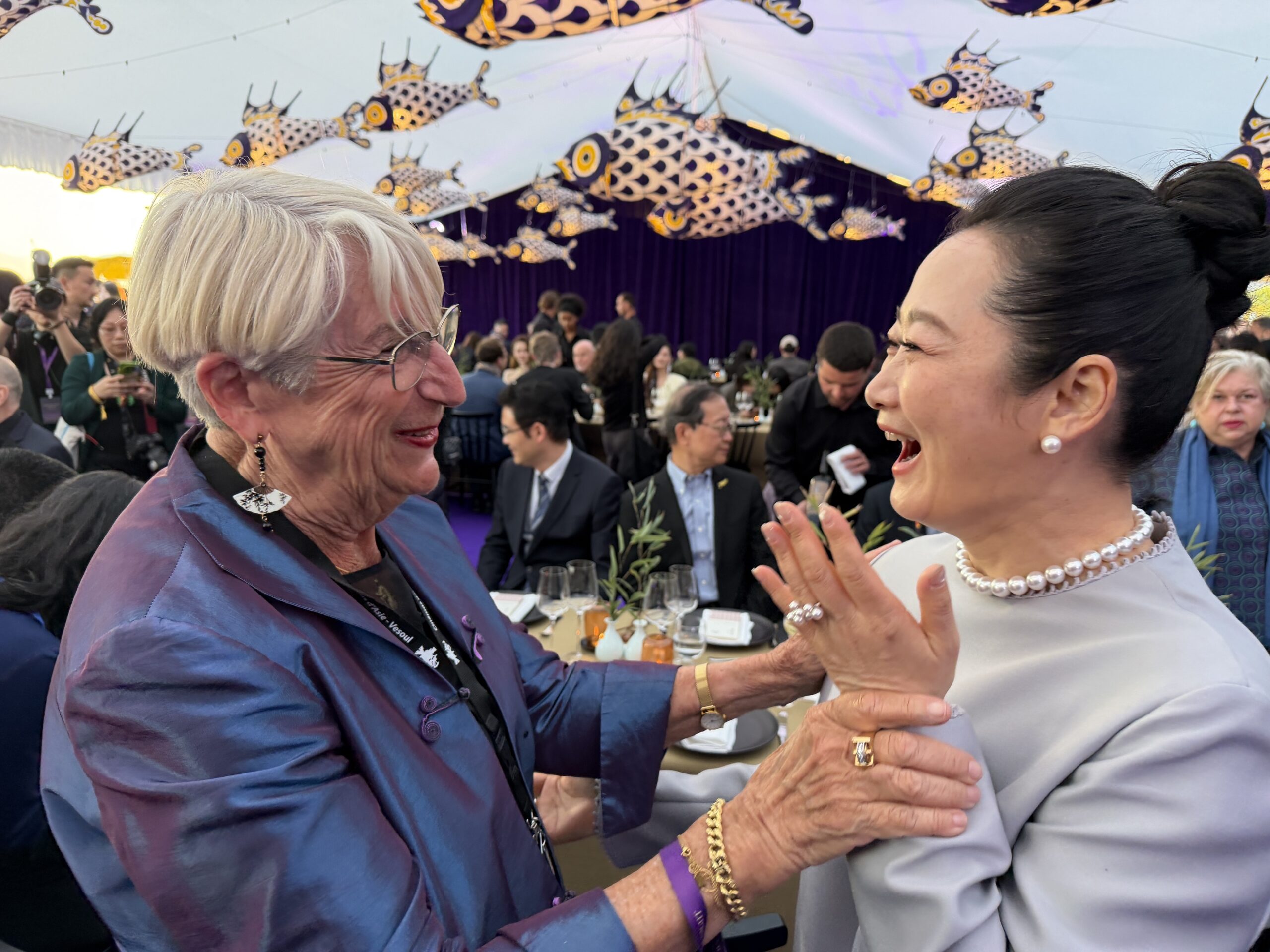
The Cannes Film Festival is renowned for its demanding schedule, often described as a marathon and an obstacle course, requiring participants to expertly juggle an array of meetings, working sessions, networking events, and film screenings. FICAV representatives diligently attended thirty-five screenings, prioritizing films from Asian countries featured across various sections of the Official Selection and the parallel sections. This included films presented in Competition, Out of Competition, Un Certain Regard, Cannes Premiére, Special Screenings, Midnight Screenings, Cannes Classics, Short Films, and La Cinéf, as well as those showcased in the Directors’ Fortnight, Critics’ Week, and ACID programs.
The logistical challenge of securing tickets for these highly sought-after screenings is a well-documented aspect of the Cannes experience. Participants often find themselves rising before dawn, with ticketing websites opening at 7:00 AM for screenings that commence as early as 8:30 AM and extend until 12:30 AM across a multitude of venues. These venues range from the Palais des Festivals and the modern Cineum multiplex to historic cinemas like the Licorne, Studio 13, and Raimu, as well as downtown cinemas such as the Olympia and Arcades. The competition for tickets is fierce, with over 40,000 accredited professionals vying for limited seats, particularly in prestigious auditoriums like the Grand Théâtre Lumière, which accommodates approximately 2,200 spectators, implying a mere 5% chance of securing a ticket for a premiere screening.
Admission is further stratified by professional category, with festival directors classified under "Cultural Institutions." Each accreditation category—ranging from producers, exhibitors, and screenwriters to technicians, actors, makeup artists, editors, programmers, distributors, costume designers, projectionists, directors, sales agents, and critics—receives a specific ticket allocation, managed through a complex and often perceived as arbitrary distribution system. For those who fail to secure tickets through the initial allocation, last-minute opportunities arise via the online Last Minute Ticket Office or by joining the physical "Last Minute" queue, often hours before the screening, with no guarantee of admission. This rigorous process underscores the principle that access to cinematic culture at Cannes demands unwavering patience, perseverance, and determination.
The Opening Ceremony and Juried Films: A Glimpse into Cinematic Excellence
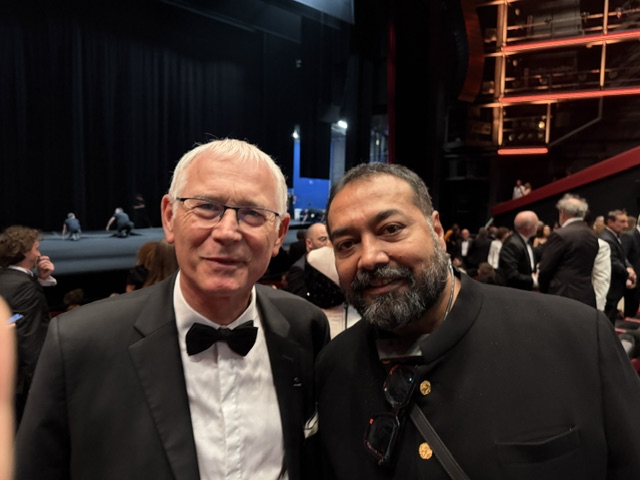
The privilege of attending the Opening Ceremony offered a spectacle of elegance, highlighted by the masterful hosting of actress Eye Haïdara. The intermission provided an unparalleled networking opportunity, bringing together three Palme d’Or winners: Jacques Audiard (Dheepan, 2015), Kore-eda Hirokazu (Shoplifters, 2018), and Bong Joon-ho (Parasite, 2019), alongside other celebrated filmmakers such as Indian director Anurag Kashyap (Gangs of Wasseypur). The evening culminated with the world premiere of Pierre Salvadori’s Electric Venus, followed by an impromptu street interview session with a television crew, underscoring the pervasive media attention surrounding the festival.
The Competition section presented a rich tapestry of cinematic visions. Asghar Farhadi’s Parallel Stories, boasting an ensemble cast including Isabelle Huppert, Virginie Efira, Vincent Cassel, Pierre Niney, Adam Bessa, and Catherine Deneuve, was noted for its stellar performances, though the abundance of star power occasionally overshadowed individual character development. Charline Bourgeois-Tacquet’s A Woman’s Life, featuring Léa Drucker, Mélanie Thierry, Charles Berling, and Marie-Christine Barrault, was commended for its accomplished cast. Valeska Grisebach’s The Dreamed Adventure, a lengthy film shot in real-time, garnered the Jury Prize.
László Nemes’s Moulin offered a powerful portrayal of Jean Moulin by Gilles Lellouche, complemented by Lars Eidinger’s chilling performance as Klaus Barbie, exploring the brutal realities of the French Resistance. Koji Fukada, a familiar presence at FICAV, presented A Few Days in Nagi, a thoughtful examination of artistic creation and the complex relationship between an artist and their muse, with a sensitive portrayal of a sapphic relationship. Paweł Pawlikowski’s Fatherland, starring Sandra Hüller and Hanns Zischler, was recognized for its concise cinematic achievement and earned the Best Director Award. Emmanuel Marre’s Our Salvation, a historical reconstruction set during the Vichy regime, was awarded the Best Screenplay Prize. Javier Ambrossi and Javier Calvo’s La Bola Negra revisited the tragic life of Federico García Lorca, weaving a narrative across multiple timelines and earning a Best Director Award.
Cristian Mungiu’s Fjord secured the prestigious Palme d’Or, marking his second win at Cannes. The film’s exploration of the tension between traditional Romanian family values and Norwegian educational policies was noted for its subtlety and unsettling impact. Kore-eda Hirokazu’s Sheep in the Box posed poignant questions about artificial companionship for grieving parents. Lukas Dhont’s Coward, exploring a gay couple’s role in maintaining troop morale during WWI, saw its lead actors Emmanuel Macchia and Valentin Campagne awarded Best Actor. Andrey Zvyagintsev’s Minotaur, loosely inspired by The Unfaithful Wife and set against Russia’s geopolitical actions, received the Grand Prix, with its commentary on the distortion of language resonating with Orwellian themes. Ryūsuke Hamaguchi’s Sudden, an epic exploration of population aging and the humanization of care facilities, earned its leading actresses, including Tao Okamoto and Virginie Efira, a shared Best Actress Award, lauded for its profound humanity and intelligent screenplay. Marie Kreutzer’s Gentle Monster depicted the disintegration of a couple following revelations of the husband’s involvement in child sexual abuse material trafficking. Na Hong-jin’s Hope, a genre-bending blend of monster movie, science fiction, and action, delighted audiences with its homages to cinematic classics. James Gray’s Paper Tiger featured Adam Driver in a compelling crime drama, while Ira Sachs’s The Man I Love delved into the anxieties of a gay cabaret performer in post-1968 America.
Un Certain Regard and Parallel Sections: Diverse Cinematic Voices
The Un Certain Regard section presented a range of compelling narratives. Viesturs Kairišs’s Ulya, shot in striking black and white, chronicled the career of basketball player Uļjana Semjonova, offering a glimpse into life in Latvia under Soviet rule. Rakan Mayasi’s Yesterday the Eye Didn’t Sleep examined Bedouin customs and the impact of arranged marriages on women’s desires. Toshikazu Nishigaya’s All the Lovers in the Night, an adaptation of Mieko Kawakami’s novel, delicately explored loneliness and intimacy in contemporary Japan. Abinash Bikram Shah’s Elephants in the Mist made history as the first Nepalese feature film selected for Cannes’ Official Selection, earning the Un Certain Regard Jury Prize for its unique portrayal of the Kinnar community. Konstantina Kotzamani’s Titanic Ocean offered a Western perspective on Japan through the lens of professional mermaid schools. Judith Godrèche’s A Girl’s Story, an adaptation of Annie Ernaux’s novel, unflinchingly depicted a traumatic sexual assault, with Maïwenn Barthélemy receiving recognition for her performance.
In the Special Screenings, Rostislav Kyrpychenko’s Vesna offered a harrowing account of the ongoing war in Ukraine, depicting the brutal realities of Russian occupation forces and the prevention of civilian burials. The Midnight Screenings featured Yeon Sang-ho’s Colony – Gun-che, a horror film that expertly blended suspense, social commentary, and supernatural terror.
Cannes Premiére showcased Volker Schlöndorff’s Heimsuchung – Klara’s Forest, a sweeping historical fresco of German history spanning a century. Kiyoshi Kurosawa’s The Samurai and the Prisoner paid tribute to the tradition of Japanese historical cinema. The Critics’ Week presented Sara Ishaq’s The Station, an allegory for the Yemeni war, and Zou Jing’s A Girl Unknown (Wu Ming Nü Hai), which sensitively explored China’s former one-child policy and adoption, earning the FIPRESCI Prize for parallel sections.
Directors’ Fortnight included July Jung’s Dora, which was found to be disappointing due to narrative excesses. Kohei Kadowaki’s animated feature We Are Aliens stood out for its distinctive visual style. Sompot Chidgasornpongse’s 9 Temples to Heaven offered a road movie immersed in Buddhist spirituality. The ACID section featured Karim Lakzadeh’s Living Twice, Dying Thrice, an offbeat dramatic comedy offering social commentary through the absurd clandestine existence of three miners. Jia Zhang-ke’s Torino Shadow (Du Ling Zhi Ying), starring Zhao Tao, was lauded for its analytical precision and observation of contemporary Chinese society.
Awards and Encounters: A Fitting Conclusion
The day of the festival’s closing ceremony, May 23rd, 2026, saw FICAV representatives attend the presentation of the Ecumenical Jury Prize and the FIPRESCI Awards. They had the opportunity to congratulate Cristian Mungiu, who received two prestigious critics’ awards shortly before being awarded the Palme d’Or for Fjord. They also met the wife of Chinese director Wang Bing, producer of A Girl Unknown, recipient of the FIPRESCI Prize. A particularly heartwarming encounter was with actress Éloïse Valli, originally from Vesoul, reinforcing the sense of a connected global community.
Conclusion: Cannes as a Catalyst for Asian Cinema
The 79th Cannes Film Festival once again affirmed its indispensable role in shaping the international film industry. For the Vesoul International Film Festival of Asian Cinemas, the event provided an unparalleled opportunity to solidify existing partnerships, forge new collaborations, identify promising programming opportunities, and discover films that will undoubtedly enrich its future editions. Through a dynamic interplay of meetings, working sessions, networking events, and an extensive array of film screenings, Cannes continues to serve as a singular crucible where world cinema is conceptualized, debated, promoted, and celebrated, with FICAV playing a vital role in bringing the richness of Asian cinema to a global audience.