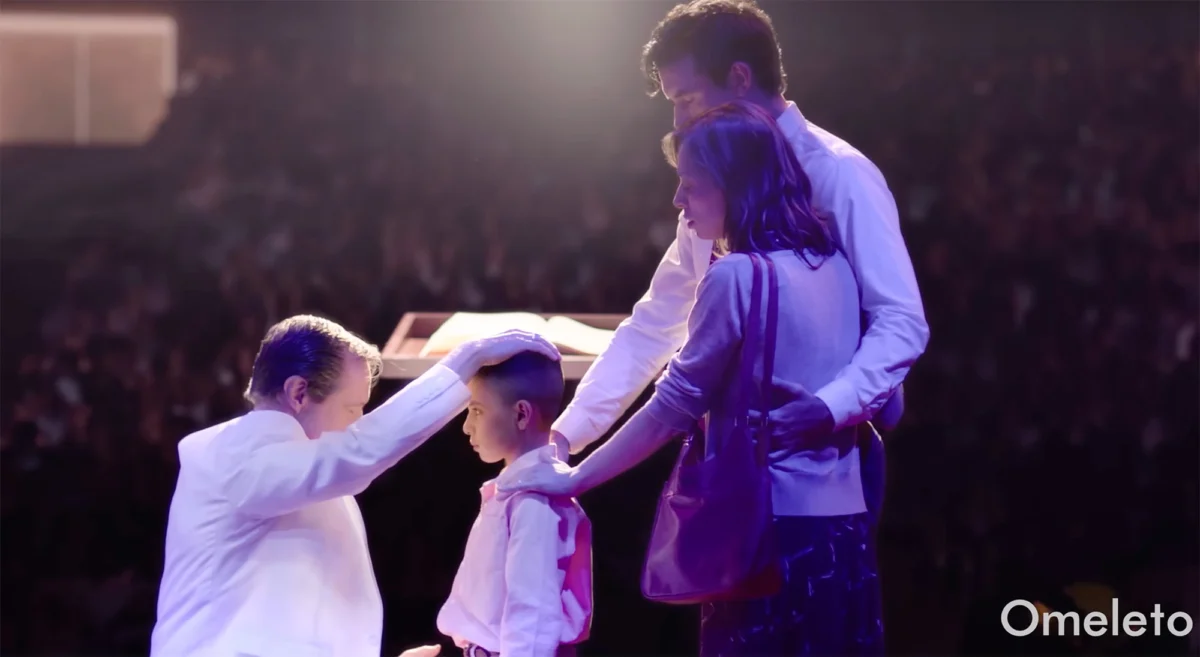
The highly anticipated short film Healing Hands, helmed by independent filmmaker Jordan Ochel, has officially debuted online via Omeleto, a prominent platform for short film distribution. This release on May 28, 2026, follows a successful run on the international film festival circuit over the past year, making its poignant narrative accessible to a global audience. The 14-minute film delves into the deeply personal journey of Jonah, a young deaf boy grappling with his identity and the societal pressures to conform, ultimately finding a new understanding of what it means to be "complete." This sensitive and empathetic portrayal, starring Alexander Campos III as Jonah, is already garnering significant attention for its nuanced approach to d/Deafness, drawing comparisons to acclaimed works like the Oscar-winning CODA and the critically lauded Sound of Metal.
The Genesis of "Healing Hands": A Personal Narrative
The emotional core of Healing Hands is rooted in the writer and director Jordan Ochel’s own personal experiences, a detail that imbues the film with an authentic and deeply resonant quality. Ochel, who developed this project as his graduate thesis film at Baylor University, has articulated a clear mission for the production: to challenge and ultimately dismantle stereotypes surrounding d/Deafness. This personal connection to the subject matter is evident in the film’s careful crafting of Jonah’s world and his internal struggles. The narrative explores the delicate balance between a child’s inherent desire for acceptance from his parents and the often-misguided efforts of those parents to "fix" what they perceive as an imperfection.
Baylor University’s film program is renowned for fostering independent voices and encouraging student filmmakers to tackle complex social issues through their art. Healing Hands stands as a testament to this ethos, providing a platform for Ochel to transform his lived experiences into a universally relatable story of identity, family, and self-discovery. The academic framework allowed for a rigorous development process, from scriptwriting to post-production, ensuring a polished and impactful final product.
The production of Healing Hands was partially supported by a successful crowdfunding campaign on Indiegogo. This grassroots funding initiative not only provided crucial financial resources but also cultivated an early community of supporters who believed in the film’s message and its potential impact. Crowdfunding platforms have become vital lifelines for independent filmmakers, enabling them to bypass traditional studio funding models and maintain creative control over their projects. The success of the Indiegogo campaign for Healing Hands underscores the public’s growing appetite for diverse and authentic storytelling, particularly narratives that shed light on underrepresented communities.

A Deeper Look into Jonah’s World: Synopsis and Thematic Resonance
The film introduces Jonah, a young boy who relies on hearing aids to navigate his auditory world. However, as his hearing aids become less effective, his academic performance suffers, prompting his teacher to recommend that he begin learning sign language. This suggestion, while practical, introduces a new layer of complexity into Jonah’s life and his family dynamics. His parents, driven by love and a fervent hope for complete healing, embark on an alternative path, taking Jonah to a church for a faith-based healing session. This moment becomes a pivotal point in Jonah’s journey. As he undergoes the spiritual ritual, he experiences a profound internal shift, realizing that his understanding of "completeness" extends far beyond his auditory capabilities. The iconic line, "I wanted to make you and Mommy happy with me!" encapsulates the emotional burden carried by many children who feel pressure to meet parental expectations, especially when those expectations are tied to a perceived physical "defect."
Healing Hands masterfully navigates several intricate themes. It explores the tension between denial and acceptance, not only within Jonah but also within his family. His parents’ desire for a miraculous cure, while born of affection, initially prevents them from fully embracing Jonah’s d/Deaf identity. The film subtly critiques the societal pressure to "cure" disabilities, advocating instead for acceptance and adaptation. It highlights the importance of communication and understanding within a family, particularly when confronted with life-altering challenges. The story is a tender portrait of a little boy coming to terms with himself, demonstrating that true completeness is an internal state, independent of external physical conditions.
Cinematographer Davin Fitch, under Ochel’s direction, employs a "luminous, composed visual naturalism" that immerses the audience in Jonah’s subjective experience. The camera work is sensitive and focused, allowing viewers to perceive the world through Jonah’s eyes, even in moments of auditory disconnect. This visual language, combined with Adrian Walther’s original musical score, creates an atmosphere of empathy and introspection, guiding the audience through Jonah’s emotional landscape without resorting to overly dramatic or sentimental tropes. The film’s respect for Jonah and his family’s approach to his journey from denial to acceptance is palpable, fostering a sense of genuine connection and understanding.
The Craft Behind the Compassion: Production Details
The successful execution of Healing Hands is a testament to the collaborative spirit of independent filmmaking. Beyond Jordan Ochel’s vision, the film benefited from a dedicated production team. Rachel Jobin and Andy Racoti served as producers, overseeing the logistical and creative aspects of bringing the script to life. Their roles were critical in managing the budget, coordinating schedules, and ensuring that Ochel’s artistic vision was realized within practical constraints.
Davin Fitch’s cinematography is a standout element, contributing significantly to the film’s immersive quality. His use of natural light and thoughtful framing choices underscore the film’s commitment to realism and emotional honesty. The visual storytelling complements the narrative, conveying Jonah’s internal world and the nuances of his family’s interactions. The original music composed by Adrian Walther further enhances the film’s emotional depth, providing an auditory layer that resonates with the story’s themes of hope, struggle, and eventual peace.

The casting of Alexander Campos III as Jonah was paramount. His performance is described as authentic and deeply moving, capturing the vulnerability and resilience of a child navigating complex emotions. The choice of an actor who could genuinely convey the experience of hearing loss and the journey toward self-acceptance was crucial for maintaining the film’s integrity and its mission to accurately represent the d/Deaf experience. The combined efforts of this talented crew and cast underscore the high production value achieved despite the independent nature of the project.
Broader Context: The Evolving Landscape of d/Deaf Representation in Media
Healing Hands arrives at a pivotal moment in media representation for the d/Deaf community. For decades, portrayals of deaf characters in film and television were often stereotypical, inaccurate, or entirely absent. However, recent years have witnessed a significant shift towards more authentic and nuanced storytelling, with Healing Hands contributing to this vital movement.
The success of films like CODA (2021), which won the Academy Award for Best Picture, brought the d/Deaf experience to mainstream audiences with unprecedented visibility. CODA centered on Ruby Rossi, the only hearing member of a deaf family, highlighting the unique challenges and joys of growing up in a culturally Deaf household. Similarly, Sound of Metal (2019), starring Riz Ahmed as a drummer experiencing sudden hearing loss, offered a raw and immersive look at the psychological and emotional impact of acquiring deafness, earning critical acclaim and two Academy Awards.
Beyond narrative features, documentaries like Deaf President Now! (2025) shed light on historical milestones in the Deaf community’s fight for recognition and self-determination. The "Deaf President Now!" movement in 1988 at Gallaudet University, the world’s only university primarily for deaf and hard-of-hearing students, was a watershed moment that demanded the appointment of a deaf president, challenging systemic hearing supremacy. The documentary serves as a powerful reminder of the community’s activism and resilience.
These films collectively underscore a crucial paradigm shift: the move away from simply depicting deaf characters towards genuinely exploring d/Deaf culture, language (like American Sign Language), and the diverse experiences within the d/Deaf community. According to the World Health Organization, over 5% of the world’s population – or 430 million people – have disabling hearing loss, yet their stories have long been marginalized in mainstream media. Authentic representation is not merely about visibility; it is about fostering empathy, challenging misconceptions, and providing role models for individuals who rarely see themselves reflected on screen. Healing Hands, with its focus on a child’s internal journey and a family’s evolving understanding, further enriches this expanding canon of d/Deaf cinema.

Impact and Implications: A Call for Empathy
Jordan Ochel’s stated goal for Healing Hands — "to change hearts and minds in a way that erases stereotypes about d/Deafness" — is profoundly significant. By offering an intimate glimpse into Jonah’s world, the film directly confronts common misconceptions. It moves beyond the simplistic view of hearing loss as merely a medical condition, instead framing it as an integral part of an individual’s identity and a doorway to a distinct cultural experience. The film implicitly advocates for a more inclusive society where d/Deaf individuals are not seen as needing to be "fixed" but rather as complete and valuable members of the community, deserving of understanding and accessible communication.
The online debut of Healing Hands on Omeleto marks a critical step in achieving this broader impact. Omeleto, with its vast global reach, ensures that the film can educate and inspire audiences far beyond the traditional festival circuit. This accessibility is crucial for independent films tackling important social issues, allowing their messages to resonate with a diverse viewership. The conversation initiated by the film online, as indicated by early reactions and engagement, points to its potential to spark meaningful dialogue about disability acceptance, family dynamics, and the power of self-love.
The success of Healing Hands also carries broader implications for emerging filmmakers. It demonstrates that compelling, character-driven narratives, particularly those drawn from personal experience and focused on underrepresented communities, can find a significant audience and make a tangible difference. It reinforces the value of short films as a powerful medium for storytelling, serving as both a proving ground for new talent and a platform for urgent messages that might not otherwise reach a wide audience through feature-length productions.
In conclusion, Healing Hands is more than just a short film; it is a meticulously crafted, emotionally resonant piece of cinema that contributes significantly to the ongoing conversation about d/Deaf representation and acceptance. Through Jonah’s tender journey, Jordan Ochel invites viewers to challenge their preconceptions, embrace empathy, and reconsider what it truly means for an individual to be "complete." As it now reaches a global audience, Healing Hands stands as a poignant reminder of the power of storytelling to foster understanding and inspire positive societal change.