

Film Movement is set to release Bouchra, an eagerly anticipated experimental documentary that blends live-action and highly stylized animation, in select U.S. theaters on June 26th, 2026. This unique cinematic offering, co-directed by acclaimed visual artists Meriem Bennani and Orian Barki, first captivated audiences and critics alike during its premiere at the 2025 Toronto International Film Festival (TIFF) and New York Film Festival (NYFF), where it garnered significant praise for its innovative approach to storytelling and profound thematic depth.
A New Voice in Cinema Emerges with "Bouchra"
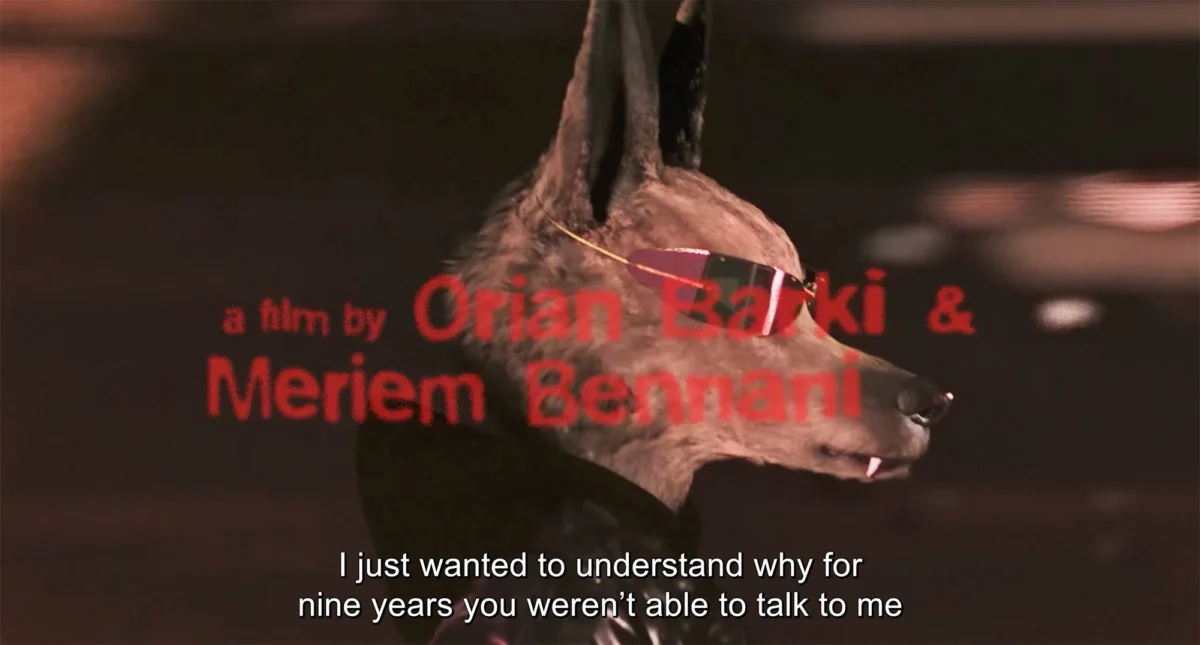
Bouchra is a meta-narrative film that centers on a Moroccan filmmaker, also named Bouchra, as she grapples with writer’s block while attempting to create an autobiographical work. The film reflexively intertwines the protagonist’s real-life experiences in New York City with those of her fictional double, who is strikingly rendered as a queer Moroccan jackal inhabiting a city populated by anthropomorphic creatures. This imaginative premise sets the stage for a deeply personal exploration of identity, artistic struggle, and the complexities of the immigrant experience. The film’s official trailer, unveiled by Film Movement, offers a glimpse into its captivating visual style and emotionally resonant narrative, hinting at the profound question posed within: "Why all these years we were silent?"
The core narrative sees the animated Bouchra, a queer Moroccan jackal navigating life in New York City, confronting her creative stagnation. This period of artistic block coincides with a series of challenging yet crucial phone conversations with her mother, who resides in Casablanca. These dialogues become a pivotal influence on her artistic project, prompting an emotional reckoning with her roots, her present identity, and her path to self-expression. The film thus explores the delicate balance of an artist’s life in the United States, the inherent rift in identity between two distinct cultural homes, and the interwoven tapestry of friendships and romantic relationships that shape one’s journey.
Unpacking the Narrative: Meta-Storytelling and Allegory
At the heart of Bouchra‘s innovative structure is its meta-narrative approach, where the act of filmmaking itself becomes a central theme. By portraying a filmmaker struggling to create an autobiographical work, Bennani and Barki delve into the inherent challenges and vulnerabilities of artistic creation, particularly when the subject matter is deeply personal. This film-within-a-film device allows for layers of introspection, blurring the lines between the creator and the created, and inviting audiences to reflect on the nature of truth and representation in art. The protagonist’s journey through writer’s block is not merely a plot point but a symbolic representation of the broader struggles faced by artists, especially those from marginalized communities.

The choice to depict Bouchra as a "queer Moroccan jackal" in an anthropomorphic New York City is a powerful allegorical device. In many cultures, the jackal is a creature associated with cunning, adaptability, and navigating liminal spaces—qualities that resonate deeply with the immigrant experience. By embodying the protagonist in an animal form, the filmmakers transcend conventional storytelling, offering a fresh perspective on the challenges of cultural assimilation, otherness, and the search for belonging. The "queer" aspect further enriches this allegory, allowing for an exploration of LGBTQ+ identity within the context of immigration and cultural heritage, navigating both societal expectations and personal desires. This symbolic representation not only makes the film visually distinctive but also enables a more nuanced and universally relatable exploration of complex themes that might be less accessible through a purely realistic lens. The "nearly photorealistic and hyper-expressive animations" promise a visual feast that grounds these allegorical figures in a tangible, albeit fantastical, reality, enhancing their emotional impact.
Meriem Bennani and Orian Barki: Artists Forging New Paths
Bouchra marks the feature film debut for both Meriem Bennani and Orian Barki, who are celebrated visual artists known for their distinct and boundary-pushing work. Their collaborative spirit and shared artistic vision are evident in the film’s ambitious scope and unique aesthetic. Bennani, a Moroccan-born, New York-based artist, has garnered international acclaim for her captivating video art, sculptures, and installations that often blend digital animation, pop culture references, and documentary elements. Her work frequently explores themes of identity, consumerism, technology, and cultural displacement with a signature blend of humor, surrealism, and critical insight. Exhibitions at prestigious institutions like MoMA PS1, the Whitney Biennial, and the Palais de Tokyo have established her as a significant voice in contemporary art, making her transition into feature filmmaking a highly anticipated event. Her previous works often employ vibrant, sometimes chaotic, visual languages to dissect the complexities of modern life, which likely informs Bouchra‘s "hyper-expressive animations."
Orian Barki, an Israeli-American artist and filmmaker, also brings a strong background in visual storytelling and experimental media. While specific details of her earlier solo projects might be less widely publicized than Bennani’s, her collaborative history with Bennani and other artists suggests a shared sensibility for innovative narratives and challenging conventional forms. Their partnership on Bouchra represents a synergy of artistic talents, leveraging their individual strengths in visual art and storytelling to craft a cinematic experience that defies easy categorization. The film’s description as possessing "lived-in granularity" and an "unmistakable visual style" points to the meticulous craftsmanship and artistic integrity that both directors are known for in their respective practices. Their collective entry into feature filmmaking signals a growing trend of visual artists expanding their practice into the cinematic realm, bringing with them fresh perspectives, experimental techniques, and a profound understanding of visual language that often revitalizes traditional filmmaking conventions.
Thematic Resonance: Immigration, Queer Identity, and the Creative Struggle
The narrative of Bouchra is deeply imbued with thematic resonance, particularly concerning the immigrant experience, queer identity, and the universal struggle inherent in artistic creation. The protagonist’s journey as a Moroccan artist living in New York City encapsulates the multifaceted challenges faced by immigrants: navigating a new cultural landscape, contending with language barriers, grappling with financial precarity in a demanding artistic field, and forging a unique identity that bridges two distinct worlds. The film promises an intimate portrayal of the emotional and psychological toll of displacement, as well as the resilience required to thrive in a foreign land while maintaining ties to one’s heritage. The original article hints at "how hard it is to create art while being an immigrant," a theme that Bouchra is poised to explore with nuance and authenticity.
Moreover, the inclusion of "queer Moroccan jackal" as the main character provides a powerful platform for exploring queer identity within a cross-cultural context. This allegorical choice allows the filmmakers to address themes of acceptance, self-discovery, and the navigation of societal expectations, both within immigrant communities and the broader Western context. The film’s description as "surprisingly sexy" suggests an honest and perhaps unconventional portrayal of desire and relationships, further enriching its exploration of identity. The "difficult yet overdue phone calls with her mother in Casablanca" serve as a crucial narrative device, highlighting the intergenerational and cross-cultural communication challenges that often arise when children pursue unconventional paths or adopt lifestyles that diverge from traditional family values. These conversations are likely to explore themes of expectation, disappointment, love, and the enduring bonds of family across geographical and ideological divides. This dialogue is central to Bouchra’s emotional reckoning and her eventual path to self-expression, underscoring the idea that understanding one’s past and heritage is integral to forging a future.

Festival Acclaim and Critical Reception
Bouchra made a significant splash during its world premiere at the 2025 Toronto International Film Festival (TIFF) and subsequently at the New York Film Festival (NYFF) later that fall. These prestigious festivals are renowned for showcasing groundbreaking international cinema and are critical launchpads for independent films seeking broader distribution and critical recognition. The film’s inclusion in such esteemed lineups immediately signaled its artistic merit and potential to resonate with cinephiles and critics alike.
Early reviews and festival synopses were overwhelmingly positive, highlighting the film’s audacious vision and unique blend of genres. The New York Film Festival’s official description lauded Bouchra as a "singular portrait effortlessly towing the line between documentary, visual art and resonant family drama." This praise underscores the film’s ability to seamlessly integrate diverse cinematic forms without sacrificing narrative cohesion or emotional impact. Critics noted its "lived-in granularity and unmistakable visual style," suggesting a film that is both meticulously crafted and deeply authentic in its portrayal of human (or anthropomorphic) experience. Furthermore, the film was described as "Deeply felt, surprisingly sexy and formally adventurous," indicating its willingness to push boundaries not only in narrative structure but also in its emotional and sensual landscape. The consensus among festival attendees and early reviewers was that Bennani and Barki’s distinctive debut "forges new ground," positioning Bouchra as a significant work that challenges conventional notions of documentary and animated filmmaking. This critical reception is crucial for an experimental film, as it helps build anticipation and legitimizes its unique artistic approach for a wider audience.
Production and Distribution: Bringing "Bouchra" to Audiences
The production of Bouchra involved key players dedicated to supporting innovative artistic endeavors. Produced by Filippo Fante and Fondazione Prada, the film benefits from a backing that is often associated with high-concept and artistically ambitious projects. Fondazione Prada, an institution dedicated to contemporary art and culture, frequently supports experimental exhibitions, films, and initiatives that push creative boundaries. Their involvement with Bouchra underscores the film’s positioning as a significant work of visual art as much as a cinematic feature, providing the necessary resources and creative freedom for Bennani and Barki to realize their ambitious vision. This institutional support is vital for independent and experimental films, which often struggle to secure funding in a commercially driven industry.
Film Movement, a leading independent film distributor in North America, has taken on the task of bringing Bouchra to U.S. audiences, scheduling its release for June 26th, 2026. Known for its curated selection of award-winning independent films, foreign art house titles, and classic cinema, Film Movement has a proven track record of championing films that might be considered niche or avant-garde by mainstream standards. Their commitment to Bouchra suggests confidence in its artistic quality and its potential to resonate with a discerning audience. The strategic summer release places Bouchra within a season that often sees a diverse array of independent films competing for critical attention, positioning it as a standout option for "die-hard cinephiles" seeking thought-provoking and formally adventurous cinema. Film Movement’s marketing strategy will likely focus on the film’s unique blend of animation and documentary, its strong festival pedigree, and its profound thematic explorations to attract its target demographic, which values artistic innovation and narrative depth over mainstream appeal.
Broader Implications for Contemporary Cinema
Bouchra stands as a testament to the evolving landscape of contemporary cinema, particularly in its audacious blurring of genre lines. By seamlessly integrating elements of documentary, animation, and experimental art film, it challenges traditional definitions and expands the possibilities of cinematic expression. This hybridization is indicative of a broader trend in filmmaking where creators are increasingly unafraid to transcend conventional categories to tell their stories in the most impactful way. Bouchra‘s success at major festivals suggests that audiences and critics are receptive to these innovative approaches, fostering an environment where artistic risk-taking is rewarded.

Furthermore, the film’s focus on a "queer Moroccan jackal" as its protagonist makes a significant contribution to diverse storytelling and representation in cinema. It offers a fresh and allegorical lens through which to explore complex identities—immigrant, queer, and artist—that are often underrepresented or stereotyped in mainstream media. By presenting these experiences through an imaginative, anthropomorphic framework, Bouchra invites a unique form of empathy and understanding, potentially reaching audiences who might otherwise not engage with such themes. This innovative approach to representation not only diversifies the narratives available but also enriches the cinematic tapestry with unique cultural and personal perspectives.
The artistic innovation demonstrated by Bennani and Barki’s debut feature also highlights the ongoing dialogue between the art world and the film industry. As more visual artists transition into feature filmmaking, they bring with them a distinct aesthetic sensibility, a deep understanding of visual language, and a willingness to experiment with form and content. This cross-pollination enriches both fields, pushing the boundaries of what is considered cinematic and challenging viewers to engage with films on multiple intellectual and emotional levels. Bouchra‘s legacy may well be in its capacity to inspire a new generation of filmmakers to embrace interdisciplinary approaches and to harness the power of allegory and experimental techniques to explore the most profound aspects of the human condition. Its upcoming release is not just an event for independent cinema but a potential marker for the future direction of documentary and animated storytelling.