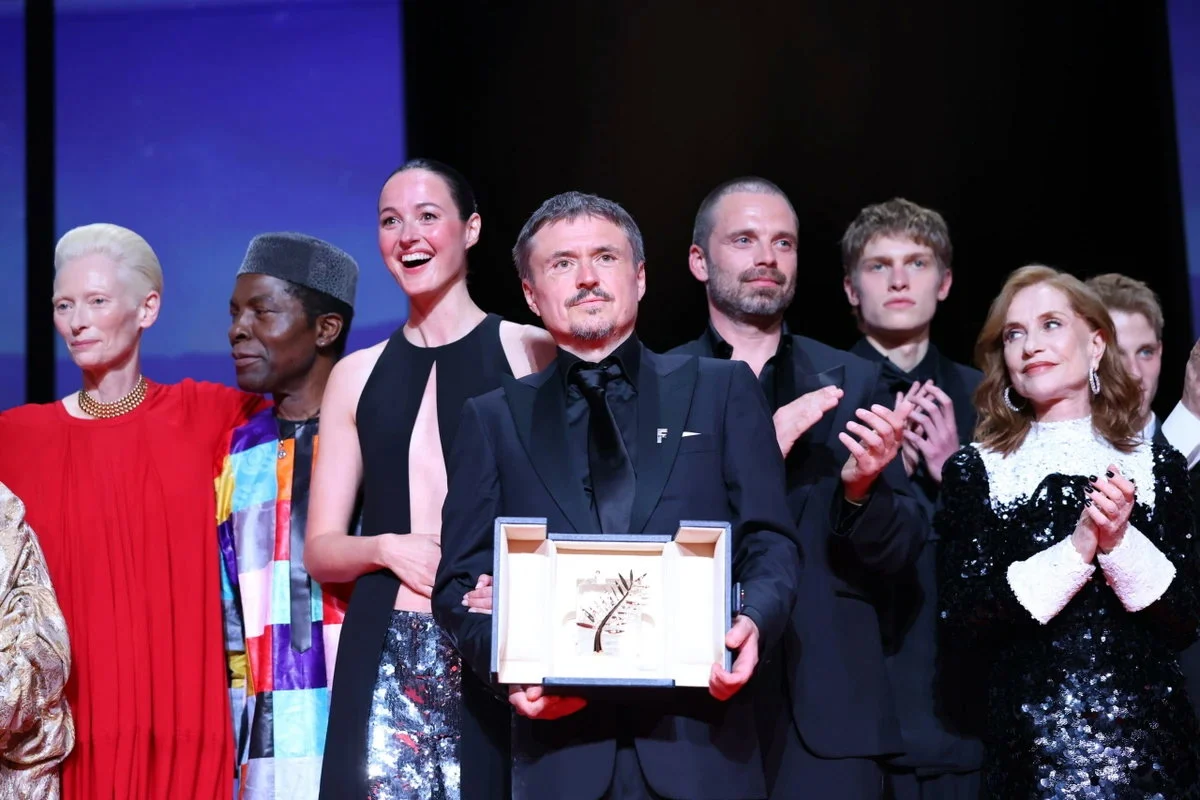
The 79th annual Cannes Film Festival concluded on May 23, 2026, with Romanian auteur Cristian Mungiu making history by securing his second coveted Palme d’Or for his latest film, ‘Fjord’. The announcement, made at a star-studded closing ceremony at the Palais des Festivals et des Congrès in Cannes, France, marked a significant moment in the festival’s storied legacy, positioning Mungiu among an elite group of filmmakers to achieve this rare double triumph. The awards ceremony, capping a fortnight of intense cinematic immersion and critical debate, saw a diverse array of films and talents recognized, though not without sparking considerable discussion among critics and industry observers.
A Historic Double for Cristian Mungiu
Cristian Mungiu’s win for ‘Fjord,’ a film reportedly set against the stark, evocative landscapes of Norway, is particularly noteworthy. It comes 19 years after his first Palme d’Or victory in 2007 for the critically acclaimed ‘4 Months, 3 Weeks and 2 Days,’ a powerful and unflinching drama that brought international attention to the Romanian New Wave. This second win places Mungiu in the company of cinematic giants such as Francis Ford Coppola, Emir Kusturica, Bille August, Luc and Jean-Pierre Dardenne, Ken Loach, and Michael Haneke, all of whom have previously earned the festival’s top honor twice. This rare achievement underscores Mungiu’s consistent artistic vision and his enduring relevance in global cinema.
However, the jury’s decision regarding ‘Fjord’ has not been met with universal acclaim, igniting a fervent critical debate. While many reviewers have praised the film for its intricate storytelling and thematic depth, others have expressed reservations, particularly concerning its perceived "middle ground" political stance. This divergence in opinion has fueled extensive discussions about the film’s message and Mungiu’s intentions, adding another layer to an already complex festival narrative. The conversation reflects broader trends in contemporary cinema, where artistic merit often intersects with socio-political commentary, leading to varied interpretations and critical evaluations.

The Prestigious Palme d’Or and the Jury’s Deliberations
The Palme d’Or, or Golden Palm, remains one of the most prestigious awards in the global film industry, symbolizing artistic excellence and often serving as a launchpad for films to achieve wider international distribution and critical recognition. The selection process is overseen by an esteemed jury, whose composition itself is a subject of intense scrutiny and anticipation each year. For the 79th edition, the jury was presided over by acclaimed Korean director Park Chan-wook, known for his distinctive visual style and genre-bending narratives in films like ‘Oldboy’ and ‘Parasite.’
Park Chan-wook led a diverse panel of nine cinematic luminaries, including American actress Demi Moore, Irish-Ethiopian actress Ruth Negga, Belgian director Laura Wandel, Chinese-American filmmaker Chloé Zhao, Chilean actor Diego Céspedes, Ivorian-French actor Isaach De Bankolé, Scottish screenwriter Paul Laverty, and Swedish actor Stellan Skarsgård. This blend of actors, directors, and screenwriters from various national and artistic backgrounds is intended to bring a multifaceted perspective to the judging process. While specific deliberations remain private, the jury’s choices inevitably reflect a collective vision and often spark dialogue about the evolving criteria for cinematic greatness. The festival’s organizers frequently emphasize the jury’s independence and its mandate to celebrate films that push boundaries, provoke thought, and demonstrate exceptional artistic achievement.
Key Awards and Notable Contenders
Beyond the top prize, several other films and individuals received significant recognition, highlighting the depth and breadth of talent showcased at Cannes 2026. The awards ceremony unfolded as follows:

- Grand Prix (Runner-Up): The second-highest honor, the Grand Prix, was awarded to Andrey Zvyagintsev’s Russian film ‘Minotaur.’ This decision was particularly notable as ‘Minotaur’ had been a strong critical favorite for the Palme d’Or, with many observers positing it as the most deserving of the top prize due to its incisive critique of modern societal moral decay. Zvyagintsev, known for his stark, socially conscious dramas such as ‘Leviathan’ and ‘Loveless,’ once again demonstrated his mastery in dissecting complex human conditions.
- Jury Prize: Valeska Grisebach’s German film ‘The Dreamed Adventure’ (Das Geträumte Abenteuer) took home the Jury Prize, acknowledging its unique artistic merit and distinctive voice. Grisebach’s previous works, like ‘Western,’ have been celebrated for their understated realism and exploration of human connection.
- Best Director (Tied): In a rare occurrence, the award for Best Director was shared by two filmmaking teams. Spanish duo Javier Ambrossi & Javier Calvo were recognized for their work on ‘The Black Ball’ (La Bola Negra), a film that garnered considerable buzz for its innovative direction. They shared the prize with Polish maestro Pawel Pawlikowski for ‘Fatherland’ (Vaterland). Pawlikowski, an Oscar-winner for ‘Ida’ and director of ‘Cold War,’ continues to impress with his distinctive cinematic language and evocative storytelling.
- Best Screenplay: Emmanuel Marre was honored with the Best Screenplay award for ‘A Man of His Time’ (Notre Salut), a testament to the film’s compelling narrative and dialogue. Strong screenwriting is often seen as the backbone of successful festival entries, and Marre’s recognition highlights the power of the written word in cinema.
- Camera d’Or (Best First-Time Filmmaker): The Camera d’Or, awarded to the best first feature film presented in any of the Cannes selections, went to Marie-Clementine Dusabejambo for ‘Ben’imana.’ This award is crucial for emerging talents, providing a significant platform for new voices and encouraging diversity in filmmaking.
- Best Performance by an Actress (Tied): Japanese filmmaker Ryûsuke Hamaguchi’s ‘All of a Sudden’ (Soudain) saw both its lead actresses, Virginie Efira and Tao Okamoto, jointly recognized for their outstanding performances. This shared award underscores the powerful ensemble work and the nuanced portrayals that captivated the jury, with the film itself being hailed by some critics as a "soulful masterpiece."
- Best Performance by an Actor (Tied): Similarly, the Best Actor award was shared by Emmanuel Macchia and Valentin Campagne for their compelling roles in Lukas Dhont’s ‘Coward.’ Dhont, whose previous film ‘Close’ was a Grand Prix winner at Cannes, once again demonstrated his ability to elicit powerful performances from his cast, with the actors’ portrayals in this World War I love story earning significant praise.
Un Certain Regard: A Platform for Distinctive Visions
The Un Certain Regard section, which runs parallel to the main competition, is dedicated to showcasing films with unique stories and unconventional styles, often from emerging or lesser-known filmmakers. This year’s selection continued to highlight global diversity and innovative cinematic approaches.
- Un Certain Regard Prize: Sandra Wollner’s ‘Everytime’ was awarded the top prize in this section, celebrating its distinctive artistic vision.
- Jury Prize: Abinash Bikram Shah’s ‘Elephants in the Fog’ received the Jury Prize, signaling its compelling narrative and artistic merit.
- Special Jury Prize: Louis Clichy’s ‘Iron Boy’ was honored with the Special Jury Prize, acknowledging its particular resonance within the section.
- Best Actress: A trio of actresses – Marina de Tavira, Daniela Marín Navarro, and Mariangel Villegas – were jointly recognized for their performances in ‘Forever Your Maternal Animal’ (Siempre Soy Tu Animal Materno), highlighting a strong ensemble performance.
- Best Actor: Bradley Fiomona Dembeasset received the Best Actor award for his role in ‘Congo Boy,’ a powerful acknowledgment of his individual contribution.
The Un Certain Regard selections often serve as an indicator of future trends and talents in international cinema, and this year’s winners underscore the festival’s commitment to nurturing a broad spectrum of voices.
Critical Discourse and Broader Implications
The 79th Cannes Film Festival has concluded with a wave of critical discussion, particularly around the perceived balance between artistic merit and socio-political messaging in the awards. The decision to award Mungiu’s ‘Fjord’ the Palme d’Or, despite its divisive reception regarding its political "middle ground" approach, has drawn comparisons to the previous year’s festival. In 2025, Jafar Panahi’s ‘It Was Just an Accident’ received the Palme d’Or, a choice that also generated significant debate about the jury’s criteria and the potential for top awards to reflect broader political or humanitarian statements rather than purely aesthetic judgments.

Critics who advocated for films like Zvyagintsev’s ‘Minotaur,’ Hamaguchi’s ‘All of a Sudden,’ or Ambrossi & Calvo’s ‘La Bola Negra’ argue that these films, with their "much stronger political stance" and explicit attempts "to teach us about how we can make the world better," might have been more impactful Palme d’Or winners. This ongoing tension between explicit social commentary and more nuanced, often ambiguous, artistic explorations forms a core part of the critical discourse surrounding major film festivals.
Despite these debates, the festival’s overall impact remains undeniable. Cannes serves as a vital platform for showcasing the best of international cinema, fostering dialogue, and propelling films and filmmakers onto the global stage. The recognition of diverse talents from Romania, Russia, Germany, Spain, Poland, France, Japan, Belgium, Rwanda, Austria, Nepal, and Congo underscores the festival’s role as a truly international event. The awards, regardless of individual critical preference, invariably bring increased attention to these films, encouraging wider audiences to engage with varied artistic expressions and to reflect on the stories and ideas they present. The hope is that these wins will not only celebrate cinematic excellence but also stimulate deeper engagement with the art form, prompting audiences worldwide to seek out and experience the transformative power of international cinema.
As the curtain falls on Cannes 2026, the discussions ignited by its awards will undoubtedly resonate throughout the film industry in the coming months, shaping critical perspectives and influencing the trajectory of these celebrated films. The festival once again affirms its position as a crucible of cinematic innovation and a powerful arbiter of global film trends.