


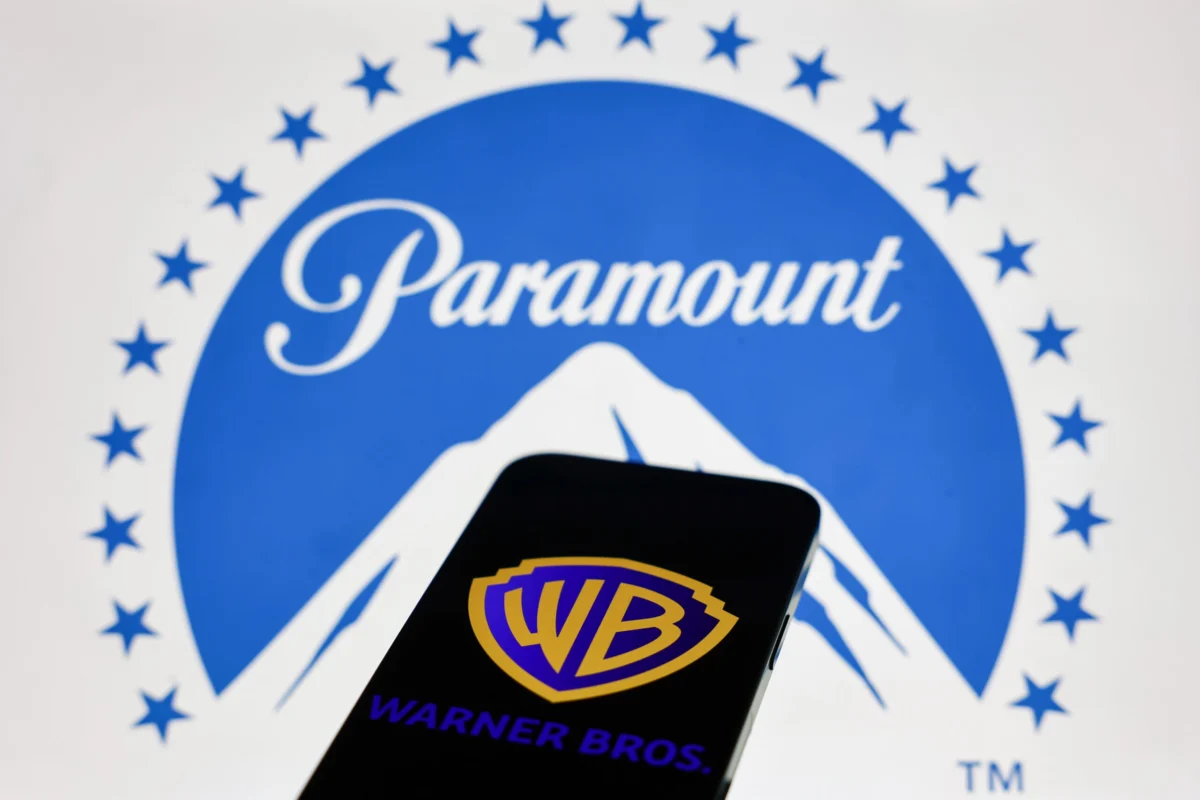
Warner Bros. Discovery (WBD) shareholders reached a decisive turning point on Thursday, formally approving the media giant’s proposed merger with Paramount Skydance in a preliminary vote. The move signals the penultimate stage of a high-stakes, months-long bidding war that has captivated Wall Street and Hollywood alike, positioning the combined entity to become one of the most formidable players in the global entertainment landscape. Under the terms of the agreement, Paramount has offered $31 per share to acquire the entirety of Warner Bros. Discovery, a valuation that encompasses an expansive portfolio including the historic Warner Bros. film studio, the Max streaming platform, and a suite of influential cable networks such as CNN, TNT, and Discovery Channel.
The approval follows a period of intense volatility and strategic maneuvering within the media sector. The transaction, which has been the subject of a competitive sales process since last September, saw Paramount Skydance emerge victorious over rival bidders, including industry heavyweights Netflix and Comcast. While the shareholder vote represents a significant legal and administrative milestone, it was not without friction. Investors voiced strong opposition to the lucrative "golden parachute" exit packages slated for top executives, highlighting a growing rift between corporate leadership and the shareholders who hold the keys to the company’s future.
The Road to Consolidation: A Chronology of the Bidding War
The path to Thursday’s vote was paved by a series of aggressive offers and counter-offers that began in late 2025. In the fourth quarter of last year, Warner Bros. Discovery became the centerpiece of a multi-billion-dollar tug-of-war as the industry grappled with the dual pressures of declining linear television revenue and the immense capital requirements of the streaming era.
In September, preliminary discussions began between WBD and several potential suitors. By December, Comcast and Netflix had both entered the fray, seeking to bolster their respective content libraries. However, Paramount Skydance, led by David Ellison and backed by significant private equity interests, consistently raised the stakes. The turning point arrived in late February when Paramount increased its bid to $31 per share. This premium proved too steep for Netflix, which subsequently withdrew its proposal to acquire WBD’s studio and streaming assets, citing a preference for organic growth over the complexities of a total company integration.
To secure the deal, Paramount Skydance also agreed to assume significant financial liabilities. This included a $7 billion breakup fee designed to protect WBD shareholders in the event that federal regulators block the merger. Furthermore, Paramount agreed to cover the $2.8 billion termination fee that WBD owed Netflix following the collapse of their earlier asset-purchase discussions. This multi-layered financial commitment underscored Paramount’s determination to consolidate the two storied media houses into a single "next-generation" powerhouse.
Strategic Rationale and Financial Structure
The merger is built on the premise of scale and synergy. By combining the assets of Warner Bros. Discovery—which itself was formed only a few years ago through the merger of AT&T’s WarnerMedia and Discovery Inc.—with Paramount Skydance, the new entity aims to achieve a level of content density that can rival Disney and Netflix.
The financial structure of the $31-per-share offer represents a significant premium over WBD’s recent trading price, a factor that was central to the recommendation from Institutional Shareholder Services (ISS). The leading proxy advisory firm noted that the cash consideration provides shareholders with immediate liquidity and "certainty of value" in an otherwise uncertain market.
"The proposed transaction is the result of a competitive sales process and a public bidding war," ISS stated in its report to investors. "Further, shareholders are receiving a meaningful premium to the unaffected share price, and there is a potential downside risk of non-approval."
Beyond the stock price, the deal is expected to unlock billions in operational synergies. Analysts anticipate that the combined company will consolidate its streaming infrastructure, merging Max and Paramount+ into a single platform. This move would significantly reduce churn rates and increase the average revenue per user (ARPU) by offering a more diverse content catalog ranging from HBO’s prestige dramas and Skydance’s blockbuster action franchises to CNN’s live news and TNT’s sports broadcasting.
The Executive Pay Conflict and the Golden Parachute
Despite the overwhelming support for the merger itself, the shareholder meeting was marked by a "say-on-pay" vote that served as a formal rebuke of the company’s executive compensation plans. Specifically, shareholders voted against the proposed payouts for WBD CEO David Zaslav and other top-tier executives.
The focal point of this controversy is an $800 million exit package, often referred to as a "golden parachute." David Zaslav’s individual portion of this package includes hundreds of millions of dollars in severance and stock awards that vest upon the completion of the sale. ISS had previously advised shareholders to vote against these payouts, labeling the awards as excessive and poorly aligned with long-term shareholder interests.
A significant portion of the controversy stems from a $335 million "excise tax gross-up." This is a specialized payment intended to cover the taxes that executives would owe under an obscure Internal Revenue Code rule from the 1980s. This rule was originally designed by Congress to discourage massive payouts during corporate takeovers by imposing a heavy tax on "excessive" compensation. By agreeing to pay the tax on behalf of the executives, the company essentially negates the deterrent effect of the law, a move that critics argue places an unfair financial burden on the company’s remaining capital.
Because the vote on executive compensation is non-binding, the payouts are still expected to proceed. However, the symbolic rejection by shareholders highlights a broader trend of investor activism regarding corporate governance and the perceived disconnect between executive rewards and company performance during transitional periods.
Leadership Perspectives and Official Reactions
Following the vote, leaders from both organizations expressed optimism about the future of the combined company. David Zaslav, who has overseen a period of aggressive debt reduction and restructuring at WBD, characterized the vote as a validation of the company’s trajectory.
"Over the past four years, our teams have transformed Warner Bros. Discovery and returned the company to industry leadership," Zaslav said in a news release. "Today’s stockholder approval is another key milestone toward completing this historic transaction that will deliver exceptional value to our stockholders. We will continue to work with Paramount to complete the remaining steps in this process."
Paramount echoed this sentiment, emphasizing the technological and creative potential of the merger. "We look forward to closing the transaction in the coming months and realizing the creation of a next-generation media and entertainment company that better serves both the creative community and consumers," the company stated. Paramount also noted that the approval follows successful equity and debt syndications, suggesting that the financing for the multi-billion-dollar deal is firmly in place.
Regulatory Outlook and Industry Implications
While shareholder approval is a major hurdle cleared, the deal still faces intense scrutiny from federal regulators. The Department of Justice (DOJ) and the Federal Trade Commission (FTC) have recently signaled a more skeptical approach toward large-scale media consolidations, citing concerns over reduced competition and the impact on consumer pricing.
The $7 billion breakup fee included in the deal serves as a "regulatory insurance policy" for WBD, but it does not guarantee a smooth path to closing. Regulators are expected to look closely at the concentration of news media (CNN) and sports rights (TNT and Paramount’s CBS Sports). There is also the question of the "Hollywood ecosystem," as the merger would reduce the number of major film studios, potentially limiting the options for creators and independent producers.
If the deal receives the green light, it is expected to close in the third quarter of this year. The implications for the broader industry are profound. A successful merger would likely trigger a final wave of consolidation among the remaining mid-sized media players, as companies like AMC Networks, Lionsgate, and even NBCUniversal’s Comcast contemplate their scale in a market dominated by three or four "super-platforms."
Conclusion: A New Era for Media
The shareholder approval of the Warner Bros. Discovery and Paramount Skydance merger marks the end of an era for two of the most iconic names in American media. By opting for consolidation, the companies are betting that size and diverse revenue streams—from theatrical releases to subscription streaming—are the only ways to survive the digital transformation of entertainment.
However, the shadow of the executive pay dispute lingers. As the new entity prepares for its Q3 debut, the leadership will need to balance the ambitious goal of building a "next-generation" media titan with the need to regain the trust of a shareholder base that, while supportive of the deal’s strategic logic, remains wary of the costs associated with its top-level leadership. For now, the industry watches the regulatory horizon, waiting to see if the biggest media deal of the decade will be allowed to redefine the future of global storytelling.