
The upcoming Tuesday release of Versant Media Group’s first earnings report since its separation from Comcast Corporation marks a pivotal moment for the media industry. As the first comprehensive look into the financial health of the newly independent entity, the report will serve as a bellwether for the broader pay-TV sector, which has struggled to maintain its footing in an era dominated by direct-to-consumer streaming services. Trading under the ticker symbol VSNT, Versant Media Group represents a bold experiment: the consolidation of storied cable assets into a pure-play enterprise designed to maximize cash flow while pivoting toward a digital-first future.
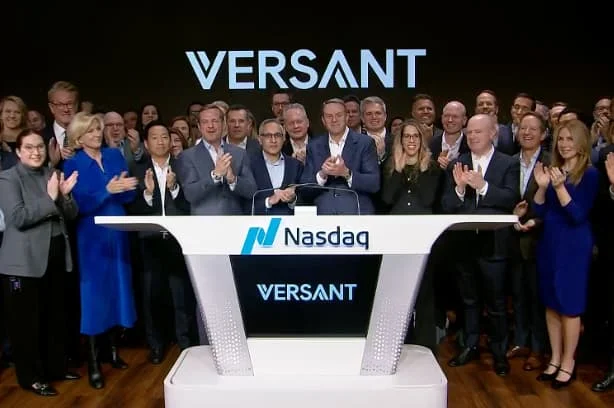
The company’s portfolio is a significant collection of media properties that were once core components of NBCUniversal’s television division. The television lineup includes CNBC, MS Now, USA Network, Golf Channel, Syfy, E!, and Oxygen. Complementing these linear networks are several high-traffic digital and transactional properties, including the movie-ticketing giant Fandango, the review aggregator Rotten Tomatoes, and niche sports platforms GolfNow and Sports Engine. Following its debut on the Nasdaq on January 5, 2026, Versant has occupied a unique, albeit challenging, position in the market as one of the few publicly traded companies almost entirely dependent on the traditional cable bundle.
The Financial Landscape and Market Reception
Since its initial public offering in early January, Versant’s stock has experienced a notable decline, dropping approximately 25% from its debut price. Market analysts attribute much of this volatility to "technical selling," a common phenomenon following a spinoff where institutional investors and index funds associated with the parent company (Comcast) liquidate shares that do not fit the market capitalization or risk profile of their specific portfolios. Currently, Versant’s market capitalization is estimated at $4.8 billion, a figure that reflects investor caution regarding the long-term sustainability of linear television.
The financial data released ahead of the IPO provided a sobering look at the challenges ahead. Securities and Exchange Commission (SEC) filings revealed a consistent downward trend in top-line revenue over the past three fiscal years. In 2022, the assets that now comprise Versant generated $7.8 billion. That figure fell to $7.4 billion in 2023 and further declined to $7.1 billion in 2024. This contraction highlights the primary headwind facing the company: the erosion of the pay-TV subscriber base as consumers increasingly "cut the cord" in favor of streaming alternatives like Netflix, Disney+, and Comcast’s own Peacock.
Strategic Focus on Live Sports and News
Despite the general decline of cable, Versant Media Group’s leadership remains optimistic, grounding their confidence in the enduring value of live, "appointment" television. CEO Mark Lazarus has emphasized that Versant is not a typical collection of general entertainment channels. During an investor presentation in December, Lazarus noted that 62% of the company’s audience is driven by live programming, primarily news and sports.
"We feel very confident in our position," Lazarus stated, pointing to the essential nature of CNBC’s real-time financial reporting and the robust viewership of MS Now. The sports portfolio, while lacking "Tier One" rights such as the NFL or NBA, remains a significant draw. Versant holds long-term agreements for NASCAR, the WWE, and comprehensive golf coverage. Analysts at Raymond James have supported this outlook, noting that Versant’s focus on sports and news protects it from the steeper declines seen by lower-value entertainment networks. This concentration of live content provides Versant with critical leverage during negotiations with cable and satellite distributors, as these channels are often cited by subscribers as the primary reason for maintaining a traditional TV package.
Distribution Stability and Upcoming Negotiations
One of the most significant assets Versant inherited from its time under the NBCUniversal umbrella is a series of long-term carriage agreements. Before the spinoff was finalized, NBCUniversal secured renewals with major distributors, including Charter Communications and Google’s YouTube TV. These agreements ensure that Versant’s networks will remain available to millions of households through at least 2028, with some sports-specific contracts extending past 2030.
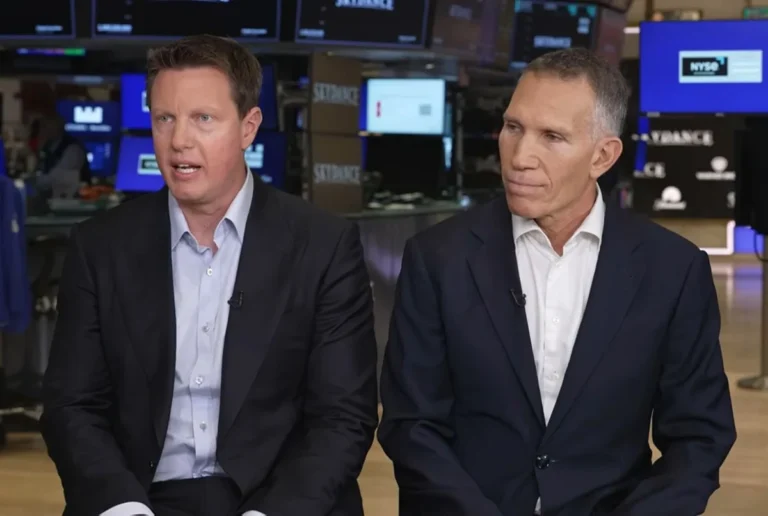
Anand Kini, Versant’s COO and CFO, has highlighted this stability as a cornerstone of the company’s investment thesis. "More than half of our pay-TV subscribers are governed by agreements that go through 2028 and beyond," Kini explained during the company’s investor day. This "cushion" provides the company with predictable revenue and "visibility" as it navigates the transition to a new business model.
However, the strength of this cushion will be tested sooner rather than later. Reports indicate that two significant distribution agreements are up for renewal within the current calendar year. While news and sports networks typically fare better in these high-stakes negotiations, the industry has seen an increase in "blackouts" as distributors push back against rising carriage fees. The outcome of these upcoming talks will be a major indicator of Versant’s ability to stand alone without the broader leverage of Comcast’s other assets, such as local NBC stations or the Peacock streaming service.
The Pivot to a Digital and Transactional Future
Recognizing that the traditional cable model cannot be the sole driver of growth, Versant’s executive team has labeled 2026 as the "first year of our business model transition." The long-term goal is to achieve a balanced revenue split: 50% from traditional pay-TV and 50% from digital, platform, subscription, and transactional businesses.
Central to this pivot are Fandango and Rotten Tomatoes. These properties allow Versant to capture revenue from the theatrical movie industry—a sector that, while also facing challenges, operates independently of the cable bundle. To bolster this segment, Versant recently acquired Indy Cinema Group, a cloud-based operating system for cinemas, which has been integrated into Fandango’s operations to provide a more seamless experience for exhibitors and moviegoers alike.
Furthermore, Versant is aggressively expanding into the free ad-supported streaming television (FAST) space. The acquisition of Free TV Networks, a provider of over-the-air digital broadcast networks, signals the company’s intent to reach "cord-cutters" and "cord-nevers" who still desire linear-style viewing experiences without the high cost of a monthly subscription.
Broader Industry Implications and Peer Comparisons
Versant’s trajectory is being closely watched by other media giants facing similar dilemmas. The industry has entered a period of intense consolidation and restructuring. For example, Warner Bros. Discovery recently contemplated a similar split of its linear and streaming assets before ultimately engaging in a complex merger deal involving Paramount and Skydance.
The market’s appetite for "pure-play" cable stocks has been historically low, as evidenced by the performance of Newsmax. The conservative news outlet saw its stock surge briefly after its New York Stock Exchange debut last year, only to see its valuation crumble shortly thereafter. Versant aims to avoid this fate by emphasizing its diversified digital holdings and its "light debt load," a luxury many of its larger, more encumbered peers do not share.
Goldman Sachs analysts have maintained a "Neutral" rating on VSNT, echoing a sentiment prevalent among institutional investors. While they acknowledge the strength of the platforms business and the company’s high free cash flow, they remain wary of the "secular challenges" inherent in the linear network business.
Timeline of Key Events
To understand Versant’s current position, one must look at the rapid sequence of events leading to its independence:
- September 2025: Comcast releases detailed financials for the "Versant" assets, revealing a three-year revenue decline but strong profitability.
- December 2025: Versant holds its inaugural Investor Day, where CEO Mark Lazarus and CFO Anand Kini outline the 50/50 revenue goal and the focus on live content.
- January 5, 2026: Versant Media Group officially debuts on the Nasdaq.
- January–February 2026: The company completes the acquisitions of Free TV Networks and Indy Cinema Group, signaling an aggressive M&A strategy.
- Late February 2026: The company prepares to release its Q4 2025 and full-year 2025 results, the first as a public entity.
Conclusion: A Test of Patience and Strategy
As the earnings call approaches, the focus will not only be on the raw numbers—revenue, EBITDA, and subscriber counts—but also on management’s commentary regarding the pace of the digital transition. Wall Street is looking for evidence that the decline in cable revenue can be offset, or at least stabilized, by growth in digital advertising and transactional services.
The traditional TV bundle has shown unexpected signs of life recently, with Charter Communications reporting a surprise gain in cable subscribers in the fourth quarter of 2025—its first since 2020. If this represents a broader stabilization of the market, Versant could be well-positioned to harvest significant cash flow for years to come. If, however, the losses at Comcast and other major distributors continue to accelerate, the pressure on Versant to accelerate its digital pivot will intensify.
For now, Versant Media Group stands as a critical case study in corporate restructuring. Whether it can transform from a "legacy" collection of channels into a modern, multi-platform media powerhouse will depend on its ability to navigate the fraught waters of distribution negotiations while successfully scaling its digital ambitions. Tuesday’s earnings report will be the first definitive chapter in that story.