



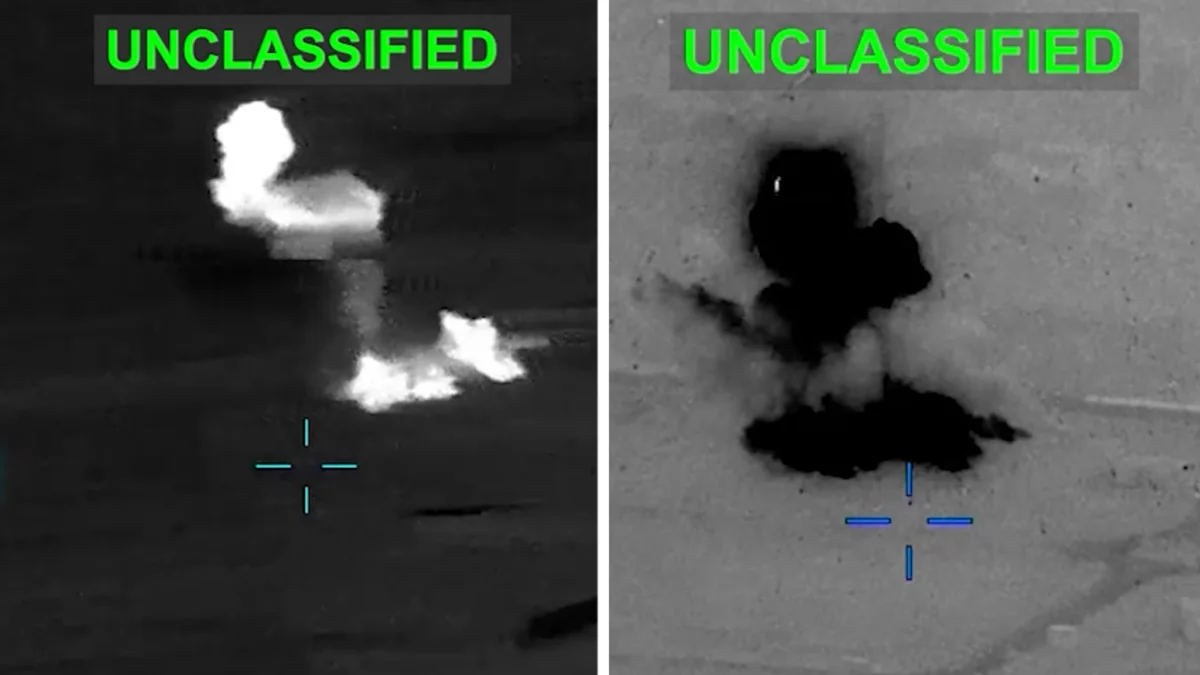
The fragile ceasefire between the United States and Iran has been severely tested, if not outright shattered, following a significant escalation of hostilities in the Persian Gulf region. On Saturday, June 28, 2026, President Donald Trump announced a new round of targeted military strikes against Iranian military infrastructure, executed by U.S. forces in response to what the U.S. alleges was a clear violation of the existing truce agreement. The U.S. Central Command (CENTCOM) released compelling video footage corroborating the intensity and precision of these strikes, reigniting fears of a full-scale regional conflict.
Escalation in the Persian Gulf: A Fragile Peace Shattered
The latest round of U.S. military action marks a critical juncture in the ongoing U.S.-Iran War, which has seen periods of intense confrontation interspersed with tentative diplomatic overtures and ceasefires. The current ceasefire, established just months prior after protracted negotiations facilitated by international mediators, aimed to de-escalate tensions and pave the way for a more comprehensive peace agreement. Its terms, though never fully disclosed, reportedly included a cessation of hostilities, mutual restraint in regional proxy conflicts, and an agreement to protect international shipping lanes. However, underlying mistrust and a series of minor provocations have consistently threatened to unravel the delicate accord.
Saturday’s events unfolded rapidly, beginning with an alleged Iranian drone attack on a civilian vessel in the strategically vital Strait of Hormuz. This incident, deemed a direct breach of the ceasefire, prompted an immediate and decisive military response from Washington, authorized by President Trump. The situation underscores the immense challenges in maintaining stability in a region fraught with geopolitical complexities and historical grievances.
The Incident: M/T Kiku Attacked in the Strait of Hormuz
The catalyst for the U.S. retaliatory strikes was an attack on the M/T Kiku, a Panamanian-flagged oil tanker, which occurred in the early hours of Saturday morning. The vessel was transiting through the Strait of Hormuz, a narrow choke point at the mouth of the Persian Gulf through which approximately 20% of the world’s petroleum and a substantial portion of its liquefied natural gas pass daily. According to U.S. intelligence reports, the M/T Kiku, carrying over two million barrels of crude oil, was targeted by an Iranian drone. While details regarding the specific drone model and launch location remain undisclosed by CENTCOM, preliminary assessments suggest a sophisticated unmanned aerial vehicle capable of precision targeting.
The attack on a commercial vessel in international waters, especially one carrying such a significant cargo of oil, is widely viewed as a severe breach of maritime law and a direct threat to global energy security. Maritime security analysts quickly highlighted the incident’s potential to drive up insurance premiums for shipping in the region, further disrupting an already volatile global oil market. Initial reports from the M/T Kiku indicated minor damage to the vessel’s stern, with no immediate threat of oil spill and no reported casualties among the crew. However, the symbolic and strategic implications of the attack were profound, signaling Iran’s willingness to project power and challenge international norms despite the ongoing ceasefire.
U.S. Retaliatory Strikes: A Display of Force
In response to the M/T Kiku incident, the United States launched a series of "defensive" strikes against Iranian military targets. U.S. Central Command (CENTCOM) confirmed that American forces conducted ten distinct strikes targeting various components of Iran’s military infrastructure. The targets, carefully selected to degrade Iran’s ability to conduct similar future attacks and monitor U.S. activities in the region, included:
- Military Surveillance Infrastructure: Several radar installations and electronic intelligence gathering sites along Iran’s coastline were hit, critical for monitoring maritime traffic and detecting aerial threats.
- Communication Systems: Key command and control nodes, vital for coordinating Iranian military operations, were neutralized, aiming to disrupt their ability to respond effectively.
- Air Defense Sites: Strategic air defense batteries, particularly those near coastal areas and oil infrastructure, were targeted to ensure air superiority for potential future U.S. operations.
- Drone Storage Facilities: Multiple depots housing unmanned aerial vehicles (UAVs), including those suspected of being used in the M/T Kiku attack, were destroyed. This aims to diminish Iran’s growing drone capabilities, a significant asymmetric threat.
- Minelayer Capabilities: Facilities associated with Iran’s naval mining operations were struck. The deployment of naval mines in critical shipping lanes like the Strait of Hormuz has long been a major concern for international maritime security.
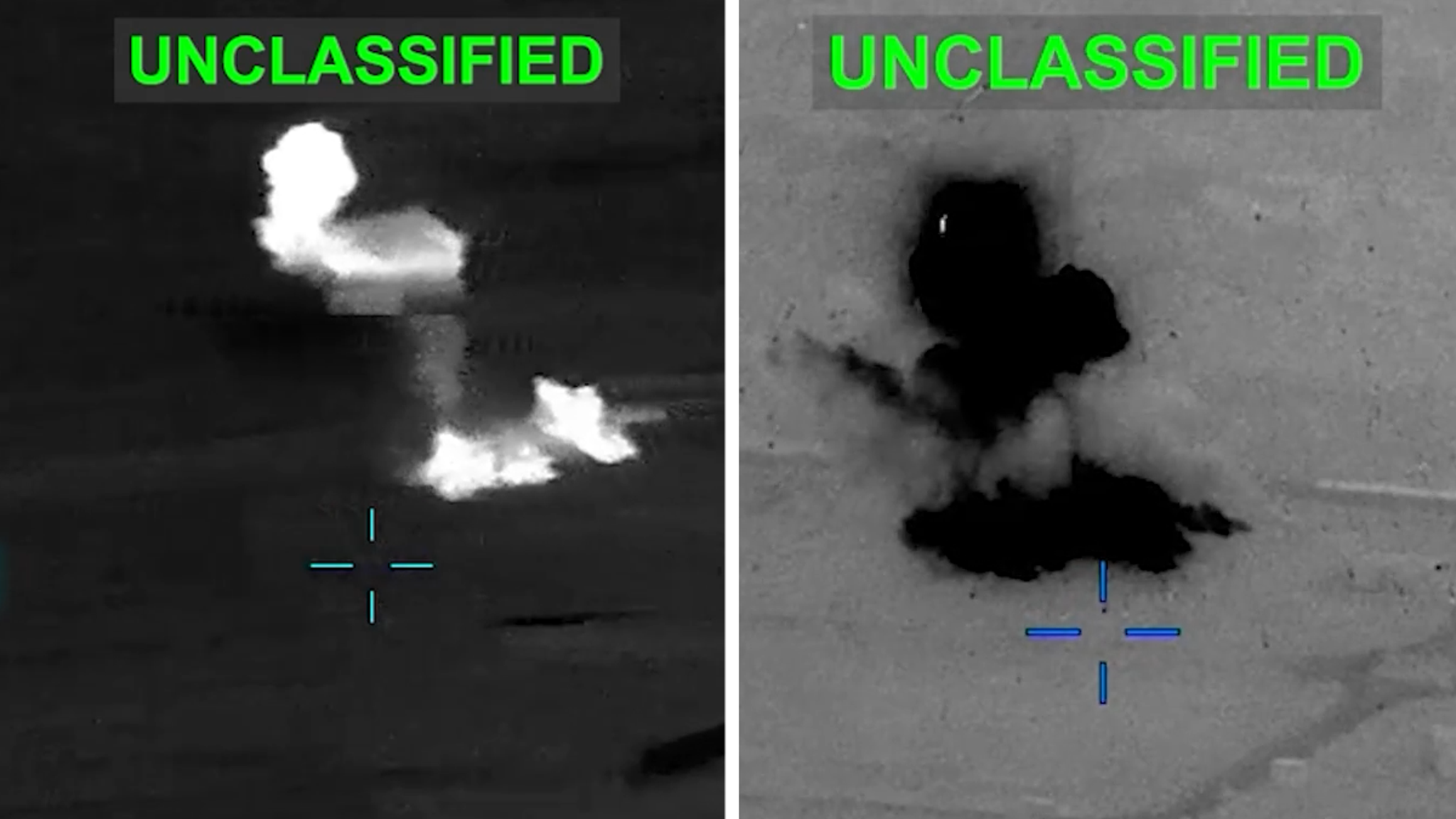
The video footage released by CENTCOM, described by President Trump as "shocking," depicted precise aerial bombardments, with structures erupting in plumes of smoke and secondary explosions, suggesting successful engagement of munitions and fuel stores. U.S. officials emphasized that these strikes were carefully calibrated to avoid civilian casualties and minimize broader collateral damage, focusing exclusively on military assets directly linked to the alleged ceasefire violation. The operation, codenamed "Operation Sentinel Shield," involved a combination of precision-guided missiles launched from naval assets and advanced fighter jets operating from regional U.S. airbases.
President Trump’s Strong Rhetoric and Warning
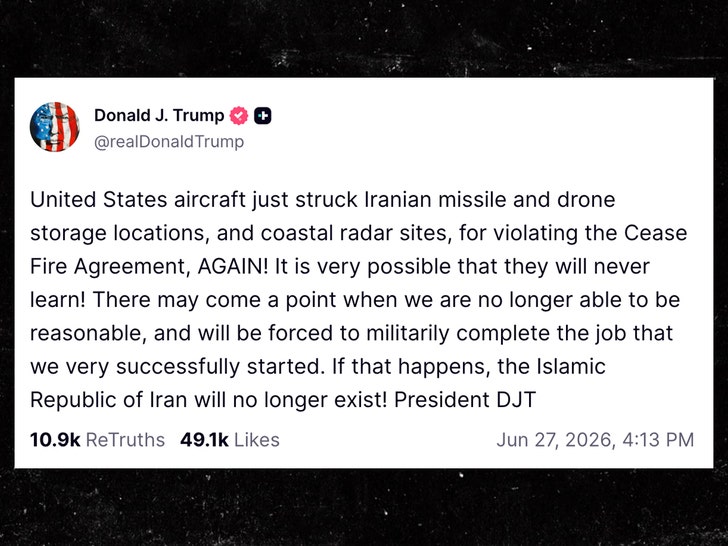
President Trump’s announcement of the strikes came via his preferred social media platform, Truth Social, on Saturday night. His posts were characteristic of his assertive foreign policy stance, directly accusing Iran of violating the ceasefire "AGAIN!" He stated, "U.S. aircraft struck Iranian missile and drone storage location, and coastal radar sites for violating the Cease Fire Agreement, AGAIN!"
More controversially, President Trump followed up with a stern warning, indicating a potential escalation far beyond retaliatory strikes. He wrote, "it’s possible the Iranians will never learn and the U.S. may have to ‘complete the job’ by wiping them off the face of the planet." This extremely provocative statement immediately drew criticism from international observers and some domestic political figures, who cautioned against rhetoric that could be interpreted as a threat of existential war, potentially leading to catastrophic consequences. While the White House later sought to clarify that the President’s remarks were a reflection of frustration with Iran’s actions and not an official policy shift, the underlying message of an uncompromising stance remained clear.
Iranian Response and International Reactions
As of Sunday morning, official Iranian state media and government spokespersons had yet to issue a comprehensive, detailed response to the U.S. strikes. However, preliminary reports from Tehran indicated strong condemnation of what Iran would undoubtedly characterize as an act of aggression and a violation of its sovereignty. Analysts anticipate Iran will deny any involvement in the M/T Kiku attack, or alternatively, frame its actions as legitimate self-defense against ongoing U.S. provocations. The Islamic Revolutionary Guard Corps (IRGC), a powerful military and political force in Iran, is expected to issue a forceful statement vowing retaliation and emphasizing Iran’s unwavering resolve.
The international community reacted with alarm to the renewed escalation. The United Nations Secretary-General issued an urgent call for de-escalation and adherence to international law, urging both parties to exercise maximum restraint and return to the negotiating table. European Union leaders, who had played a crucial role in brokering the previous ceasefire, expressed deep concern over the "dangerous deterioration" of the situation and called for an emergency session to discuss diplomatic options. China and Russia, while traditionally maintaining closer ties with Iran, also urged caution, emphasizing the need for dialogue and warning against any actions that could destabilize the broader Middle East.
Broader Implications and the Future of the Conflict
The latest military engagement carries profound implications for the U.S.-Iran War and regional stability.
Geopolitical Stability: The immediate concern is the potential for a full-scale resumption of hostilities. The targeting of key military infrastructure by the U.S. could prompt Iran to retaliate, potentially against U.S. assets in the region, allied nations, or global shipping. Such a cycle of escalation could quickly spiral out of control, drawing in other regional and international actors. The "fragile ceasefire pact," already under immense strain, now appears to be on the brink of collapse, making any potential deal to end the war significantly more remote.
Economic Repercussions: The attack on the M/T Kiku and the subsequent U.S. strikes have sent ripples through global energy markets. Oil prices experienced a sharp spike in early trading, reflecting fears of supply disruptions from the Persian Gulf. Shipping insurance rates for vessels transiting the Strait of Hormuz are expected to soar, increasing the cost of global trade and potentially leading to higher consumer prices worldwide. Continued instability in this vital maritime corridor poses a severe threat to the global economy, already grappling with other challenges.
Humanitarian Concerns: A prolonged and intensified conflict would inevitably lead to a humanitarian crisis, displacing populations, destroying infrastructure, and causing immense suffering. While the current U.S. strikes focused on military targets, any wider conflict would place civilian lives at grave risk, exacerbating existing tensions and creating new waves of refugees.
Diplomatic Fallout: The prospects for a diplomatic resolution to the U.S.-Iran conflict have diminished considerably. President Trump’s strong rhetoric, particularly his threat to "wipe them off the face of the planet," makes it challenging for any party to credibly engage in peace talks. International mediators will face an uphill battle in convincing both sides to return to negotiations, especially if a cycle of retaliatory attacks takes hold. The focus will likely shift from securing a comprehensive peace deal to simply managing de-escalation and preventing a wider regional conflagration.
The events of Saturday, June 28, 2026, represent a dangerous turning point in the U.S.-Iran War. With the ceasefire effectively shattered and rhetoric reaching alarming levels, the international community watches with bated breath, hoping that restraint and diplomacy can still prevail over the specter of an even more devastating conflict.