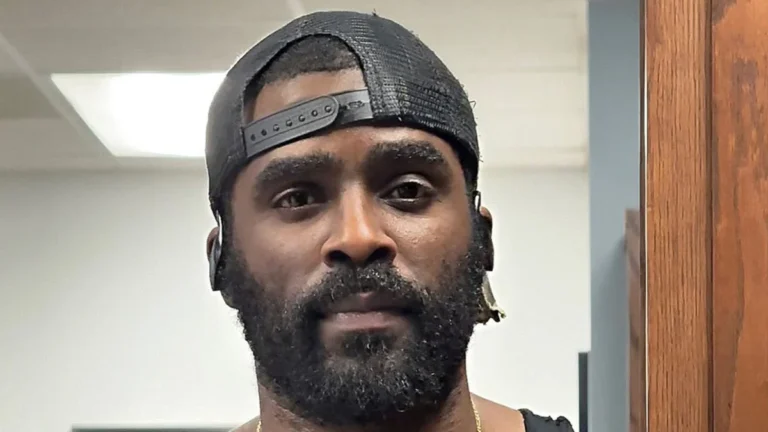




A Miami civil jury has delivered a mixed verdict in the high-profile legal battle between NFL wide receiver Tyreek Hill and his estranged wife, Keeta Vaccaro, ordering the professional athlete to pay $500,000 in damages after finding him liable on two counts of battery. The conclusion of the week-long trial brings a measure of legal resolution to a turbulent chapter for the 32-year-old free agent, who has been sidelined from professional football since suffering a severe injury during Week 4 of the previous NFL season.
While the financial penalty marks a tangible legal defeat for Hill, the verdict was not a total loss for the veteran wide receiver. The six-person jury deliberated before ultimately acquitting Hill on eight of the ten initial counts brought against him. Those dismissed claims encompassed additional allegations of battery, formal charges of assault, and accusations of intentional infliction of emotional distress. Furthermore, the jury formally denied Vaccaro’s request for punitive damages, limiting the financial judgment strictly to the $500,000 figure designated for the two proven counts of battery.
Breakdown of the Verdict and Specific Incidents
The legal proceedings centered around a series of volatile domestic disputes spanning multiple years. The two specific battery counts for which Hill was found legally responsible stemmed from isolated altercations occurring in January 2024 and April 2025.
The latter incident proved to be a critical turning point during the week-long courtroom battle. Prosecutors and legal counsel for Vaccaro introduced compelling digital evidence into the record, specifically a nanny camera video that partially captured the April 2025 altercation. The footage, which was publicly scrutinized after being admitted into evidence, played a central role in swaying the jury regarding that specific count.
Throughout the civil trial, Hill took the stand in his own defense to counter the narrative presented by his estranged wife’s legal team. While testifying under oath, Hill openly admitted to shortcomings in his personal life and acknowledged that he had not been an exemplary husband. However, he consistently and forcefully denied the allegations that he had ever physically abused Vaccaro.
Following the reading of the verdict, legal representatives for both sides expressed contrasting interpretations of the jury’s decision. Christi Bright, one of Hill’s defense attorneys, indicated that her client experienced a profound sense of relief when the final counts were read.

"Mr. Hill was very pleased that he was able to get his story out and to be able to tell the world what he’s not been able to speak about," Bright stated outside the courtroom. "He’s very grateful."
Conversely, the verdict leaves Vaccaro with a partial legal victory, having successfully established liability for two instances of physical abuse while failing to secure a sweeping condemnation across all ten original causes of action or the substantial punitive financial penalties her team originally sought.
Chronology of Events and Legal Escalation
To understand the gravity of the civil trial, it is necessary to examine the timeline of events that preceded the courtroom showdown in Miami. The marital relationship between Hill and Vaccaro had faced persistent public scrutiny, punctuated by private disputes that ultimately spilled over into the legal system.
The foundational timeline of the case includes:
- January 2024: The first of the two incidents for which Hill was ultimately found liable occurred, marking an early inflection point in the deterioration of the marriage.
- April 2025: A subsequent domestic altercation took place, partially recorded by a residential nanny camera system, which would later serve as critical evidentiary material in court.
- Late 2025 to Early 2026: Legal filings accumulated as divorce and civil battery claims advanced through the Florida judicial system, culminating in public anticipation of a high-stakes trial.
- October 2026: The civil battery trial commenced in Miami, lasting approximately one week and featuring testimony from both Hill and Vaccaro, alongside the presentation of digital evidence, including the nanny camera footage.
- October 14, 2026: The six-person jury reached its mixed verdict, finding Hill liable on two counts and awarding Vaccaro $500,000 in damages while dismissing the remaining eight counts.
Background Context on Tyreek Hill’s Career and Status
Tyreek Hill, widely recognized by his moniker "Cheetah" for his exceptional speed on the gridiron, has long been one of the most dynamic and explosive offensive weapons in the National Football League. Prior to the civil trial and his current status as a free agent, Hill enjoyed a decorated career marked by multiple Pro Bowl selections and All-Pro nods, establishing himself as a marquee talent capable of transforming a franchise’s offensive output.
However, Hill’s career has also been shadowed by off-field controversies and legal scrutiny. Over the years, the wide receiver has faced various disciplinary investigations and public relations challenges, prompting intense league scrutiny under the NFL’s stringent personal conduct policy.
Athletically, Hill has been absent from professional competition since Week 4 of the prior season, when he sustained a gruesome and debilitating injury while playing for the Miami Dolphins. The combination of a lengthy physical rehabilitation process and the looming cloud of the civil litigation significantly impacted his professional trajectory, leading to his current availability on the open market as a free agent.

Official Responses and League Implications
With the civil trial concluded, immediate attention has shifted from the courtroom to the executive offices of the National Football League and various franchise front offices. The intersection of civil legal liability and the NFL’s disciplinary framework remains a delicate and high-stakes arena for any team considering signing the veteran wide receiver.
Prior to the jury reaching its verdict, league officials confirmed that the NFL was actively reviewing the allegations against Hill in accordance with the Personal Conduct Policy. Under this policy, the league maintains the authority to conduct an independent investigation, review court transcripts and evidence—including the nanny camera footage presented at trial—and impose disciplinary measures such as fines or suspensions, regardless of whether a case is handled in civil court rather than criminal proceedings.
Despite the civil liability finding and the $500,000 judgment against his client, Hill’s representation remains highly optimistic regarding his immediate professional future. Drew Rosenhaus, Hill’s prominent sports agent, indicated that discussions with interested NFL franchises are actively ongoing.
"A deal could happen any time," Rosenhaus asserted, signaling that multiple teams are weighing the competitive value of acquiring an elite, game-changing offensive talent against the potential public relations and disciplinary risks associated with the civil verdict.
Broader Impact and Future Outlook
The legal outcome in Miami offers a complex precedent for professional athletes facing civil domestic disputes. On one hand, Hill avoided the most catastrophic financial and legal scenarios envisioned by his critics, successfully defeating eight of the ten counts, including major allegations of intentional infliction of emotional distress and assault, while evading punitive damages. On the other hand, the formal judicial finding of liability on two battery counts, backed by $500,000 in damages and documented by digital evidence, ensures that the controversy will remain a defining element of his public profile.
For the NFL, the case presents a renewed test of its enforcement mechanisms under the personal conduct policy. The league office must now determine whether a civil liability finding involving domestic incidents warrants formal suspension or other corrective action, setting a tone for how player accountability is managed outside of criminal convictions.
As Hill continues his physical recovery from the severe injury that sidelined him in Week 4 of last season, the resolution of the Miami civil trial removes a major legal distraction. Whether general managers and ownership groups are willing to overlook the $500,000 judgment in exchange for the on-field prowess of one of the game’s most explosive receivers remains the central question as the NFL season progresses. For now, Hill awaits the league’s final review and the potential call that will dictate the next chapter of his professional football career.