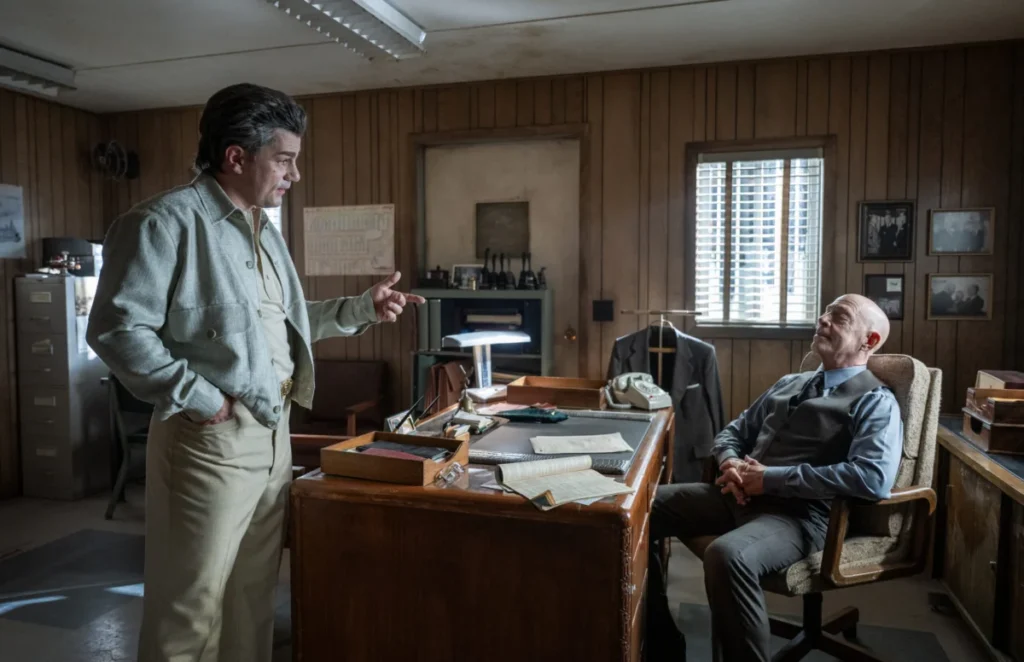




The latest cinematic venture from director Alejandro G. Iñárritu, the ambitious satire Digger, has arrived at a precarious juncture in the domestic box office landscape. Starring Tom Cruise in a transformative role as an aging, disgraced oil tycoon, the film managed a modest $3.3 million on its opening Friday, a figure that incorporates revenue from Thursday evening preview screenings. Industry analysts currently project an opening weekend total of approximately $8 million across 3,300 North American locations. This performance represents a significant shortfall for a production carrying a $125 million price tag, signaling a difficult start for a project intended to be a major awards-season contender.
For Tom Cruise, a star whose name has historically been synonymous with high-octane, reliable box office returns, this performance is particularly noteworthy. Current projections indicate that Digger is on track to record the lowest opening weekend for a Cruise-led project since the 2007 war drama Lions for Lambs, which debuted with $6.7 million. While that earlier film was produced on a significantly smaller budget, the comparison highlights a rare moment of commercial vulnerability for the actor, who has spent the last decade revitalizing his career through the massive success of the Mission: Impossible franchise and Top Gun: Maverick.
Critical Reception and Audience Sentiment
The commercial struggles of Digger are compounded by a lukewarm reception from both critics and general audiences. The film currently holds a 51 percent approval rating on the review aggregator Rotten Tomatoes. In his review for The Hollywood Reporter, chief film critic David Rooney characterized the film as a project that feels fundamentally disconnected from its potential, noting that the narrative, despite its bold stylistic choices, ultimately falls flat.
Beyond the critical divide, the film has faced a more immediate hurdle: audience engagement. Digger earned a C+ CinemaScore, a grade that ranks among the lowest in Cruise’s long and decorated career. In the modern theatrical ecosystem, where opening-weekend word-of-mouth is amplified instantly through social media, such a grade often serves as a negative indicator for long-term sustainability. Studio executives at Warner Bros. had reportedly hoped that the film’s status as a high-concept, filmmaker-driven piece would generate the kind of cultural cachet that drives sustained attendance, yet the initial data suggests a disconnect between the film’s artistic intent and the desires of the general multiplex audience.
A Period of Transition at Warner Bros.
The underperformance of Digger occurs at a delicate time for Warner Bros. The studio is currently navigating a period of profound corporate transformation, with its tenure as an independent entity nearing its conclusion. The impending $111 billion merger between Paramount and Skydance, expected to be finalized on October 6, looms over the studio’s operations.

Recent internal shifts have added to the sense of flux at the Burbank lot. It was recently confirmed that film chiefs Michael De Luca and Pamela Abdy, who were responsible for successes like the Oscar-winning features One Battle After Another and Sinners in 2025, are departing the studio. Their successors, Dana Goldberg and Josh Greenstein, will inherit a slate that has faced considerable volatility throughout 2026. Within this context, the commercial failure of a $125 million production like Digger serves as an unfortunate capstone to the current leadership’s tenure, emphasizing the challenges inherent in balancing high-risk auteur projects with the demands of a consolidating media market.
Competitive Landscape: The Dominance of Verity
While Digger faltered, the top spot for the weekend was claimed by Amazon MGM Studios’ adaptation of the Colleen Hoover novel Verity. Directed by Michael Showalter and starring Anne Hathaway, Dakota Johnson, and Josh Hartnett, the thriller leveraged the current cultural appetite for spooky-season content, grossing $15.1 million on Friday and pacing toward a $33.6 million domestic debut across 3,510 theaters.
However, the victory for Verity is tempered by similar audience reception issues. Much like Digger, the film received a C+ CinemaScore, suggesting that while the marketing campaign successfully drew viewers to the theaters, the product failed to satisfy their expectations. The film’s 34 percent rating on Rotten Tomatoes reflects a broader dissatisfaction, with critics labeling the adaptation a "literary misfire." Despite the poor reviews, the film’s success demonstrates the continued power of established intellectual property, particularly from authors with large, pre-existing digital fanbases.
Secondary Market Performance and Sustained Hits
The remainder of the weekend box office reflects a marketplace dominated by established titles and genre-specific releases. Sony’s Resident Evil reboot, directed by Zach Cregger, continues to demonstrate impressive durability in its third week. Holding the second-place position, the film is expected to gross $12 million, bringing its total domestic cume to approximately $124.3 million. The success of the Resident Evil franchise, now under the stewardship of Austin Abrams, underscores the persistent viability of video game adaptations when handled with a distinct creative vision.
Meanwhile, Paramount’s Heart of the Beast is maintaining its momentum in its second frame. The David Ayer-directed feature, which stars Brad Pitt as a Special Forces operative navigating the wilderness with a canine partner, is projected to earn $11 million this weekend, pushing its domestic gross to roughly $38 million. A24’s fact-based thriller Primetime, featuring Robert Pattinson as journalist Chris Hansen, also continues to perform steadily in its second week, with an estimated $8 million gross bringing its domestic total to $34 million.
Lionsgate’s horror offering, Beware Boiúna, entered the fray this weekend but failed to make a significant impact. The film, directed by Mike P. Nelson, earned approximately $500,000 from 1,121 theaters. Given that Nelson has been tapped to direct the next installment of the long-running Saw franchise, industry observers are closely monitoring how this smaller-scale project influences his creative reputation within the horror genre.

Broader Implications for Star-Driven Cinema
The performance of Digger invites a broader discussion about the changing nature of star power in the film industry. Paul Dergarabedian, a senior media analyst at Rentrak, noted that the current market requires a recalibration of expectations regarding marquee names. "We have to place our expectations around what this movie is and what it’s trying to be, rather than what the name Tom Cruise might normally be expected to deliver at the box office," Dergarabedian observed.
Historically, Cruise has successfully oscillated between two distinct modes of filmmaking: the blockbuster franchise star and the dedicated character actor working with auteur directors. Projects like Born on the Fourth of July and Magnolia demonstrated his willingness to subvert his own image in service of complex narratives. However, modern audiences have become accustomed to seeing Cruise in high-stakes, action-oriented roles, leading to a potential cognitive dissonance when he appears in subversive, character-driven satires.
As Cruise prepares to return to the action genre with the upcoming Days of Thunder 2, the industry will be watching to see if his loyal fanbase returns to the fold. For now, the underperformance of Digger serves as a reminder that even the most iconic stars are subject to the unpredictable nature of audience taste and the shifting tides of the theatrical exhibition model.
Looking ahead, the industry remains focused on the upcoming slate, which includes the Jessica Chastain-led thriller Other Mommy and Aaron Sorkin’s latest project, The Social Reckoning. These releases will test whether audiences are ready for a shift toward more character-focused dramas as the year moves into the final quarter, a period traditionally defined by high-profile awards contenders. The lesson from this weekend is clear: regardless of a star’s stature or a film’s budget, the ultimate arbiter of success remains the synergy between creative ambition and audience reception.