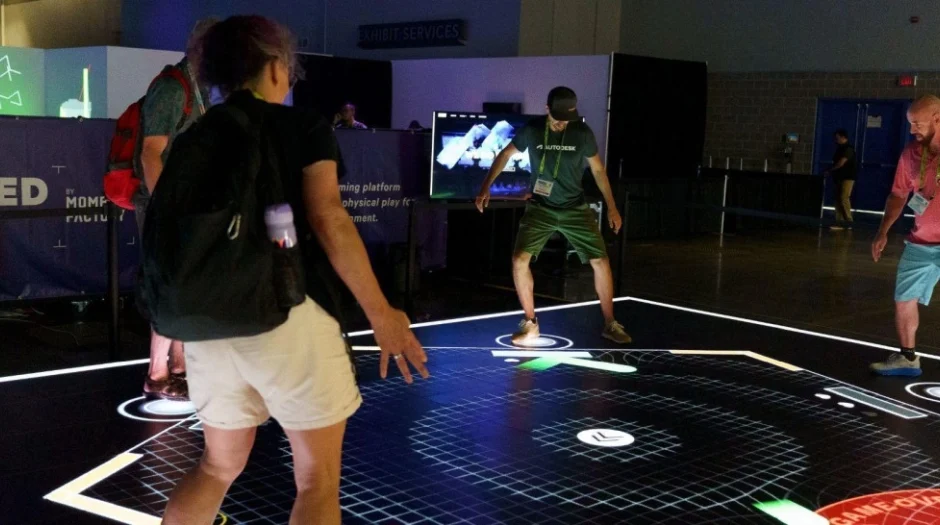
The SIGGRAPH 2026 Experience Hall, set to transform the Los Angeles Convention Center from July 19-23, promises an immersive dive into the cutting edge of computer graphics and interactive techniques. This highly anticipated event, a cornerstone of the 53rd annual SIGGRAPH conference, will feature five distinct interactive programs: Spatial Storytelling, the Immersive Pavilion, the Art Gallery, Emerging Technologies, and the Hands-On Courses track. Together, these curated experiences are designed to push the boundaries of what is possible, blurring the lines between creator and audience, technology and art, and the tangible and the virtual. Attendees will have the unique opportunity to not only witness but actively participate in groundbreaking innovations, ranging from co-parenting robotic companions to experiencing the visceral impact of digital wildfire simulations.
A Legacy of Innovation: The SIGGRAPH Conference
SIGGRAPH, an acronym for Special Interest Group on Computer Graphics and Interactive Techniques, has a storied history dating back to its inception in 1974. Organized by ACM SIGGRAPH, the conference has consistently served as the premier global venue for researchers, artists, developers, and enthusiasts to showcase and discuss the latest advancements in computer graphics and interactive technologies. From its early days of presenting pioneering frame buffer technology to today’s explorations in real-time rendering, AI-driven content creation, and immersive virtual environments, SIGGRAPH has been instrumental in shaping the digital landscape we inhabit. The Experience Hall, in particular, has evolved into a vital component of the conference, offering a more accessible and hands-on approach to understanding complex technological concepts, making them tangible and relatable for a broader audience. This year’s iteration in Los Angeles continues this tradition, building upon decades of fostering innovation and community within the computer graphics field.
Five Pillars of Experience: Exploring the Hall’s Diverse Offerings
The SIGGRAPH 2026 Experience Hall is meticulously crafted to provide a multifaceted exploration of digital creation. Its core philosophy is to move beyond passive observation, encouraging active engagement and direct interaction with the technologies and artistic expressions on display.
Spatial Storytelling: Narratives That Embrace the Viewer
Returning for its second year, the Spatial Storytelling program redefines narrative by utilizing space itself as the primary medium. Esen K. Tüten from SIGGRAPH 2026, the Spatial Storytelling Chair, emphasizes the program’s focus on empowering the audience: "Spatial storytelling is a practice of using space as the medium. Rather than presenting a story in a fixed frame such as a page or a screen, we allow the audiences to navigate, participate, and also inhabit the story itself." This approach democratizes storytelling, granting viewers agency to shape their experience and deepen their understanding through embodied participation.
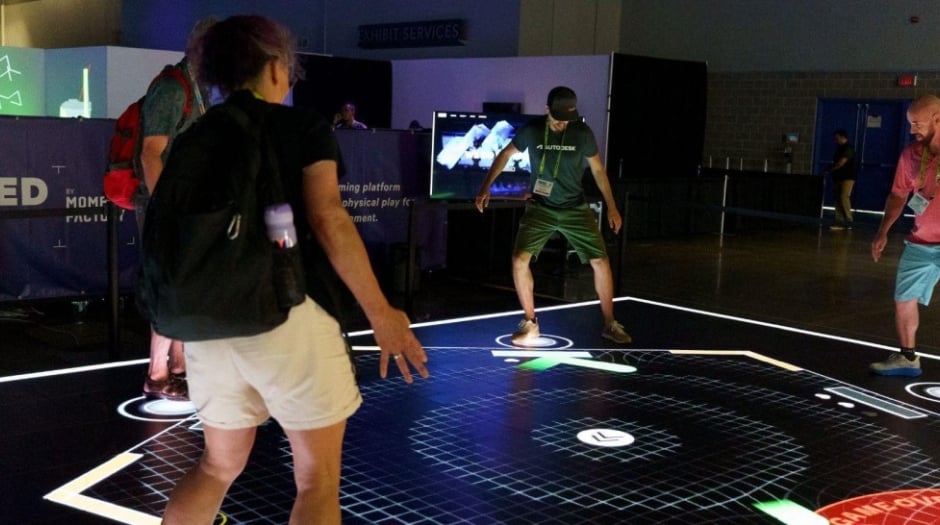
This year’s Spatial Storytelling showcase delves into profound themes, including memory, identity, and the evolving relationship between humans and artificial intelligence. Among the highlights is "Dog Walk: Narrating Human-AI Alignment through Companion Robots" by Robert Twomey and Jesse Fleming. This project invites participants to co-parent two robot dogs whose language models develop through daily interaction, prompting reflection on intimacy, embodiment, and synthetic companionship. Another compelling exhibit, "Flashover: Spatial Storytelling of Wildfire from Memory to Spatial Experience" by Phillip Wilkinson and his team, uses advanced installation design and volumetric imagery to transform the recollection of wildfires into a visceral, embodied encounter. Gabriela Bila Advincula and Jonny Cohen’s "Ancestral Craft and Emerging Technologies: Designing Futures from Place" explores how XR installations and robotic art rooted in the Amazon rainforest can ground future innovations in indigenous knowledge. Ethan Shaftel’s "Cheap and Cheerful: Low-Fidelity Prototyping for Spatial Stories" demonstrates how accessible, low-fidelity methods can effectively drive VR narrative development from concept to funding. Finally, Kevin Peter He’s "Visual Instruments for Live Cinema: Turning Process into Performance" elevates the often-unseen labor of virtual production into a live cinematic performance.
The Immersive Pavilion: An Arcade of Next-Generation Realities
The Immersive Pavilion serves as a nexus where the physical and digital realms converge, expanding the definition of immersion far beyond traditional virtual reality headsets. Luke Tannenbaum, SIGGRAPH 2026 Immersive Pavilion Chair, likens the experience to stepping into an arcade or a creator’s workshop, where the scope of immersive experiences continues to broaden annually. The pavilion embraces a platform-agnostic approach, incorporating technologies such as eye-tracking, multisensory inputs, and AI agents alongside VR and AR. Interactivity is paramount, allowing attendees to spectate, participate, and engage directly with the creators. Tannenbaum notes, "It becomes this collaborative museum where it’s less of a corporate, manicured message and more of creators being in a collaborative setting to bounce ideas off of each other."
This year’s Immersive Pavilion features a diverse range of projects, from social gaming to practical training applications. "Landmine/Garden" from NYU ITP casts visitors as deminers navigating a virtual minefield, unearthing buried stories and transforming a landscape of danger into one of remembrance. "Impulse: Dawn of the Digital Dance Studio" by Brandon Powers and Whitt Sellers utilizes motion capture and Unreal Engine to enable real-time choreography of multiple digital dancers. The "Smileoyed: Embodied Virtual Pet for Behavioral Affective Synchrony with Multisensory and Biofeedback" project, developed by teams from National Taipei University of Technology and National Taiwan University, presents a virtual pet that responds to a user’s breathing and facial expressions via a specialized cushion. "Goo Goo Clash: A Co-located Mixed Reality VE-Sport Experience" by Fortal Interactive, NDF Dev, and Bitkub Capital Group reimagines the classic arcade game Snake as a physical, mixed-reality sport. A notable cross-program highlight is "Roll for Reality: Virtual Production Improvised D&D Show," a Dungeons & Dragons-inspired performance that uses motion capture to bring players onto virtual characters performed by stunt actors against an LED backdrop.
The Art Gallery: Exploring the Nuances of "In-Betweens"
Continuing SIGGRAPH’s long-standing tradition of showcasing digital art, the Art Gallery presents works that challenge, inspire, and provoke thought. This year’s exhibition, featuring 12 pieces selected from 211 submissions, is unified under the theme "In-Betweens." Everardo Reyes, SIGGRAPH 2026 Art Gallery Chair, explains the curatorial intent: "The theme of the Art Gallery this year is one word: ‘In-Betweens.’ We wanted to call for artworks that explicitly tell their own story about how they are made and how they make the visitor establish a relationship with the work or the world." The gallery is structured as a network, emphasizing the interconnectedness of technologies, materials, places, institutions, and individuals that contribute to the creation of each artwork.
Several pieces in the Art Gallery directly address the "in-between" space, exploring themes of memory, identity, and the evolving human-AI relationship. "A Walled City" by Weidi Zhang and Rodger Luo employs a custom AI system to transform user-uploaded images into architectural chambers, creating a dynamic monument to collective digital presence inspired by Hong Kong’s Kowloon Walled City. "Are We Gazing at the Same Moon?" by Jeyun Cloud and Ziqian Yin uses generative AI to reimagine moon-gazing rituals across parallel realities, questioning the boundaries between personal and collective memory through audio-visual installations and sculpture. Pinyao Liu’s "SOMA: In Search of Somatic Intelligence" is a multisensory robotic sculpture that treats bodily memory as a form of human-AI communication, where a wearable device allows visitors to re-enact movements, which the machine then interprets and responds to with its own mechanical choreography. Lastly, "Stuck in the Middle" by Avital Meshi is a participatory installation where wearable devices voice conflicting AI perspectives, prompting users to consider personal agency amidst constant algorithmic influence.
Emerging Technologies: Innovations Within Reach
The Emerging Technologies program is dedicated to bringing advanced research out of the realm of abstract theory and into tangible, interactive experiences. Jesse Barker, SIGGRAPH 2026 Emerging Technologies Chair, highlights the program’s core: "Interactivity and engagement are at the very core of the Emerging Technologies venue. All of our contributors are bringing something that attendees must be present to experience." Barker emphasizes that immersion isn’t solely dependent on photorealism, noting that haptics, robotics, and other tactile elements contribute significantly to making experiences immediately accessible and compelling.
This year’s featured projects transform cutting-edge research into tactile explorations. "A MIDI-Controlled Water-Droplet Interface for Generating Droplet Impact Sounds" by Taisei Kato and Tetsuaki Baba uses precisely timed water droplet impacts to create musical compositions. "Shall We Dance? Resonance of Intentions with an Embodied Agent based on the Free Energy Principle" by Takeru Hashimoto, Shunichi Kasahara, and Jun Tani presents an agent capable of negotiating movement and synchronizing with a human dance partner. "EmerFlux: A Two-Layer Liquid Surface Display for Organic Pixel-Based Aesthetic Representation of Information" by Kaito Shimizu and Toshitaka Amaoka showcases organic, pixel-like patterns generated at the interface of water and oil. "Pinlight AR Near-Eye Display with Large FOV and Expanded Eyebox through Eye Tracking," developed by a consortium of universities, enhances augmented reality displays by utilizing dynamic eye tracking to widen the field of view. Finally, "Katakko: Embodiment of Modular Robots through Automatic Motion Mapping" by Sotaro Yokoi and his team allows users to assemble personalized social robots that automatically mirror their movements.
Hands-On Courses: Learning Through Active Creation
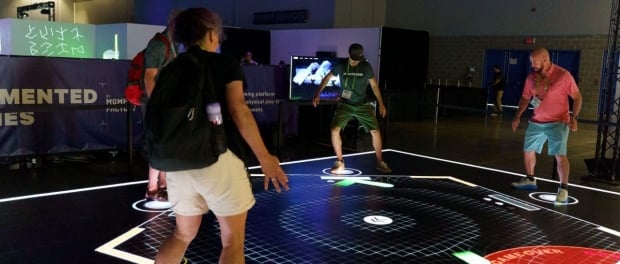
The Hands-On Courses track, a new addition to the Courses program, formerly known as Labs, offers participants a direct, practical engagement with research and creative projects. Presented within the Experience Hall and equipped with provided hardware, these courses allow attendees to write code, run tools, and build scenes, fostering a deeper understanding through active participation rather than passive observation.
This year’s curriculum spans a wide range of disciplines, from quantum computing to real-time graphics. "Hands-on Programming and Running Quantum Teleportation," led by Andrew Glassner, guides participants through writing and executing quantum computing code to program the quantum teleportation algorithm on a simulator. Paige Bailey of DeepMind and Google leads "Dreaming in 4 Dimensions: Generating Media With Gemini, Genie, and Veo," where attendees will collaborate with Google DeepMind engineers to generate concept art, video, and interactive worlds using advanced AI models. "Introduction to Slang: The Next-Generation Shading Language," presented by Nia Bickford and Chris Hebert of NVIDIA, introduces Slang, an open-source shading language designed to simplify cross-platform graphics development. "Debugging USD Composition," facilitated by Pallav Sharma, Joan Panis of Autodesk, and Nick Porcino of Pixar Animation Studios, provides hands-on practice in authoring data and diagnosing issues within complex production scenes. Lastly, "Advance World Simulation With 3D Gaussian Splatting for Large-Scale Environment Reconstruction," led by Zoë LaLena of NVIDIA, demonstrates reconstructing large scenes for robotics testing using NVIDIA Omniverse NuRec Gaussian-based technologies.
Broader Impact and Future Implications
The SIGGRAPH 2026 Experience Hall is more than just a showcase of technological marvels; it is a testament to the power of experiencing innovation firsthand. The emphasis on interactivity and hands-on engagement underscores a critical understanding in the field: that some of the most radical advancements in computer graphics and interactive techniques are best grasped through direct participation. As Jesse Barker aptly stated, "The beauty of emerging technologies is that there are always more problems to be solved." This sentiment encapsulates the forward-looking nature of SIGGRAPH, a conference that continuously propels the boundaries of what is technologically and creatively achievable.
The implications of these advancements extend far beyond the realm of entertainment and digital art. From AI-driven storytelling that offers personalized narratives to immersive training simulations that can revolutionize education and healthcare, the technologies presented at SIGGRAPH 2026 hold the potential to reshape industries and redefine human interaction with the digital world. The ability to create more embodied, responsive, and intuitive digital experiences promises to enrich our lives in profound ways, fostering new forms of connection, learning, and creative expression.
SIGGRAPH 2026, held at the Los Angeles Convention Center from July 19-23, stands as a pivotal event for anyone interested in the future of digital media. By offering a rich tapestry of interactive programs and hands-on learning opportunities, the Experience Hall provides a unique platform to witness, engage with, and contribute to the ongoing evolution of computer graphics and interactive techniques. The conference serves as a vital reminder that the future of technology is not merely observed, but actively built, experienced, and understood through direct engagement. For those eager to explore where interaction and storytelling are headed, registration for SIGGRAPH 2026 is now open.