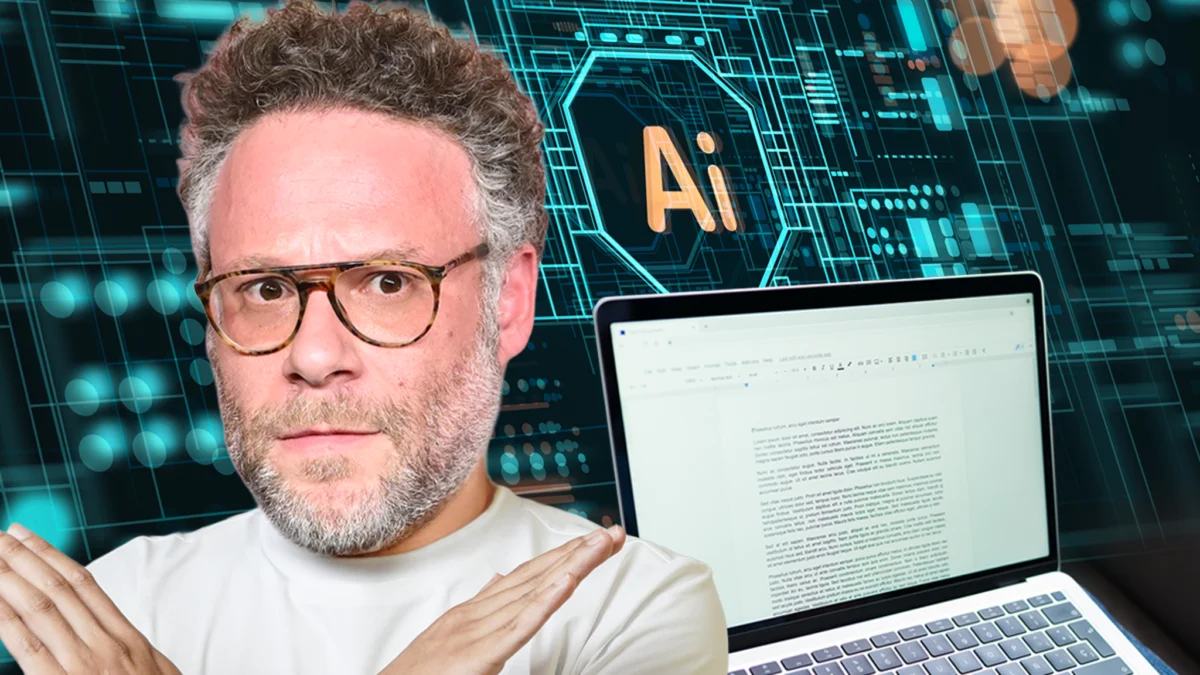
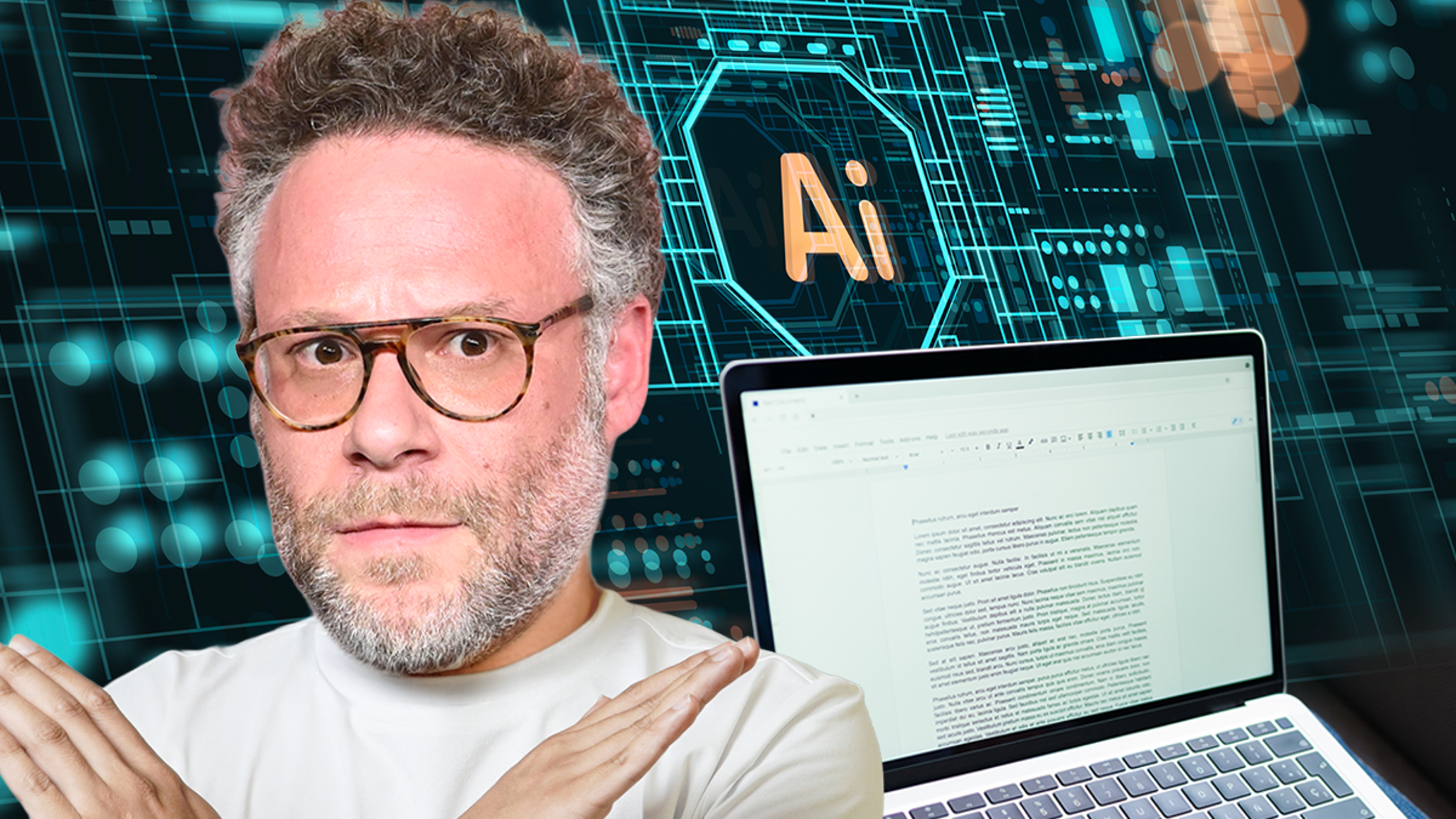
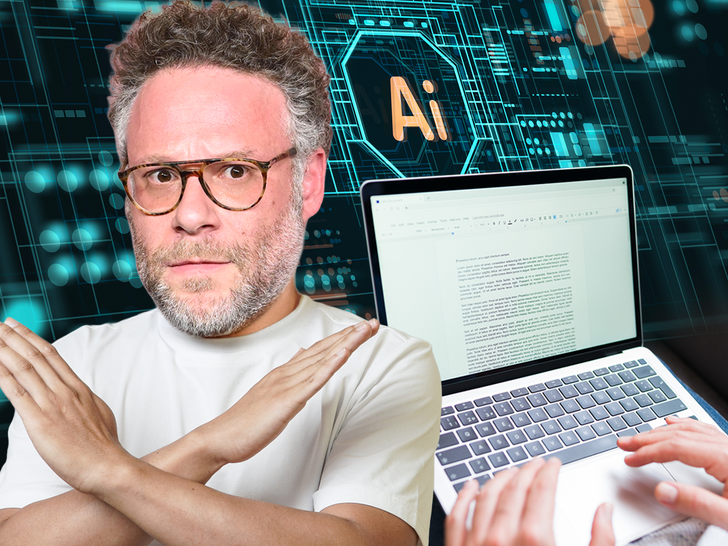
Hollywood luminary Seth Rogen has unequivocally expressed his disdain for artificial intelligence (A.I.) in the realm of creative writing, dismissing A.I.-generated content as "stupid dog s***" and asserting that any writer who relies on such technology is fundamentally unsuited for the profession. Speaking in an interview with Brut., the actor, writer, and producer articulated a profound belief in the intrinsic value of the human creative process, positioning it as paramount to the final product and essential for anyone aspiring to the title of a writer. Rogen’s forceful comments, delivered on May 16, 2026, ignite further debate within an entertainment industry already grappling with the burgeoning influence and disruptive potential of advanced A.I. technologies.
Rogen’s Unwavering Stance on Creative Authenticity
Rogen, known for his distinctive comedic voice and prolific output across film and television, including hits like Superbad, Pineapple Express, and This Is the End, argued vehemently against the notion that A.I. could ever genuinely replicate or enhance the human act of storytelling. His critique extends beyond mere quality concerns, delving into the philosophical core of what it means to be a creator. For Rogen, the act of writing is not merely about assembling words into a coherent narrative but is deeply embedded in the struggle, the personal investment, and the unique perspective that only a human mind can bring. He emphasized that a true writer finds joy and meaning in the "process" itself – the brainstorming, the drafting, the revisions, the moments of frustration and breakthrough – rather than solely in the efficiency or speed of generating a script.
"I truly don’t understand when people share A.I. content like it’s as good as what a human being can make," Rogen stated, underscoring a perceived disconnect in appreciating genuine artistry. His blunt assessment of A.I. "slop" as "stupid dog s***" serves to highlight his belief that such content lacks the soul, nuance, and unpredictable spark that defines human creativity. This perspective resonates with a significant segment of the creative community that fears A.I. threatens to homogenize narratives, dilute originality, and ultimately devalue the unique contributions of human artists.
The Broader Hollywood AI Debate: A Chronology of Conflict and Adaptation
Rogen’s comments arrive at a critical juncture for the entertainment industry, which has been embroiled in an intense, multi-faceted discussion about the role and regulation of A.I. for several years. The foundational concerns surrounding A.I.’s impact on creative professions reached a fever pitch during the landmark Hollywood labor disputes of 2023. Both the Writers Guild of America (WGA) and the Screen Actors Guild – American Federation of Television and Radio Artists (SAG-AFTRA) included robust protections against uncontrolled A.I. usage as central demands in their respective strikes.
Timeline of Key Developments:
- Early 2023: As generative A.I. tools like ChatGPT gain mainstream prominence, concerns among writers and actors begin to escalate. Initial discussions focus on copyright, fair compensation, and the potential for A.I. to generate script outlines, character concepts, or even full screenplays, thereby diminishing the need for human writers.
- May-September 2023: The WGA goes on strike, with A.I. protections forming a significant pillar of their negotiations. Writers demand that A.I. not be used to write or rewrite literary material, that A.I. cannot be considered "source material," and that A.I.-generated material not affect a writer’s credit or compensation.
- July-November 2023: SAG-AFTRA joins the WGA on strike, raising alarms about the use of A.I. to replicate actors’ voices, likenesses, and performances without consent or fair compensation. The fear of "digital doubles" being used indefinitely without additional payment becomes a major point of contention.
- September 2023: The WGA reaches a tentative agreement, securing some of the strongest A.I. protections in any industry contract to date. The deal establishes that A.I. cannot write or rewrite literary material, nor can it be used to train A.I. on writers’ material.
- November 2023: SAG-AFTRA concludes its strike with its own set of A.I. protections, including provisions for informed consent and fair compensation for the use of digital replicas.
- Early 2024: Despite the new union agreements, the debate continues. Industry figures begin to articulate diverse perspectives on A.I.’s future. Tyler Perry, a prominent filmmaker and studio owner, publicly announces in February 2024 that he is considering incorporating A.I. extensively into his production processes. He even puts a halt on a massive studio expansion project, citing advancements in A.I. as a primary factor, implying that the technology could significantly reduce the physical infrastructure and human labor required for filmmaking.
- April 2026: Actress and producer Reese Witherspoon urges industry professionals to embrace A.I. rather than resist it, suggesting it’s an inevitable wave that creative individuals should learn to ride. She frames it as an opportunity for innovation and efficiency, warning against being left behind.
- May 2026: Seth Rogen delivers his strong condemnation of A.I.-assisted writing, firmly aligning himself with the preservation of human creative integrity and the traditional craft of storytelling.
- Early 2026 (exact date prior to Rogen’s statement): The Academy of Motion Picture Arts and Sciences, custodians of the prestigious Oscars, announces new eligibility rules. Significantly, A.I.-generated actors and screenplays primarily written using A.I. will not be considered for the Academy Awards. This decision marks a pivotal institutional stance, aiming to safeguard the human element in filmmaking’s highest honors.
Divergent Industry Perspectives: Preservation vs. Progress
The entertainment industry remains deeply divided on A.I.’s future, creating a landscape of both apprehension and opportunity. The contrasting views of Rogen, Perry, and Witherspoon highlight the complexity of the challenge.
The Academy’s Stance: Safeguarding Human Artistry
The Academy’s move to exclude A.I.-generated content from Oscar consideration is a significant institutional endorsement of human creativity. This decision reflects a desire to preserve the integrity and prestige of the awards, ensuring they remain a celebration of human achievement in filmmaking. For many, the Oscars serve as a benchmark of artistic excellence, and allowing A.I. to compete would fundamentally alter that perception, potentially eroding the value of human-made works. This stance aligns with the sentiment of many artists who believe true art originates from human experience, emotion, and intellect, elements that A.I., despite its sophistication, cannot authentically replicate. The Academy’s decision provides a clear signal that while A.I. may become a tool, it should not become the primary author or performer in works seeking top industry recognition.
The Proponents: Efficiency and Innovation
On the other side are figures like Tyler Perry and Reese Witherspoon, who see A.I. as an inevitable and potentially transformative force. Perry’s decision to reconsider his studio expansion due to A.I. advancements speaks volumes about the perceived economic benefits. A.I. could automate tedious tasks, accelerate post-production, generate visual effects, and even streamline script development, potentially reducing labor costs and production timelines. For independent filmmakers or studios with tighter budgets, A.I. might offer unprecedented access to sophisticated tools previously available only to major players.
Reese Witherspoon’s call to "get on the A.I. train" before it speeds by reflects a common Silicon Valley ethos of embracing technological disruption. She and others envision A.I. not as a replacement, but as a powerful new tool in a creator’s arsenal. A.I. could assist in world-building, generate endless iterations of character dialogue for brainstorming, or even help analyze audience data to inform storytelling choices. This perspective emphasizes adaptability and innovation, suggesting that those who learn to harness A.I. will gain a competitive edge in a rapidly evolving industry. It’s a pragmatic approach that prioritizes staying relevant and exploring new creative frontiers.
The Nuance of the Creative Process and Economic Realities
Rogen’s emphasis on the "process" being as important as the "finished product" touches upon a crucial aspect of artistic endeavor. For many writers, the act of creation is not merely a means to an end but a deeply personal and often therapeutic journey. The struggle to find the right words, to craft compelling characters, and to weave intricate plots contributes to the unique voice and authenticity of a piece. If A.I. streamlines this process to the point of eliminating the human struggle, the resulting work, in Rogen’s view, may lack depth, originality, and genuine emotional resonance.
However, the economic realities of Hollywood are undeniable. The pressure to produce content faster, more affordably, and for a global audience is immense. Studios and producers are constantly seeking efficiencies. A.I. promises to deliver some of these efficiencies, potentially lowering production costs, accelerating development cycles, and allowing for rapid content generation. This clash between the preservation of human artistry and the pursuit of economic efficiency forms the core tension of the current debate.
Implications for the Future of Storytelling and Creative Labor
The ongoing integration of A.I. into the entertainment industry carries profound implications across several fronts:
- Job Market Transformation: While A.I. may displace some roles, it is also likely to create new ones, such as A.I. prompt engineers, A.I. ethicists, and specialists in A.I.-assisted content refinement. The demand for purely generative A.I. will be balanced against the enduring need for human oversight, curation, and the unique spark of originality.
- Redefinition of Authorship: The question of who owns the copyright to A.I.-generated content, or content created with significant A.I. assistance, remains complex. This will necessitate new legal frameworks and industry standards for attribution and compensation.
- Ethical Considerations: The potential for A.I. to perpetuate biases present in its training data, generate misleading "deepfakes," or exploit the likenesses of actors raises significant ethical concerns that require careful regulation and responsible deployment.
- Artistic Evolution: A.I. could push the boundaries of storytelling in unforeseen ways, enabling entirely new forms of interactive narratives, personalized content, or immersive experiences. The challenge will be to harness these capabilities without sacrificing the human touch that makes stories compelling.
- The Hybrid Model: The most probable future scenario involves a hybrid model where A.I. serves as a sophisticated tool for human creators, assisting with research, data analysis, brainstorming, and repetitive tasks, thereby freeing up human artists to focus on higher-level creative ideation and emotional depth.
Seth Rogen’s passionate declaration serves as a potent reminder that despite technological advancements, the human element in art remains fiercely defended by many. His insistence that a writer must love the "process" is a call to uphold the intrinsic value of human creativity, even as the industry navigates a future increasingly shaped by algorithms. The Hollywood debate over A.I. is far from settled, representing a pivotal moment where the industry must decide how to balance innovation with the preservation of its most fundamental asset: the unique, irreplaceable spark of human artistry.