

Batto, who describes himself as something of a "YouTube ethnographer," has spent years curating the debris of the digital age. His previous work, including the Certain Moments To Remember series, established a fascination with the formative decade of YouTube, an era defined by the "Charlie Bit My Finger" viral phenomenon and the introduction of the front-facing camera. With this latest feature, Batto shifts from short-form compilations to a sprawling investigation of how a single event can harness the diffuse energy of the world in one direction.
The Digital Archeology of June 25, 2009
The methodology behind the film is as much an exercise in data mining as it is in filmmaking. Batto’s process involved scouring the depths of YouTube, often sorting search results from "bottom-to-top" to find videos with views in the single digits. This approach unearths the raw, unpolished reactions of teenagers in their bedrooms, amateur film reviewers, and mourners who felt a sudden, urgent need to document their grief for an audience that, at the time, barely existed.
The film utilizes a specific visual device to convey the sheer volume of data: a rotating prism where each side is a five-by-four grid of twenty simultaneous videos. This "overwhelmed" aesthetic reflects the reality of the internet on that specific Thursday in 2009. As the film cuts from footage of a Spanish cathedral to an ultrasound to a group of refugees on a lifeboat, the viewer is forced to confront the impossible task of cataloging every human experience occurring in the shadow of a global news event.
Batto’s work-in-progress screenings revealed a playlist of over 800 videos, a collection that continued to grow even as the film neared completion. This obsessive curation mirrors the subject matter of his 2024 short documentary, Honeycomb, which focused on the phenomenon of catalytic converter thefts. In that film, Batto drew a parallel between looters hacking precious metals from the undercarriages of cars and archivists "mining" the internet for lost media. Both acts involve finding untapped value in places where it is least expected.
Chronology of a Global Shockwave
To understand the weight of Batto’s film, one must revisit the specific chronology of June 25, 2009. The day began with the news of the passing of Farrah Fawcett, an iconic figure of 1970s television, who died at age 62 after a long battle with cancer. However, by mid-afternoon Pacific Time, the narrative of the day shifted violently.
At approximately 12:22 p.m. PT, paramedics were called to Michael Jackson’s rented mansion in Holmby Hills, Los Angeles. By 2:26 p.m., he was pronounced dead at the Ronald Reagan UCLA Medical Center. The news first broke via the celebrity news outlet TMZ, marking a pivotal moment in journalism where a digital-first tabloid outpaced traditional news giants like CNN and the Los Angeles Times.
The resulting surge in internet traffic was unprecedented. Google’s search engine initially interpreted the massive influx of searches for "Michael Jackson" as a distributed denial-of-service (DDoS) attack, leading to a temporary crash of Google News. Twitter reported a doubling of its usual tweet-per-second rate, causing the service to buckle under the pressure. Wikipedia editors engaged in a "near-instantaneous" update war as they scrambled to verify the news. Batto’s film captures this digital frenzy not through the lens of the platforms themselves, but through the people living through it.
Supporting Data: The Scale of the Cultural Impact
The cultural footprint of Jackson’s death, as documented in the film, is supported by staggering data from that period. In the week following his death, Jackson became the first artist to sell more than one million digital tracks in a single week. His albums took over the top nine spots on Billboard’s Top Pop Catalog Albums chart.
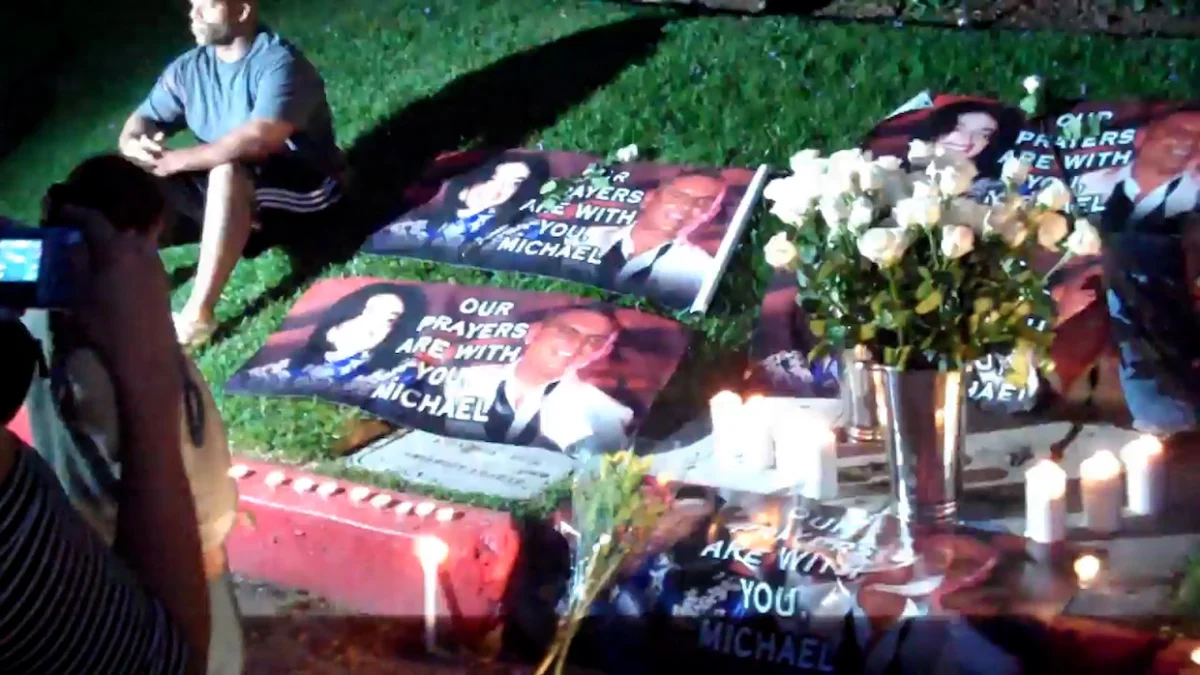
Furthermore, the film highlights a peculiar moment of geographical and digital confusion. In the hours following the news, mourners gathered at the Hollywood Walk of Fame. However, because Jackson’s star was covered by a red carpet for the premiere of the film Bruno, fans mistakenly gathered around the star of a British radio DJ also named Michael Jackson. This "double memorial" serves as a metaphor for Batto’s broader theme: the inherent noise and occasional inaccuracy of a world trying to process information in real-time.
Batto’s film also documents the "vlog boom" of 2009. According to YouTube’s historical data, the year 2009 saw a significant increase in user-generated content as laptop cameras became standard. The "innocence" Batto identifies in these videos—where creators seemed indifferent to lighting, framing, or personal branding—is a hallmark of the pre-algorithmic era.
Official Responses and Public Reaction
While the film focuses on "found footage" from everyday users, it also weaves in the frantic energy of professional media. The film includes reactions to the blogger Perez Hilton, who infamously claimed Jackson’s hospitalization was a publicity stunt just minutes before the death was confirmed. The backlash against Hilton, captured in various raw vlogs, illustrates the burgeoning power of online communities to police and critique media narratives.
Inferred in the film’s structure is a reaction to the "slow obsolescence" of modern search engines. Batto’s commentary suggests that the internet of 2009 was a "single chorus," whereas the internet of 2026 is a series of "fleeting" moments that cannot be held. This sentiment is echoed by media critics who argue that the "Main Character" era of the internet has made collective mourning more performative and less communal than it was fifteen years ago.
Broader Impact and Implications for Digital Archiving
There’ll Likely Be Michael Jackson Vigils Throughout the Night raises critical questions about the future of history. As search engines become increasingly cluttered with AI-generated content and optimized advertisements, the ability to reconstruct a specific day in the past becomes a specialized skill. Batto’s role as an "archivist-thief" suggests that the history of the 21st century will not be found in official government archives, but in the "overpopulated graveyard of lost media" on platforms like YouTube.
The film’s premiere featured a unique distribution method: refurbished third-generation iPod Touches preloaded with the film. This choice emphasizes the physical reality of the technology that defined the 2009 era. The inclusion of a Michael Jackson impersonator at the premiere—who reportedly fell asleep—adds a layer of surrealism to the project, highlighting the exhaustion that comes with trying to sustain a legacy in a high-speed digital world.
The broader implication of Batto’s work is a warning about the "fleeting" nature of current digital experiences. When asked if a similar film could be made about a contemporary figure, Batto noted that today’s internet doesn’t create discernible, "holdable" moments in the same way. The fragmentation of platforms (TikTok, X, Instagram, Discord) means that there is no longer a single "town square" where the world gathers.
In conclusion, Batto’s feature serves as a time capsule of a transitionary period in human history. It captures the exact moment when the world moved from being observers of media to active participants in its creation. By documenting the vigils for the King of Pop, Batto has created a vigil for the internet itself—a memorial for a time when the digital cacophony still felt like a shared human experience. The film stands as a testament to the untapped value sitting at the bottom of our digital history, waiting for an archivist with the right tools to strip it for parts and show us what we have lost.