



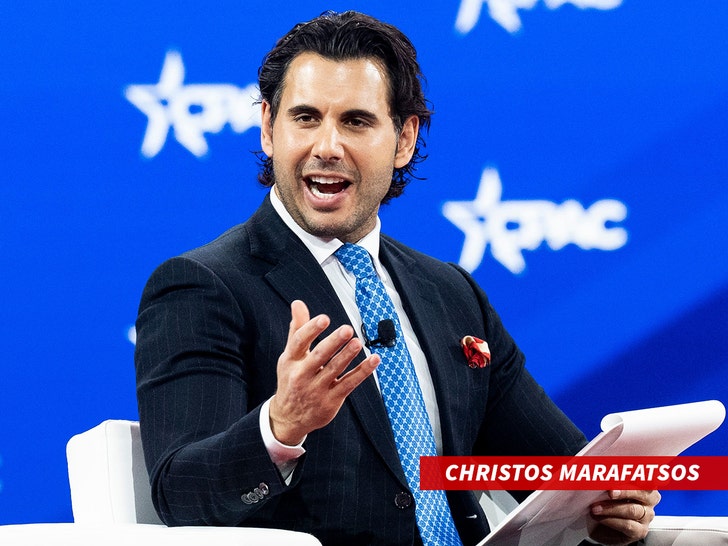
Ambassador Kimberly Guilfoyle’s diplomatic tenure has recently come under intense public scrutiny following revelations regarding her close association with Christos Marafatsos, a registered lobbyist who has maintained a visible presence at high-level official government meetings. According to an investigative report published by The Wall Street Journal, Marafatsos—whom former President Donald Trump previously characterized as a "good-looking guy"—holds no official elected or appointed government position, yet he has routinely accompanied the ambassador across international borders, raising significant ethics and conflict-of-interest questions within diplomatic circles.
The core of the controversy centers on energy sector developments in southeastern Europe. As the United States Ambassador to Greece, Guilfoyle has reportedly used her diplomatic platform to encourage various foreign governments in the region to establish commercial natural gas agreements with Aktor, a prominent energy and construction conglomerate. Public records and investigative findings highlight a financial and professional nexus between these diplomatic efforts and Marafatsos, who has received approximately $160,000 in payments as a registered lobbyist for the very same gas conglomerate.
The Anatomy of a Diplomatic Controversy
The intersection of official state business and private lobbying has long been a sensitive subject in international relations, particularly when involving high-profile diplomatic appointments. Ambassadors are tasked with representing United States foreign policy interests, fostering bilateral trade, and maintaining the highest standards of integrity free from the appearance of commercial favoritism. The involvement of an uncredentialed, paid lobbyist in official bilateral discussions has thus alarmed ethics watchdogs and political analysts alike.

The investigation by The Wall Street Journal details how Marafatsos has integrated himself into Guilfoyle’s official itinerary. Beyond merely attending closed-door diplomatic meetings across multiple countries, Marafatsos reportedly facilitated high-level travel, including flying the ambassador to Bulgaria aboard a private jet. This level of access and logistical support granted to an individual representing private commercial interests has intensified inquiries into the boundaries separating state diplomacy from corporate lobbying.
Furthermore, Aktor has been aggressively expanding its footprint in the regional energy market, recently securing a massive $6 billion infrastructure and gas deal in neighboring Albania. Critics and ethics experts point to the temporal and strategic alignment between Guilfoyle’s advocacy for Aktor across various Balkan nations and Marafatsos’s financial ties to the company as prima facie evidence of a potential conflict of interest, prompting calls for a formal transparency review by oversight committees.
Chronology of Events and Escalating Scrutiny
While the precise timeline of Marafatsos’s integration into Ambassador Guilfoyle’s inner circle remains a focal point of ongoing journalistic inquiries, the progression of events highlights a steady escalation in joint international travel and high-stakes commercial advocacy.
Initially, Marafatsos operated primarily within political and business networking circles, gaining notable recognition within conservative political spheres where Trump famously noted his appearance. Over time, however, his proximity to Guilfoyle’s official ambassadorial duties deepened.

- Appointment and Deployment: Following her diplomatic posting as Ambassador to Greece, Guilfoyle assumed responsibilities aimed at stabilizing energy markets and reducing European reliance on non-allied energy sources, a mandate that frequently intersects with private infrastructure development.
- Expansion of Commercial Advocacy: In the course of her diplomatic duties, Guilfoyle began engaging with regional governments—including nations such as Bulgaria and Albania—advocating heavily for commercial partnerships involving Aktor.
- The Lobbying Nexus: Financial disclosures and investigative reporting revealed that Marafatsos was concurrently retained by Aktor, collecting $160,000 for lobbying services connected to the conglomerate’s regional gas and infrastructure projects.
- Private Transit and Joint Appearances: Marafatsos’s involvement transcended standard public lobbying when he was documented coordinating private transportation, including a private jet flight transporting the ambassador to Bulgaria for meetings relevant to the region’s energy architecture.
- Media Exposure and Legal Pushback: The publication of The Wall Street Journal investigative piece brought the arrangement into the public spotlight, prompting immediate legal defenses and formal statements from the involved parties denying any regulatory or ethical violations.
Official Responses and Legal Defense
In the wake of the investigative revelations, legal representatives and corporate entities connected to the situation have pushed back vigorously against allegations of impropriety. Aktor released a comprehensive statement to the media defending the legitimacy of its commercial operations and denying that the ambassador engaged in any form of improper advocacy.
"Guilfoyle wasn’t improperly promoting Aktor’s commercial interests," representatives for the conglomerate asserted, maintaining that all corporate expansion initiatives and international bids complied fully with applicable local and international legal frameworks.
Similarly, legal counsel representing Ambassador Guilfoyle, Christos Marafatsos, and Aktor have issued unified denials regarding any wrongdoing. These legal responses emphasize that diplomatic advocacy for American or allied commercial interests in strategic sectors—such as European energy diversification—is a standard component of ambassadorial duties designed to bolster regional stability and economic partnership. They contend that the professional interactions between the ambassador and Marafatsos do not constitute a violation of ethics guidelines or conflict-of-interest statutes.
Broader Policy Implications and Ethical Analysis
The situation surrounding Ambassador Guilfoyle and Christos Marafatsos underscores the persistent challenges of maintaining strict ethical boundaries in modern diplomacy, where commercial energy interests frequently overlap with geopolitical strategy.
Energy security has become a paramount concern for United States foreign policy in Europe, particularly following efforts to decouple European energy grids from hostile state actors. In this high-stakes environment, American diplomats are often called upon to advocate for reliable corporate partners capable of executing massive infrastructure projects. However, when private lobbyists—especially those with personal or financial ties to specific firms—gain unfettered access to confidential diplomatic sessions and facilitate private transit for sitting ambassadors, it blurs the line between public service and private enterprise.
Ethics experts note that even in the absence of explicit legal violations, the appearance of a conflict of interest can severely undermine the credibility of United States diplomatic missions abroad. Foreign governments may grow skeptical of American policy directives if perceived as favoring specific corporate balance sheets over broad strategic alliances.
As oversight bodies, congressional committees, and international media outlets continue to examine the financial disclosures and travel logs associated with this case, the incident serves as a significant case study on the need for rigorous transparency, strict enforcement of ambassadorial ethics codes, and clear demarcations between statecraft and commercial lobbying in contemporary international relations.