


The independent animated feature Jinsei, a deeply personal and meticulously crafted debut by Suzuki Ryuya, offers a starkly different vision of animation, diverging significantly from the mainstream anime industry’s typical offerings. This crowdfunded film, entirely hand-drawn by the filmmaker himself over an intensive 18-month period, premiered at the prestigious Annecy International Animation Film Festival, immediately signaling its artistic ambition and unique narrative approach.
A Century of Identity: The Protagonist’s Journey
Jinsei unfolds across the span of a century, tracing the life of a protagonist whose identity is in constant flux. The narrative commences in the early 2000s, marked by a tragic accident where the protagonist’s mother is killed by an elderly driver, and his father is left in a coma. Thrust into the care of his stepfather, Hiroshi, the young boy embarks on a life defined by anonymity. He is never referred to by his given name, and the audience, too, is kept in the dark about his true appellation. His early years are spent in quietude within a housing complex in Tohoku, a region of Japan that has itself faced significant historical and geographical challenges. It is here that he encounters Kin, a transfer student, and, drawing inspiration from his father’s memory, harbors aspirations of becoming an idol.
The film’s central conceit revolves around the protagonist’s ever-shifting nomenclature. From birth to death, he is called by a multitude of names, encompassing derogatory terms and various stage names. This deliberate lack of a fixed identity underscores the film’s exploration of selfhood, societal perception, and the often-impersonal nature of fame. The narrative is structured into ten distinct chapters, each segment charting a significant period in his eventful 100-year existence. This episodic structure, while contributing to the film’s unique rhythm, also necessitates a degree of interpretive engagement from the viewer, as the transitions between chapters are not always strictly linear or logically connected.
A Pervasive Melancholy: The Film’s Aesthetic and Emotional Core
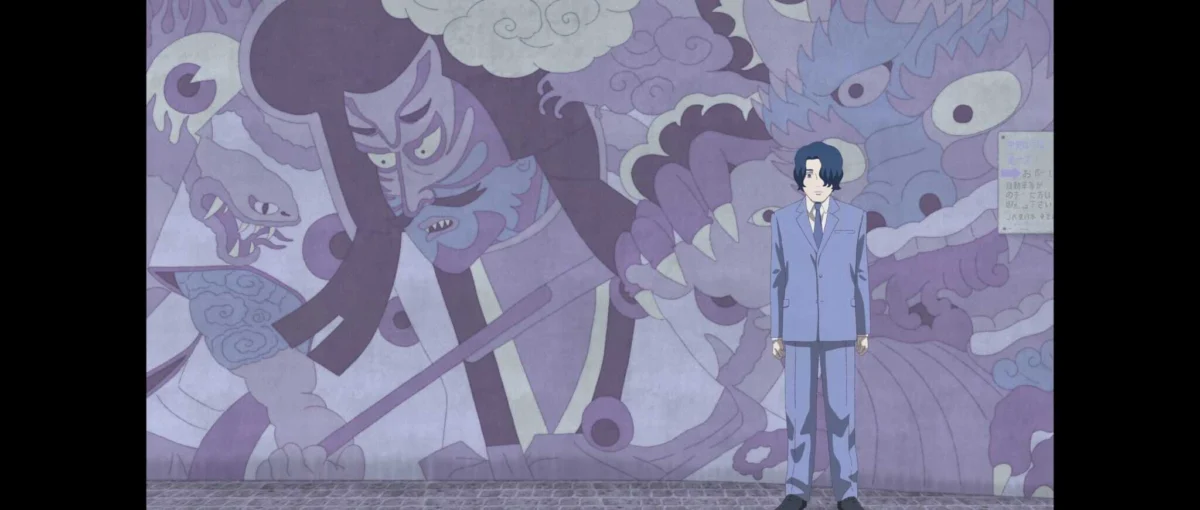
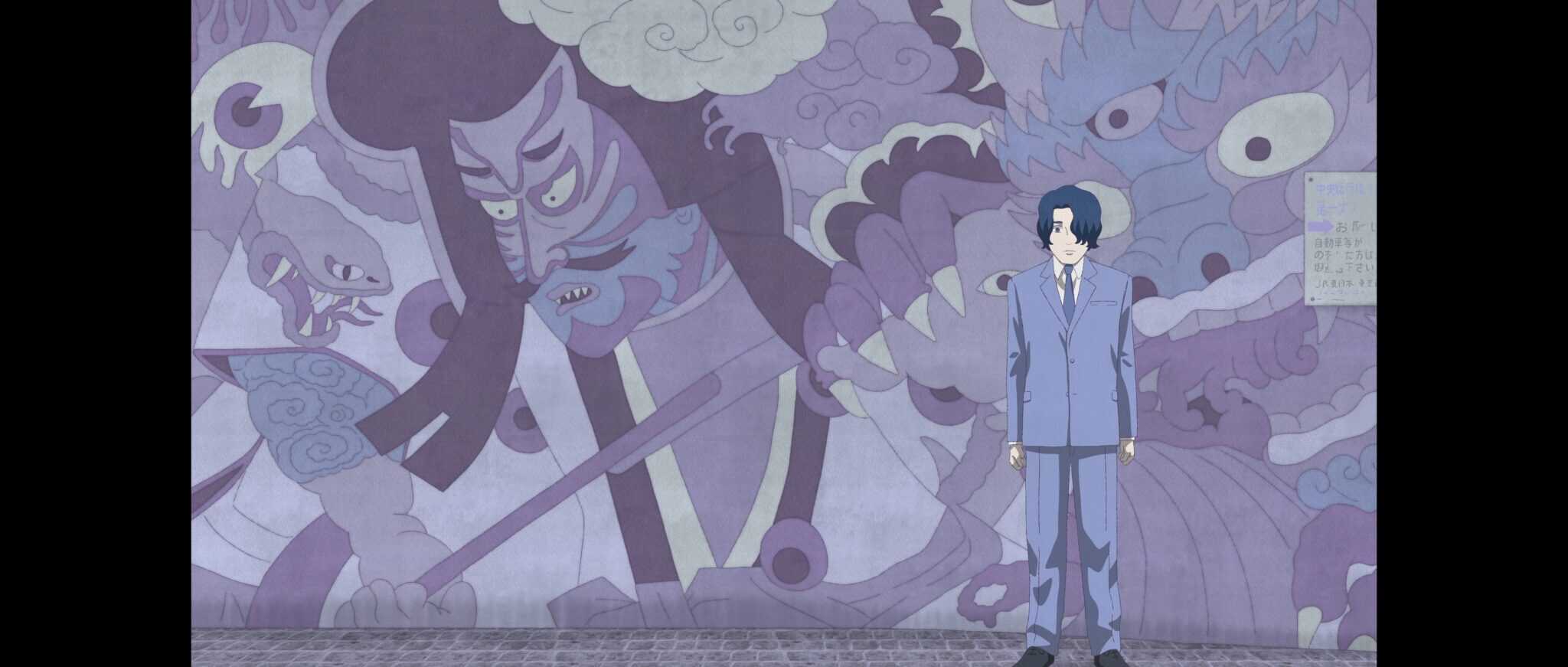
A profound sense of melancholia permeates every facet of Jinsei. This pervasive sentiment is not confined to the narrative itself but is deeply interwoven with the film’s cinematic elements. The character designs, rendered with a deliberate lack of ostentation, and the muted color palette, dominated by desaturated tones and a spectrum of grays, all contribute to this somber atmosphere. Even the protagonist’s manner of speech reinforces this overarching feeling of quiet resignation and introspection. This aesthetic choice imbues the film with a bleak and pessimistic tone, a characteristic that persists even as more vibrant colors are introduced in later segments. However, this unwavering commitment to its melancholic tone ultimately serves the narrative effectively, creating a cohesive emotional landscape. It is this shared emotional undercurrent that bridges the disparate segments of the story, providing a unifying thread that binds the protagonist’s long and complex life.
The film’s deliberate avoidance of a conventionally linear narrative, especially as the story progresses, can be seen as a stylistic choice to mirror the often fragmented and unpredictable nature of memory and lived experience. This approach challenges the viewer to piece together the protagonist’s journey, emphasizing the subjective nature of his narrative and his place within a larger societal context.
Critique of the Entertainment Industry: A Dog-Eat-Dog World
A significant thematic thread woven through Jinsei is a sharp critique of the entertainment industry. The film portrays this world as a cutthroat environment, rife with exploitation and predatory practices. The early segments, focusing on the protagonist’s initial foray into the entertainment world, highlight the harsh realities faced by aspiring artists. The depiction of the boys’ group and its manager, Mr. Shiratori, draws palpable parallels to the influence and alleged methods of Johnny Kitagawa, the late founder of Johnny & Associates, a powerful Japanese talent agency. The film’s commentary on this particular sector of the industry is unsparingly critical, depicting it as a system designed to commodify and control young talent.
However, Jinsei subverts expectations by presenting a narrative where the victims, in a surprising turn of events, do not remain passive. The film depicts their retaliation in a manner that is described as shocking, suggesting a potent and visceral response to years of mistreatment and exploitation. This element of agency and defiance, even in its most extreme forms, offers a counterpoint to the pervasive helplessness that characterizes much of the protagonist’s early life.
The later arcs of the film, while perhaps less immediately engaging than the exposé of the entertainment industry, continue to explore themes of power dynamics and societal control. The protagonist’s ongoing struggle against forceful authority, a consistent element throughout his life, is highlighted as a particularly compelling and rarely explored aspect of cinematic storytelling. This persistent defiance against oppressive structures speaks to a deeper commentary on individual resilience and the human spirit’s capacity to resist subjugation, even in the face of overwhelming odds. The "Japan arc," though its references may become more oblique, continues this thematic exploration, suggesting a broader engagement with national identity and historical consciousness.
Artistic Merit: A Testament to Independent Vision
The artistic execution of Jinsei is a testament to Suzuki Ryuya’s singular vision and dedication. The film’s art, presented in a letterbox format, showcases a high level of craftsmanship, despite the evident constraints of a low-budget independent production. The sketches and background art are rendered with an impressive aesthetic quality, even if they do not exhibit the hyper-detailed character design often found in mainstream anime.
The animation itself, while not characterized by extensive motion—an understandable concession given the production limitations—effectively contributes to the film’s overall impact. The deliberate sparseness of movement, coupled with rapid cuts, enhances the otherworldly and melancholic atmosphere that defines Jinsei. This stylistic choice is not a weakness but rather a deliberate artistic decision that amplifies the film’s thematic concerns and emotional resonance.
The musical score deserves particular mention for its subtle yet profound impact. The soundtrack is described as remarkably fitting, working in harmony with the visual and narrative elements to create a cohesive and immersive experience. The music does not overpower but rather subtly enhances the mood and emotional weight of each scene, underscoring the film’s melancholic undertones and its moments of quiet contemplation.
Broader Impact and Implications
Jinsei stands as a significant achievement in independent animation. It offers a rewarding viewing experience, rich in sentiment and featuring a narrative that delivers pointed social commentary. Its success in garnering attention at international festivals like Annecy underscores the growing global appreciation for diverse and artistically ambitious animated works that challenge conventional norms.
The film’s existence, born from crowdfunding and the solitary effort of its creator, highlights the evolving landscape of film production, where independent artists can bypass traditional gatekeepers to bring their unique visions to audiences. Jinsei serves as a compelling alternative to the often formulaic and cliché-ridden narratives that can characterize mainstream anime. It demonstrates that powerful storytelling, profound emotional depth, and critical social observation can be achieved through distinct artistic approaches, proving that innovation and artistic integrity can flourish outside the established industry paradigms. The film’s exploration of identity, the exploitation within creative industries, and the enduring human spirit in the face of adversity resonates universally, making it a significant contribution to contemporary cinema. Its unique aesthetic and narrative structure offer a fresh perspective on animated storytelling, encouraging a deeper engagement with the medium and its potential for meaningful expression.