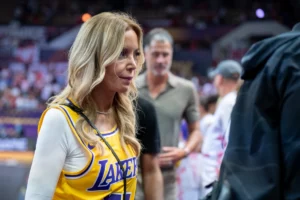


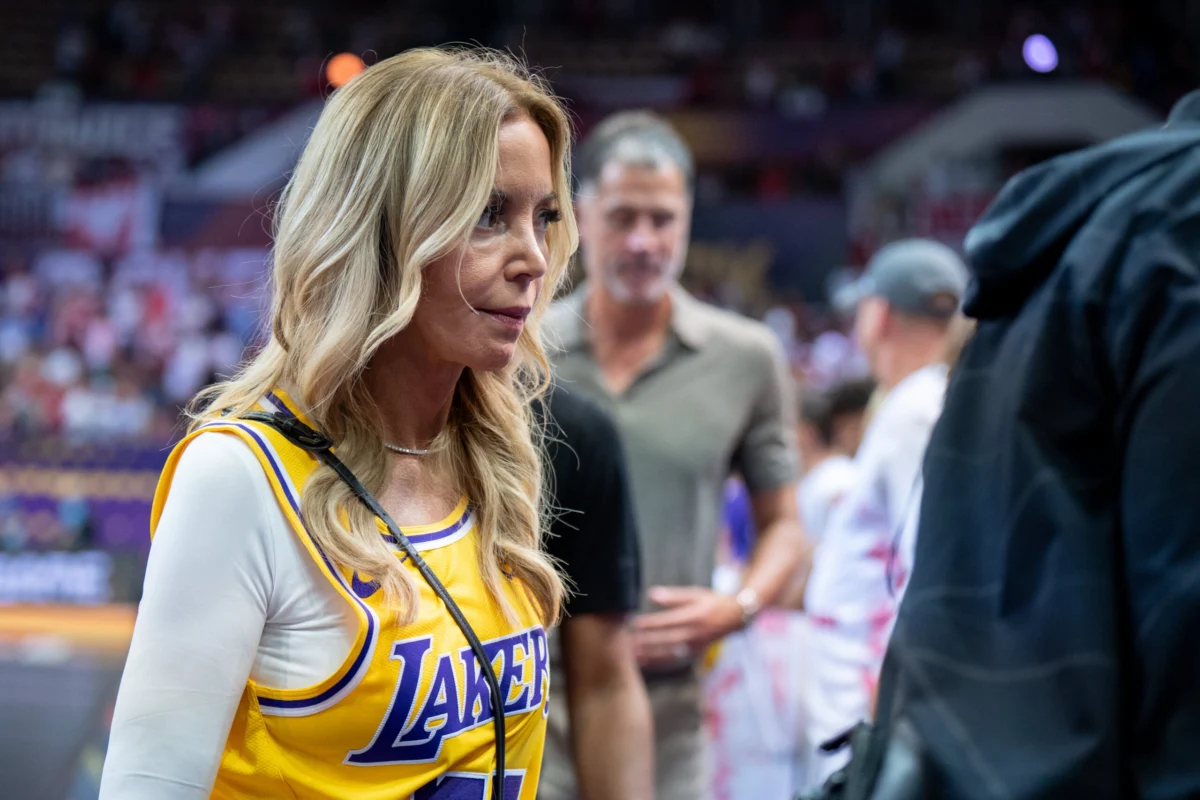
The ownership structure of the Los Angeles Lakers, one of the most storied franchises in professional sports, has plunged into a high-stakes legal confrontation as Jeanie Buss, the team’s governor and controlling owner, officially challenged her siblings’ efforts to divest the family’s remaining interest in the organization. The dispute arises following reports that five of her siblings—Jim, Johnny, Janie, Joey, and Jesse—sought to sell the family’s 17.8% ownership stake in the franchise to a group led by former Disney CEO Bob Iger and Thrive Capital founder Joshua Kushner.
The friction pits the long-standing governing authority of Jeanie Buss against the collective desire of her siblings to liquidate their positions. In a formal letter obtained by CNBC and authored by her attorney, Adam Streisand, Jeanie Buss declared that she has not consented to any such sale, asserting that any attempt by her siblings to unilaterally offload the stake is legally void. This impasse places the future of the franchise’s ownership group in significant jeopardy, potentially complicating the acquisition efforts of Iger and Kushner, who recently moved to secure a majority stake from minority owner Mark Walter.
A Legal Foundation for Control
At the heart of the conflict is a 2017 court order and the governing documents of the JAB Trust, the entity through which the Buss family holds its interest in the Lakers. According to Streisand’s letter, the trust requires the approval of its co-trustees—Jeanie, Janie, and Joey Buss—for any sale of the 17.8% stake to proceed. Crucially, the trust mandate stipulates that the co-trustees must manage the shares in a manner that ensures Jeanie Buss maintains her status as the Controlling Owner of the franchise.
The legal argument presented by Jeanie Buss’s camp is clear: any move to divest these shares without her approval, or in a way that threatens the 15% ownership threshold required for her to remain governor, would constitute a breach of fiduciary duty and a direct violation of existing court mandates. By asserting that her siblings are in contempt of court should they proceed, Jeanie Buss has effectively frozen the transaction, forcing the matter into a potential judicial review.
Chronology of the Lakers Ownership Saga
The current tension is the culmination of years of internal family dynamics and shifting ownership strategies. The timeline of the Lakers’ ownership stability has been a subject of intense scrutiny since the passing of patriarch Jerry Buss in 2013.
- 2013: Jerry Buss passes away, leaving the controlling interest of the Lakers to his children via the JAB Trust.
- 2017: Following internal disputes regarding the management of the team, a court order is established to define the governance structure, cementing Jeanie Buss’s role as the primary decision-maker.
- August 2026: Reports emerge that Iger and Kushner have reached an agreement to purchase the majority stake held by Mark Walter. This deal, valued at approximately $12.5 billion, sets a new benchmark for NBA franchise valuations.
- August 2026 (Mid-month): The five siblings issue a public statement confirming their intention to sell the family’s remaining 17.8% stake, citing a desire to move forward with the process.
- August 17, 2026: Jeanie Buss issues a formal letter through her legal counsel, explicitly opposing the sale and threatening legal action against her siblings should they attempt to bypass the trust’s requirements.
Financial Context and Market Valuations
The valuation of the Los Angeles Lakers has seen an astronomical rise over the last decade. When Jerry Buss purchased the team in 1979, the price tag was roughly $16 million. Today, the $12.5 billion valuation agreed upon by Mark Walter and the prospective buyers underscores the immense growth of NBA franchises as global media properties.
The 17.8% stake held by the JAB Trust represents a significant portion of the team’s equity. If the sale were to proceed, the combined acquisition of the Walter stake and the family interest would grant Iger and Kushner approximately 83% control of the team. This consolidation of power would fundamentally alter the Lakers’ boardroom, potentially marginalizing the Buss family’s historical influence entirely.
Industry analysts suggest that Jeanie Buss’s reluctance to sell is rooted in more than just legal maneuvering. Maintaining the family’s stake is seen as a strategic move to preserve the "Lakers legacy," a brand identity that the Buss family has cultivated for over 40 years. From a financial standpoint, holding the stake allows the family to continue benefiting from the exponential growth of NBA media rights, international expansion, and the ongoing appreciation of professional sports assets.

The Siblings’ Position
In their statement, the five siblings emphasized their commitment to the franchise, framing the decision to sell as a carefully considered move. "The Los Angeles Lakers have never been just a basketball team. They have been one of the greatest privileges of our lives," the statement read. The siblings noted that their focus remained on the well-being of the fans and the community, suggesting that their exit is intended to be handled through an orderly process.
However, the disconnect between their public stance and Jeanie Buss’s legal response highlights a deep-seated fracture in the family’s alignment. While the siblings express unity in their desire to divest, they face the harsh reality of the governance structures their father put in place to ensure the team remained under the control of a unified family interest—or, in the absence of that, under the firm control of the designated governor.
Broader Implications for the NBA
The situation has sent shockwaves through the NBA, a league that prides itself on stability at the ownership level. While professional sports leagues often encourage, and sometimes require, clear chains of command, the public nature of the Buss family dispute creates a rare instance of internal conflict being litigated in real-time.
NBA Commissioner Adam Silver and the league’s Board of Governors typically prefer to avoid public feuds among team owners. If the dispute remains unresolved, the league may be forced to intervene or demand a mediated settlement to ensure that the team’s business operations—ranging from sponsorship deals to stadium management—are not hampered by the ownership uncertainty.
Furthermore, the involvement of high-profile figures such as Bob Iger and Joshua Kushner adds a layer of complexity. As titans of industry, they are likely accustomed to transactional finality. Being caught in the middle of a family legal battle potentially complicates their investment thesis. If the sale cannot be completed as planned, Iger and Kushner may be forced to renegotiate their terms with Mark Walter or walk away from the deal entirely.
Future Outlook: Can the Rift Be Healed?
As the parties move toward potential litigation, the most likely outcome is a period of intense negotiation. Jeanie Buss’s leverage is significant, backed by the 2017 court order. Her siblings, meanwhile, possess a significant minority stake that they clearly wish to liquidate, likely to diversify their own portfolios or capitalize on the current market peak.
The resolution will hinge on whether the siblings can find a way to satisfy the trust’s requirements while simultaneously achieving their goal of exiting the Lakers ownership structure. If they cannot, the Lakers may remain a family-controlled entity for the foreseeable future, even as the team’s valuation continues to rise in the global market.
For the fans of the Los Angeles Lakers, the dispute serves as a reminder of the delicate balance between professional sports as a business and as a family legacy. While the front office continues to focus on the basketball court, the boardroom remains the site of a battle that could define the next chapter of one of the most successful franchises in the history of North American sports. As legal teams exchange filings and the deadline for the proposed sale approaches, the basketball world watches to see if the Buss family can resolve their differences or if the court will have to decide the future of the purple and gold.