The chilling reality of Vichy France’s complicity in the Holocaust is brought into stark focus with the release of Daniel Auteuil’s directorial effort, "When the Night Falls." Set against the grim backdrop of August 1942, the film delves into a specific, harrowing episode: the mass round-up and screening of foreign Jews in occupied France. While the grand narratives of World War II often overshadow more localized atrocities, Auteuil’s film aims to illuminate a critical moment of bureaucratic indifference and clandestine heroism, a story deemed vital for remembrance and the prevention of future horrors. However, the cinematic execution of this significant historical chapter, while attempting to convey the weight of its subject matter, ultimately struggles to maintain a cohesive and compelling narrative pace, oscillating between moments of palpable tension and protracted, almost languid, exposition.
The Historical Crucible: Lyon, August 1942
The film centers on the city of Lyon, a key administrative hub within the Vichy-controlled zone, during a period of escalating persecution. In August 1942, the collaborationist Vichy regime, under the authority of Marshal Philippe Pétain, intensified its efforts to identify and detain "undesirables," with a particular focus on foreign Jewish populations. This policy was not a spontaneous act but a calculated extension of the anti-Semitic legislation enacted by the Vichy government since 1940, which included the establishment of special commissions to review the status of foreign nationals and the implementation of quotas for Jewish individuals in various professions.
The specific event depicted in "When the Night Falls" is the organization of a screening commission tasked with deciding the fate of thousands of foreign Jews arrested and interned in makeshift camps, such as the abandoned barracks alluded to in the film’s opening. These arrests were often carried out in conjunction with German authorities, underscoring the extent of French collaboration. The objective was to determine who among the arrested would be exempt from deportation to the Nazi extermination camps in Eastern Europe. This process was inherently flawed, designed to facilitate rather than prevent the deportations, and relied on a bureaucratic apparatus that stripped individuals of their humanity, reducing them to files and classifications.
Architects of Bureaucracy and Resistance
At the heart of the narrative are two pivotal figures: Gilbert Lesage, a young civil servant within the Service Social des Étrangers (Social Services for Foreigners), and Father Alexandre Glasberg, a committed humanitarian. Lesage, portrayed by Antoine Reinartz, finds himself tasked with the unenviable duty of establishing and leading this screening commission. His role places him directly within the machinery of the state, a position that forces him to confront the moral compromises inherent in his work. The film suggests Lesage volunteers for this role, perhaps a complex motivation stemming from a desire to influence the process from within or a naive belief in the possibility of navigating the system for humanitarian ends.
Opposing the cold calculus of the state is Father Alexandre Glasberg, played with commendable gravitas by Daniel Auteuil himself. Glasberg, a Catholic priest of Jewish origin, was a prominent figure in the French Resistance and dedicated his efforts to aiding and rescuing Jews throughout the occupation. His presence in the commission, alongside other selected members like Lili Tager (Luàna Bajrami), represents a crucial intersection of bureaucratic power and humanitarian defiance. The film posits that these individuals, caught between the oppressive dictates of Vichy and the clandestine networks of mutual support that emerged in occupied France, would ultimately have to unite their efforts to subvert the state’s deadly agenda.
The Mechanics of Dehumanization
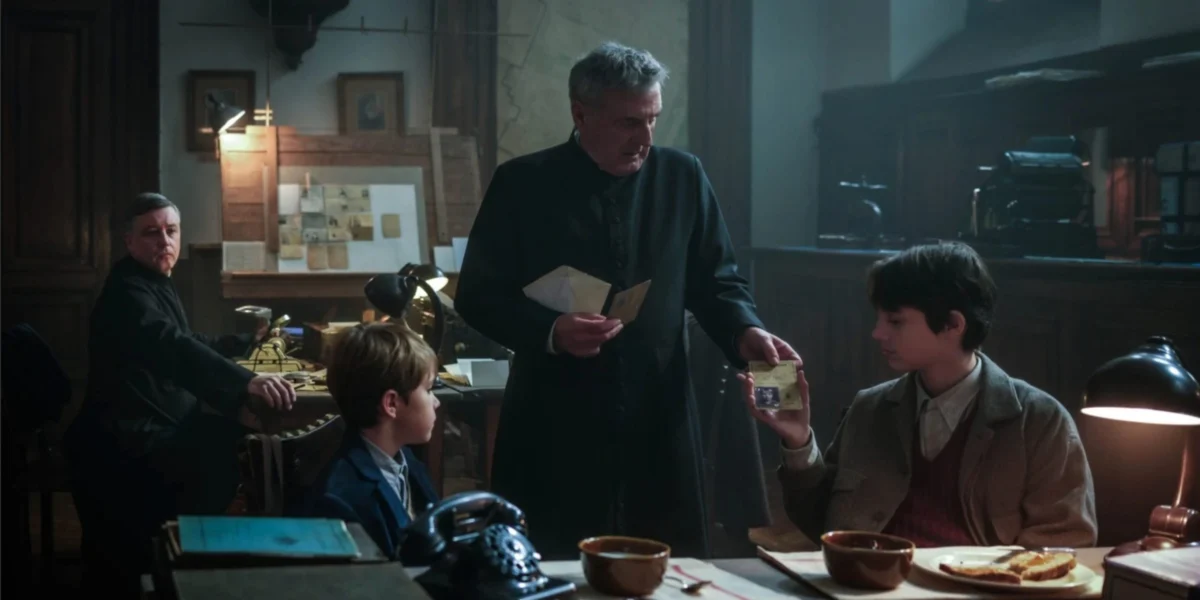
The film’s early sequences, particularly a silent, atmospheric depiction of a black car navigating a camp of abandoned barracks, effectively establish a mood of dread and foreboding. The art direction, with its emphasis on foreboding structures, immediately immerses the viewer in the bleak reality of the internment camps. However, once dialogue is introduced, the screenplay adopts a clinical and detached tone, which, while perhaps intended to mirror the administrative nature of the proceedings, can feel alienating for the audience. This stylistic choice, though deliberate, presents a challenging entry point into the film’s emotional core.
A significant portion of "When the Night Falls" is dedicated to the procedural aspects of the screening commission. Scenes depicting the formation of the committee and their meetings, where they meticulously review individual cases, form the narrative’s backbone. The dialogue, often characterized by its bureaucratic jargon and legalistic phrasing, serves to underscore the absurdity and cruelty of using administrative processes to facilitate genocide. A chilling line, "This isn’t about fairness, it’s about efficiency," encapsulates the film’s critique of how bureaucratic systems can be weaponized to obscure moral responsibility and expedite inhumane policies.
The film highlights the internal conflict within the commission, with Lesage, Glasberg, and Tager working, to varying degrees, to exempt as many individuals as possible. They face opposition from members who are more compliant with Vichy’s directives, creating a palpable tension within the confined spaces of their meetings. This focus on the minutiae of their efforts emphasizes the immense pressure and risk involved in any attempt to circumvent the state’s apparatus.
A Narrative Acceleration and its Consequences
As the conspirators devise a clandestine method to save a significant number of individuals from deportation, the film experiences a sudden and dramatic acceleration in its pacing. This rapid progression through the crucial act of rescue, the very reason for the film’s existence, feels somewhat abrupt. The reviewer notes that this expediency leaves the narrative feeling incomplete, as if the more dramatic and consequential elements of the story are rushed through after a prolonged period of procedural detail. This uneven pacing can detract from the overall impact, leaving the audience with a sense of narrative imbalance.
Visual Storytelling: A Matter of Focus
Daniel Auteuil’s directorial choices in "When the Night Falls" are characterized by a stylistic flair that, according to critics, does not always serve the clarity of the storytelling. The extensive use of extreme close-ups and focus shifts is cited as a technique that often distracts rather than illuminates. Furthermore, the interplay between the altered camera focus and the film’s inherently dark lighting is seen as obscuring the visual narrative, to the point where the film’s title, "When the Night Falls," is perceived as being taken too literally in its visual execution. This overreliance on visual effects, without a clear narrative purpose, can undermine the emotional resonance of the story.
Broader Implications and Historical Significance
"When the Night Falls" tackles a vital, albeit often overlooked, facet of World War II history: the active participation of the Vichy regime in the persecution of Jews. The film highlights the dual nature of this period, where state-sanctioned brutality coexisted with acts of profound courage and resistance. The story of Gilbert Lesage and Father Alexandre Glasberg serves as a testament to the individuals who, despite operating within oppressive systems, found ways to uphold their humanity and fight for the lives of others.
The historical context of Vichy’s anti-Semitic policies is crucial to understanding the film’s subject matter. Following the armistice with Germany in June 1940, the Vichy government, led by Marshal Pétain, enacted a series of discriminatory laws. These laws stripped Jews of their rights, confiscated their property, and ultimately paved the way for their deportation. The "Yellow Badge" decree in May 1942, requiring Jews to wear a yellow star, was a precursor to the intensified round-ups. The Vel’ d’Hiv Roundup in July 1942, a massive raid in Paris that resulted in the arrest of over 13,000 Jews, is a stark reminder of the scale of these operations, and the events in Lyon depicted in the film were part of this broader, systematic persecution.
The film’s portrayal of the screening commission underscores the insidious nature of bureaucratic antisemitism. The process of "screening" was designed to create a veneer of legality and administrative necessity for actions that were fundamentally criminal. By focusing on the internal workings of such a commission, "When the Night Falls" exposes how even seemingly minor bureaucratic decisions, when amplified by state power and malevolent intent, could have devastating consequences.
Echoes of Resistance and the Price of Silence
The actions of figures like Father Glasberg were not isolated incidents. Throughout occupied France, individuals from various walks of life risked their lives to help Jews escape persecution. Religious institutions, clandestine networks, and ordinary citizens formed a complex web of resistance that saved thousands. The film implicitly acknowledges these broader networks of mutual support, highlighting the contrast between the state’s oppressive machinery and the grassroots efforts of those who defied it.
The film’s central conflict between bureaucratic expediency and humanitarian intervention resonates with the broader historical struggle against the Holocaust. It poses critical questions about individual responsibility within authoritarian regimes and the moral imperative to act in the face of injustice. The fact that the film chooses to focus on a specific, localized event suggests a desire to humanize the historical narrative, to move beyond abstract statistics and examine the individual lives caught in the gears of persecution.
The Legacy of Memory and the Cinema’s Role
"When the Night Falls" serves as a reminder of the importance of cinematic storytelling in preserving historical memory. While the film’s execution may be subject to criticism regarding its pacing and visual style, its commitment to bringing this specific chapter of history to light is commendable. The reviewer’s observation that the film’s most effective sequences are those that eschew dialogue and characters, relying instead on atmosphere and sound to convey dread, speaks to the power of visual and auditory storytelling in evoking emotional responses.
The film’s existence at film festivals like Cannes signals a continued interest in exploring the complexities of World War II and the Holocaust, not just in terms of grand battles or overarching ideologies, but in the more intimate and often overlooked human dramas that unfolded. By commemorating the actions of those who fought against the tide of barbarism, such as Lesage and Glasberg, and by exposing the mechanisms of state-sponsored persecution, films like "When the Night Falls" contribute to a collective understanding that is essential for ensuring that such atrocities are never repeated. The film’s ultimate success lies not only in its narrative but in its contribution to a broader cultural dialogue about remembrance, responsibility, and the enduring power of the human spirit in the face of unimaginable darkness. The story it tells, though flawed in its cinematic delivery, is undoubtedly a story that deserves to be told and remembered.