

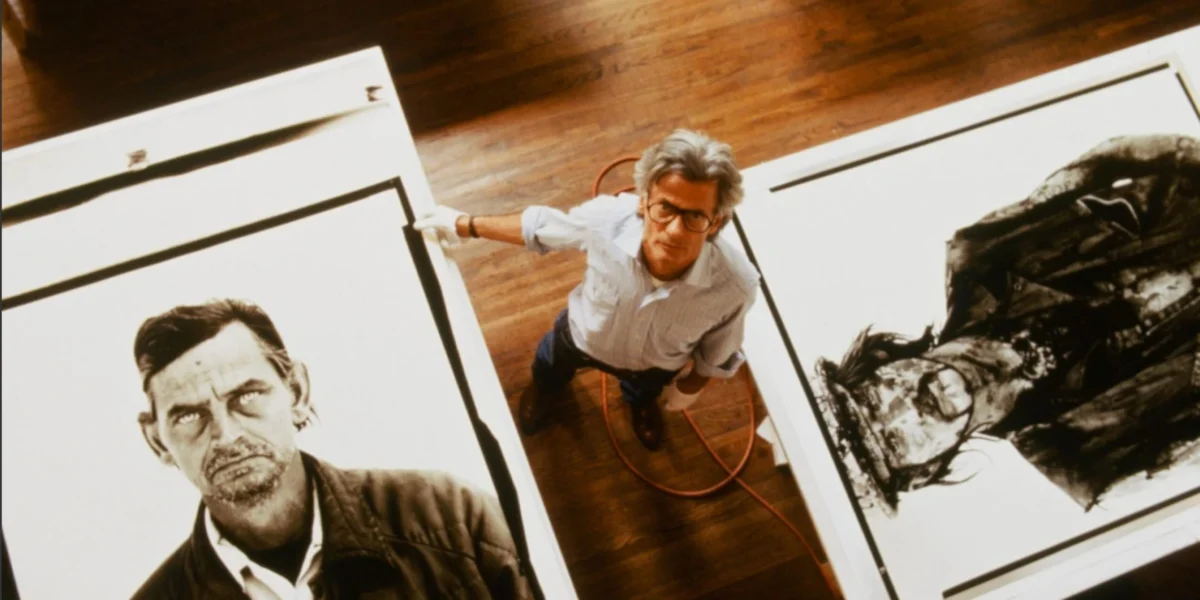
Ron Howard’s latest documentary, "Avedon," offers a comprehensive and insightful exploration into the life and enduring legacy of Richard Avedon, a photographer whose revolutionary vision fundamentally reshaped the landscape of visual communication in the 20th century. The film, running at a precise 104 minutes, meticulously traces Avedon’s six-decade career, delving into his artistic process, his profound influence on fashion, portraiture, and social commentary, and the intricate tapestry of his personal life. Drawing upon unprecedented access to Avedon’s personal archives, the documentary weaves together never-before-seen stills, intimate behind-the-lens footage, and candid new interviews with his closest collaborators, offering a nuanced portrait of an artist who was as complex as his iconic images.
The Architect of the Image-Driven World
Richard Avedon’s name may not be as immediately recognizable to the general public as some of the subjects he immortalized, but his visual lexicon is undeniably ingrained in the fabric of our modern, image-saturated world. From the glamorous sheen of Hollywood stars like Marilyn Monroe and Audrey Hepburn to the gravitas of world leaders and the ethereal presence of international supermodels, Avedon’s lens didn’t merely capture culture; it actively sculpted it. His photographs possessed a unique power to transcend mere representation, becoming blueprints for aesthetic trends, social perceptions, and the very way we understand celebrity and identity. The documentary posits that understanding Avedon’s work is key to understanding the evolution of visual language in the 20th century, suggesting that every iconic image is, in essence, only half the story, with the artist’s intent and context forming the crucial other half.
A Journey Through a Photographic Titan’s Life
Directed by acclaimed filmmaker Ron Howard, "Avedon" is a testament to the enduring power of Avedon’s artistry. The film is a collaborative effort, developed in partnership with the Richard Avedon Foundation, which has granted access to a treasure trove of material. This includes archival footage of Avedon himself speaking, providing direct insight into his thoughts, motivations, and artistic philosophy. These archival segments are interwoven with new interviews featuring a distinguished roster of individuals who knew and worked closely with Avedon. Among them are Isabella Rossellini, the renowned actress and model who graced many of Avedon’s iconic fashion shoots; Lauren Hutton, another supermodel whose career was significantly shaped by Avedon’s vision; and John F. Avedon, the photographer’s son, offering a unique and personal perspective on his father’s life.
These new interviews are pivotal in painting a multifaceted portrait of Avedon. They shed light on his "singular eye," his relentless pursuit of authenticity, and, at times, his reportedly "somewhat ruthless nature" and uncompromising approach to his craft. While the documentary is described as a "solid, well-made documentary that successfully communicates Avedon’s essence," the inclusion of these personal accounts also acknowledges the complexities of the artist, moving beyond a purely celebratory narrative. The film’s structure is often likened to a "filmed Wikipedia entry," a straightforward yet engaging chronicle that efficiently updates viewers on the pivotal moments of Avedon’s life and career.
The White Canvas: Stripping Back to Reveal the Truth
A signature element of Richard Avedon’s photographic style was his masterful use of stark, white backgrounds. This deliberate choice was not merely an aesthetic preference; it was a fundamental tool in his artistic arsenal, designed to strip away extraneous detail and focus intensely on the subject. By eliminating the distractions of elaborate sets or environments, Avedon compelled viewers to confront the raw essence of his subjects – their expressions, their postures, and the unspoken narratives etched onto their faces. The documentary highlights this technique, emphasizing Avedon’s desire to "strip back the glitz and glamour and capture real moments."
This pursuit of authenticity is perhaps most powerfully exemplified in Avedon’s work with Marilyn Monroe. The film points to a specific, split-second shot of the Hollywood icon, where she momentarily relinquishes her practiced, magical smile, revealing a glimpse of a more unguarded, perhaps even vulnerable, persona. This image, captured despite Monroe’s larger-than-life public image, serves as a poignant illustration of Avedon’s patience, determination, and profound ability to coax a sense of reality from even the most carefully constructed public figures. It underscores his belief that the true essence of a person could be revealed by peeling back the layers of artifice.
Archival Depth and Contemporary Resonance
Ron Howard’s directorial approach in "Avedon" is characterized by a deliberate deference to the artist himself. The documentary effectively positions Avedon as the central figure, utilizing extensive archival footage to construct its narrative backbone. The visual elements are meticulously curated to complement Avedon’s own words, guiding the spectator through the chronological progression of his life and the evolution of his artistic vision. While the film is acknowledged as being "fairly formulaic" and not attempting to break new ground in documentary filmmaking, its strength lies in its ability to let Avedon’s own work and words speak volumes. The "revolutionary" aspect, it seems, is inherent in Avedon’s groundbreaking contributions themselves, which the film serves to illuminate.
The inclusion of newly filmed interviews with Avedon’s son, Isabella Rossellini, and Lauren Hutton adds layers of personal insight and emotional resonance that might otherwise be absent. These contemporary perspectives help to fill out the narrative and provide context for Avedon’s archival pronouncements. An interesting visual dichotomy emerges within the film: the crisp, contemporary digital aesthetic of the new interviews contrasts with the grainy, evocative texture of the archival footage. This contrast subtly underscores the passage of time and the evolution of the photographic medium, hinting at the digital era that Avedon, sadly, did not live to fully witness. The film implicitly raises a point about contemporary image-making, suggesting that while technology has democratized photography, the true impact still lies in the artist’s "direction and creative choices." Howard’s own "standard-looking digital shots" are interpreted as a deliberate choice to keep the focus firmly on Avedon’s story, allowing the artist’s legacy to be the primary visual force.
Beyond the Studio: Avedon’s Cultural Footprint
The documentary also delves into less widely known aspects of Avedon’s influence. For instance, it reveals that Avedon himself was the inspiration for the iconic 1957 film "Funny Face," starring Audrey Hepburn and Fred Astaire. Leonard Gershe, the screenwriter for "Funny Face," was a friend of Avedon’s and based the film’s narrative, including a central romance, on Avedon’s own life experiences and his relationship with model Dorcas Marie Nowell. This connection, often overlooked by even avid cinephiles, highlights the profound and far-reaching impact Avedon had on popular culture, extending beyond the realm of photography into the world of cinema.
Furthermore, "Avedon" does not shy away from exploring the photographer’s political convictions and how they informed his work. The film touches upon Avedon’s powerful portraiture from the Vietnam War era, capturing the stark realities faced by ordinary Vietnamese people in Saigon. His willingness to challenge authority and convention is also noted, including his apparent "indifference to upsetting those with power," exemplified by his encounters with royalty. While his personal life is explored, primarily through the lens of his son, the documentary acknowledges that Avedon could be a "ruthless" figure, a facet that the film, perhaps due to its close collaboration with the Richard Avedon Foundation, does not delve into with extreme depth. This is identified as a potential limitation, with some viewers perhaps feeling the film leans towards being a "puff piece," a respectful but perhaps not entirely unvarnished tribute.
A Lasting Impression: The Enduring Power of Avedon’s Vision
Ultimately, Ron Howard’s "Avedon" stands as a dignified and compelling tribute to one of America’s most seminal photographers. It is a "respectful portrait" that is poised to captivate anyone with an interest in Avedon’s remarkable life and groundbreaking career. Whether one is familiar with his elegant spreads in the world’s most prestigious magazines or simply recognizes his iconic portraits of stars like Marilyn Monroe and Audrey Hepburn, the documentary offers valuable insights. Howard successfully synthesizes Avedon’s artistic process, his political sensibilities, and the sheer force of his visual impact, presenting a cohesive and illuminating narrative.
The film’s implications extend beyond a mere biographical account. In an era where the sheer volume of images can sometimes dilute their impact, "Avedon" serves as a powerful reminder of the transformative potential of a singular artistic vision. Avedon’s ability to infuse his subjects with a palpable sense of their inner lives, to challenge conventional notions of beauty and celebrity, and to use his platform for social commentary, continues to resonate. His legacy is not just in the photographs themselves, but in the enduring principles of observation, authenticity, and courageous artistic expression that he championed. The documentary, by bringing these principles to the forefront, ensures that Richard Avedon’s influence will continue to shape the visual narratives of generations to come. His work serves as a foundational text for understanding how photography has not only mirrored our world but actively contributed to its ongoing construction.