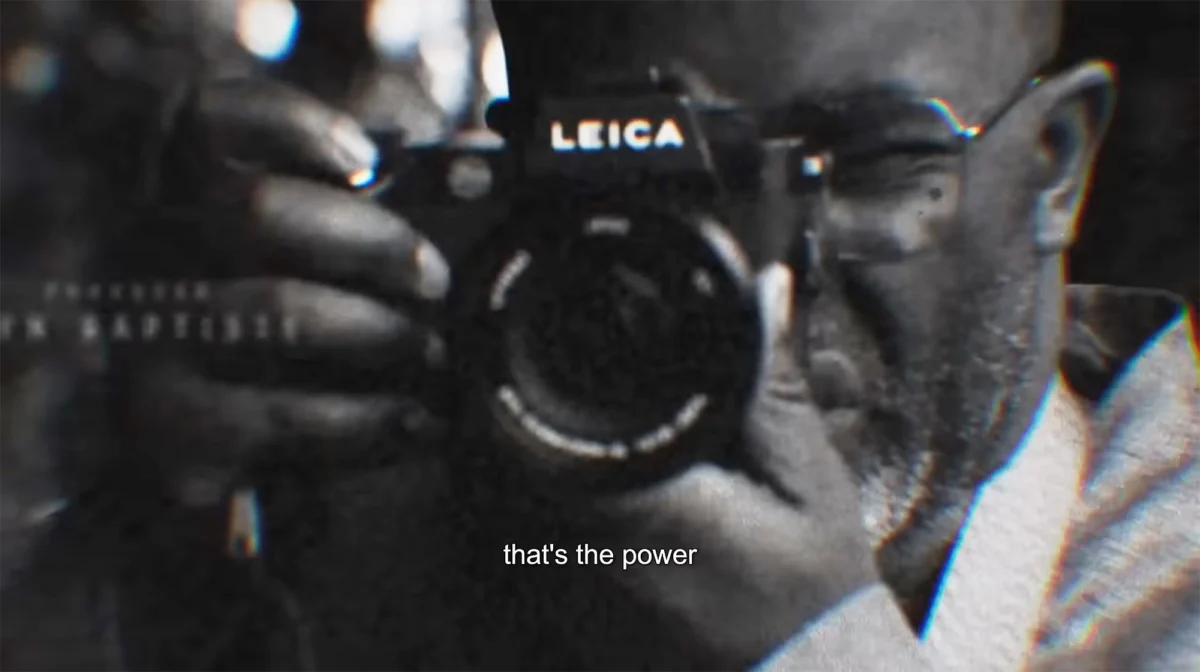
Watermelon Pictures has released the first look teaser trailer for Shoot the People, a powerful new documentary film offering an intimate profile of renowned British-Nigerian photographer and Oscar-nominated filmmaker Misan Harriman. Directed by BAFTA-winning UK filmmaker Andy Mundy-Castle, the film delves into Harriman’s distinctive approach to documenting the urgency, power, and humanity behind global protest movements driving social change, from the Black Lives Matter protests of 2020 to the Palestinian liberation movement. Having garnered significant acclaim on the festival circuit, including its world premiere at SXSW London 2025 and a major stop at DOC NYC in the fall, Shoot the People is slated for a limited theatrical release in art house cinemas across the US beginning June 19th, 2026, followed by its UK debut on July 10th, 2026. The documentary promises to provide profound insights into the challenges and strategies inherent in the pursuit of societal transformation, all viewed through the discerning and often self-reflective lens of Harriman.
The Visionary Behind the Lens: Misan Harriman’s Journey
Misan Harriman has emerged as a singularly influential voice in contemporary photography, celebrated for his compelling imagery that transcends mere documentation to capture the raw emotion and transformative potential of human endeavor. Born in Nigeria and based in the United Kingdom, Harriman initially forged a successful career in finance before pivoting to photography in 2017, a transition that would rapidly redefine his professional trajectory and artistic purpose. His rapid ascent in the photographic world is a testament to his innate talent and profound sensitivity. He quickly gained international recognition for his poignant and often iconic portraits, notably becoming the first Black male photographer to shoot a cover for British Vogue in September 2020, featuring frontline workers in the midst of the COVID-19 pandemic. His portfolio also includes significant milestones such as the official portrait announcing the second pregnancy of Meghan Markle and Prince Harry, the Duke and Duchess of Sussex, further solidifying his position within the echelons of global visual culture. Beyond his commercial successes, Harriman’s true passion lies in photojournalism, where his work often serves as a critical mirror reflecting societal injustices and the collective human spirit striving for change. He is also recognized for his role as the Chair of the Cultural Committee at the Royal Academy of Arts, underscoring his deep engagement with the academic and institutional aspects of art, which may inform the original description of him as an "academical photographer." This blend of commercial success, artistic integrity, and institutional involvement positions Harriman uniquely to comment on the power and responsibility of visual storytelling.
Harriman’s artistic philosophy, as highlighted in the film, resonates with the potent declaration: "That’s the power of art – to say another world is possible, and we have the power to change things." This ethos permeates his work, transforming photographs into catalysts for dialogue and action. His commitment to humanitarian narratives extends beyond still imagery; in 2023, Harriman earned an Academy Award nomination for Best Live Action Short Film for his directorial debut, The After, a testament to his versatile storytelling prowess and his ability to translate profound emotional narratives across different mediums. This critical acclaim further elevates his standing as a multifaceted artist dedicated to exploring the human condition.
Documenting Moments of Global Significance
Shoot the People meticulously chronicles Harriman’s immersion in some of the most pivotal social movements of the recent past, providing an invaluable visual archive and a nuanced perspective on contemporary activism.

Black Lives Matter (2020)
A significant portion of the documentary focuses on Harriman’s engagement with the Black Lives Matter protests in 2020, sparked by the murder of George Floyd. His photographs from these demonstrations became instantly iconic, capturing the raw pain, righteous anger, and unwavering solidarity of protestors across the globe. Harriman’s images humanized the movement, bringing faces and stories to the headlines, and often going viral to amplify the message of racial justice. His ability to distill complex emotions into singular frames played a crucial role in shaping public perception and mobilizing support. The film explores how Harriman, despite his "person of privilege" status, navigated these emotionally charged environments, using his lens not just to observe, but to participate in the historical record, ensuring that the voices and struggles of marginalized communities were seen and heard. This section of the film is particularly poignant, offering a retrospective look at a moment that irrevocably altered global consciousness regarding systemic racism.
The Palestinian Liberation Movement
The documentary also follows Harriman as he documents the Palestinian liberation movement, a deeply complex and often contentious geopolitical issue. His decision to cover this movement underscores his commitment to shedding light on humanitarian crises and the struggles for self-determination, regardless of political sensitivities. Documenting the realities faced by Palestinians, Harriman’s work aims to cut through dominant narratives, offering a ground-level view of resilience, displacement, and the persistent quest for dignity. The film captures the inherent risks and ethical considerations involved in photojournalism in conflict zones, highlighting the courage required to bear witness and the responsibility that comes with sharing such profound human experiences with a global audience. Through Harriman’s lens, viewers gain a deeper understanding of the individuals caught within the larger political struggle, emphasizing the human cost and the ongoing fight for fundamental rights.
Broader Advocacy: Climate Change and Human Rights
Beyond these two central movements, Shoot the People also touches upon Harriman’s photographic contributions to other critical global issues, including protests against climate change inaction and the broader documentation of human rights abuses, such as the "Gaza atrocities" referenced in the film’s synopsis. His work in these areas exemplifies a consistent dedication to using his platform to advocate for a more just and sustainable world. By capturing the urgency of environmental activism and the devastating impact of conflict, Harriman’s photography serves as a powerful call to conscience, urging viewers to confront uncomfortable truths and consider their role in driving positive change. The documentary explores how his images, even in their stillness, provoke palpable reactions and foster a sense of shared humanity across diverse global contexts.
The Director’s Perspective: Andy Mundy-Castle
Guiding the narrative of Shoot the People is BAFTA-winning UK filmmaker Andy Mundy-Castle, whose previous work demonstrates a consistent commitment to socially conscious storytelling. Mundy-Castle is acclaimed for his ability to craft narratives that explore complex societal issues with empathy and critical insight. His 2022 documentary White Nanny Black Child delved into the experiences of Black children fostered by white families in the UK from the 1960s to the 1990s, earning critical praise for its sensitive handling of identity, race, and family dynamics. This background positions Mundy-Castle as an ideal director to navigate the nuanced themes present in Harriman’s work and personal reflections.
Mundy-Castle’s directorial approach in Shoot the People is characterized by an immersive style, blending Harriman’s frontline photography with intimate interviews and reflective discussions. The film is not merely a showcase of powerful images; it is a profound exploration of the photographer himself—his motivations, his ethical considerations, and his personal journey amidst global upheaval. Mundy-Castle’s vision ensures that the documentary provides a holistic portrait, allowing audiences to not only witness Harriman’s impactful work but also to understand the intellectual and emotional labor behind it. The collaboration between Harriman’s visual artistry and Mundy-Castle’s narrative craftsmanship promises a compelling and thought-provoking cinematic experience.

A Journey Through the Festival Circuit and Theatrical Release
The journey of Shoot the People from conception to its public release illustrates the rigorous process of documentary filmmaking and its strategic engagement with film festivals. The film marked its world premiere at SXSW London 2025, a prestigious platform that celebrates innovation in film, music, and technology. Premiering in London held particular significance, given Harriman’s British background and Mundy-Castle’s UK roots, allowing for a strong local connection and immediate engagement with a key audience. The reception at SXSW London set a positive tone for the film’s festival run, generating initial buzz and critical interest.
Following its European debut, Shoot the People made a notable appearance at DOC NYC in the fall of 2025. DOC NYC is one of America’s largest and most influential documentary film festivals, renowned for showcasing groundbreaking non-fiction cinema and often serving as a launchpad for Oscar-contending films. Its inclusion in DOC NYC’s lineup underscored the film’s artistic merit and its potential to resonate with a broader American audience, particularly those interested in social justice and the craft of photojournalism. The festival circuit provided invaluable opportunities for the filmmakers to gauge audience reactions, refine their messaging, and secure distribution deals.
Watermelon Pictures, recognizing the film’s profound relevance and artistic quality, acquired the distribution rights. The decision for a limited theatrical release in art house cinemas across the US and UK is a strategic one, typical for documentaries with strong artistic and social messaging. This approach allows the film to connect with discerning audiences who actively seek out thought-provoking content and appreciate the immersive experience of watching a documentary on the big screen. The US release on June 19th, 2026, followed by the UK release on July 10th, 2026, aims to maximize visibility during the summer months, providing ample opportunity for audiences to engage with Harriman’s powerful narrative. The film’s official site, watermelonpictures.com/films/shoot-the-people, serves as a central hub for further details, screenings, and engagement opportunities.
The Photographer’s Dilemma: Privilege, Effectiveness, and Dialogue
One of the most compelling aspects explored in Shoot the People is Misan Harriman’s candid self-reflection regarding his role and the efficacy of his work. As a "self-described person of privilege," Harriman grapples with inherent doubts about whether his images truly effect change or merely document suffering from a distance. This internal conflict adds a profound layer of authenticity and critical self-awareness to the film, distinguishing it from a celebratory profile.
The documentary features poignant discussions between Harriman and prominent human rights leaders, including US Representative Ilhan Omar and Martin Luther King III. These interactions are crucial, as they provide an external validation and critical perspective on Harriman’s internal questioning. Rep. Ilhan Omar, a vocal advocate for human rights and social justice, and Martin Luther King III, a living legacy of the American Civil Rights Movement, offer invaluable insights into the practicalities and philosophies of activism. Their dialogue with Harriman likely explores:

- The Ethics of Documentation: How does a photographer from a privileged background responsibly document the struggles of marginalized communities without perpetuating existing power imbalances or exploiting their pain?
- The Power vs. Limitations of Visuals: While images can galvanize public opinion, what are their ultimate limitations in translating awareness into concrete policy changes or systemic reform? How do they intersect with legislative action and grassroots organizing?
- The Role of Allies: How can individuals with platforms and privilege effectively leverage their resources to support movements they are not directly a part of, ensuring their contributions are authentic and impactful?
These conversations elevate Shoot the People beyond a simple biographical account, transforming it into a meta-commentary on the nature of advocacy itself. Harriman’s willingness to confront his own doubts and engage in critical dialogue with leading figures in human rights work underscores the film’s commitment to a nuanced and honest portrayal of activism in the 21st century. It suggests that true impact often stems from a continuous process of questioning, learning, and collaborating, rather than from a singular, unchallenged perspective.
Broader Implications: Art as a Catalyst for Social Change
Shoot the People arrives at a time when the role of visual media in shaping public discourse and galvanizing social movements is more pronounced than ever. In an age dominated by digital platforms and rapid information dissemination, a single photograph can traverse the globe in seconds, sparking conversations, igniting empathy, and challenging complacency. The documentary inherently explores the profound capacity of art, specifically photography, to serve as a catalyst for social change.
The film’s exploration of Harriman’s work highlights several key implications:
- Humanizing Global Crises: Harriman’s focus on the individual stories and raw emotions within mass movements serves to humanize complex geopolitical and social issues. By bringing the faces of protestors, victims, and activists to the forefront, his work makes abstract problems tangible and relatable, fostering greater empathy and understanding among audiences.
- Archiving History in Real-Time: Photojournalists like Harriman are essential chroniclers of contemporary history. Their images provide an immediate, unfiltered record of events as they unfold, creating a visual archive that will inform future generations’ understanding of our current struggles and triumphs. Shoot the People emphasizes the enduring value of this archival function.
- Inspiring Action and Solidarity: The visual power of protest photography often serves as a potent call to action. By witnessing the courage and conviction of those on the front lines, others are inspired to join the cause, lend their support, or at least engage in critical self-reflection. The film underscores how art can build bridges of solidarity across geographical and cultural divides.
- Challenging Narratives: In an era of widespread misinformation, independent photojournalism can play a crucial role in presenting alternative perspectives and challenging dominant, often state-controlled, narratives. Harriman’s work in sensitive areas like the Palestinian liberation movement exemplifies this crucial function of independent media.
- The Evolving Role of the Artist-Activist: The documentary ultimately portrays Harriman as an artist-activist, blurring the lines between creative expression and social responsibility. It suggests that in an increasingly interconnected world, artists have a vital role to play not just in reflecting society, but in actively shaping its trajectory towards justice and equity.
Conclusion
Shoot the People is poised to be more than just a documentary; it is an urgent and compelling cinematic experience that offers a profound meditation on the power of visual storytelling and the moral complexities of bearing witness to history. Through the extraordinary lens of Misan Harriman and the insightful direction of Andy Mundy-Castle, the film invites audiences to not only observe global protest movements but to deeply engage with the ethical dilemmas and enduring hopes that animate them. As Harriman’s poignant questionings resonate with the wisdom of human rights leaders, the documentary transcends a simple profile, becoming a vital exploration of empathy, privilege, and the unwavering belief that another world is possible. With its theatrical release in the US and UK approaching this summer, Shoot the People stands as a testament to the enduring power of art to illuminate, provoke, and ultimately inspire change, affirming that compassion and critical self-reflection are needed now more than ever.