



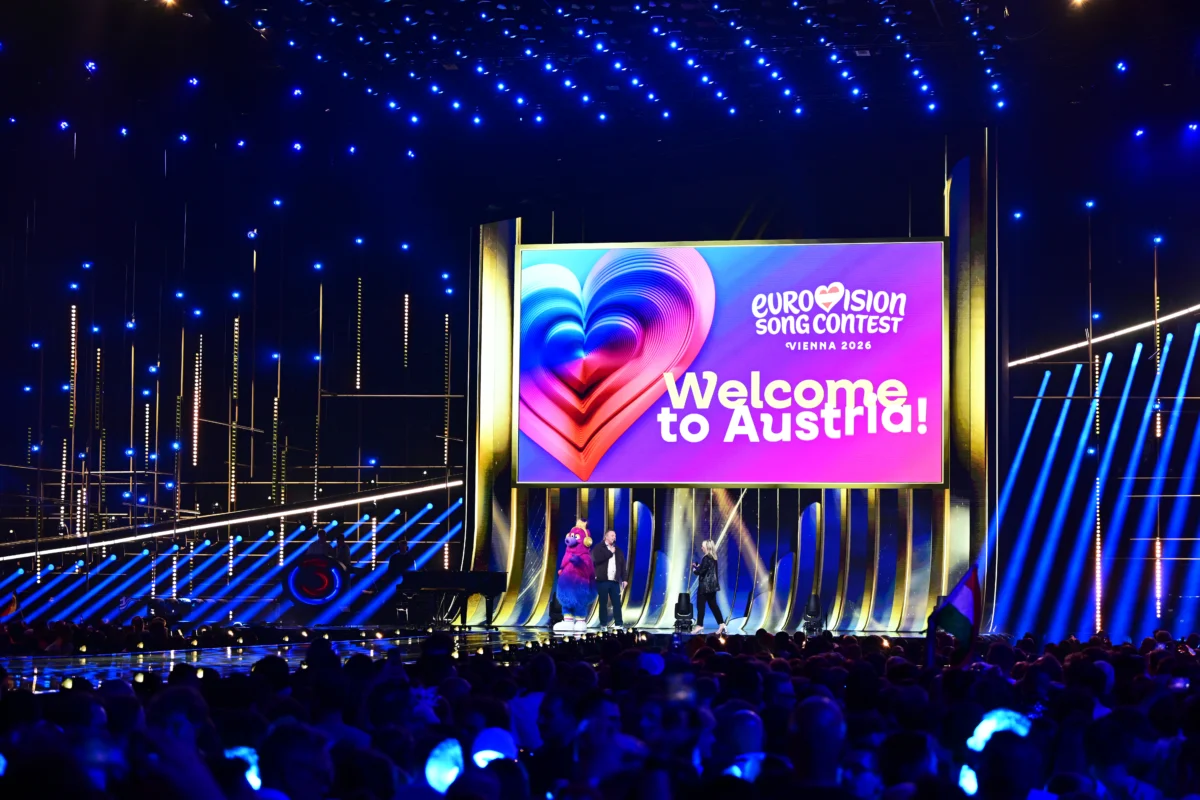
Bulgaria secured its first-ever Eurovision Song Contest title on Saturday night in Vienna, triumphing in a raucous and deeply contentious competition that saw the nation’s pop star, Dara, and her dance-hall thumper "Bangaranga" unexpectedly best Israel in a dramatic final moments. The victory marked a significant upset, as Bulgaria had been outside the top five oddsmakers’ predictions coming into the final at the Wiener Stadthalle. Yet, Dara captivated both the professional juries and the popular vote among the 25 finalists, culminating in a win that was as surprising as it was historic for the Eastern European nation. The song’s enigmatic title, "Bangaranga," was clarified by Dara herself during the show as representing "the feeling that everybody gets in themselves the moment you choose to lead through love and not fear," a sentiment that resonated powerfully amidst a night charged with both musical excitement and underlying geopolitical friction.
The Unforeseen Victory: Bulgaria’s Ascent to the Top
Dara’s performance of "Bangaranga" was a masterclass in modern pop, blending infectious dance-hall rhythms with a vibrant stage presence that immediately set it apart. The song, characterized by its energetic beats and Dara’s compelling vocals, managed to cut through the diverse soundscape of the Eurovision final, appealing to a broad spectrum of voters. For a country that first joined Eurovision in 2005 and had only advanced past the semi-finals five times prior to this year, Bulgaria’s win is a monumental achievement. It underscores the contest’s enduring capacity for unexpected outcomes, where artistry and audience connection can trump pre-event hype and established reputations. The dual success in both the overall jury vote and the popular televote is particularly telling, indicating a broad consensus on the quality and appeal of Bulgaria’s entry, a rare feat that often eludes even highly favored contenders. This comprehensive win suggests "Bangaranga" possessed a universal appeal, transcending cultural and political divides to unite listeners in its message and rhythm.
Israel’s Contentious Journey and the Nail-Biting Near Miss
While Bulgaria celebrated its triumph, the narrative of the night was undeniably shaped by Israel’s controversial participation and its dramatic surge through the ranks. The 20XX Eurovision contest had been marred by boycotts and protests from various groups over Israel’s involvement, reflecting heightened geopolitical tensions. Despite this backdrop, Israel’s representative, Noam Bettan, delivered a rousing performance of his "toxic-love story anthem," "Michelle," which captivated a significant portion of the European public. The song itself, regarded by some as a metaphor for the complex and often fractious relationship between Jews and Europe, carried a deeper resonance for many viewers.
After finishing eighth in the jury vote, Israel astonishingly surged into the lead midway through the popular televote reveal. This unexpected ascent created a palpable tension in the arena and among the estimated 160 million global viewers. The dramatic split-screen moment, showing Noam Bettan alongside Bulgaria’s Dara as the final votes were tallied, became a microcosm of the night’s charged atmosphere. Cheers and boos mingled in the background, punctuated by calls of "Am Yisrael Chai" (The People of Israel Live), showcasing the deep divisions and fervent support that characterized Israel’s presence. Bettan, a child of French immigrants to Israel, became a symbol of resilience, carrying the hopes of a nation often under scrutiny on the international stage. His performance and the public’s overwhelming response to "Michelle" highlighted the power of music to transcend political discourse, even as the political undertones remained undeniable. Israel, a Eurovision participant since 1973 and a four-time winner, was seeking its fifth title, having also finished second the previous year with Nova Massacre survivor Yuval Raphael, who was also a writer on "Michelle." This consistent strong showing, particularly in the public vote, underscores Israel’s enduring connection with a segment of the Eurovision audience, irrespective of broader political sentiment.
Eurovision 20XX: A Season of Unprecedented Security and Scrutiny
The context of the 20XX Eurovision Song Contest in Vienna was unlike any other in recent memory. The decision by five countries to boycott the event over Israel’s participation necessitated an unprecedented level of security, transforming the Wiener Stadthalle into a fortress. Austrian authorities, in conjunction with the European Broadcasting Union (EBU), deployed a formidable array of security measures designed to counter any potential threats. This included a contingent of 500 private security personnel, meticulously trained for crowd control and emergency response. Surveillance was significantly enhanced with the installation of 180 new cameras, providing comprehensive coverage of the venue and its surroundings. Advanced counter-drone technology was deployed to mitigate aerial threats, while specialized sniffer dog units conducted continuous patrols to detect explosives or other prohibited items.
In a move highlighting the gravity of the perceived threats, the city of Vienna also collaborated with an FBI task force based in New York to monitor cyber threats, acknowledging the digital dimension of modern security challenges. This multi-layered approach underscored the commitment of the organizers and host city to ensure the safety of all participants and attendees, but it also cast a shadow over the festive atmosphere traditionally associated with Eurovision. The heightened security served as a stark reminder of the geopolitical realities impacting cultural events, transforming what is usually a celebration of unity and diversity into a tightly controlled environment. The EBU, as the governing body of Eurovision, reiterated its commitment to keeping the contest non-political, but the very need for such extensive security measures illustrated the inherent difficulty in separating art from the complex global landscape.
The Road to the Final: A Chronology of Anticipation and Competition
The journey to the Grand Final of the Eurovision Song Contest is a multi-stage process, typically beginning with two semi-final rounds held in the week leading up to Saturday’s main event. Countries not automatically qualified – the "Big Five" (France, Germany, Italy, Spain, and the United Kingdom, as the largest financial contributors to the EBU) and the host nation – must compete for a coveted spot in the final. This year, the semi-finals were held on Tuesday and Thursday evenings, winnowing down a larger field of hopefuls to the 25 nations that would ultimately compete for the title. Each semi-final night saw ten countries advance based on a combined jury and public vote, building anticipation and showcasing a vast array of musical talent and cultural expressions from across Europe and beyond.
As the week progressed, the atmosphere in Vienna intensified, with delegations engaging in rehearsals, press conferences, and various promotional events. The Wiener Stadthalle buzzed with activity, transformed into a state-of-the-art stage complete with elaborate lighting, pyrotechnics, and innovative visual effects. On the night of the final, the show commenced with an opening act featuring past winners and cultural performances, setting the stage for the highly anticipated competition. Each of the 25 finalists then took to the stage, performing their entries to a global audience. Following all performances, the voting window opened, allowing viewers across participating and non-participating countries to cast their votes via telephone, SMS, or the official app. This period, typically lasting around 15 minutes, is often filled with interval acts and recap videos of the songs, heightening the suspense before the crucial vote reveal.
Voting Mechanics and the Dramatic Reveal
The Eurovision voting system is designed to balance expert opinion with popular appeal, splitting the final score 50/50 between national juries and the public televote. Each participating country fields a jury of five music industry professionals who rank all competing songs. These jury votes are announced first, with each country’s spokesperson appearing via satellite to award 1 to 8, 10, and 12 points to their top ten songs. This initial phase often provides an early indication of potential frontrunners, but rarely determines the ultimate winner.
This year, as the jury votes rolled in, several countries took turns at the top, creating an illusion of a more predictable outcome. Bulgaria, while performing strongly, was not the outright leader at this stage. The true drama unfolded during the reveal of the public televote, which is presented in reverse order of the jury scores, adding immense suspense. The lowest-ranked jury vote country receives its public points first, gradually building to the highest-ranked. As the public votes were added, Israel, which had been in eighth place after the jury vote, began its astonishing ascent, propelled by a massive wave of public support. It surged past several strong contenders, eventually taking the lead, much to the surprise of many. The final moments saw the accumulated public votes for the top few countries added to their jury scores. It was only when Bulgaria’s combined tally was announced that it edged out Israel, securing the victory in a truly last-second triumph, leaving both delegations, and millions of viewers, breathless. This intricate system ensures that the winner truly represents a broad appeal across both professional and public spheres.
Other Notable Performances and Disappointments
Beyond the top two contenders, the 20XX Eurovision final showcased a diverse range of talent. Romania, for instance, secured a commendable third place with "Choke Me," a track sung by the goth-attired physics graduate student Alexandra Căpitănescu. Despite its provocative title, the song was presented by Căpitănescu as an exploration of artistic expression rather than a literal "sex song," resonating with a segment of the audience for its unique aesthetic and powerful vocals. The performance was visually striking, with dark, dramatic staging that complemented Căpitănescu’s distinctive look and vocal delivery.
Conversely, several pre-final favorites failed to live up to expectations. Finland, Australia, and Greece, all highly touted by oddsmakers and fans alike in the lead-up to the final, finished outside the top three. Their entries, while critically acclaimed in some circles and popular during the semi-finals, did not garner sufficient combined jury and televote points to reach the podium. This outcome further emphasized the unpredictable nature of Eurovision, where momentum and performance on the night can significantly alter fortunes, often defying expert predictions. The contest serves as a reminder that popularity and critical acclaim can be fleeting, and true success hinges on capturing the collective imagination of a vast and varied European audience.
Historical Context and Eurovision’s Enduring Appeal
The Eurovision Song Contest, first conceived in 1956, was initially an experiment in live television broadcasting and an effort to unite a post-war Europe through shared cultural experience. From its humble beginnings with just seven participating nations, it has grown exponentially to become one of the world’s longest-running and largest annual televised music events. Its enduring appeal lies in its unique blend of musical spectacle, national pride, and kitsch, captivating audiences across generations. Over the decades, Eurovision has evolved significantly, incorporating modern production values, diverse musical genres, and embracing new technologies for voting and viewership.
With an estimated 160 million viewers tuning in globally each year, Eurovision transcends a mere song competition; it is a cultural phenomenon, a platform for artistic expression, and, at times, a mirror reflecting contemporary geopolitical currents. While the EBU consistently strives to maintain a non-political stance, the contest has historically been a stage for subtle (and sometimes overt) political statements, national rivalries, and solidarity. From votes influenced by diplomatic relations to entries carrying messages of peace or protest, Eurovision has never been entirely immune to the world outside its glittering arena. This year’s heightened security and the boycotts surrounding Israel’s participation serve as a stark reminder of the contest’s unique position at the intersection of entertainment and international affairs, showcasing its capacity to both unite and inadvertently expose societal divisions.
Implications and the Road Ahead
Bulgaria’s historic victory carries significant implications, both for the nation and for the future trajectory of the Eurovision Song Contest. For Bulgaria, hosting the next edition of Eurovision will be a source of immense national pride and a unique opportunity to showcase its culture, tourism, and hospitality to a global audience. The economic benefits of hosting such a large-scale international event, from tourism revenue to infrastructure development, are substantial. However, it also presents a considerable logistical and financial challenge for a country that has not previously undertaken such an endeavor. The victory, championed by Dara’s message of "love not fear," could also be seen as a reaffirmation of the contest’s foundational values amidst a challenging global climate.
For Israel, despite the disappointment of a near-win, the strong public support for Noam Bettan and "Michelle" sends a powerful message. It demonstrates that cultural diplomacy can still find a foothold even amid intense political controversy. The ongoing debate surrounding Israel’s participation will undoubtedly continue, prompting reflections on how Eurovision can navigate increasingly politicized international relations while maintaining its core mission of bringing people together through music. The events of this year highlight the EBU’s ongoing challenge to balance artistic freedom with political neutrality, a task that becomes more complex with each passing year. As the dust settles on Vienna’s contentious yet memorable contest, all eyes will now turn to Bulgaria, awaiting the next chapter in the ever-evolving story of the Eurovision Song Contest.