Toho Next and Tsuburaya Productions have officially unveiled the full trailer for The Origin of Ultraman, a landmark documentary film poised to meticulously retell the sprawling history of Japan’s most iconic tokusatsu franchise. Set to premiere in Japanese cinemas on July 3rd, 2026, the film promises an unprecedented deep dive into the legendary series, offering insights from a distinguished roster of international and Japanese cinematic luminaries. While an international release date, particularly for the United States, remains unconfirmed, the initial preview has ignited significant anticipation among fans and film scholars globally.
The documentary arrives as a pivotal commemorative piece, marking the 60th anniversary of the Ultraman series. This cinematic endeavor aims to transcend a mere historical recounting, instead focusing on the profound cultural impact and innovative spirit that has sustained the franchise for six decades. By bringing together leading voices from various facets of cinema, tokusatsu, and design, The Origin of Ultraman seeks to illuminate the enduring allure and complex philosophical underpinnings of a universe where colossal heroes battle monstrous threats. As encapsulated by a poignant line from the trailer, "Children need to be shown something real," the film appears dedicated to revealing the authentic artistry and human ingenuity behind the fantastical spectacle.
A Legacy Forged in Fire: The Genesis of Ultraman
The phenomenon of Ultraman began not with the towering hero himself, but with the visionary mind of Eiji Tsuburaya, often hailed as the "God of Tokusatsu" (special effects). Tsuburaya’s pioneering work in special effects for Toho’s Godzilla films laid the groundwork for an entirely new genre. After decades of contributing to some of Japan’s most iconic monster films, he founded Tsuburaya Productions in 1963, with an ambition to create original television content that showcased cutting-edge practical effects. This ambition first materialized in 1966 with Ultra Q, a monochrome science fiction anthology series that explored mysterious phenomena and featured a plethora of original kaiju (strange beasts). Ultra Q proved to be a critical and commercial success, setting the stage for its groundbreaking successor.
Later that same year, Ultraman debuted, transforming the landscape of Japanese television. The series introduced a giant, red-and-silver alien hero who merges with a human host, Shin Hayata, to defend Earth from various kaiju and alien invaders. What distinguished Ultraman was its blend of thrilling monster battles, intricate miniature sets, innovative suitmation techniques, and a surprisingly mature narrative that often touched upon environmental themes, human folly, and the ethical dilemmas of power. The impact was immediate and staggering; Ultraman achieved a peak viewership of 42.8% in Japan during its initial run, a figure that underscores its profound penetration into the national consciousness and cultural fabric of the era. This level of engagement solidified Ultraman not merely as a children’s program but as a significant cultural event, shaping generations of Japanese youth and artists.
The unique worldview of Ultraman, where even the formidable kaiju are often endowed with complex backstories and motivations, distinguishing them from mere antagonists, has been a cornerstone of its enduring appeal. These creatures are frequently portrayed not as pure evil, but as products of environmental degradation, alien experiments, or tragic circumstances, prompting viewers to grapple with broader implications beyond simple good-versus-evil narratives. This nuanced approach, coupled with the striking visual design of both the giants and their monstrous adversaries, cultivated a rich universe that continues to captivate. This distinctive approach to characterization, where villains possess depth, has been a hallmark of Tsuburaya Productions’ storytelling, influencing countless subsequent works in Japanese popular culture.

The Architects of a Cinematic Exploration: Documentary Directors and Producers
Guiding this ambitious project are co-directors Yu Nakamura and Kazuki Yoshida. While their individual filmographies may not be as globally recognized as some of the luminaries they interview, their collaboration on The Origin of Ultraman suggests a fresh and contemporary perspective on the franchise’s extensive history. The official trailer hints at a visually rich and narratively compelling exploration, moving beyond standard archival footage to create a vibrant cinematic experience that resonates with modern audiences.
A significant aspect of the documentary’s pedigree is the involvement of acclaimed filmmaker Hirokazu Kore-eda, who is credited with planning the project. Kore-eda, an internationally lauded director and Palme d’Or winner for Shoplifters, is renowned for his deeply humanistic dramas that often explore family dynamics, societal pressures, and the human condition. His involvement suggests that The Origin of Ultraman will delve beyond the superficial spectacle of monster fights, seeking to uncover the emotional resonance, societal reflections, and human spirit embedded within the tokusatsu genre. Kore-eda’s influence is likely to steer the narrative towards exploring the "truth behind Ultraman" not just in terms of production history, but in its deeper meaning and impact on human experience and cultural identity. His meticulous approach to storytelling implies a documentary that is both informative and profoundly reflective.
The production team also includes Masahiro Onda and Tomoko Izuta from Slow Hand, with Takayuki Tsukagoshi supervising. The collaboration between Toho Next, a subsidiary of the legendary Toho Co., Ltd. (original producers of Godzilla and distributors of many Tsuburaya films), and Tsuburaya Productions themselves, highlights the institutional weight and authentic access behind the documentary. This joint effort ensures comprehensive coverage and an authoritative perspective on the franchise’s legacy, benefiting from direct access to extensive archives, original production materials, and key personnel who have shaped the Ultraman universe over decades. This institutional backing lends significant credibility to the project, promising an unparalleled and definitive historical account.
A Pantheon of Perspectives: Visionaries on Ultraman’s Enduring Appeal
Perhaps the most compelling aspect of The Origin of Ultraman is its assembly of world-renowned directors and creators who offer their unique perspectives on the series. This curated selection of voices promises to unveil the multifaceted influence of Ultraman across various creative disciplines and national borders, demonstrating its profound impact beyond Japan.
-
Guillermo del Toro: The Oscar-winning director, known for his profound love of monsters and gothic fantasy in films like Pan’s Labyrinth and The Shape of Water, is a natural fit. Del Toro frequently speaks about the emotional depth and allegorical power of creatures. His perspective on Ultraman is likely to focus on the intricate design of its kaiju, their often tragic or symbolic roles, and the way the series elevates monster cinema into a form of modern mythology. One could infer Del Toro might express admiration for Tsuburaya’s ability to imbue these colossal beings with distinct personalities and purposes, making them more than mere adversaries, but rather complex figures within a grand narrative.
-
Hirokazu Kore-eda: Beyond his pivotal role in planning the documentary, Kore-eda’s interview contributions will be particularly insightful. Given his filmography, which often explores family dynamics, societal pressures, and the human condition with subtle grace, he might analyze how Ultraman reflects Japanese society, its anxieties, and its aspirations during different eras. He could comment on the subtle human drama within the monster-of-the-week format, or the universal themes of heroism, sacrifice, and community that resonate deeply within the series. His perspective could underscore the unexpected depth and humanistic values found within a genre often perceived as purely entertainment.

-
Hideo Kojima: The acclaimed video game designer behind Metal Gear Solid and Death Stranding is renowned for his cinematic storytelling, intricate world-building, and meta-narratives. Kojima’s commentary could focus on Ultraman‘s narrative structure, its pioneering use of serialized storytelling in television, and how it established archetypes that continue to influence pop culture across various media. He might also discuss the technological innovations of Tsuburaya Productions and how they pushed the boundaries of visual effects, inspiring subsequent generations of creators across different media, including the video game industry, which he has significantly shaped.
-
Hideaki Anno: A pivotal figure in modern Japanese animation and live-action cinema, Anno’s inclusion is perhaps the most significant. As the creator of Neon Genesis Evangelion and a fervent admirer of tokusatsu, Anno’s work is deeply steeped in the legacy of Ultraman. His recent directorial effort, Shin Ultraman (2022), was a heartfelt homage and a critically acclaimed reimagining of the original series. Anno’s insights are expected to be profoundly personal and historically informed, detailing how Ultraman influenced his own artistic vision, his meticulous appreciation for Tsuburaya’s craft, and his efforts to carry forward the spirit of tokusatsu into the 21st century. He might speak to the challenges and joys of reinterpreting such an iconic property for contemporary audiences while preserving its original essence.
-
Shinji Higuchi: Co-director of Shin Godzilla (2016) and director of Shin Ultraman, Higuchi is another essential voice. His extensive collaboration with Anno on modern tokusatsu revivals makes him uniquely qualified to discuss the evolution of special effects, the delicate balance between practical and digital techniques, and the continued relevance of the giant hero genre. Higuchi could offer practical insights into the challenges of creating large-scale destruction and monster battles, while maintaining the emotional core that makes Ultraman resonate with audiences. He might also shed light on the creative process behind Shin Ultraman and its direct connection to the original series’ production methodologies.
-
Nicolas Winding Refn: The Danish director, known for his stylized, often surreal films like Drive and The Neon Demon, possesses a distinct aesthetic sensibility. Refn’s interest in Ultraman might stem from its bold visual language, its exploration of archetypal heroism and villainy, and its status as a piece of pure, unadulterated pop art. He could provide a more abstract, philosophical interpretation of Ultraman’s enduring visual appeal and its place within global cultural iconography, perhaps highlighting its dreamlike qualities, its unique color palette, or its exploration of primal human fears and desires projected onto colossal beings.
As these diverse perspectives intertwine, the documentary aims to paint a comprehensive and multi-layered portrait of Ultraman, revealing how a Japanese children’s show transcended its original context to become a global artistic touchstone, influencing a wide array of creative minds across different cultures and artistic mediums.
The Nuance of Kaiju and Hero: Unpacking Ultraman’s Unique Worldview
One of the documentary’s stated goals is to explore the series’ "one-of-a-kind worldview," particularly how "Kaijus are given complex backstories as meaningful as the hero’s." This emphasis highlights a crucial distinction of the Ultraman franchise within the broader monster genre. Unlike many Western monster films where creatures are often mindless forces of destruction, Ultraman’s kaiju frequently possess origins rooted in human activity, ecological disaster, or even cosmic misunderstanding.

For instance, some kaiju are ancient beings disturbed by modern civilization, others are mutated animals, and a significant number are alien invaders with their own motivations, sometimes even sympathetic ones. This complexity forces the viewer, especially children, to grapple with moral ambiguities and consider the interconnectedness of all life. It subtly introduces themes of environmentalism, anti-war sentiment, and the consequences of scientific hubris. The documentary will likely delve into how Tsuburaya Productions consistently pushed this narrative depth, making the battles not just spectacles of destruction, but often contests of ideals or tragic resolutions, elevating the genre beyond simple entertainment.
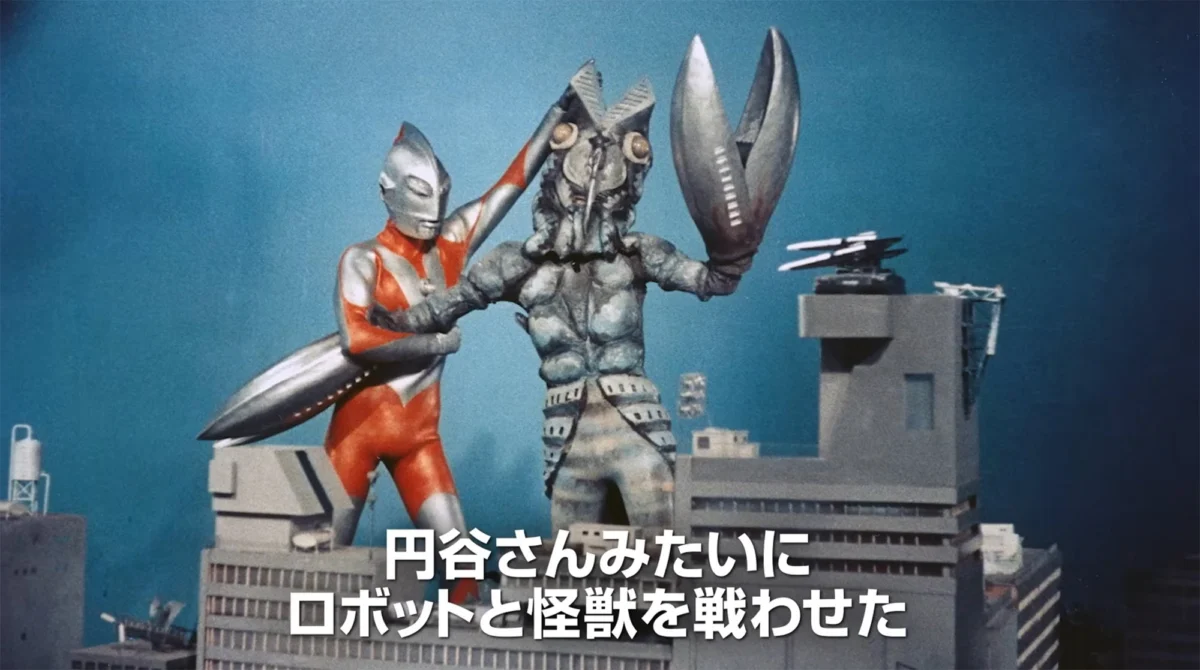
Furthermore, the film promises to uncover "the enduring visual appeal of both the giants and the creatures." This refers to the meticulous craftsmanship of suitmation, the art of performers in elaborate monster suits interacting with detailed miniature sets. This practical effects approach gave the series a tangible, tactile quality that continues to charm audiences even in an era dominated by CGI. The designs of Ultraman himself, from his sleek, powerful form to the iconic Color Timer on his chest, and the myriad of imaginative kaiju designs, have become instantly recognizable symbols worldwide. The documentary is expected to celebrate this artistry, perhaps with behind-the-scenes footage or interviews with original suit actors and designers, providing a tribute to the unsung heroes of tokusatsu who brought these fantastical worlds to life.
Six Decades of Phenomenon: A Timeline of Ultraman’s Evolution
The 60th-anniversary context of The Origin of Ultraman makes a chronological exploration of the franchise’s evolution paramount, highlighting its adaptability and continuous innovation.
- 1966: The birth of Ultra Q and Ultraman, establishing Tsuburaya Productions as a powerhouse of special effects television. The initial Ultraman series ran for 39 episodes, setting viewership records and laying the foundation for the Ultra series.
- Late 1960s – 1970s (Showa Era): The franchise rapidly expanded with successive series like Ultra Seven, Return of Ultraman, Ultraman Ace, Ultraman Taro, and Ultraman Leo. This era solidified the Ultra Garrison, the Monster Graveyard, and the concept of an entire "Land of Light" populated by Ultramen, creating a rich and expansive mythology. The themes often reflected the social anxieties and technological optimism of post-war Japan.
- 1980s – Early 1990s: A period of fewer new TV series in Japan, but significant international expansion with animated co-productions like Ultraman: The Adventure Begins (USA, 1987) and live-action ventures such as Ultraman Towards the Future (Australia, 1992). These productions introduced the hero to a broader global audience, adapting the concept for different cultural contexts.
- Mid-1990s – 2000s (Heisei Era): A major revitalization with Ultraman Tiga (1996), which redefined the franchise for a new generation. Tiga introduced a multi-form changing Ultraman and a more complex narrative approach, winning critical acclaim and rekindling immense popularity. This era continued with series like Ultraman Dyna, Ultraman Gaia, and Ultraman Cosmos, often exploring darker themes and more sophisticated special effects, pushing the boundaries of what tokusatsu could achieve.
- 2010s – Present (Reiwa Era): The franchise continued its global expansion and experimented with new formats. Series like Ultraman Orb, Ultraman Geed, Ultraman Z, and Ultraman Blazar showcased a blend of modern CGI alongside traditional tokusatsu techniques, maintaining relevance while honoring its roots.
- Recent Adaptations (2020s): The franchise has seen a significant resurgence in global prominence. Ultraman Rising (2024), an animated film produced by Industrial Light & Magic (ILM) for Netflix, introduced the character to a new generation of Western viewers with state-of-the-art animation. Simultaneously, Hideaki Anno and Shinji Higuchi