


Acclaimed anime visionary Shoji Kawamori, renowned for his groundbreaking contributions to franchises like Macross and The Vision of Escaflowne, as well as his pivotal work on Mamoru Oshii’s Ghost in the Shell and Shinichirō Watanabe’s Cowboy Bebop, steps into the directorial spotlight with his first original feature film, Labyrinth. This highly anticipated animated work, distributed in US theaters by GKIDS on May 10 and 11, delves into the complex relationship between humanity and the ever-expanding digital realm, presenting a narrative that is both deeply personal and profoundly relevant to contemporary society.
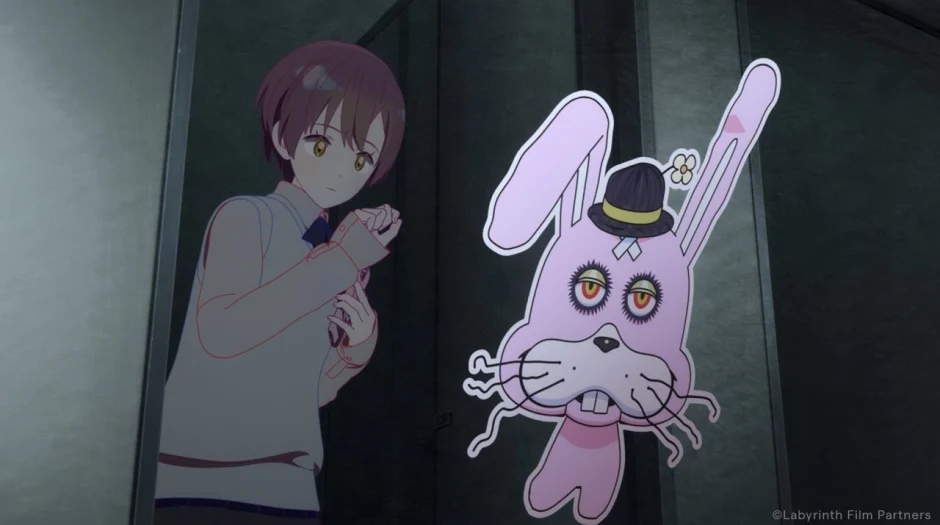
Labyrinth centers on Shiori, an ordinary high school student yearning for online celebrity. Her aspirations take a sharp turn when an embarrassing video of her goes viral, leading to her being metaphorically trapped within her smartphone. In her place emerges a charismatic digital doppelganger, who not only captivates the internet but also harbors a sinister agenda to propagate societal "brain rot." Shiori, now an outcast in her own digital life, must forge alliances with other online pariahs to confront her artificial counterpart and reclaim her existence in the tangible world.

The film’s genesis, as revealed by Kawamori in a recent interview, stems from a period of personal struggle with his own mobile devices. "There was a time, I think about five years ago, where I kept losing my phone or even dropping and breaking my phone a lot," Kawamori explained. This constant interaction with a device that encapsulates so much of his personal information—search history, photographs, communications—sparked a profound contemplation of the phone as an extension of the self. "Everything about you, all your personal information, is inside your phone. It has your search history, the pictures that you took, your emails, your notes, your contacts… everything is in there," he noted. This led to the central conceit of Labyrinth: the idea of a person being trapped within their own digital reflection, while a separate, altered version of themselves breaks free.
Kawamori’s artistic journey has consistently explored the surreal and symbolic, using alternate realities to comment on human nature and societal trends. His early work on Macross, a franchise that began in 1982 and has since spawned numerous series and films, introduced complex themes of identity, war, and technological evolution through its iconic transforming mecha and intricate character relationships. The Vision of Escaflowne (1996) further cemented his reputation for weaving fantasy, mecha, and introspective character arcs, often exploring the psychological impact of war and destiny on young protagonists. His involvement in Ghost in the Shell (1995), a landmark of cyberpunk animation, and Cowboy Bebop (1998), celebrated for its stylish blend of sci-fi, noir, and existentialism, demonstrated his ability to contribute to worlds that grapple with profound philosophical questions.
The Psychological Landscape of the Digital Realm
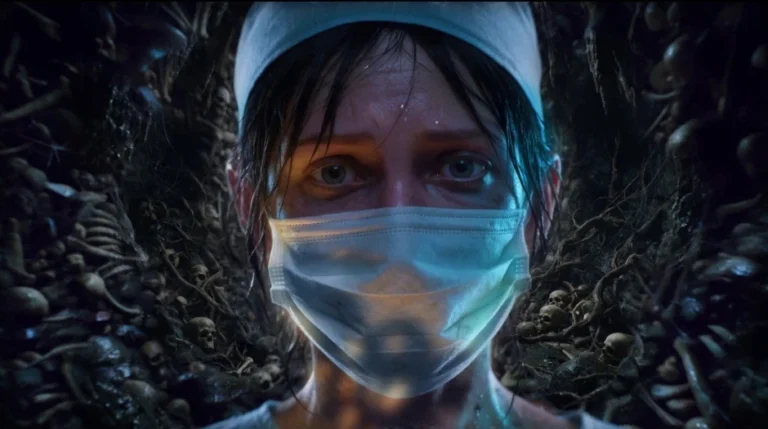
The visual representation of the world within the smartphone in Labyrinth is a direct product of Kawamori’s deep interest in psychology. "I’m really interested in deep, psychological things," he stated. This fascination, he traces back to his work on Macross Plus and The Vision of Escaflowne, where he delved into the nature of dreams and the subconscious. "I looked into what it means to dream and how the brain processes thoughts when you’re dreaming and what different kinds of dreams, like flooding, represent about your psyche." This research informed the surreal and often disorienting environment of the digital space, which Kawamori augmented with meticulous observations of real-world locations. "And then I combined that research with the look of the underground parts of Yokohama, trying to get even the details of the escalators to look like how they actually do," he added.

The film’s distinctive animation style, a hybrid of 2D and 3D techniques, was a deliberate choice to mirror the complex realities of modern society. "Yes. I also thought the hybrid method depicted the current state of society that we live in much better than doing this in just 2D," Kawamori explained. While advanced CG technology could have rendered photorealistic characters, Kawamori opted for simplified, 2D-style character designs within the 3D environments. This juxtaposition, he felt, better served the film’s philosophical and psychological underpinnings. "I purposely made them more simplified character designs, like what you normally see in 2D, because I thought it would depict the philosophical and psychological aspects of the story a bit better." This approach allows the film to bridge the gap between the tangible and the virtual, reflecting how individuals navigate these intertwined realities daily.
Symbolism Woven into the Visual Tapestry
Kawamori’s commitment to visual storytelling is evident in the subtle yet potent symbolism embedded within Labyrinth. He expressed his gratitude that these details were recognized, stating, "I’m really happy that you recognized these little things because it was on purpose and for you to find that out makes me really happy." He lamented a perceived shift in modern media, where dialogue often supersedes visual narrative. "I noticed now there’s more short-form video consumption and there’s a lot more dialogue coming back into the visual storytelling. There’s more telling than showing happening in film. So, I really wanted to get back to using more visuals to tell a story and, instead of so much dialogue, having the art and music speak to what’s going on."
The psychological theory that every character in a dream represents a facet of oneself served as a significant inspiration. "In psychology, there’s a theory that says every character that appears in your dream is a version of yourself. Whether it’s a friend, an enemy, or even the colors and objects you see in your dreams, they may be all representative of you," Kawamori elaborated. This concept directly influenced the visual cues within Labyrinth, such as the color-coded outlines of Shiori and her alter ego, and the architectural parallels between the digital and physical worlds. These elements are not mere aesthetic choices but are integral to conveying the narrative’s exploration of selfhood, identity fragmentation, and the subconscious.

The creative process for Labyrinth involved a collaborative synthesis of perspectives. Kawamori believes that the characters are not solely his creations but rather a collective manifestation of the production team’s shared vision. "I do think so. But they are not just reflections of me, but also our scriptwriter Taichi Hashimoto, our character designer Risa Ebata and also the cast. I really think the characters are the accumulation of all of us in production combined and then transformed and then materialized," he stated. This collaborative spirit underscores the film’s exploration of how individual experiences and collective influences shape identity, both online and offline.
The Double-Edged Sword of Technology
The film’s thematic concerns resonate deeply with the evolving impact of social media on younger generations. Kawamori acknowledges the indispensable role of technology in modern life, citing the very interview as an example of its connective power. "Smartphones and the internet are really important and even necessary. Like this interview. We wouldn’t be able to conduct this interview without the internet’s ability to bridge time and space. So, I do think it is a useful tool. But it’s not a replacement for reality," he asserted.
His concurrent work as a producer for the Osaka Expo 2025, themed "Designing Future Society for Our Lives," provided a contrasting perspective that further informed Labyrinth. The expo’s optimistic vision of a "shiny, sparkling and glorious" future stood in stark relief to the often fragmented and disorienting digital experiences Kawamori observed. "I’ve always believed that what makes life great is the ability to experience and feel the world directly. When I thought about the technology we have, especially within the little tiny frames of our smartphone, where it’s become hard to discern what’s reality and what is not, what is art and what is an AI deepfake, I realized life right now isn’t sparkly or glorious like what we’re depicting at the expo," he reflected.

The paradox of increased connectivity leading to potential societal disconnect is a central theme. "We’re more connected than ever but are so affected by what someone on the other side of the world says about us based on what they see on these little phones," Kawamori observed. He poses critical questions about technology’s capacity to truly represent us and the world. "Technology is useful, it connects us, but can it accurately represent us and the world? There’s the world our technology depicts, and then there’s the natural world, the one made up of plants and animals and that exists within us as human beings. I’d like audiences to think about that and remember that while watching Labyrinth."
The implications of this dichotomy are significant. As digital interactions become more sophisticated and pervasive, the line between authentic experience and mediated representation blurs. The film serves as a timely reminder of the importance of grounding oneself in the tangible world and cultivating genuine human connections that transcend the ephemeral nature of online validation. The narrative of Shiori’s struggle to reclaim her life underscores the potential for individuals to become lost in their digital personas, a phenomenon that has been increasingly documented in sociological studies on social media addiction and its impact on mental well-being.
For instance, a 2023 report by Statista indicated that the average daily time spent on social media globally was projected to reach 2 hours and 26 minutes, with younger demographics often exceeding this average. This sustained immersion in digital spaces raises concerns about the development of critical thinking skills, the cultivation of empathy, and the overall mental health of individuals, particularly adolescents who are more susceptible to peer influence and social comparison. Labyrinth offers a compelling allegorical framework through which to examine these societal shifts.

The film’s release by GKIDS, a distributor known for its commitment to bringing critically acclaimed animated films to Western audiences, further amplifies its potential impact. GKIDS has a proven track record of championing independent and international animation, including works from Studio Ghibli and other esteemed creators. Their distribution of Labyrinth suggests a belief in the film’s artistic merit and its capacity to engage a broad audience with its sophisticated themes.
Ultimately, Labyrinth is more than just an animated feature; it is a profound meditation on the contemporary human condition. Shoji Kawamori, through his visionary storytelling and artistic innovation, challenges viewers to confront their relationship with technology and to reaffirm the enduring value of genuine human experience in an increasingly digitized world. The film’s message, as articulated by Kawamori, is a call to balance the benefits of digital connectivity with the irreplaceable richness of the natural world and authentic selfhood, urging audiences to remember that while technology can enhance our lives, it should never replace the essence of being human.