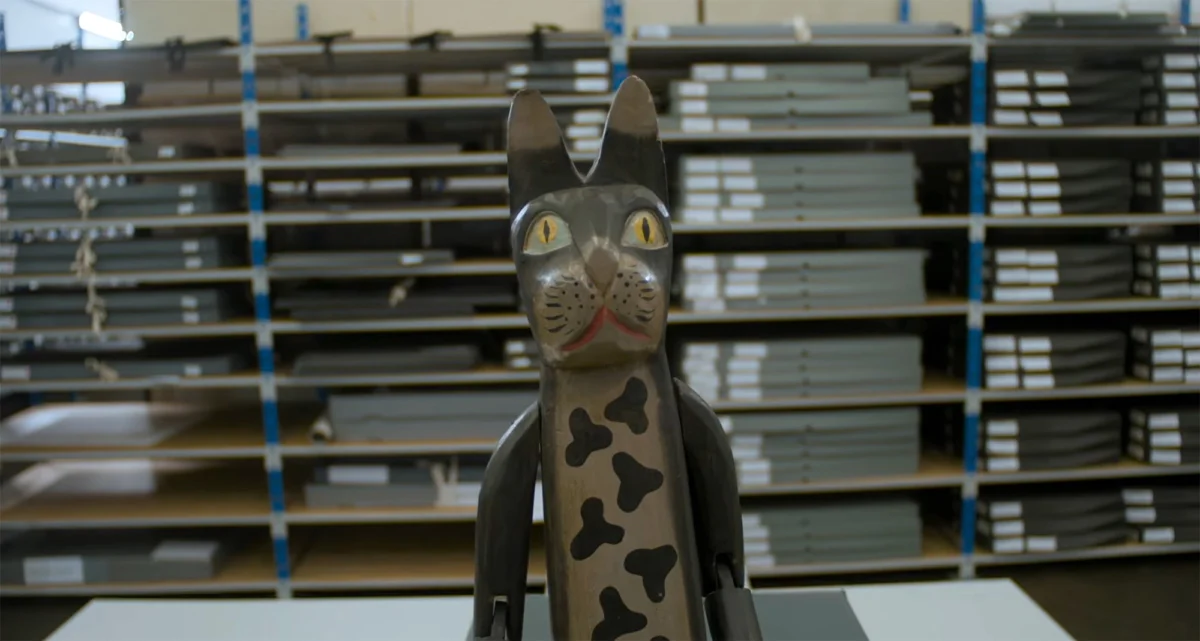
The cinematic world is poised for a profound exploration into the mind of one of its most enigmatic figures as Brussels-based visual artist Brecht Debackere’s documentary, Nostalgia for the Future, prepares for its global premiere at the prestigious 2026 Cannes Film Festival. Selected for the highly esteemed Cannes Classics section, the film promises an unconventional, deeply immersive journey into the life and philosophical world of French filmmaker Chris Marker, whose real name was Christian-François Bouche-Villeneuve. Guided by the resonant English narration of acclaimed actress Charlotte Rampling, the documentary aims to unravel the complexities of a director famously known as the "best-known author of unknown films," a man who deliberately shrouded his persona behind a veil of pseudonyms and iconic images of cats.
Unveiling the Elusive Chris Marker
Chris Marker, born in Neuilly-sur-Seine, France, in 1921, remains one of the most influential yet mysterious figures in post-war cinema. His career, spanning over five decades until his passing in 2012, was characterized by a relentless pursuit of innovation in documentary and experimental filmmaking. Marker eschewed personal publicity, rarely granted interviews, and cultivated an image of a disembodied voice and an observant eye, preferring his work to speak for itself. This deliberate elusiveness became a hallmark of his artistic identity, challenging conventional notions of authorship and celebrity. He adopted the pseudonym "Chris Marker" early in his career, believed to be a reference to felt-tip markers or perhaps a nod to the philosophical concept of "markers" in memory and identity. His iconic self-representation often involved images of cats, notably his own ginger cat, Guillaume-en-Egypte, further deepening the playful yet profound mystery surrounding him.
Marker’s filmography is a testament to his intellectual curiosity and artistic daring. His 1962 science fiction short film, La Jetée, a narrative constructed almost entirely from still photographs, is perhaps his most internationally recognized work. This seminal film, a haunting exploration of time travel, memory, and post-apocalyptic survival, profoundly influenced subsequent generations of filmmakers, notably inspiring Terry Gilliam’s 1995 feature 12 Monkeys. Beyond La Jetée, Marker’s oeuvre includes essay films that blend documentary, fiction, and philosophical inquiry, such as Sans Soleil (1983) and A Grin Without a Cat (1977). Sans Soleil, a meditative, fragmented travelogue narrated by a fictional cameraman’s letters, is often cited as a masterpiece of the essay film genre, weaving together observations on memory, history, and the passage of time across disparate global locations. These films cemented his reputation as a pioneer who blurred the lines between genres, using cinema as a tool for profound philosophical reflection and political commentary. His unique approach to montage, sound, and narrative structure established him as a master of the "cine-essay," a form he virtually invented and perfected.
Brecht Debackere’s Unconventional Approach

Director Brecht Debackere, a visual artist and filmmaker based in Brussels, has embraced the challenge of portraying such a deliberately elusive figure by adopting an equally unconventional methodology. His stated intention, "I never intended to make a conventional documentary. How do you introduce an audience to a figure who exists almost entirely without biographical data?" speaks volumes about the film’s experimental spirit. Debackere, known for his work in audiovisual arts and his role at the Royal Institute for Theatre, Cinema & Sound (RITCS) in Brussels, previously directed Exprmntl, a film that likely showcased his affinity for exploring the avant-garde. This background perfectly positions him to tackle Marker’s legacy.
Instead of traditional interviews or linear biography, Debackere chose to follow "the associative logic of the work itself: the invisible threads connecting history, philosophy, and folklore." This approach mirrors Marker’s own methods in films like Sans Soleil, where seemingly disparate images and ideas are woven together to form a cohesive, albeit non-linear, narrative. Debackere views the archive not as a static repository of the past but "as a living system of memory," an active landscape where meaning is continually created and reinterpreted. This philosophical stance is crucial to Nostalgia for the Future, transforming the documentary from a mere historical recounting into an immersive, almost archaeological, excavation of a creative mind. The film meticulously examines troves of Marker’s artifacts and collections – including photographs, personal notes, unreleased footage, and sound recordings – attempting to piece together his identity and the choices he made through the material traces he left behind. It is, as Debackere describes, "a portrait in the abstract," aiming to capture a "state of mind that combined lyrical imagination with ethical depth."
The choice of Charlotte Rampling as narrator adds another layer of artistic depth. Rampling, an iconic figure in European cinema with a career spanning over five decades, brings a voice imbued with gravitas, intelligence, and a subtle melancholic beauty. Her presence lends an authoritative yet intimate tone, guiding viewers through Marker’s labyrinthine world without imposing a definitive interpretation. Her narration, speaking in English, allows for a broader international accessibility, while her established artistic sensibility aligns perfectly with the film’s intellectual and aesthetic ambitions.
Cannes Classics: A Fitting Platform
The selection of Nostalgia for the Future for the Cannes Classics section of the 2026 Cannes Film Festival underscores its significance within the cinematic landscape. Cannes Classics is dedicated to showcasing restored prints of cinematic masterpieces and documentaries that delve into the history of cinema and the lives of its most influential figures. It is a segment that celebrates the preservation and continued relevance of film heritage, making it an ideal venue for a film dedicated to Chris Marker, a director whose work is foundational to modern documentary and experimental cinema.
The Cannes Film Festival itself, established in 1946, stands as one of the world’s most prestigious and widely publicized film festivals. It serves as a crucial platform for launching films, fostering international co-productions, and shaping global cinematic discourse. For a documentary like Nostalgia for the Future, premiering at Cannes Classics not only guarantees significant international exposure but also places it within a curated lineage of films deemed essential to cinematic history. This prestigious debut immediately signals the film’s artistic merit and its importance in understanding a pivotal figure whose influence continues to resonate in contemporary filmmaking. The festival’s global press coverage and industry attendance will ensure that Debackere’s unique portrait of Marker receives the attention it deserves from critics, scholars, and a passionate audience of "cinema geeks" and cinephiles alike.

Filmmaking as an Act of Memory and Identity
At its core, Nostalgia for the Future is a profound meditation on memory, identity, and the enduring power of images. Chris Marker himself was obsessed with these themes, viewing time as non-linear and memory as a malleable, subjective construct. His films frequently juxtaposed past and present, personal and collective histories, to explore how images shape our understanding of reality and our aspirations for the future. Debackere’s documentary directly engages with these Marker-esque concerns, positioning itself not just as a biographical sketch but as a meta-commentary on the act of biographical representation itself.
The concept of "transforming the archive into a landscape of living memory" is central to this endeavor. Instead of presenting a dry collection of facts, the film aims to breathe life into Marker’s material traces, allowing his objects and images to speak in new configurations. This dynamic engagement with the archive reflects a contemporary understanding of history, where narratives are not simply discovered but actively constructed through interpretation and context. The documentary becomes an active participant in this process, guiding the audience through a constellation of personal documents and film fragments, inviting them to decode the man through the very material he left behind. It suggests that identity is not a fixed entity but a fluid, evolving narrative shaped by what we create, preserve, and choose to reveal—or conceal.
The title itself, Nostalgia for the Future, encapsulates this temporal complexity. "Nostalgia" typically refers to a longing for the past, while "future" points forward. The juxtaposition suggests a paradoxical yearning for a future that is perhaps rooted in, or informed by, a re-evaluation of the past. This resonates deeply with Marker’s own work, which often looked back at historical events or personal memories to understand their implications for what lay ahead. Debackere’s film seems to posit that understanding Marker’s past—his choices, his art, his elusiveness—is essential for imagining the future of cinema and the role of the artist within it.
Broader Implications and Anticipation
The premiere of Nostalgia for the Future at Cannes is expected to reignite interest in Chris Marker’s unparalleled contribution to cinema. For those unfamiliar with his work, the documentary will serve as a compelling introduction to a master filmmaker whose influence is often felt but less frequently attributed in mainstream discourse. For seasoned cinephiles, it offers a fresh, potentially revelatory perspective on a figure they thought they knew, challenging preconceived notions about biography and artistic legacy.

The film also contributes to the ongoing evolution of the documentary genre. In an era saturated with conventional biographical films, Debackere’s commitment to an abstract, associative portrait pushes the boundaries of what a documentary can be. It affirms the power of experimental approaches to reveal deeper truths, particularly when dealing with subjects who resisted straightforward categorization. This could inspire a new wave of filmmakers to explore non-traditional narrative structures and engage with archival material in more innovative ways.
Executive produced by Steven Dhoedt, Nostalgia for the Future stands as a significant cinematic event. While no other release dates are currently set beyond its Cannes premiere, the buzz generated at the festival will undoubtedly pave the way for broader distribution, whether through art-house cinemas, streaming platforms specializing in independent and international films, or educational institutions. The film’s official site, nostalgiaforthefuture.com, will likely become a key resource for those eager to delve deeper into its themes and the legacy of Chris Marker.
Ultimately, Brecht Debackere’s Nostalgia for the Future is more than just a film about Chris Marker; it is a profound philosophical inquiry into memory, identity, and the very nature of cinematic storytelling. By engaging with Marker’s work on his own terms—through fragments, associations, and a deep respect for the unspoken—Debackere promises a documentary experience that is as intellectually stimulating as it is emotionally resonant, inviting audiences to reconsider the boundaries of biographical filmmaking and the enduring impact of a truly singular artist.