



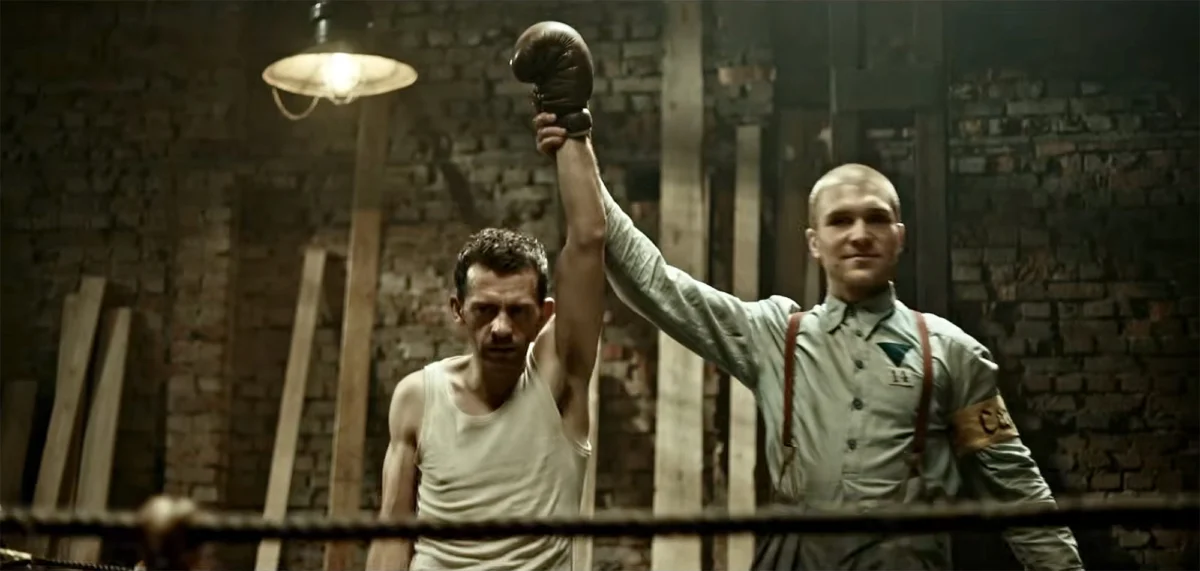
Well Go USA is poised to bring the harrowing true story of Polish boxing champion Tadeusz "Teddy" Pietrzykowski to American audiences with the direct-to-VOD release of "The Champion" on May 26, 2026. Originally titled "Mistrz" (The Master) in its native Poland and sometimes known internationally as "The Champion of Auschwitz," this compelling historical drama chronicles Pietrzykowski’s extraordinary fight for survival and dignity within the brutal confines of the Auschwitz-Birkenau concentration camp during World War II. The film, which first premiered in 2020 at the Gdynia Polish Film Festival, stars Piotr Witkowski as the titular boxer, whose unexpected victories in the camp’s impromptu rings offered a crucial flicker of hope to his fellow prisoners and served as a silent, yet potent, act of defiance against their Nazi captors.
The Unyielding Spirit of Tadeusz "Teddy" Pietrzykowski
Tadeusz Pietrzykowski, born in 1917, was a promising amateur boxing champion in pre-war Warsaw, known for his agility and technique. His life, like millions of others, was irrevocably altered with the German invasion of Poland in September 1939, marking the beginning of World War II. In March 1940, at the age of 23, Pietrzykowski was arrested by the Gestapo while attempting to cross the border to join Polish forces fighting abroad. He was initially imprisoned in Pawiak prison in Warsaw, a notorious Gestapo stronghold, before being included in the very first transport of political prisoners to Auschwitz-Birkenau. This transport, comprising 728 Polish prisoners, arrived at the newly established concentration camp on June 14, 1940, a date now commemorated as National Remembrance Day for Victims of German Nazi Concentration and Extermination Camps in Poland.
Upon his arrival at Auschwitz, Pietrzykowski, identified by the prisoner number 77, was subjected to the horrific realities of the camp, designed for systematic dehumanization and extermination. The early phase of Auschwitz was primarily intended for Polish political prisoners and intellectuals, a deliberate attempt by the Nazi regime to eliminate the Polish leadership and intelligentsia. Conditions were unspeakably brutal, characterized by starvation, forced labor, disease, and constant cruelty from the SS guards and kapos (prisoner functionaries). Survival rates were astronomically low, with prisoners facing a daily struggle against death.
It was in this inferno that Pietrzykowski’s boxing prowess unexpectedly emerged as a tool for survival and a symbol of resistance. Around March 1941, an SS officer, likely intrigued by Pietrzykowski’s athletic physique or perhaps having learned of his pre-war reputation, organized a boxing match between Pietrzykowski and Walter Dunning, a notorious German kapo and former professional boxer. Dunning, known for his brutality and physical dominance, was a formidable opponent. In a shocking turn of events, Pietrzykowski defeated Dunning. This victory, reportedly achieved through sheer skill and determination, marked the beginning of Pietrzykowski’s career as "The Champion of Auschwitz."
Over the next three years, Pietrzykowski participated in an estimated 40 to 60 fights within the camp, winning the vast majority of them. His opponents included German kapos, SS guards, and occasionally other prisoners, often in exchange for extra food rations, soap, or other small privileges that could mean the difference between life and death for himself and his fellow inmates. These fights, though orchestrated by the SS for their own amusement and as a perverse form of "entertainment," inadvertently became something far more profound for the prisoners. Each time Pietrzykowski stepped into the ring, he carried the hopes of hundreds, if not thousands, of captive onlookers. His victories, particularly against German opponents, were not merely athletic triumphs; they were powerful psychological blows against the perceived invincibility of their oppressors. They offered a fleeting moment of joy, a shared sense of defiance, and a crucial reminder that even in the darkest of places, the human spirit could still push back.

Pietrzykowski’s reputation grew, affording him a degree of protection and influence that he often used to help others. He would share his meager winnings, intervene on behalf of fellow prisoners, and even reportedly used his position to secure more lenient assignments for some. His acts of compassion and courage extended beyond the boxing ring, solidifying his legend among the camp’s inmates. In 1943, as the Germans began to liquidate some of the older, "less useful" prisoners from Auschwitz, Pietrzykowski was transferred to the Neuengamme concentration camp in Germany, where he continued to fight and survive. He was subsequently moved to Bergen-Belsen, where he was finally liberated by British forces in April 1945.
After the war, Pietrzykowski struggled with the trauma of his experiences, like many survivors. He eventually became a physical education teacher and coach, dedicating his life to helping others through sport. He often spoke about his time in Auschwitz, not for personal glory, but to bear witness to the atrocities and to honor the memory of those who perished. His accounts were crucial in documenting the grim realities of the camps. Tadeusz Pietrzykowski passed away in 1991, leaving behind a legacy of incredible courage and an enduring testament to the human capacity for resilience in the face of unimaginable evil.
Auschwitz-Birkenau: The Epicenter of Atrocity
To fully grasp the significance of Pietrzykowski’s story, it is essential to understand the historical context of Auschwitz-Birkenau. Established by Nazi Germany in occupied Poland, Auschwitz evolved into the largest and most lethal of the Nazi concentration and extermination camps. Initially, from its inception in June 1940, Auschwitz I served primarily as a concentration camp for Polish political prisoners, intellectuals, and members of the resistance. The arrival of the first transport, including Pietrzykowski, marked the beginning of a systematic campaign to crush Polish national identity and leadership.
However, Auschwitz’s function rapidly expanded. Auschwitz II-Birkenau, constructed nearby, became the principal site of the "Final Solution" – the Nazi plan to annihilate the Jewish people. Here, from 1942 onwards, gas chambers and crematoria were built to facilitate industrial-scale murder. In total, an estimated 1.1 million people perished at Auschwitz-Birkenau, approximately 90% of whom were Jews. Other victims included Poles, Roma (Gypsies), Soviet prisoners of war, and people of various other nationalities. The camp became synonymous with the Holocaust, representing the apex of Nazi barbarity and systematic genocide.
The daily existence for prisoners in Auschwitz was a constant struggle against death. Forced labor, often pointless and physically debilitating, coupled with starvation rations, rampant disease (typhus, dysentery, tuberculosis), and constant physical and psychological abuse, led to an average life expectancy of only a few months for many. The SS regime enforced strict discipline through terror, public executions, and arbitrary violence. Within this horrific environment, any glimmer of humanity or hope was profoundly significant. The boxing matches, though originating from the perverted whims of the SS, inadvertently provided such a glimmer. For a brief period, the usual power dynamic was subtly subverted, as a prisoner, through sheer skill, could momentarily triumph over his oppressors. These small victories fostered a sense of collective spirit and reminded prisoners that their captors were not entirely invincible.
The Film’s Journey: From Polish Premiere to Global Audience
"The Champion," known as "Mistrz" in its original Polish release, is a testament to the enduring power of Pietrzykowski’s story. The film marks the feature directorial debut of Polish filmmaker Maciej Barczewski, who also penned the screenplay. Barczewski’s approach to the subject matter is rooted in historical accuracy and a profound respect for the victims of the Holocaust. The casting of Piotr Witkowski in the demanding role of Tadeusz Pietrzykowski was crucial, requiring not only acting prowess but also significant physical transformation and boxing training to authentically portray the champion. Witkowski’s performance, alongside supporting cast members such as Rafał Zawierucha, Marcin Czarnik, and Jan Szydłowski, has been praised for its intensity and emotional depth.

The film first captivated audiences at the 2020 Gdynia Polish Film Festival, where it received critical acclaim for its powerful narrative and evocative portrayal of life in Auschwitz. Its initial theatrical release in Poland and subsequent distribution across various international markets allowed the story of "Teddy" to reach a wider global audience. The upcoming VOD release in the United States by Well Go USA on May 26, 2026, represents another significant step in bringing this vital historical account to more viewers. Well Go USA, known for distributing a diverse range of international and independent films, has recognized the film’s artistic merit and its profound historical importance.
For audiences in the US, "The Champion" will be available with both the original Polish audio track, accompanied by English subtitles, and an English-dubbed version. While the English dub aims to broaden accessibility for those less accustomed to foreign-language films, many cinephiles and proponents of authentic historical storytelling often advocate for experiencing films in their original language with subtitles, believing it preserves the integrity of the performances and the cultural nuance intended by the filmmakers. The decision to offer both options allows viewers to choose their preferred method of engagement with this poignant narrative.
Themes of Resilience, Resistance, and Remembrance
"The Champion" transcends the genre of a sports drama, evolving into a profound exploration of human resilience, the nature of resistance, and the enduring power of hope in the darkest of times. Pietrzykowski’s story is a powerful example of "spiritual resistance," a concept crucial to understanding survival in concentration camps. Beyond armed rebellion or overt defiance, spiritual resistance encompassed acts that maintained one’s humanity, dignity, and cultural identity. For Pietrzykowski, his boxing matches were not just about physical survival; they were acts of mental and emotional endurance, challenging the dehumanizing system that sought to strip prisoners of their individual worth.
His victories provided a psychological lifeline for countless prisoners. In a place designed to break spirits and extinguish hope, Teddy’s triumphs offered a momentary escape from the grim reality, a brief illusion of justice, and a powerful symbol that even the all-powerful SS could be bested. This collective experience of shared hope and defiance was a vital, albeit subtle, form of resistance that helped maintain morale and solidarity among the inmates.
The film’s release and its continued distribution serve a critical role in Holocaust remembrance and education. As the generation of Holocaust survivors dwindles, films like "The Champion" become increasingly vital in ensuring that the lessons of history are not forgotten. They provide a vivid, human-centered perspective on the atrocities, making the unfathomable horrors more accessible and relatable to contemporary audiences. By focusing on an individual’s struggle and extraordinary courage, the film personalizes the immense tragedy of the Holocaust, reminding viewers of the individual lives and stories behind the staggering statistics.
The Broader Significance of Holocaust Cinema
Holocaust cinema occupies a unique and ethically complex position in filmmaking. Films such as "Schindler’s List," "The Pianist," "Son of Saul," and "Life Is Beautiful" have all approached the subject from different angles, each contributing to a collective memory and understanding of this pivotal historical event. These films are not merely entertainment; they are often seen as acts of witness, educational tools, and tributes to those who suffered and those who resisted.

"The Champion" joins this important cinematic canon by shining a light on a lesser-known, yet incredibly impactful, aspect of life within the camps. It underscores the diverse forms of survival and resistance that existed, moving beyond conventional narratives to explore the strength found in unexpected places. The ethical considerations in portraying such sensitive historical events are paramount, requiring meticulous research, respectful storytelling, and a commitment to authenticity. Barczewski’s film, by grounding itself firmly in the documented experiences of Tadeusz Pietrzykowski, endeavors to meet these high standards.
The global reach of films like "The Champion" ensures that the message of "never again" resonates across cultures and generations. It fosters empathy, encourages critical thinking about prejudice and persecution, and reinforces the importance of standing up against injustice. In an increasingly interconnected world, where historical revisionism and denial can unfortunately still find traction, cinematic narratives rooted in fact play an indispensable role in safeguarding historical truth.
As "The Champion" becomes available to US audiences, it offers an opportunity to engage with a powerful, inspiring, and deeply moving true story from one of humanity’s darkest chapters. It is a film that not only recounts history but also celebrates the enduring strength of the human spirit in the face of unimaginable adversity, reminding us that even a single act of courage can ignite a spark of hope against the deepest despair.