

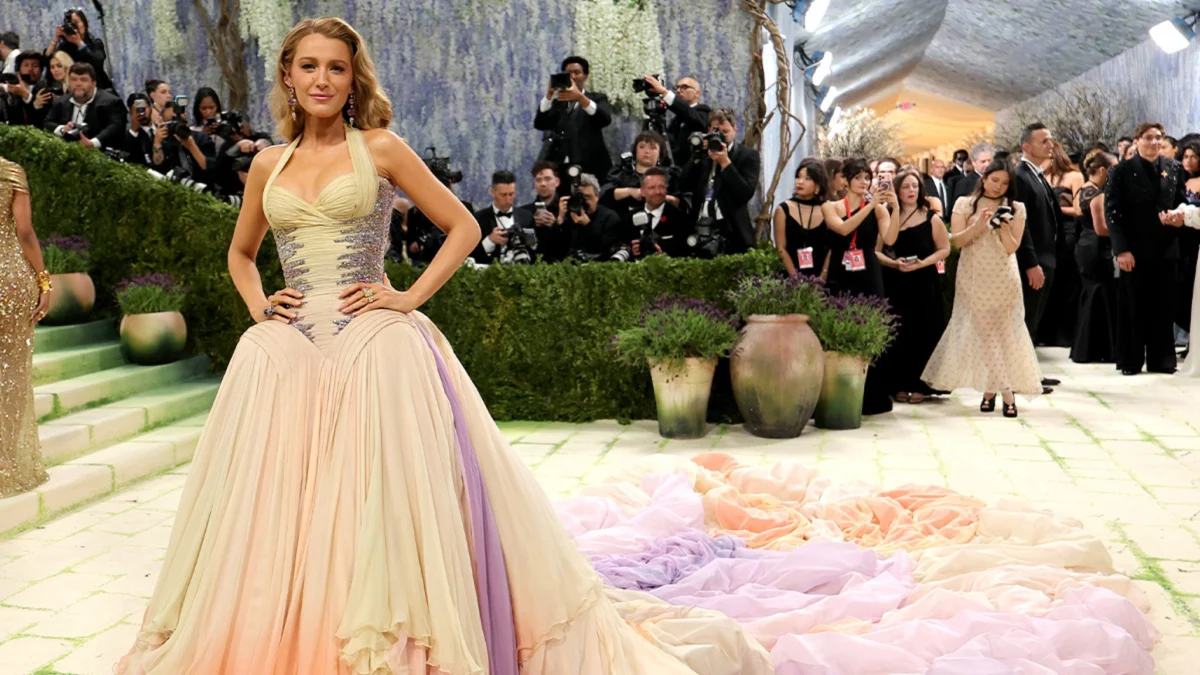
New York, NY – In a powerful display of resilience and sartorial splendor, acclaimed actress Blake Lively made a vibrant entrance at the annual Met Gala on Monday evening, May 4, 2026. Her radiant appearance, marked by a breathtaking pastel gown, coincided with the public announcement that her contentious legal dispute with actor and director Justin Baldoni regarding their film "It Ends With Us" had been officially settled. The dual events marked a pivotal moment for Lively, signaling both a personal triumph over a protracted legal battle and a reaffirmation of her status as a red-carpet icon.
A Triumphant Return to the Met Gala Carpet Amidst Personal Victory
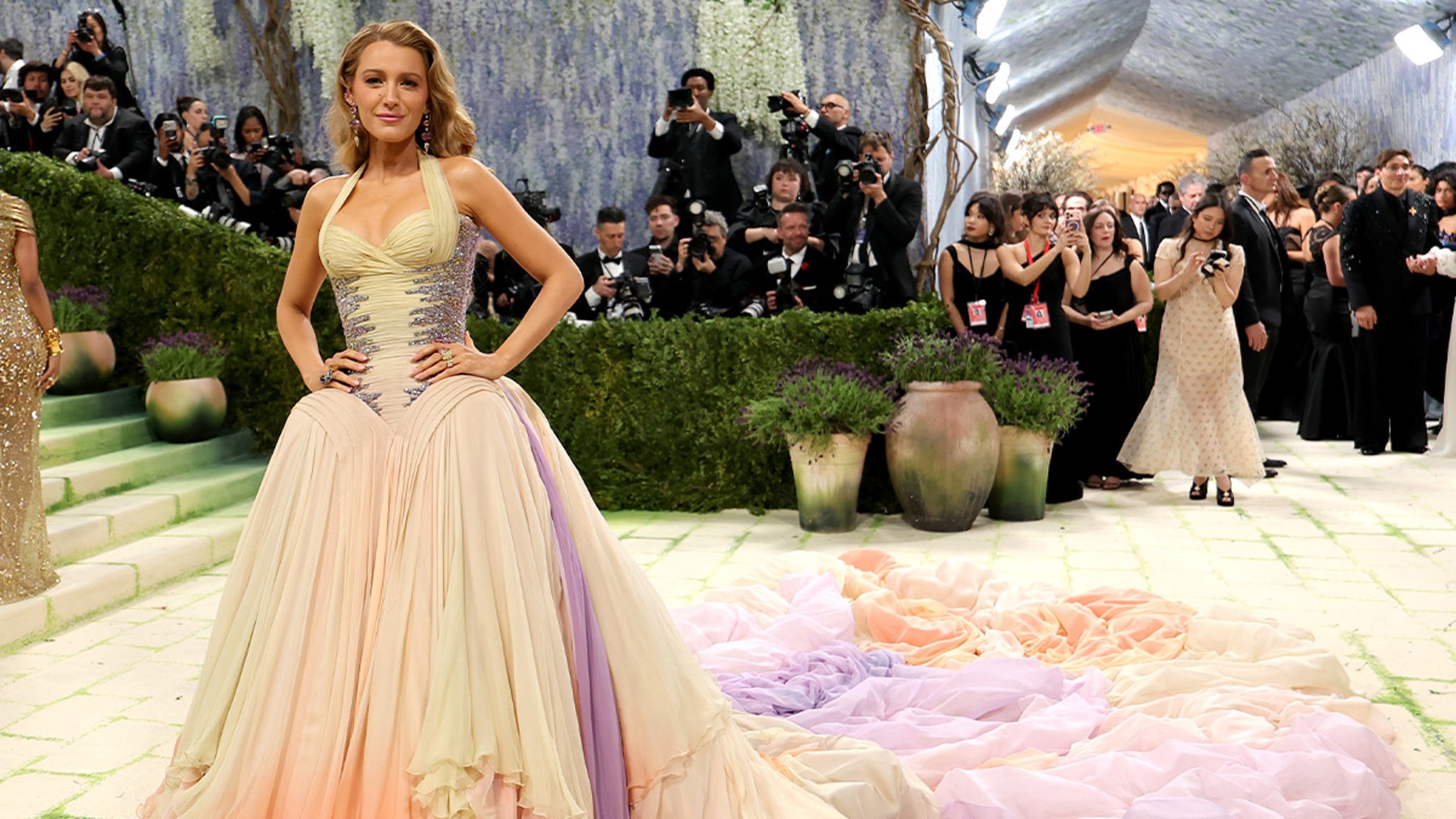
Known for her consistently show-stopping ensembles at the Met Gala, Blake Lively’s 2026 arrival was particularly resonant. Stepping onto the Metropolitan Museum of Art’s hallowed steps, she exuded an unmistakable air of lightness and liberation. Her gown, a cascading confection of dreamy pinks and blues, evoked a springtime fantasy, its ethereal fabric shimmering under the flashbulbs. Observers and fashion critics were quick to interpret the ensemble as a sartorial declaration of freedom, a visual metaphor for turning a new, brighter page. The deliberate choice of a color palette that screamed "cotton candy energy"—playful, light, and unequivocally jovial—stood in stark contrast to the months of legal tension that had recently overshadowed her public image.
Lively’s previous Met Gala appearances have often been thematic masterpieces, from her Statue of Liberty-inspired Versace gown in 2022 to her opulent gilded glamour looks. This year’s choice, while seemingly less literal in its interpretation of an as-yet-unannounced theme, spoke volumes through its celebratory mood, positioning her as a figure not only of high fashion but also of profound personal strength. The Met Gala, an annual fundraising event for the benefit of the Metropolitan Museum of Art’s Costume Institute in New York City, is widely regarded as the fashion industry’s premier annual event. Held traditionally on the first Monday in May, it serves as a platform for avant-garde fashion and artistic expression, with each year’s theme guiding the sartorial choices of its high-profile attendees. Lively’s choice this year, whether aligned with a secret theme or a personal statement, certainly commanded attention, capturing headlines for both its aesthetic appeal and its symbolic timing.
The "It Ends With Us" Legal Saga: A Chronology of Conflict and Resolution
The backdrop to Lively’s radiant Met Gala appearance was the resolution of a bitter legal battle that had cast a long shadow over the highly anticipated film adaptation of Colleen Hoover’s bestselling novel, "It Ends With Us." The dispute, involving Lively and her co-star and director Justin Baldoni, reached a critical juncture earlier on Monday when both parties formally announced a settlement, narrowly averting a potentially explosive court trial just weeks before its scheduled commencement.
The genesis of the conflict can be traced back to reported disagreements and alleged workplace issues that surfaced during the production of "It Ends With Us." While specific details remained largely under wraps due to the sensitive nature of legal proceedings and potential non-disclosure agreements, public reports indicated a growing discord between the lead actress and the film’s director and producer. Sources close to the production, speaking anonymously due to the ongoing nature of the dispute, hinted at differing creative visions and concerns over the on-set environment, which eventually escalated into formal legal action. This type of production conflict, while not uncommon in Hollywood, often becomes magnified when high-profile figures are involved, drawing intense media scrutiny and potentially impacting a film’s future.
Blake Lively’s legal team had filed a series of serious allegations, including claims of retaliation and a subsequent "smear campaign" that she contended had severely damaged her professional standing. These claims were substantial, with Lively alleging that the fallout from these actions had resulted in a staggering loss of $161 million in potential earnings and opportunities. The financial figure underscored the gravity of her allegations and the perceived impact on her career, highlighting the significant stakes involved in such disputes for celebrity talent whose brand and marketability are paramount. Conversely, Baldoni’s representatives had consistently denied any wrongdoing, asserting that all actions taken were within professional and legal boundaries, maintaining that their conduct adhered to industry standards.
Throughout the legal process, various court rulings had shaped the trajectory of the case. While a judge had previously dismissed the majority of Blake Lively’s initial claims, the crucial allegation of retaliation had survived, setting the stage for a potentially protracted and public trial. This specific charge, often difficult to prove, suggested that Lively’s team had presented sufficient evidence to warrant its continuation, highlighting the seriousness with which the court viewed her grievances. The prospect of a high-profile trial, with both celebrities potentially testifying and sensitive production details being aired publicly, loomed large over Hollywood, creating significant anticipation and concern within the industry about potential revelations and their broader implications for workplace practices.
The Settlement: A Joint Statement for Peace and Purpose
The announcement of the settlement brought an abrupt end to what promised to be a dramatic legal showdown. In a joint statement released to the press, Blake Lively and Justin Baldoni presented a united front, emphasizing their shared pride in the "It Ends With Us" project. The statement meticulously avoided any direct acknowledgment of the specific allegations or the financial claims, instead focusing on the film’s overarching mission.
"The movie ‘It Ends With Us’ is a source of pride for both of us," the statement read, underscoring their collective commitment to the project’s artistic and social objectives. Critically, the statement highlighted the film’s core purpose: "Its mission to raise awareness for domestic violence survivors remains paramount." This emphasis on the film’s social impact served to reframe the narrative, shifting focus from personal conflict to public good and aligning with the sensitive themes of Colleen Hoover’s original novel.
Crucially, the joint statement also subtly acknowledged the behind-the-scenes turmoil without delving into specifics. It noted that "concerns raised by Blake ‘deserved to be heard’," a significant concession that validated Lively’s grievances without explicitly admitting fault on Baldoni’s part. This delicate phrasing allowed both parties to save face while publicly recognizing the validity of the issues raised. The statement further reaffirmed "their commitment to safe, respectful workplaces," a boilerplate yet essential pledge in an industry increasingly scrutinized for its production environments. This commitment reflects a broader shift in Hollywood’s approach to workplace conduct, particularly in the wake of movements advocating for safer and more equitable conditions across all levels of production.
The statement concluded with a plea for closure and peace, expressing "hope everyone can move forward ‘constructively and in peace,’ including dialing down the online noise." This final call aimed to mitigate further speculation and negative commentary from fans and media alike, signaling a desire to put the contentious period behind them and allow the film to be judged on its merits rather than its fraught production history. The emphasis on collective progress and reduced "online noise" also speaks to the challenges celebrities face in an age of pervasive social media commentary.
Implications of the Settlement: Beyond the Courtroom and into the Industry
The decision to settle, rather than proceed to trial, carries significant implications for all parties involved and for the wider film industry. For Blake Lively, the settlement offers a definitive end to a stressful chapter, allowing her to publicly move forward with her career unencumbered by ongoing litigation. While the specific terms of the settlement remain confidential, it can be inferred that a mutually agreeable resolution, likely involving some form of compensation or acknowledgment, was reached to avoid the unpredictable and potentially damaging outcome of a public trial. The validation of her "concerns deserved to be heard" provides a measure of vindication, even without a formal court ruling, which can be crucial for an artist’s reputation and future collaborations.
For Justin Baldoni, the settlement removes the immediate threat of a highly publicized legal battle that could have tarnished his reputation as a filmmaker and advocate. Baldoni, known for his work on projects with socially conscious themes, likely sought to avoid a trial that could distract from the important message of "It Ends With Us" and potentially damage his standing within the industry. The joint statement’s emphasis on the film’s mission allows him to refocus public attention on the artistic and social value of the project, a strategic move to preserve his public image and the integrity of his work.
From an industry perspective, this settlement underscores the growing importance of resolving workplace disputes swiftly and discreetly, especially when high-profile talent is involved. The entertainment industry has faced increasing pressure in recent years to address issues of workplace safety, harassment, and equitable treatment, spurred by movements like #MeToo and broader calls for accountability. Settlements, while often criticized for their secrecy, can sometimes be seen as a pragmatic way for companies and individuals to mitigate risk, control narratives, and avoid setting legal precedents that could have broader implications for future disputes. The specific mention of "safe, respectful workplaces" in the joint statement reflects this ongoing industry-wide conversation and the imperative for public figures and production companies to project an image of compliance and responsibility, not just legally but ethically. Such settlements often include clauses that prevent future litigation over the same issues, providing a clear path forward for all involved.
"It Ends With Us": The Road Ahead for the Highly Anticipated Adaptation
The resolution of the legal battle paves a clearer path for the release and reception of "It Ends With Us." The film, based on Colleen Hoover’s immensely popular novel, deals with sensitive themes of domestic violence, abuse, and resilience. The book’s massive readership brings with it significant expectations, and the production had already faced scrutiny and anticipation from its dedicated fanbase. The legal conflict had threatened to overshadow the film’s message, creating unwanted distractions for both the creative team and the audience.
With the legal cloud now lifted, the focus can squarely return to the artistic merits of the adaptation and its critical message. The film stars Lively as Lily Bloom, a woman who navigates a tumultuous relationship while confronting her past, and Baldoni as Ryle Kincaid. The success of the film will now hinge on its ability to faithfully adapt the source material while resonating with audiences on an emotional level. The joint statement’s reiteration of the film’s mission to raise awareness for domestic violence survivors is a strategic move to re-center public discourse on the narrative’s profound social relevance, ensuring that the legal drama doesn’t overshadow the critical conversations the film aims to spark. The film’s eventual release will be a litmus test for how audiences separate the art from its production challenges.
Blake Lively: A Career Defined by Style, Substance, and Strategic Moves
Blake Lively has long cultivated an image as a formidable presence both on and off screen. Beyond her acting roles in popular series like "Gossip Girl" and films such as "A Simple Favor," she has carved out a niche as a fashion icon, often styling herself for major events, including the Met Gala. Her ability to consistently deliver memorable red-carpet moments has cemented her status as a cultural influencer, a testament to her keen eye and understanding of public presentation.
The events of Monday, May 4, 2026, add another layer to her public persona. Her confident and joyous appearance at the Met Gala, immediately following the announcement of a significant legal victory, showcases a star who is not only adept at navigating the treacherous waters of Hollywood but also capable of using high-profile platforms to reclaim her narrative. It suggests a strategic and composed approach to managing public perception, transforming a potentially damaging legal entanglement into an opportunity for a powerful personal statement. Lively’s Met Gala entrance, therefore, was more than just a fashion moment; it was a carefully orchestrated act of public triumph, signaling that for her, indeed, some things truly do end, allowing for vibrant new beginnings. This ability to pivot from controversy to triumph is a hallmark of enduring celebrity careers.
The coming months will reveal the true impact of this settlement on the film’s success and the ongoing careers of its stars. For now, Blake Lively’s Met Gala appearance stands as a powerful symbol of moving forward, a vibrant testament to resilience in the face of adversity, and a definitive statement that for her, the drama of "It Ends With Us" is, at last, truly over. The fashion world and the entertainment industry alike will be watching closely to see what new chapters she writes next.