

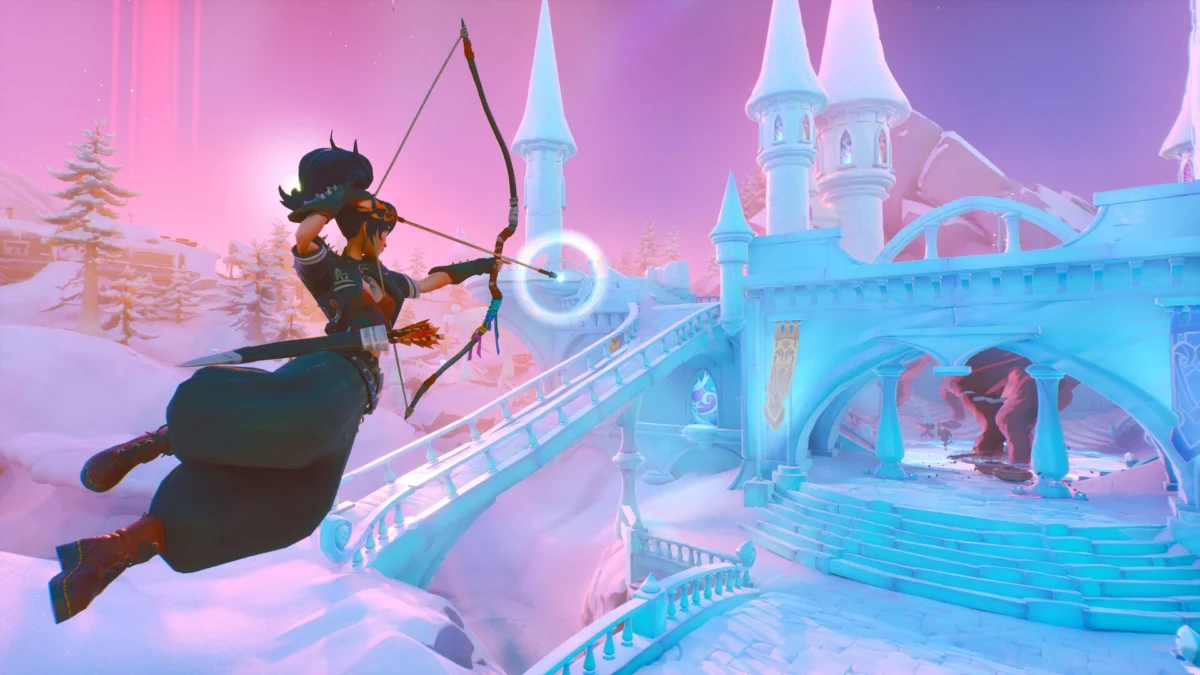
Knight Street Games has officially announced the cessation of active development for Last Flag, its third-person hero shooter, just fourteen days after the title’s initial launch on the Steam platform. The decision comes after the game failed to secure a player base sufficient to sustain long-term operations, marking another casualty in an increasingly volatile and crowded competitive shooter market. In a comprehensive statement released via the studio’s official Discord server, the development team cited the "financial reality" of their current situation as the primary driver behind the pivot, acknowledging that while the game will remain accessible to those who purchased it, the ambitious roadmap originally envisioned for the project has been significantly curtailed.
The announcement highlights a growing trend within the independent development sector, where studios attempt to challenge the dominance of "AAA" live-service giants by offering traditional, premium purchasing models. Knight Street Games explicitly marketed Last Flag as an alternative to the industry’s reliance on microtransactions and seasonal battle passes, positioning it as a "complete game experience at an affordable price." However, the lack of an initial player surge and the subsequent struggle to maintain concurrent user counts on Steam charts have forced the studio to re-evaluate its ability to provide ongoing support and console porting.
The Vision of Last Flag and the Indie Philosophy
The development of Last Flag began five years ago with a specific creative mandate: to translate the mechanical joy of traditional, real-life "capture the flag" into a digital, hero-based format. From its inception, the project was designed to be an outlier in the modern gaming landscape. Knight Street Games sought to avoid the "live service" trap, which often necessitates a relentless content treadmill and aggressive monetization strategies to remain solvent.
By opting for a one-time purchase price, the studio hoped to attract a community of players weary of the psychological pressure of daily logins and cosmetic storefronts. The team’s statement reflected this ethos, noting that they intentionally avoided the pace and scale of AAA competition to focus on "heart" and a distinct mechanical identity. Despite these intentions, the marketplace response proved that the premium model for multiplayer-only shooters remains a high-risk venture, particularly when competing against free-to-play titles that benefit from massive marketing budgets and established social ecosystems.
Technical Preservation and the "Custom Lobby" Pivot
Unlike many of its contemporaries that have opted for total server shutdowns following a commercial failure, Knight Street Games has committed to a preservation strategy. The studio emphasized that "Last Flag isn’t going anywhere," outlining a plan to transition the game into a community-led state. This involves working closely with backend service providers and Steam to ensure the infrastructure remains functional for existing owners.
The most significant component of this transition is the introduction of custom lobbies. By allowing players to host their own matches and modify game rules, the developers hope to empower the remaining core community to sustain the game independently of official matchmaking updates. This move is designed to prevent Last Flag from becoming "dead software," a common fate for multiplayer titles that lose developer backing. The studio is also moving forward with a final series of updates that were already in the production pipeline, including the game’s tenth playable character, a new map, an additional game mode, and various cosmetic enhancements and leaderboards.
Comparative Market Analysis: The Hero Shooter Graveyard
The difficulties faced by Last Flag are not isolated incidents but rather part of a broader pattern of instability within the hero shooter genre. The industry has seen several high-profile and indie-led projects struggle to maintain momentum in 2024. Most notably, the news article draws a direct parallel to Highguard, a live-service shooter developed by Wildlight.
Highguard launched in January to a promising start, amassing nearly 100,000 concurrent players on PC. However, the title suffered from a rapid exodus of users who cited concerns over map design and the 3v3 gameplay format. Despite the developers’ efforts to pivot to a 5v5 mode and introduce new content, the revenue decline was irreversible. Highguard was ultimately shuttered in March, only two months after its debut, because it could no longer generate enough income to sustain its staff.
The contrast between Highguard and Last Flag lies in their business models—one was a live-service gamble, the other a premium indie effort—yet both met similar fates. This suggests that the barrier to entry for the genre is no longer just the quality of the game, but the ability to capture and hold the collective attention of a global audience that is already deeply invested in established titles like Overwatch 2, Valorant, and Apex Legends.
Chronology of Last Flag’s Short Lifecycle
To understand the suddenness of this production halt, one must look at the timeline of the game’s public presence:
- 2019 – 2023: Long-term development period focused on "capture the flag" mechanics and character design.
- Early 2024: Marketing push emphasizing the lack of microtransactions and the "indie heart" of the project.
- Launch Day: Last Flag releases on Steam. Initial reviews are generally positive regarding gameplay feel, but player counts remain in the low hundreds.
- Week 1: Steam charts show a failure to gain viral traction. The studio begins internal discussions regarding financial sustainability.
- Week 2: Official announcement of production cessation. The studio confirms that console development is suspended indefinitely and shifts focus to "preservation patches."
The Financial Reality of Modern Game Development
The "financial reality" mentioned by Knight Street Games is a multifaceted issue affecting the entire software industry. For an indie studio, the costs of maintaining servers, providing security updates, and funding a full-time development staff are astronomical. Without a consistent stream of new players or a recurring revenue model (which the studio intentionally avoided), the burn rate of capital quickly outpaces the initial sales revenue.
The studio’s decision to halt production now, rather than months down the line, appears to be a strategic move to ensure they have enough remaining resources to fulfill their promise of making the game "disappear-proof." By focusing on the backend transition and the final content drop, they are attempting to exit the active development phase with their reputation intact, even if the commercial goals were not met.
Implications for the Indie Multiplayer Sector
The struggle of Last Flag serves as a cautionary tale for independent developers eyeing the multiplayer space. It highlights the "discoverability crisis" on platforms like Steam, where hundreds of games are released weekly, making it difficult for even high-quality titles to find their niche.
Furthermore, it raises questions about the viability of the "premium" model for multiplayer games. While players often vocalize a distaste for microtransactions, the sheer number of high-quality free-to-play options means that any entry fee acts as a significant friction point for new users. For a multiplayer game, where the "product" is effectively the presence of other players, a low initial player count creates a feedback loop that discourages new purchases, leading to the "empty lobby" syndrome that Last Flag was unable to overcome.
Future Outlook for Knight Street Games
While production on Last Flag has ended, Knight Street Games remains operational. The studio has expressed gratitude to its community, noting that building the game was a "dream come true." The statement concluded with a request for fans to "tune in for what comes next," suggesting that the studio may pivot to a new project—likely one with a different scope or business model—informed by the lessons learned during the Last Flag cycle.
For the players who remain, the next few months will bring the final official updates, including the tenth character and the new map. Once these are deployed, the future of Last Flag will rest entirely in the hands of its community. The success of the "custom lobby" transition will determine whether the game survives as a cult classic or fades into the digital archives of the mid-2020s gaming era. For now, the "battlefield" remains open, but the architects of that field have officially moved on to the next horizon.