


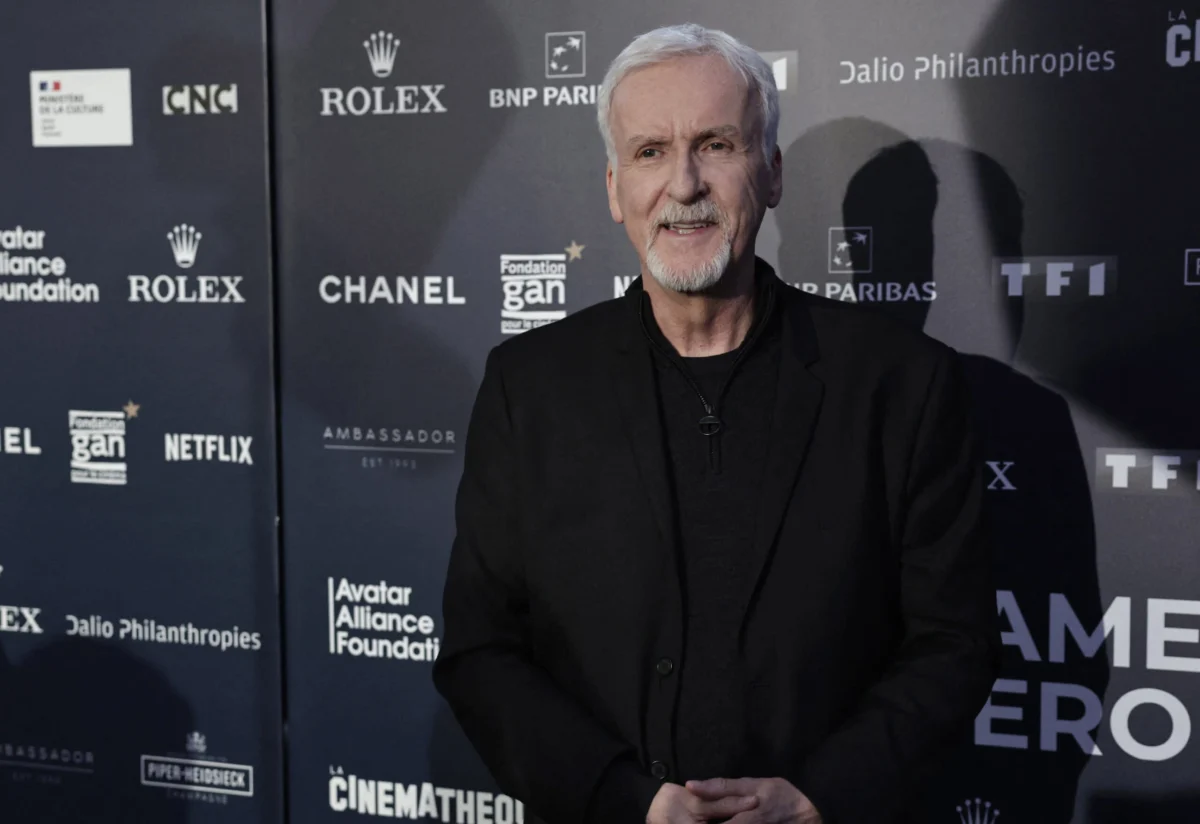
James Cameron, the Academy Award-winning director behind cinematic milestones such as "Titanic" and "Avatar," has issued a stark warning to federal lawmakers regarding Netflix’s proposed acquisition of Warner Bros. Discovery’s film studio and streaming assets. In a detailed letter addressed to Senator Mike Lee (R-Utah), chairman of the Senate subcommittee on antitrust, competitive policy, and consumer rights, Cameron characterized the potential merger as a catastrophic event for the traditional theatrical experience, likening the industry’s future to a "sinking ship" should the deal proceed.
The letter, obtained by CNBC and reported here for the first time, underscores a growing rift between the traditional Hollywood establishment and the silicon-valley-backed streaming giants. Cameron’s correspondence follows a high-profile Senate hearing held on February 3, where Netflix co-CEO Ted Sarandos and Warner Bros. Discovery (WBD) executive Bruce Campbell testified regarding the competitive impacts of the transaction. Cameron, who has dedicated his career to pushing the technical boundaries of the big-screen experience, argues that the consolidation of a legacy studio into a streaming-first platform would fundamentally erode the infrastructure of American cinema.
The Arguments Against Consolidation
In his missive to Senator Lee, Cameron expressed a profound concern for the theatrical motion picture business, a sector he noted has been his "life’s work." While acknowledging that his films eventually move to downstream video markets and streaming platforms, he emphasized that the cinema remains the primary and essential venue for high-concept storytelling.
"I believe strongly that the proposed sale of Warner Brothers Discovery to Netflix will be disastrous for the theatrical motion picture business," Cameron wrote. He argued that Netflix’s core business model is inherently "at odds" with the survival of movie theaters. By absorbing WBD, one of the "Big Five" legacy studios, Netflix would gain control over a production powerhouse that currently releases approximately 15 theatrical films per year. Cameron posits that this volume is vital for theater operators who are already struggling with shifting consumer habits and a reduced slate of wide-release films.
The filmmaker suggested that the merger would not only reduce the number of films produced for the big screen but also restrict the options available to creators. "It will remove consumer choice by reducing the number of feature motion pictures that are made," Cameron stated, adding that it would "restrict the choices of filmmakers looking for studios to invest in their projects, which will in turn reduce jobs."
Congressional Scrutiny and the Antitrust Landscape
Senator Mike Lee, who oversees the subcommittee responsible for examining competitive policy, indicated that Cameron’s concerns are shared by a broad spectrum of industry stakeholders. In an official statement, Lee confirmed that his office has received outreach from various actors, directors, and industry professionals regarding the merger.
"I share many of their concerns," Lee said, signaling that the Senate may hold follow-up hearings to address the specific risks posed to the labor market and consumer pricing. The subcommittee’s investigation centers on whether the acquisition constitutes a vertical or horizontal monopoly that could stifle competition in both the production of content and its distribution.
The regulatory hurdle is significant. Critics of the deal point to the massive market share a combined Netflix-WBD entity would command. As of the third quarter of 2024, Netflix reported approximately 325 million global subscribers, while WBD’s HBO Max (rebranded as Max) held 128 million. Merging these two user bases would create a streaming behemoth with nearly half a billion subscribers, potentially giving the company unprecedented leverage over licensing fees, advertising rates, and talent negotiations.
Netflix’s Strategic Defense: A "Pro-Worker" Narrative
In the face of mounting criticism from Hollywood’s elite, Netflix leadership has maintained a steadfast defense of the acquisition. During a recent earnings call, co-CEO Ted Sarandos described the deal as "pro-consumer, pro-innovation, and pro-worker." Netflix’s formal written testimony to the Senate subcommittee outlined a vision of growth rather than contraction.
Netflix has pledged to invest $20 billion in film and television production in 2026, with a significant portion of that capital allocated to projects within the United States. The company argues that its acquisition of WBD assets would allow it to scale its production capabilities, utilizing WBD’s existing studio infrastructure and veteran production teams.
"We are not acquiring these amazing assets to shut them down, but to build them up," the company stated in its testimony. Netflix also attempted to appease theater owners by promising to honor a 45-day theatrical window for Warner Bros. films before they transition to the streaming platform. Sarandos has argued that the addition of a legacy studio would preserve jobs during a volatile period for the media ecosystem, claiming that Netflix needs the "extensive experience and expertise" of WBD’s staff to run its expanded operations.

However, Cameron and other skeptics remain unconvinced. The filmmaker pointed to past comments made by Sarandos, who has previously referred to movie theaters as an "outdated concept" and told investors that driving audiences to physical cinemas was "not our business." Cameron argued that any verbal or written commitments to support theatrical releases are likely to "evaporate in a few years" once the acquisition is finalized and the regulatory pressure subsides.
The Rival Bid: Paramount Skydance and Market Competition
The tension surrounding the Netflix-WBD deal is further complicated by the presence of a rival suitor. Paramount Skydance has launched a hostile tender offer to acquire the entirety of Warner Bros. Discovery, positioning itself as a more traditional, "theater-friendly" alternative to Netflix.
Paramount Skydance has leveraged many of the same arguments as Cameron, suggesting that a Netflix takeover would destroy the competitive balance of the industry. By positioning the bid as a "hostile" move, Paramount Skydance is appealing directly to WBD shareholders, arguing that a merger with another traditional media entity would yield better long-term value and preserve the integrity of the studio’s brand.
Netflix executives have countered these concerns by broadening the definition of their competition. Sarandos and co-CEO Greg Peters have frequently stated that Netflix does not just compete with other movie studios, but with the entire "attention economy," which includes social media platforms like TikTok, video games, and user-generated content on YouTube. By this logic, Netflix views itself as a relatively small player in a vast global media landscape, an argument intended to downplay antitrust concerns.
Economic and Geopolitical Implications
Beyond the creative and competitive arguments, Cameron’s letter touched on the broader economic significance of the American film industry. He framed Hollywood as one of the nation’s last dominant export sectors, noting that while the U.S. may have lost its lead in automotive or steel manufacturing, it remains the undisputed world leader in cinematic content.
Cameron’s mention of trade policy shifts—specifically referencing the Trump administration’s focus on protecting U.S. exports—adds a political dimension to the debate. President Donald Trump has previously suggested using tariffs and other trade mechanisms to protect the American film industry from foreign competition and digital disruption. Cameron warned that a Netflix-WBD merger would weaken this vital export by prioritizing a closed-loop streaming model over the global theatrical distribution network that currently brings billions of dollars back to the U.S. economy.
"The theatrical experience of movies could become a sinking ship," Cameron warned, concluding his letter with a poignant reference to his 1997 blockbuster. "That ship has sailed… I am very familiar not only with ships that sail, but also those that sink."
Chronology of Key Events
The path toward this potential merger has been marked by several critical milestones:
- Late 2025: Initial reports surface regarding Netflix’s interest in acquiring Warner Bros. Discovery’s film and streaming assets following a period of financial restructuring at WBD.
- December 8, 2025: Paramount Skydance launches a hostile tender offer for WBD, complicating Netflix’s acquisition path.
- January 20, 2026: During a Q4 earnings call, Netflix leadership doubles down on the "pro-consumer" benefits of the deal, citing a planned $20 billion content spend for 2026.
- February 3, 2026: The Senate subcommittee on antitrust, competitive policy, and consumer rights holds a hearing featuring testimony from Ted Sarandos and Bruce Campbell.
- February 2026: James Cameron sends a private letter to Senator Mike Lee, escalating industry opposition to the deal and urging legislative intervention.
Analysis of Potential Outcomes
If the Netflix-WBD deal is approved, it would mark the most significant shift in Hollywood’s power structure since the advent of television. The potential implications are twofold.
On one hand, the deal could provide much-needed financial stability to WBD’s assets, ensuring that iconic franchises continue to receive high-budget treatments. Netflix’s vast data resources and global reach could theoretically find larger audiences for niche films that might struggle in a traditional theatrical environment.
On the other hand, the "Netflix-ization" of a major studio could lead to a "Great Contraction." If the 15-film annual theatrical slate is reduced to a handful of "event" movies designed merely to market a streaming release, the collateral damage to the exhibition industry—theaters, concession workers, and local economies—could be irreparable. Furthermore, the loss of a major independent buyer in the talent market could lead to depressed wages and fewer creative risks, as filmmakers would be forced to adhere to Netflix’s specific algorithmic requirements.
As the Senate subcommittee weighs these factors, the industry remains in a state of high anxiety. The "Titanic" director’s warning has provided a powerful focal point for those who believe that the soul of American cinema is at stake. Whether the "sinking ship" can be righted remains a question that will likely be decided in the halls of Washington D.C. in the coming months.