


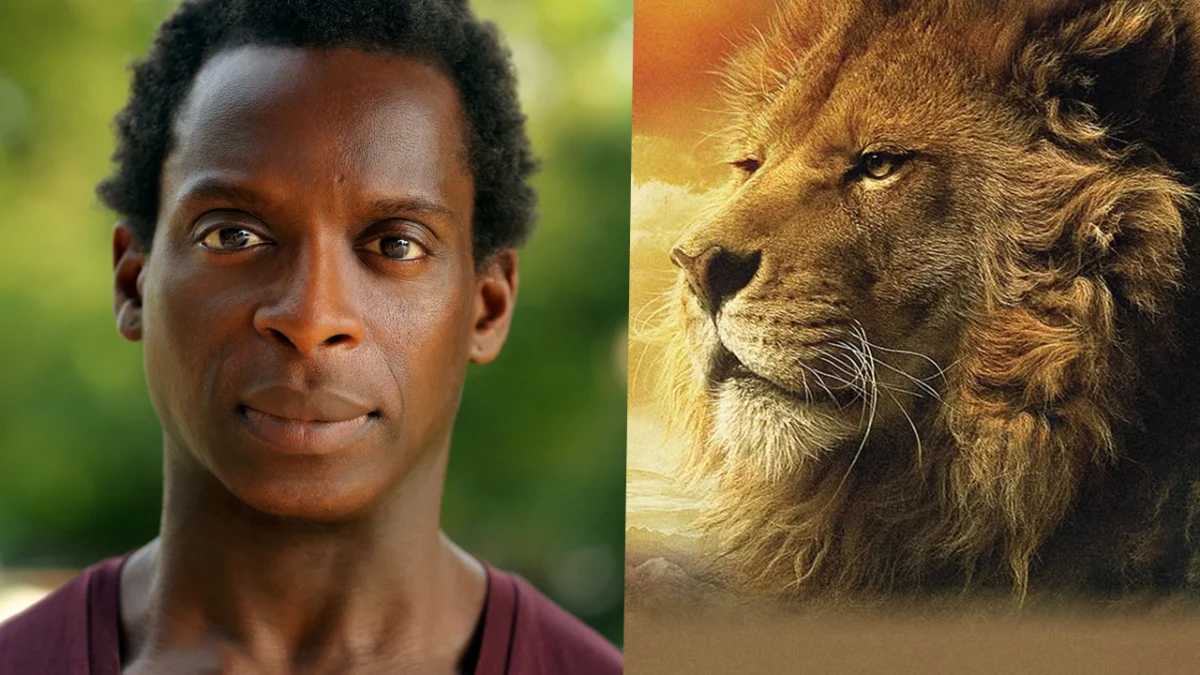
London, UK – In a significant development for one of Netflix’s most ambitious upcoming projects, critically acclaimed Olivier Award-winning actor Kobna Holdbrook-Smith has officially joined the star-studded cast of Narnia: The Magician’s Nephew, the highly anticipated adaptation of C.S. Lewis’s beloved fantasy epic. This casting news arrives concurrently with a major strategic announcement: the film’s release date has been shifted to 2027, with a full global theatrical window preceding its eventual streaming debut, signaling Netflix’s evolving approach to its tentpole productions.
The addition of Holdbrook-Smith, renowned for his versatile performances across stage, screen, and television, further elevates an already formidable ensemble. While Netflix has yet to officially confirm his specific role, industry sources indicate that Holdbrook-Smith is slated to portray Francis, a character believed to be the cinematic adaptation of Frank the Cabby from C.S. Lewis’s original novel. This role is pivotal, as Frank is one of the first human inhabitants of Narnia, chosen by Aslan himself to become its inaugural king. His casting underscores the project’s commitment to securing top-tier talent for even seemingly supporting roles, reflecting the narrative depth and significance of the characters within the Narnian universe.
A Strategic Shift: Netflix Embraces Theatrical Distribution
The decision to push Narnia: The Magician’s Nephew to a 2027 release, specifically targeting a wide theatrical window, marks a notable strategic pivot for Netflix. Initially conceived as a direct-to-streaming event, this move indicates the platform’s increasing willingness to leverage traditional distribution models for its most high-profile and commercially viable films. The film is now slated for an IMAX and global theatrical premiere on February 12, 2027, with special IMAX sneak previews beginning two days prior on February 10, 2027. Its global streaming debut on Netflix will follow approximately seven weeks later, on April 2, 2027.
This shift aligns with a broader industry trend where streaming giants are re-evaluating the exclusive streaming model for blockbuster-scale content. The theatrical release provides several advantages: it generates significant pre-release buzz, establishes the film as a major cultural event, offers a premium viewing experience that can translate to higher critical acclaim, and provides an additional revenue stream. For a franchise as globally recognized and cherished as The Chronicles of Narnia, a theatrical launch could be instrumental in establishing its new cinematic identity and attracting a wider, multi-generational audience beyond Netflix’s subscriber base. It also signals Netflix’s intent to compete directly with traditional studios for box office dominance in the fantasy genre, a space currently dominated by franchises like Lord of the Rings and Harry Potter.
Kobna Holdbrook-Smith: A Career Defined by Excellence
Kobna Holdbrook-Smith brings a wealth of experience and critical acclaim to the Narnia saga. His distinguished career is marked by a blend of powerful stage performances and memorable screen roles. He garnered widespread recognition and the prestigious Olivier Award for Best Actor in a Musical for his electrifying portrayal of Ike Turner in Tina: The Tina Turner Musical. This accolade, a testament to his commanding stage presence and vocal talent, highlights his ability to inhabit complex characters with depth and authenticity. Further testament to his contributions to the arts, Holdbrook-Smith was awarded an M.B.E. (Member of the Order of the British Empire) in the Queen’s birthday honors for his services to drama.
His filmography spans a diverse range of genres, demonstrating his versatility. Family audiences will recognize him from roles in beloved British productions such as Paddington 2, where he appeared as a guard, and Mary Poppins Returns. He also lent his talents to the recent musical fantasy Wonka, further showcasing his range in large-scale productions. In the realm of superhero blockbusters, Holdbrook-Smith has featured in Marvel’s Doctor Strange and Zack Snyder’s Justice League. Fantasy television enthusiasts may recall his appearance as the angelic Balthamos in the acclaimed BBC/HBO adaptation of Philip Pullman’s His Dark Materials, a role that offered him experience within complex, world-building fantasy narratives. This extensive background makes him an ideal choice for the intricate world of Narnia, a franchise that demands both dramatic gravitas and an understanding of fantastical storytelling.
Greta Gerwig’s Vision for a New Narnia
At the helm of this ambitious undertaking is Academy Award-nominated filmmaker Greta Gerwig, known for her distinctive directorial voice and critical successes such as Barbie and Little Women. Gerwig is not only directing Narnia: The Magician’s Nephew but is also penning the screenplay, a dual role that underscores her deep creative involvement and vision for the franchise. Her prior work, particularly Barbie, which grossed over $1.4 billion worldwide, demonstrates her capacity to craft culturally resonant narratives that appeal to a broad demographic while maintaining artistic integrity.
Gerwig has openly shared her profound connection to C.S. Lewis’s work, stating, "Because of C. S. Lewis’s The Chronicles of Narnia, I believed in magic and hidden worlds and adventure… It is the honor of a lifetime to be asked to imagine it into being." This personal passion suggests a faithful yet fresh interpretation, one that respects the source material’s spiritual and fantastical elements while imbuing it with her characteristic blend of wit, emotional depth, and intricate character development. Her involvement has been a key factor in generating significant anticipation for the series, promising a sophisticated and engaging cinematic experience.
The Genesis of Narnia: The Magician’s Nephew
The choice of The Magician’s Nephew as the inaugural film in Netflix’s Narnia series is a crucial one, as it serves as the origin story for the entire Chronicles of Narnia saga. Published in 1955, it is chronologically the first book, introducing readers to the creation of Narnia and many of its foundational elements. The plot revolves around Digory Kirke (who later becomes the Professor from The Lion, the Witch and the Wardrobe) and his friend Polly Plummer. Through a series of magical rings crafted by Digory’s eccentric and morally ambiguous uncle, Andrew, they are transported to different worlds, including the dying world of Charn and, ultimately, the nascent world of Narnia.
It is in Narnia that they witness the majestic lion Aslan sing the world into existence. Caught up in this momentous event are several characters from Earth, including the malicious Queen Jadis (the future White Witch), Uncle Andrew, and Frank the Cabby along with his horse, Strawberry. Frank the Cabby, a good-hearted and unassuming Londoner, finds himself thrust into an unimaginable adventure. His steadfast nature and simple goodness catch Aslan’s attention, leading to his divine appointment as the first King of Narnia, King Frank I, alongside his wife, Helen, who is brought from Earth to rule with him. This narrative choice provides a fresh starting point for a new generation of viewers, allowing for a comprehensive exploration of Narnia’s mythology from its very genesis, rather than retreading the more frequently adapted The Lion, the Witch and the Wardrobe. The character of Francis/Frank the Cabby is thus not merely a supporting player but a foundational figure in Narnian history, making Holdbrook-Smith’s casting particularly significant.
The Enduring Legacy of C.S. Lewis and Previous Adaptations
C.S. Lewis’s The Chronicles of Narnia, a seven-book series published between 1950 and 1956, remains one of the most beloved and enduring fantasy sagas in literary history. The books have sold over 100 million copies worldwide and have been translated into more than 47 languages, captivating generations with their rich mythology, allegorical depth, and timeless themes of good versus evil, sacrifice, and redemption.
The series has seen several adaptations across various media. Early television serials by the BBC in the late 1980s and early 1990s introduced many to the visual world of Narnia. More recently, Walden Media, in partnership with Disney and later 20th Century Fox, produced a series of feature films: The Lion, the Witch and the Wardrobe (2005), Prince Caspian (2008), and The Voyage of the Dawn Treader (2010). While The Lion, the Witch and the Wardrobe was a critical and commercial success, grossing over $745 million globally, subsequent installments saw diminishing returns, with Prince Caspian earning $419 million and The Voyage of the Dawn Treader $415 million. These films collectively demonstrated the broad appeal of Narnia but also highlighted the challenges of sustaining a multi-film franchise. Netflix’s acquisition of the rights in 2018, allowing them to develop an entire universe of films and series, marked a fresh start, promising a cohesive and long-term vision for the property. This new iteration, under Gerwig’s direction, aims to redefine the cinematic standard for Narnia.
Netflix’s Grand Fantasy Ambition
The Narnia project represents a cornerstone of Netflix’s broader strategy to establish itself as a dominant force in the high-stakes fantasy genre. In an increasingly competitive streaming landscape, original, high-quality genre content is crucial for subscriber acquisition and retention. Netflix has invested heavily in fantasy, with varying degrees of success, through properties like The Witcher, Shadow and Bone, and The Sandman. Narnia, with its established global fanbase and rich narrative potential, is positioned to be a flagship series, capable of anchoring Netflix’s fantasy slate for years to come. The decision for a theatrical release for The Magician’s Nephew suggests that Netflix sees this as more than just a streaming hit; it’s a global cinematic event designed to resonate across all viewing platforms.
The meticulous casting, the involvement of a visionary director like Gerwig, and the strategic distribution plan all point to Netflix’s serious commitment to doing justice to C.S. Lewis’s legacy. As the 2027 release date approaches, further casting announcements and production details are eagerly awaited by fans worldwide, keen to see how this new chapter of Narnia unfolds. The journey into the Wood between the Worlds promises to be an epic one, with Kobna Holdbrook-Smith’s presence adding another layer of exceptional talent to a truly monumental cinematic endeavor.