




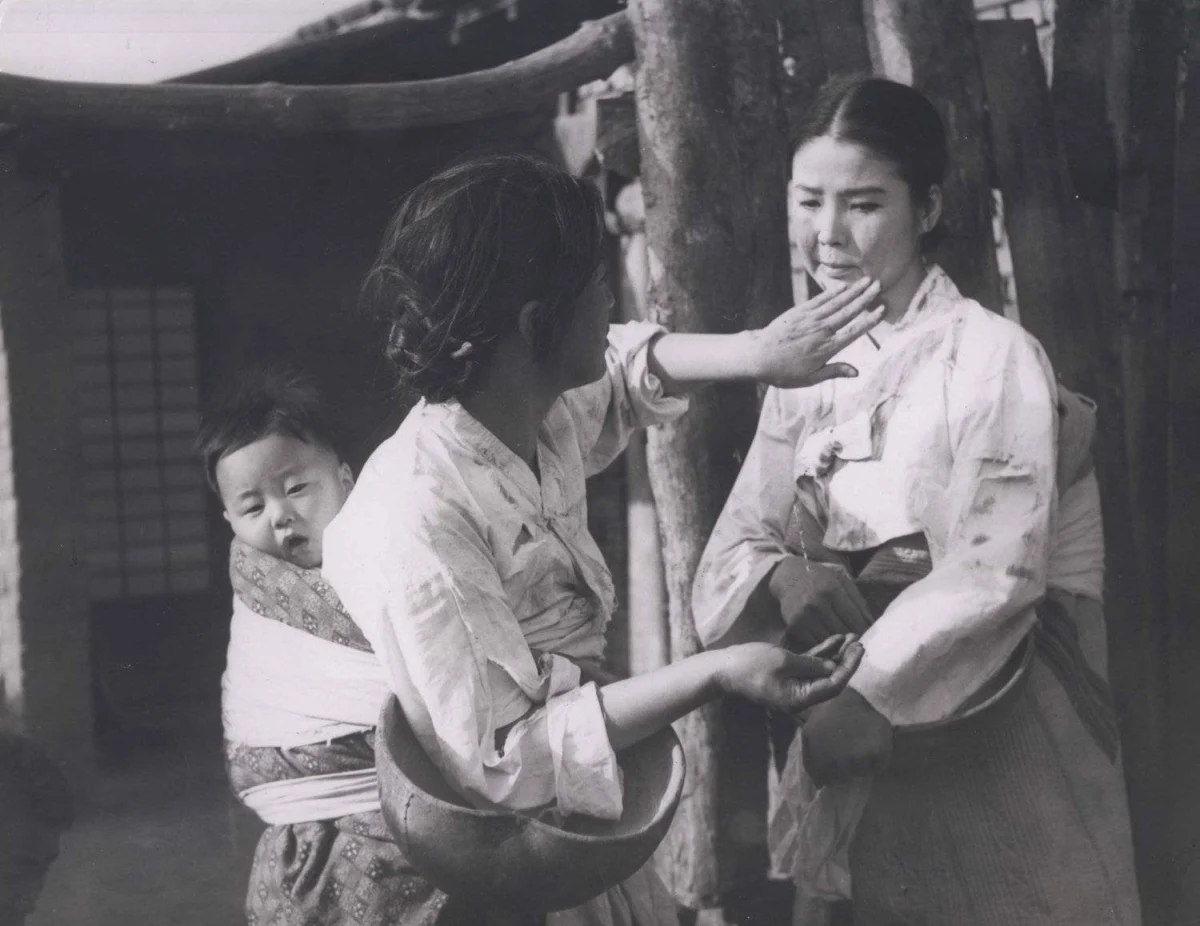
Potato, a cinematic adaptation of Kim Dong-in’s seminal 1921 novella "Gamja," stands as a powerful testament to the enduring capacity of Korean melodrama to transcend mere sentimentalism and deliver profound social commentary. While often associated with emotional narratives, the genre, as exemplified by this film, has consistently served as a potent medium for exploring the harsh realities faced by individuals and society. "Potato" specifically delves into the harrowing experiences of women during the Japanese Occupation era in Korea, a period marked by immense hardship, social upheaval, and the systematic oppression of Korean culture and its people. The film meticulously crafts a narrative that, while steeped in melodrama, offers a stark and unflinching portrayal of female vulnerability, exploitation, and the desperate struggle for survival within a patriarchal and colonial framework.
Historical Context: A Nation Under Duress
The Japanese Occupation of Korea, which commenced in 1910 and lasted until the end of World War II in 1945, was a period of profound national trauma. The colonial administration imposed a stringent system of control, suppressing Korean language, culture, and identity. Economic exploitation was rampant, with resources systematically siphoned off to fuel Japan’s industrial and military expansion. For Korean women, this era amplified existing societal inequalities and introduced new forms of suffering. Traditional gender roles often relegated women to domestic spheres, but the economic pressures of occupation forced many into labor, often under exploitative conditions. Furthermore, the pervasive atmosphere of power imbalance meant that women, particularly those from lower socioeconomic strata, were susceptible to various forms of coercion and abuse from both their own countrymen and the occupying forces. The novella "Gamja" by Kim Dong-in, published in 1921, emerged from this oppressive environment, reflecting the lived experiences and anxieties of a generation grappling with subjugation and societal decay.
Narrative Unfolding: The Trials of Bok-nyeon
At the heart of "Potato" lies the tragic story of Bok-nyeon, a beautiful 20-year-old woman whose life is irrevocably shaped by misfortune. Her fate is sealed when she is married to Jang, a man who, despite his impoverished circumstances, clings to a delusional sense of aristocratic superiority. Jang’s refusal to engage in any form of labor, fueled by his perceived noble lineage, places the entire burden of their survival squarely on Bok-nyeon’s shoulders. This burden is not merely metaphorical; the film vividly illustrates the literal weight of their poverty through early scenes depicting Bok-nyeon’s relentless efforts to procure sustenance and income.
Initially, Bok-nyeon resorts to begging, a desperate act in the impoverished village they inhabit. However, the local women, recognizing her predicament and perhaps their shared struggle, eventually guide her toward more strenuous work. Her journey leads her to a forest where she finds employment picking caterpillars. This arduous task, undertaken out of sheer necessity, exposes her to a new layer of exploitation. The man overseeing the work is depicted as a predatory figure, a relentless womanizer who deliberately selected the women for their looks. He wields his authority to coerce several women into sexual encounters, a grim reality of the power dynamics prevalent during the era. Bok-nyeon’s turn inevitably arrives, marking a pivotal and devastating moment in her descent. The cumulative hardships she endures—the grueling labor, the poverty, and the sexual coercion—gradually erode her innocence and resilience, transforming her into a harsher, more hardened individual. Survival instincts begin to dictate her actions, leading her to use her own body as a commodity, a last resort in a world that offers her no other options. This stark reality creates friction and animosity among the women, their individual struggles for survival pitting them against one another, while her husband remains an utterly useless and demanding presence.
Thematic Resonance: Exploitation, Class, and Gender
Beyond the immediate narrative of Bok-nyeon’s suffering, "Potato" delves into several critical thematic elements that illuminate the sociopolitical landscape of Japanese-occupied Korea. The film’s portrayal of women’s lives is central to its commentary. Bok-nyeon’s marriage to a man who refuses to contribute to their livelihood, due to a misplaced sense of pride rooted in his aristocratic ancestry, serves as a pointed critique of rigid class structures and their detrimental impact on women. Her father’s decision to marry her off, presumably for financial or social reasons, further underscores the limited agency women possessed. They were often pawns in a patriarchal system, expected to fulfill societal obligations and cater to the needs of men, including sexual demands, without any reciprocal support or respect.
The film’s depiction of the exploitative work in the forest, overseen by the predatory Director, starkly illustrates the systemic objectification of women. Men in positions of power were often able to exploit women with impunity, treating them as disposable commodities. The narrative highlights how the desperate circumstances forced upon these women inevitably led to antagonism amongst them. The scarcity of resources and opportunities meant that their struggles for survival often clashed, fostering a climate of suspicion and hostility. This internal conflict among the oppressed further weakens their collective ability to resist external forces.
A Voyeuristic and Sensual Undertone
An intriguing and somewhat unexpected element woven into the fabric of "Potato" is a discernible voyeuristic and sensual layer. This aspect begins with the opening scene, featuring Bok-nyeon bathing partially undressed, and continues through a series of implied, rather than explicit, sexual encounters and suggestive moments. The presence of such sensuality, even in its subtly conveyed form, is noteworthy given the stringent censorship prevalent during the era. This approach, while potentially controversial, serves to heighten the film’s engagement, drawing the audience into Bok-nyeon’s world and the raw physicality of her existence. The striking performance of Yoon Jung-hee in the lead role significantly amplifies this sensual dimension, imbuing her character with a magnetic presence that captivates the viewer.
Transformation and Marginalization
Under the relentless pressure of her circumstances, Bok-nyeon undergoes a profound transformation. The initial victim of exploitation gradually becomes more hardened, even cruel, and seemingly shameless. Yet, despite her evolving demeanor, she remains trapped, continually exploited by the men in her life and unable to escape her oppressive marriage. The introduction of a Chinese man into the narrative further complicates Bok-nyeon’s situation. His presence, while not explicitly detailed in terms of his role in her life, serves to highlight another layer of societal hierarchy. Even a poor immigrant, as long as he is male, holds a relatively higher social standing and potential for agency compared to the women of Korea, irrespective of their own circumstances.
As Bok-nyeon becomes increasingly ostracized, branded a pariah by the women in the village who once might have offered solidarity, her fate appears tragically predetermined. The film offers a bleak outlook on her prospects, suggesting that recognition, if any, would only come posthumously. This bleakness culminates in an ironic and highly melodramatic final scene, a hallmark of the genre that underscores the tragic arc of Bok-nyeon’s life.
Performances and Craftsmanship
The success of "Potato" is significantly indebted to the stellar performances of its cast and the meticulous craftsmanship of its production team. Yoon Jung-hee, in the demanding lead role of Bok-nyeon, carries the narrative with extraordinary power. Her performance is a masterclass in transformation, seamlessly transitioning from vulnerability to defiance, from sensuality to raw aggression. Her portrayal is particularly impactful during moments of violence, where she conveys a visceral intensity that is both captivating and disturbing. Heo Jang-kang, as Bok-nyeon’s husband Jang, delivers a convincingly unpleasant performance as a thoroughly despicable character devoid of redeeming qualities. His portrayal, at times bordering on the darkly comedic, effectively encapsulates the parasitic nature of his character. Park Nou-sik, as the Director, embodies a chilling duality, appearing professional on the surface while subtly revealing a predatory undercurrent that makes his character deeply unsettling.
The cinematography by Jang Seok-jun is of a remarkably high caliber. He skillfully captures the nuanced elements of the film, from the voyeuristic sensuality to the evocative bucolic setting of the woods and the stark realism of the rundown village. This visual storytelling significantly enhances the emotional impact of the narrative. Kim Hee-su’s editing contributes to a brisk and engaging pace, perfectly complementing the film’s narrative style. Clocking in at a concise 81 minutes, "Potato" maintains its focus and avoids unnecessary elongation, ensuring that its powerful message resonates without overstaying its welcome.
Broader Impact and Legacy
"Potato" serves as a compelling example of how Korean cinema, particularly within the melodrama genre, can transcend superficial emotional appeal to offer profound social and historical commentary. The film’s unflinching portrayal of the struggles faced by women during a tumultuous period in Korean history provides a vital historical document, shedding light on the intersection of colonialism, classism, and patriarchy. By adapting Kim Dong-in’s 1921 novella, the film not only resurrects a significant literary work but also brings its enduring themes to a new generation of viewers, fostering a deeper understanding of Korea’s past and the resilience of its people. The film’s critical acclaim and its ability to provoke discussion about gender roles, exploitation, and the human cost of oppression solidify its place as an important contribution to Korean cinematic history. Its legacy lies in its capacity to remind audiences of the human stories often buried beneath grand historical narratives, and the courage required to survive and resist in the face of overwhelming adversity.