

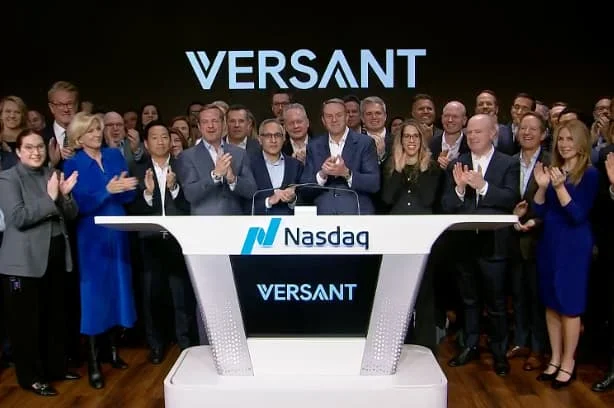
Versant Media Group is scheduled to release its first quarterly earnings report as a standalone public company this Tuesday, marking a critical milestone for the Comcast spinoff. Wall Street analysts and investors are preparing for an unprecedented look into the internal financials of a media conglomerate comprised almost exclusively of traditional cable television networks and specialized digital properties. The report follows the company’s January 5, 2026, debut on the Nasdaq, an event that represented one of the most significant structural shifts in the American media landscape in recent years. By carving out its cable assets, Comcast sought to insulate its core connectivity and streaming businesses from the secular headwinds facing linear television, leaving Versant to navigate the "cord-cutting" era as a pure-play entity.
The upcoming disclosure will provide the first granular data on a portfolio that includes high-profile brands such as CNBC, MS Now, USA Network, Golf Channel, Syfy, E!, and Oxygen. Beyond the television screen, Versant also oversees a suite of digital and transactional assets, including the movie-rating site Rotten Tomatoes, the ticketing platform Fandango, and sports-tech interfaces like GolfNow and Sports Engine. For investors, the primary question is whether Versant’s heavy reliance on live news and sports can provide a sufficiently sturdy floor to offset the broader decline of the traditional pay-TV bundle.
The Genesis of Versant Media: A Strategic Decoupling
The formation of Versant Media Group was the culmination of a multi-year strategy by Comcast to streamline its operations. For decades, cable networks were the primary profit engines for media giants, providing steady affiliate fees and robust advertising revenue. However, the rise of direct-to-consumer streaming services led to a sustained decline in cable subscriptions. In late 2024, Comcast signaled its intent to spin off its cable networks into a separate, publicly traded company, a move designed to allow NBCUniversal to focus on its film studio, theme parks, and the Peacock streaming service.
When Versant officially listed on the Nasdaq in early 2025, it inherited a complex legacy. While the spinoff freed the networks from the corporate shadow of a larger conglomerate, it also placed them under the direct scrutiny of a market that has become increasingly skeptical of linear television’s long-term viability. Since its January debut, Versant’s stock has experienced a significant contraction, falling approximately 25%. Market analysts attribute this decline partly to technical selling pressure—as institutional investors who received Versant shares as part of the Comcast spinoff rebalanced their portfolios—and partly to fundamental concerns regarding the company’s revenue trajectory.
Analyzing the Financial Foundation
Prior to its public listing, Securities and Exchange Commission (SEC) filings provided a sobering look at the financial trends within Versant’s asset pool. The data revealed a steady downward trend in top-line growth: the assets generated $7.1 billion in revenue in 2024, a decrease from $7.4 billion in 2023 and $7.8 billion in 2022. This trajectory highlights the "secular challenges" often cited by analysts at firms like Goldman Sachs, who have maintained a neutral rating on the stock due to the contraction of the linear television market.
Despite the revenue decline, Versant remains a profitable enterprise with a current market capitalization of roughly $4.8 billion. The company’s financial health is bolstered by its relatively light debt load—a strategic decision made during the spinoff to ensure the new entity had the flexibility to pursue acquisitions and internal pivots. Unlike some of its debt-saddled peers in the media industry, Versant’s balance sheet is designed to support a "business model transition" rather than mere survival.
The Power of Live Content and Distribution Stability
A central pillar of Versant’s pitch to the investment community is its concentration of live programming. During an investor day presentation in December, CEO Mark Lazarus emphasized that 62% of the company’s audience is driven by live sports and news. In an era where scripted entertainment is easily replaced by on-demand streaming, live content remains the "glue" that keeps consumers tethered to the cable bundle.
The company’s sports portfolio, while lacking "Tier One" blockbuster rights like the NFL or NBA, features a robust lineup of niche and high-engagement content. This includes significant golf rights, WWE programming, and NASCAR coverage. Analysts at Raymond James have noted that this specific mix, combined with the influential business news reach of CNBC, provides Versant with considerable leverage during negotiations with cable and satellite distributors.
Stability is further reinforced by the long-term nature of Versant’s existing carriage agreements. Before the spinoff was finalized, NBCUniversal secured multi-year deals with major distributors, including Charter Communications and Google’s YouTube TV. These agreements ensure that Versant’s networks will remain in millions of households through at least 2028, with some sports-related contracts extending past 2030.
"The long-term nature of these partnerships highlights the stability of our business and also provides great visibility in the years to come," stated Anand Kini, Versant’s COO and CFO. However, the company faces an immediate test this year as two distribution agreements are reportedly up for renewal. These negotiations will serve as a bellwether for how much value distributors still place on Versant’s "Tier Two" sports and news assets in a stand-alone context.
The 2026 Transition: A Pivot to Digital and Platforms
Leadership at Versant has designated 2026 as the "first year of our business model transition." The long-term objective is to transform the company from a cable-centric organization into a diversified media platform where revenue is split evenly between traditional pay TV and digital/transactional streams.
To achieve this 50/50 split, Versant is aggressively expanding its digital footprint. Recent strategic moves include:
- The Acquisition of Free TV Networks: This move into the free ad-supported streaming television (FAST) space allows Versant to capture audiences who have moved away from paid subscriptions but still consume linear-style content.
- The Integration of Indy Cinema Group: By folding this cloud-based cinema operating system into Fandango, Versant is deepening its role in the theatrical ecosystem, positioning itself as a vital service provider for movie theaters.
- Direct-to-Consumer Enhancements: While Versant does not own a flagship general-interest streaming service like Peacock, it is investing in niche digital products tied to its core brands, such as GolfNow and digital extensions of the CNBC brand.
Comparative Industry Context
Versant is not alone in its struggle to redefine the value of cable networks. The media industry has seen various approaches to this problem. Newsmax, which went public last year, saw an initial surge in stock price followed by a sharp decline, illustrating the volatility of "pure-play" media stocks. Meanwhile, Warner Bros. Discovery initially considered a similar split of its TV networks from its streaming assets before ultimately moving toward a total company sale in a deal involving Paramount and Skydance.
The "Comcast model"—spinning off the networks into a separate entity—is being watched closely by other legacy media companies. If Versant can demonstrate that a lean, focused management team can extract high cash flows from "melting" assets while successfully seeding new digital growth, it may provide a blueprint for the industry. Conversely, if the stock continues to struggle despite profitable earnings, it may signal that the market has permanently soured on any company with significant exposure to the cable bundle.
Market Expectations and Implications
As the Tuesday earnings report approaches, analysts will be looking for more than just the bottom-line numbers. Key metrics of interest include:
- Advertising Resilience: How well CNBC and USA Network are holding up in a fragmented ad market.
- Digital Growth Rates: Whether the revenue from Fandango and Rotten Tomatoes is growing fast enough to eventually offset linear declines.
- Affiliate Fee Trends: Any commentary on the upcoming contract renewals and the potential for "blackouts" or rate increases.
While Goldman Sachs and other institutions remain cautious, there is an acknowledgment of Versant’s unique position. The company’s ability to generate free cash flow is undisputed; the challenge lies in convincing Wall Street that this cash can be successfully reinvested into a future that looks very different from the television landscape of the last forty years.
Ultimately, Versant Media Group represents a high-stakes experiment in corporate restructuring. By stripping away the high-growth "glamour" assets of a modern media conglomerate, the company has left itself with a core business that is both highly profitable and structurally challenged. Tuesday’s earnings will not just be a report on a single quarter; they will be the first data points in a long-term argument for the continued relevance of the cable network in a digital-first world. Investors will be watching closely to see if Mark Lazarus and his team can articulate a path that leads toward the 50% digital revenue goal without sacrificing the cash flow that currently sustains the company’s $4.8 billion valuation.