


Valve has officially confirmed that its highly anticipated successor to the 2015 Steam Controller will be released on May 4, marking a significant milestone in the company’s expanding hardware ecosystem. This announcement follows a period of strategic recalibration for the Bellevue-based technology giant, which saw several of its upcoming hardware projects delayed due to volatility in the global semiconductor and memory markets. While the more complex Steam Machine mini-PC and the "Steam Frame" standalone VR headset remain subject to revised production timelines, the new Steam Controller has successfully navigated supply chain hurdles to meet a spring launch window.
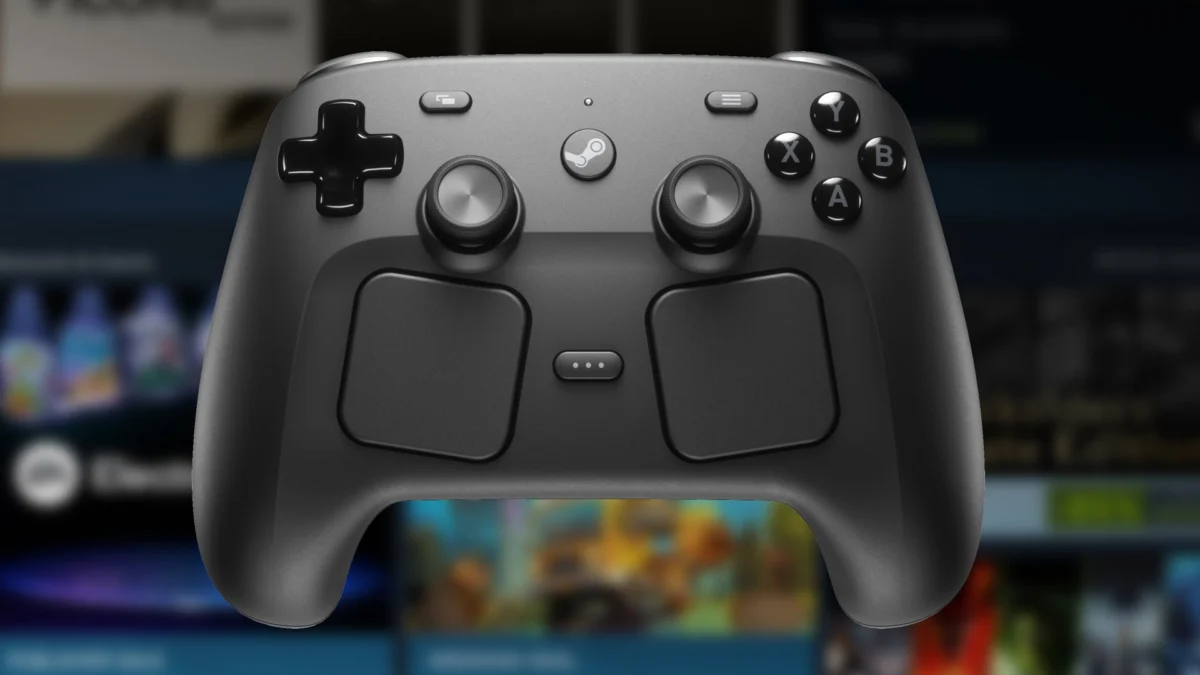
The device enters the market at a critical juncture for Valve. Following the runaway success of the Steam Deck, which has redefined the handheld gaming category, the company is seeking to bridge the gap between portable play and traditional living room setups. The new Steam Controller, priced at £85 in the United Kingdom and $99 in the United States, represents a synthesis of the experimental design language found in Valve’s original 2015 peripheral and the refined ergonomic standards established by the Steam Deck.
A Strategic Escape from the Memory Supply Crisis
The timing of the Steam Controller’s release is particularly noteworthy given the broader context of Valve’s hardware roadmap. In November of last year, Valve unveiled a trio of hardware projects: a high-performance Steam Machine mini-PC, a standalone VR headset known as Steam Frame, and the new Steam Controller. Originally, all three were slated for an early 2024 release. However, the global tech industry was soon hit by a significant surge in the price and scarcity of RAM and NAND storage, largely driven by the massive infrastructure demands of artificial intelligence data centers.
While the Steam Machine and Steam Frame require significant quantities of high-speed memory and onboard storage—components currently being prioritized for AI-focused enterprise clients—the Steam Controller operates on a different hardware profile. As Valve designer Lawrence Yang clarified, the controller’s lack of internal RAM and high-capacity storage allowed it to bypass the bottlenecks currently strangling PC and console manufacturing.
"We didn’t artificially hold it back for whatever reason," Yang stated during a technical briefing. "This is just how long it’s taken to get everything ready from a hardware, firmware, software standpoint, as well as building up enough launch quantity." By decoupling the controller from the more resource-heavy components of the Steam Machine and Steam Frame, Valve has been able to maintain its commitment to a 2024 release for at least one segment of its new hardware suite.
The Evolution of Design: From Experimentation to Ergonomics
The original 2015 Steam Controller was a polarizing piece of hardware. While it was praised by a dedicated niche of power users for its innovative dual trackpads and deep customization via the Steam Input software, it faced criticism for its steep learning curve and the absence of a traditional second analog stick. Valve engineer Jeremy Slocum acknowledged these historical shortcomings, noting that the original design often required players to "relearn" how to interact with games that were fundamentally built for traditional gamepads.
The new iteration of the Steam Controller seeks to rectify these issues by adopting the layout found on the Steam Deck. Most notably, the device now features two full-sized analog thumbsticks alongside two haptic trackpads. This "hybrid" approach ensures that the controller is immediately accessible to those used to Xbox or PlayStation layouts, while still offering the precision of trackpads for genres that typically require a mouse, such as real-time strategy (RTS) games or complex simulation titles.
Development of the new controller began in earnest following the launch of the Steam Deck OLED. According to Slocum, the ergonomics were refined through the prototyping of various handheld forms. "As we were developing the Steam Deck, a lot of the prototypes we built were very much controller-like, but in a handheld form factor," Slocum explained. The team realized that a significant portion of Steam Deck users were docking their devices to play on televisions or monitors, but found that traditional third-party controllers could not replicate the specific input configurations they had tailored for their handheld sessions. The new Steam Controller is designed specifically to fill this "hole in the experience," providing a seamless transition between mobile and docked play.
Technical Specifications and Global Pricing
Valve has positioned the Steam Controller as a premium peripheral, reflected in its build quality and feature set. While full technical documentation is expected closer to the ship date, preliminary reports indicate the inclusion of high-polling-rate wireless connectivity, Hall effect sensors in the triggers and thumbsticks to prevent "stick drift," and the same robust haptic feedback system found in the Steam Deck.
The global pricing structure for the device has been finalized as follows:
- United Kingdom: £85
- United States: $99
- Europe: €99
- Canada: $149 CAD
- Australia: $149 AUD
- Poland: 419 złoty
Valve has attributed regional price variations to a combination of distribution logistics, import duties, and local market conditions. The £85 price point places the Steam Controller in direct competition with "Pro" level peripherals from other manufacturers, such as the Sony DualSense Edge and the Xbox Elite Series 2, though Valve’s offering distinguishes itself through its unique integration with the Steam Input API.
Chronology of Valve’s Hardware Ambitions
To understand the significance of this launch, one must look at Valve’s decade-long journey into hardware:
- 2013–2015: The Steam Machine Initiative. Valve attempted to disrupt the console market by partnering with third-party manufacturers like Alienware and Zotac to create PC-based consoles running SteamOS. This era saw the birth of the first Steam Controller.
- 2015–2019: The Experimental Phase. While the Steam Machine initiative struggled due to software fragmentation, Valve found success with the Valve Index VR headset and the Steam Link streaming device.
- 2022: The Steam Deck Revolution. Valve released its first internal handheld, proving that SteamOS (now based on Arch Linux) was a viable, user-friendly platform for mass-market gaming.
- Late 2023: The Hardware Expansion. Valve announced the Steam Machine revival (a first-party mini-PC), the Steam Frame VR headset, and the new Steam Controller.
- February 2024: The Global Delay. Valve admitted that the Steam Machine and Steam Frame would be pushed back toward a 2026 window due to the RAM and storage crisis.
- May 4, 2024: The Steam Controller Launch. The first of the three announced devices reaches consumers.
Market Implications and the Future of SteamOS
The release of the Steam Controller is more than just the launch of a new peripheral; it is a foundational step toward Valve’s broader goal of establishing SteamOS as a dominant platform in the living room. By providing a standardized input method that mirrors the Steam Deck, Valve is ensuring that developers can optimize their games for a single "Steam" input profile that works across handhelds, desktops, and future "Steam Machine" consoles.
Industry analysts suggest that the Steam Controller’s success will serve as a bellwether for Valve’s future hardware endeavors. If the controller achieves high adoption rates, it will validate the demand for a dedicated Valve-branded "console" experience, potentially accelerating the development of the delayed Steam Machine. Furthermore, the inclusion of advanced inputs like back-grip buttons and touch-capacitive thumbsticks suggests that Valve is committed to maintaining its lead in input innovation, even as it moves toward a more traditional ergonomic form factor.
As the May 4 release date approaches, the gaming community remains focused on how Valve will handle the logistics of a global rollout. With warehouses around the world reportedly stocked and ready, the company aims to avoid the "reservation queue" system that defined the early days of the Steam Deck launch. For fans of the original 2015 controller, and for the millions of new users brought into the ecosystem by the Steam Deck, the new Steam Controller represents the next chapter in Valve’s ongoing mission to unify the flexibility of PC gaming with the convenience of a console.