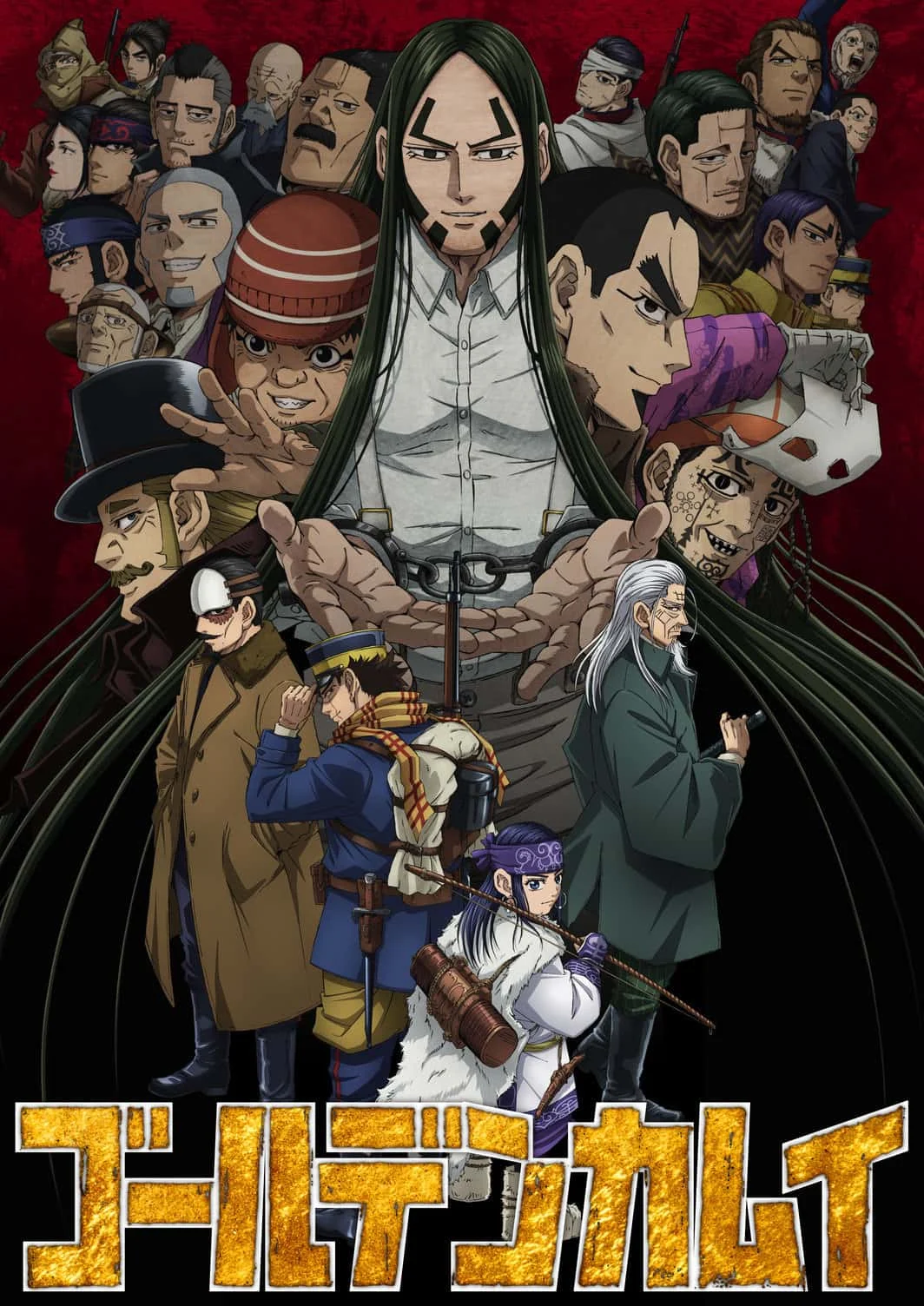
Based on Satoru Noda’s critically acclaimed and commercially successful manga, which has sold over 18 million copies, Golden Kamuy has cemented its status as a singular and impactful anime adaptation of the past decade. The journey of bringing Noda’s intricate narrative to the screen began in 2018, initially under the direction of Hitoshi Nanba and later helmed by Shizutaka Sugahara. This ambitious project saw its production transition from Geno Studio to Brain’s Base across its multiple seasons, each contributing to its growing legacy.
From its inception, Golden Kamuy distinguished itself within the shonen genre by daring to place an Ainu character at its core, meticulously showcasing the language, culture, and customs of Japan’s indigenous Ainu people. This commitment to authenticity was not a mere aesthetic choice; it was underpinned by the direct involvement of Ainu language linguist Hiroshi Nakagawa, ensuring a level of accuracy rarely encountered in mainstream anime productions. This dedication resulted in a series that transcended its occasional narrative or pacing issues, offering viewers a profoundly educational and culturally enriching experience.
The anime consistently maintained a high caliber of production throughout its run. The second season notably refined some of the minor shortcomings of its predecessor, while the third season continued this trajectory with remarkable success. Even the fourth season, while sometimes perceived as slightly less cohesive, still managed to surpass many of its contemporary anime offerings. By the time its final season is slated for release in 2026, Golden Kamuy will have firmly established itself as one of the most significant anime achievements of recent years, skillfully weaving together elements of intense action, historical accuracy, and ethnographic exploration into a compelling and unforgettable tapestry.
The Hunt for the Ainu Gold: A Narrative Unveiled
The narrative of Golden Kamuy is set against the backdrop of the tumultuous aftermath of the Russo-Japanese War. At its heart is Saichi Sugimoto, a decorated veteran of the Battle of 203 Hill, whose uncanny ability to survive harrowing situations earned him the moniker "Immortal Sugimoto." Despite his legendary resilience and a fearsome combat prowess, Sugimoto finds himself eking out a living as a miner in Hokkaido. His primary motivation is to secure financial support for the widow of a fallen comrade. His fortunes take a dramatic turn when he stumbles upon whispers of a hidden trove of Ainu gold, a legendary treasure said to be concealed by the indigenous people.
The key to locating this immense wealth lies in a cryptic code encoded within the tattoos adorning the bodies of escaped convicts from the notorious Abashiri Prison. This revelation ignites a fierce race against time and a deadly scramble for survival, as multiple factions, each with their own ruthless agendas, begin their pursuit of the elusive gold.
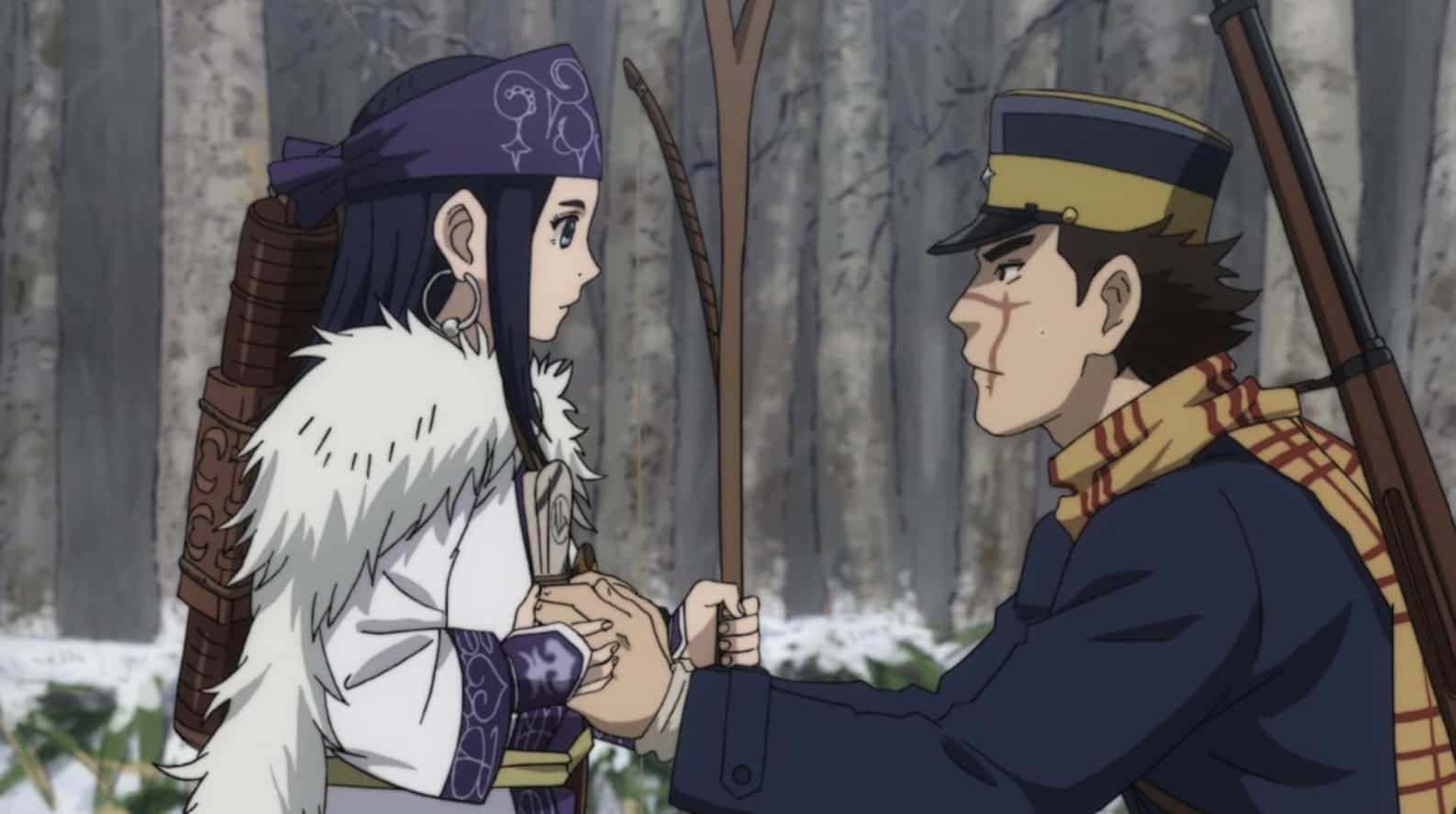
Sugimoto’s solitary quest takes an unexpected turn when he encounters Asirpa, a resourceful young Ainu girl who not only saves him from a potentially fatal encounter with a grizzly bear but also possesses crucial knowledge related to the treasure. Recognizing a shared interest and a mutual need, they forge an unlikely partnership. Asirpa’s personal connection to the gold, particularly her father’s apparent involvement in its concealment, deepens the stakes and adds a layer of emotional complexity to their endeavor.
Their journey propels them through the unforgiving and breathtaking landscapes of Hokkaido and beyond, a harsh environment that becomes as much an antagonist as the human adversaries they face. Along the way, they encounter a diverse cast of characters, ranging from invaluable allies to formidable enemies. Among the allies is Yoshitake Shiraishi, a master escape artist whose unique skills prove indispensable. The opposition, however, is particularly menacing, featuring the ruthless 7th Division of the Japanese Army, led by the chillingly sociopathic Tokushiro Tsurumi, and the legendary, albeit formidable, Toshizo Hijikata, a historical figure with aspirations of establishing a new republic.
As the narrative unfolds, alliances prove to be fluid and often treacherous. Sugimoto finds himself forced to cooperate with former adversaries, while Asirpa, due to her intimate knowledge of the Ainu culture and the treasure’s secrets, becomes a central figure of exploitation for nearly every faction. The geographical scope of the story expands, venturing into Sakhalin and incorporating Russian elements, before converging in Sapporo, where a series of increasingly violent and strategically complex confrontations erupt between the competing groups.
The pursuit of the gold serves as a central thread, but it is intricately interwoven with the personal histories of the characters, the political machinations of the era, and a profound exploration of Ainu culture. This multifaceted approach results in a narrative that is as unpredictable as it is deeply resonant.
Historical Context and Cultural Immersion
Golden Kamuy‘s enduring appeal is significantly amplified by its masterful blending of historical realism with established genre conventions, creating an experience that feels both familiar and refreshingly novel. The anime clearly draws inspiration from other samurai and historical fiction narratives, with Sugimoto echoing the resilience of characters like Manji from Blade of the Immortal, Tsurumi bearing a resemblance to the formidable Shishio from Rurouni Kenshin, and Hijikata embodying the recurring presence of historical figures in various fictional works. The narrative skillfully navigates between moments of brutal, visceral action and periods of unexpected, often absurd, humor, employing the genre’s characteristic pedantic wit through exaggerated character behavior and expressions.
However, Golden Kamuy carves out its own distinct niche through its profound emphasis on survival against the elements and its meticulous ethnographic portrayal. The action extends beyond mere interpersonal conflicts to encompass a constant, life-or-death struggle against nature itself. Bears, wolves, wolverines, and even Siberian tigers are not simply background elements but integral participants in the unfolding drama, introducing an element of raw unpredictability and grounding the narrative in a harsh reality where all factions must contend with the unforgiving environment.
More crucially, the series delves into Ainu culture with an unparalleled depth and respect. The traditions, practices, and belief systems of the Ainu are depicted with remarkable detail, encompassing their culinary habits, spiritual connections to the natural world, and daily life. The linguistic nuances reflect broader cultural distinctions, while rituals and activities are rendered with an authenticity that underscores the extensive research undertaken by the production team. These immersive portrayals not only enrich the narrative context but also provide a powerful lens through which to analyze the characters’ motivations and backgrounds.
As the series progresses, additional cultural and historical layers are meticulously introduced. The second season intensifies its focus on supporting characters, revealing poignant and often tragic backstories and expanding its scope to include other indigenous groups, such as the Matagi hunters. The third season further broadens its horizons by incorporating Russian elements and drawing parallels to real historical events, particularly through the backstory of Asirpa’s father and his involvement in revolutionary movements.
Narrative Evolution and Thematic Balance
The structure of Golden Kamuy‘s narrative undergoes a notable evolution over its seasons. While the earlier installments present a relatively cohesive and linear storyline, the later seasons adopt a more episodic, road-movie-like approach. This structure allows the characters to encounter a diverse array of individuals and situations in each episode, facilitating a broader exploration of themes and character arcs. While this approach occasionally risks becoming repetitive, particularly when it leans into a "villain of the week" format, it also provides opportunities for deeper dives into specific subplots and character development.
The delicate balance between dramatic intensity and comedic relief is another defining characteristic of the series. Initially, the humor serves as a welcome counterpoint to the pervasive violence and grim realities of the narrative. However, as the series progresses, the integration of comedic elements becomes somewhat uneven. In certain instances, the attempts to lighten the mood can detract from the overall tension and emotional impact, especially in later seasons where an increased reliance on humor occasionally undermines the narrative’s gravility. Nevertheless, there are moments where the series’ more crude humor aligns effectively with the cultural context, reflecting aspects of traditional Ainu storytelling.
Ultimately, Golden Kamuy succeeds in presenting a complex and captivating interplay of history, culture, and character-driven storytelling, solidifying its position as a standout achievement in the anime landscape.
Technical Prowess and Artistic Vision
From a technical standpoint, Golden Kamuy consistently demonstrates a high level of craftsmanship, even as it navigated shifts in its creative staff and production studios. This commitment to quality has been a hallmark of the series since its inception.
Kenichi Oonuki’s character designs in the initial seasons are particularly noteworthy. Each character is rendered with meticulous detail, resulting in a memorable and distinct cast. While there are apparent influences from other anime works, Oonuki’s designs possess a unique identity, with each character’s personality vividly reflected in their visual appearance. In subsequent seasons, Takumi Yamakawa assumed the role of character designer, delivering strong designs that, while impressive, occasionally faced challenges due to the sheer volume of characters, leading to some figures appearing somewhat similar.
The animation, initially produced by Geno Studio, is exceptional. Non-action sequences are characterized by highly realistic movement, while action scenes boast impressively dynamic choreography. The depiction of violence is particularly striking, featuring intricate and brutal encounters that effectively convey the physical toll on the characters. While the CGI utilized for animals, especially bears, could benefit from refinement, it does not significantly detract from the overall high quality of the animation.
With the transition to Brain’s Base, the animation quality remains robust. Character movement continues to be fluid, and the interaction with the environment is rendered with even greater refinement. The action sequences, particularly in the final season, reach their apex, with both intimate one-on-one duels and large-scale battles executed with precision and palpable intensity. The sniper duel, a particularly memorable sequence, stands out for its aesthetic brilliance and narrative impact.
The backgrounds and environmental design also warrant significant praise. The series masterfully captures the stark beauty of Hokkaido, Sakhalin, and other depicted locations with a high degree of detail and historical accuracy. The snow-laden landscapes, dense forests, and urban environments are all rendered with meticulous care, contributing to the immersive quality of the narrative. While the coloring palette occasionally leans towards being overly bright for the story’s tone, the overall visual presentation remains undeniably impressive.
A particularly noteworthy aspect is the seamless integration of cultural elements into the visual design. The depiction of Ainu clothing, tools, and rituals is handled with precision, further enhancing the series’ authenticity. Even elements such as food preparation and consumption are presented with remarkable detail, transforming them into integral components of the storytelling.
The music and opening and ending themes also play a crucial role in establishing the series’ atmosphere. Tracks such as "Reimei" and "Tokeidai no Kane" are exceptional, perfectly complementing the tone of the series and amplifying its emotional resonance.
Epilogue: A Legacy Forged
Golden Kamuy ultimately stands as a remarkable series that, despite its few imperfections, achieves a profound level of storytelling. It masterfully combines intense action, complex characters, and a deep exploration of history and culture, securing its place as a significant anime production. While certain aspects, such as the sometimes uneven balance between drama and comedy and the occasional narrative fragmentation, prevent it from reaching absolute perfection, these flaws are relatively minor when viewed within the context of its broader achievements.
Across its multiple seasons, the anime has consistently upheld the high standards set at its beginning, while simultaneously refining its shortcomings and continuing the legacy of one of the most compelling series of recent years. Its ability to educate while entertaining, to seamlessly blend historical realism with genre conventions, and to present a diverse and unforgettable cast of characters ensures its lasting impact among the most significant anime productions of its era.
As the story approaches its climax, with the promise of a final confrontation that will determine the fate of the legendary Ainu gold, Golden Kamuy maintains an unwavering level of audience engagement, leaving viewers eagerly anticipating its ultimate resolution. The series’ journey from a celebrated manga to a critically acclaimed anime adaptation has been a testament to ambitious storytelling and meticulous execution.