

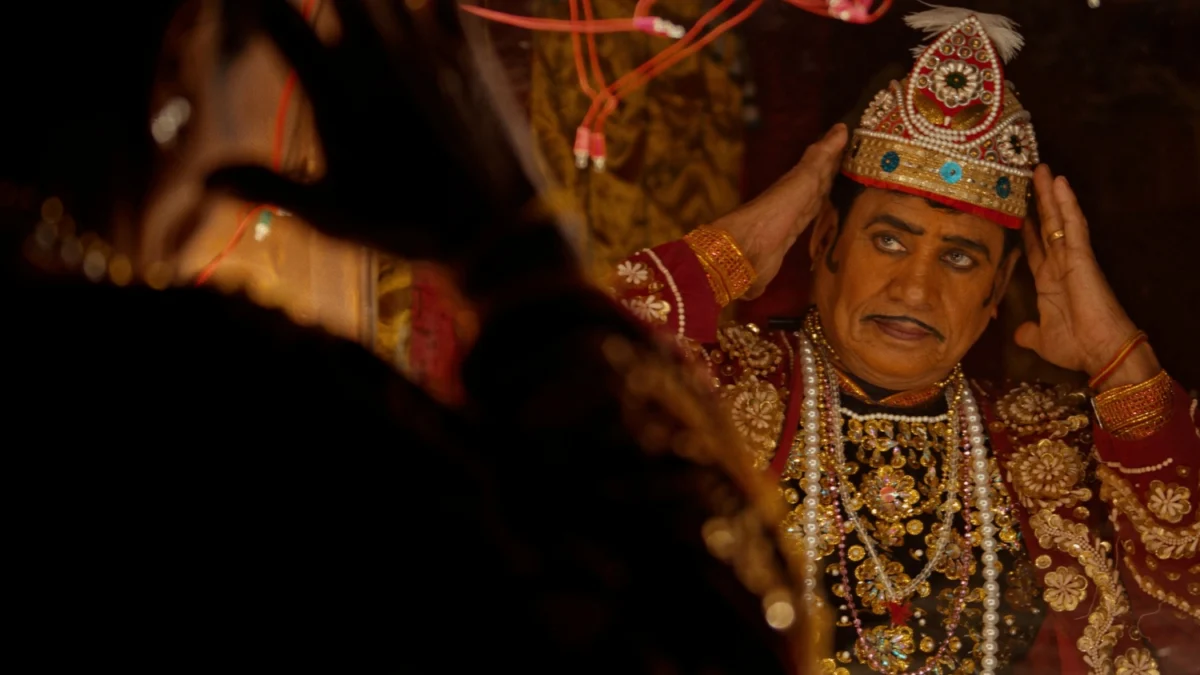
The burgeoning success of Bangladeshi cinema on the international stage has been a significant point of discussion, particularly following the strong showing of three titles within the Rotterdam program at the start of the year. Beyond these critically acclaimed works, a distinct and culturally rich production, "King in the Land of Princess," directed by Asif Islam, offers a compelling examination of tradition confronting modernity, artfully captured in the vibrant style of traditional jatra theatre. This unique film, which premiered in Moscow—a city that also hosted the screening of Islam’s previous work, "Nirvana"—provides a fascinating glimpse into the complex dynamics of performance, celebrity, and cultural evolution within Bangladesh.
A Glimpse into the World of Jatra Theatre
Jatra, a revered folk theatre form originating from the Bengal region, encompassing both Bangladesh and parts of India, is renowned for its boisterous, music-infused, and intensely dramatic presentations. These performances are not merely entertainment; they are cultural touchstones, weaving together mythological narratives, pressing social themes, and communal engagement, typically performed in open-air settings to large, participatory audiences. "King in the Land of Princess" endeavors to immerse viewers in this immersive and theatrical world, offering a dual perspective that captures both the spectacle of the stage and the often-unseen machinations behind the curtain.
The film stars Ashna Habib Bhabna, one of Bangladesh’s most popular actresses, in a role that seems to resonate with the contemporary pressures faced by artists navigating the digital age. The production itself was a feat of endurance and dedication, captured over seven consecutive nights in front of live, reacting audiences, a testament to the immediate and visceral nature of jatra performances. The decision to shoot in the traditional 4:3 aspect ratio further enhances the film’s aesthetic, evoking a sense of historical context and an intimate viewing experience, akin to archival footage or classic cinematic presentations.
The Unfolding Narrative: Tradition Meets the Digital Age
The narrative architecture of "King in the Land of Princess" is built upon a clever juxtaposition of two parallel realities: the unfolding drama on the jatra stage and the backstage drama that mirrors and often dictates its trajectory. The film opens with the palpable energy of a live performance about to commence. The ambient sounds of a sound check fill the air, followed by the announcer’s calls to the eager crowd, building anticipation. Interspersed with this is the intimate, almost voyeuristic, backstage footage: performers meticulously applying makeup, adjusting elaborate costumes, and preparing for their roles. This early sequence immediately establishes the film’s dual focus and foreshadows the tensions that will arise.
A central conflict emerges almost immediately with the character of Princess Rosie, a celebrated actress from Dhaka, who has been brought in to perform in the play "Nawab Siraj-ud-Doula." Her presence, intended to elevate the production, is immediately complicated by a logistical and financial snag: she has not yet received her payment. This disruption, however, does not halt the show. The announcer, undeterred, continues his duties, engaging the audience with calls to attend and even offering a musical interlude during the intermission. This scene highlights the resilience and adaptable nature of jatra performers, who must often contend with unforeseen circumstances to deliver their art.
As the performance progresses, the narrative continues to oscillate between the on-stage spectacle and the off-stage realities. The on-stage segments function in a quasi-documentary style, recording the play itself and the surrounding activities. However, these seemingly passive observations are imbued with dramatic weight, as the events backstage exert a tangible influence on the on-stage proceedings. A key observation that emerges is the audience’s discernible preference for the more traditional elements of jatra—the music, the singing, and the dancing. This predilection is amplified by the rising profile of Princess Rosie, who, beyond her stage persona, has cultivated a significant following as an Instagram celebrity. Her contemporary fame and digital presence inadvertently underscore the evolving tastes and distractions of the modern audience, creating a subtle but powerful tension with the established art form.
The escalating situation reaches a critical point as the Nawab, the jatra master and a figure embodying the traditional artistic authority, finds himself facing the very real possibility of the play being cut short. This threat is not born from a lack of artistic merit but from the audience’s shifting engagement, influenced by the allure of contemporary celebrity and the pervasive impact of social media. The crowd’s reactions, a vital component of jatra’s participatory nature, become a force that could ultimately derail the performance, illustrating a profound disconnect between the enduring legacy of jatra and the immediate demands of the digital age.
Thematic Resonance: Modernity’s Embrace and Tradition’s Erosion
"King in the Land of Princess" eloquently articulates a commentary on the inexorable march of modernity and its impact on established traditions. This is a theme that has echoed throughout history, as new technologies, cultural trends, and societal shifts inevitably reshape older forms of expression and social structures. The film captures this phenomenon with a poignant sense of nostalgia, as it portrays the individuals who are the custodians of tradition—the performers, the artisans, the masters of jatra—witnessing their art form potentially becoming obsolete in the eyes of a new generation. This juxtaposition of the old and the new, the enduring and the ephemeral, imbues the narrative with a strong dramatic undercurrent that sustains much of the film’s emotional resonance.
The visual language of the film, meticulously crafted by Asif Islam’s cinematography, further accentuates this thematic duality. While a consistent emphasis on vibrant, intense colors permeates the visuals—from the elaborate costumes and makeup to the very fabric of the performance tent and even the tickets sold—there is a distinct differentiation between the on-stage and backstage sequences. The backstage segments are characterized by an almost exclusive use of close-ups. This technique, while effective in capturing the raw emotion and intimate moments of preparation and anxiety, can, as the film progresses, become somewhat relentless and perhaps even visually fatiguing for the viewer. In contrast, the on-stage sequences largely employ medium and long shots, offering a broader perspective of the performance. The occasional strategic zoom on the audience serves to re-center the viewer’s attention on the reception and reaction to the performance, a choice that proves quite effective in reinforcing the film’s central concerns.
Sound Design and Editing: A Symphony of Authenticity
The sound design of "King in the Land of Princess" is a crucial element that enhances its immersive quality. The film masterfully blends the natural sounds of the lively crowd, the backstage chatter and activity, with the music that forms the backbone of jatra performances. This integration creates an authentic and engaging auditory landscape that draws the viewer deeper into the experience. However, the inherently "prima" or operatic musical style of jatra, with its specific conventions and melodic structures, may require a degree of audience familiarity to be fully appreciated. Those unaccustomed to its particularities might find certain musical passages less accessible.
The editing, also helmed by Islam, contributes to a relatively measured tempo throughout the film. Many scenes are allowed to linger, giving the audience time to absorb the atmosphere and the emotional nuances of the performances and the backstage drama. Despite this deliberate pacing, the skillful alternation between the two narrative threads ensures that the film maintains a sense of momentum and narrative progression, preventing it from becoming static. This careful control over rhythm and pacing is essential in balancing the observational documentary elements with the unfolding dramatic arc.
Stellar Performances: The Heart of the Production
The acting within "King in the Land of Princess" is a significant strength, elevating the film beyond a mere observation of cultural shifts. Arabinda Majumdar, portraying the Nawab, delivers a performance of profound depth and impact. His ability to convey complex emotions through subtle gestures and, perhaps more powerfully, through his silences, speaks volumes. His quiet dignity and the weight of tradition he carries are palpable, making his struggles resonate deeply.
Equally compelling is Ashna Habib Bhabna as Princess Rosie. She navigates the dual role of a seasoned stage actress and a burgeoning social media influencer with remarkable conviction. Her portrayal of the celebrity persona, with its inherent pressures and public scrutiny, is nuanced and believable. The on-stage performances of both Majumdar and Bhabna are undoubtedly among the most potent elements of the work, anchoring the film with their artistic integrity and dramatic presence.
Conclusion: A Lasting Impression
"King in the Land of Princess" successfully achieves its ambitious goal of functioning as both a documentary-style exploration of jatra theatre and a compelling human drama. The film’s central commentary on the evolving relationship between tradition and modernity is presented with clarity and effectiveness. The acting, particularly from its lead performers, provides a powerful emotional core that anchors the narrative.
While the film’s dual approach is largely successful, there are moments where the integration of its two distinct narrative strands, especially within the on-stage segments, occasionally falters. These instances, which may demand a certain prior understanding or appreciation of jatra’s musical and performative styles, do not, however, detract significantly from the overall positive impact of the film. "King in the Land of Princess" is a thought-provoking and visually rich work that leaves a lasting impression, offering a poignant reflection on cultural change and the enduring power of performance in the face of evolving societal landscapes. The film’s presence on the international festival circuit, following its Moscow premiere, suggests a growing appreciation for nuanced explorations of cultural heritage and the challenges faced by traditional art forms in the contemporary world. Its inclusion in programs alongside more mainstream Bangladeshi cinema underscores a dynamic and multifaceted film industry that is increasingly finding its voice on the global stage.