The rapid integration of artificial intelligence into the global workforce has catalyzed a significant demographic divide, as new data suggests a widening gender gap in both the adoption of and attitudes toward the technology. According to the 5th annual SurveyMonkey Women at Work survey, released in late February 2026, men are increasingly embracing AI as an essential professional tool, while women remain notably more skeptical of its benefits and ethical implications. This disparity in sentiment and usage comes at a critical juncture for the labor market, as generative AI moves from a niche novelty to a fundamental component of the modern enterprise software stack.
The survey, which polled 6,330 professionals between February 10 and February 16, 2026, highlights a stark contrast in how different genders perceive the utility of AI. Approximately 69% of men surveyed identified AI as a "valuable assistant and collaborator" in their daily tasks. In contrast, agreement with this sentiment dropped to 61% among women. Perhaps more telling is the ethical lens through which the technology is viewed: 50% of women participants expressed the belief that using AI at work "feels like cheating," a sentiment shared by only 43% of their male counterparts. These findings suggest that beyond mere technical proficiency, there is a psychological and cultural barrier to AI adoption that disproportionately affects women in the workplace.
A Three-Year Chronology of the Generative AI Revolution
To understand the current state of workplace AI, it is necessary to trace the trajectory of the technology since its mainstream debut. The modern generative AI boom was effectively ignited in November 2022 with the public launch of OpenAI’s ChatGPT. This milestone marked the beginning of a period of unprecedented technological acceleration that has fundamentally altered the corporate landscape over the last three and a half years.
The timeline of this evolution has moved through several distinct phases:
- Late 2022 – Early 2023: The "Proof of Concept" phase. Chatbots like ChatGPT and Google’s Bard (now Gemini) demonstrated the ability of large language models (LLMs) to generate human-like text, draft emails, and summarize documents.
- Late 2023 – 2024: The "Multimodal Expansion." AI services evolved to include image generation (DALL-E, Midjourney) and sophisticated video production (Sora). During this time, Microsoft integrated its Copilot feature across the Office 365 suite, bringing AI directly into the workflows of millions of office workers.
- 2025: The "Year of the Agent." The focus shifted from simple chatbots to "coding agents" and autonomous AI agents capable of performing complex, multi-step tasks such as building entire software applications or managing supply chain logistics with minimal human intervention.
- 2026: The "Integration and Assessment" phase. As evidenced by the current SurveyMonkey data, companies are now grappling with the long-term social and structural impacts of these tools, including the displacement of traditional software and the emergence of a clear "usage gap" among employees.
Analyzing Workplace Usage and the "Power User" Disparity
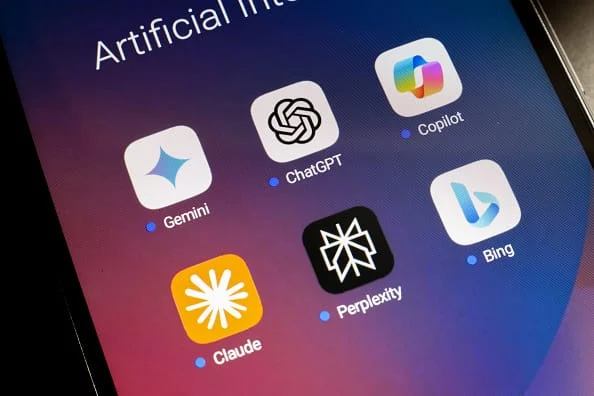
The discrepancy in sentiment is reflected in actual workplace behavior. The SurveyMonkey data indicates that men are utilizing AI tools with significantly higher frequency than women. Nearly two-thirds (64%) of women reported that they never use AI at work, compared to 55% of men. This suggests that despite the ubiquity of tools like ChatGPT, Claude, and Perplexity, a majority of the workforce remains on the sidelines, with women being more likely to abstain entirely.
The gap is even more pronounced among "power users"—those who have fully integrated AI into their professional identity. The survey found that 14% of men use AI multiple times a day, whereas only 9% of women do the same. This 5-percentage-point lead in high-frequency usage could have long-term implications for productivity metrics and career advancement, as those who master these tools are often perceived as more efficient or "future-ready" by management.
Corporate Mandates and the Institutionalization of AI
While individual employees debate the merits of AI, corporate leadership has largely moved toward a mandate of total integration. JPMorgan Chase CEO Jamie Dimon has been one of the most vocal proponents of this shift, characterizing AI as "critical to our company’s future success." During the bank’s 2026 investor day, Dimon revealed that nearly two-thirds of the firm’s workforce now utilizes an internal large language model.
This institutional push is not without its casualties. Dimon has acknowledged that AI will inevitably eliminate certain roles, emphasizing that the burden is on companies to retrain their staff rather than simply downsize. This "retrain or replace" mentality is driving a surge in demand for professional development, yet here too, a gendered divide persists.

The survey revealed that 59% of men believe they need more training on how to use AI at work, compared to a lower percentage of women. This suggests that men are more likely to view AI proficiency as a competitive necessity. Furthermore, 39% of men expressed a "fear of missing out" (FOMO) regarding AI adoption, while only 35% of women felt the same. Interestingly, 42% of women "strongly disagreed" with the idea that failing to embrace AI would lead to missing out on professional opportunities, compared to 36% of men. This lack of urgency among women may stem from a skepticism toward the technology’s long-term value or a different prioritization of human-centric skills.
The "Broken Rung" and Long-Term Career Implications
Experts warn that if the AI usage gap is not addressed, it could exacerbate existing gender inequalities in the corporate hierarchy. Sheryl Sandberg, founder of LeanIn.Org and former Chief Operating Officer of Meta, has highlighted the potential for AI to become the latest barrier to female advancement.
"We know that AI is going to be challenging for jobs, and it’s going to be the most challenging for the people that don’t know how to use those tools," Sandberg stated in a recent assessment of the labor market. She noted that the "broken rung"—the phenomenon where women miss out on the first promotion to a manager-level position—could be further weakened if men are the primary adopters of productivity-enhancing AI tools early in their careers.
If entry-level and mid-level men are using AI to complete tasks faster and with higher technical accuracy, they may be promoted at higher rates than women who eschew the technology due to ethical concerns or a lack of training. Sandberg warned that these "disproportionate impacts" would be detrimental not only to individual careers but also to the broader economy and corporate diversity.
Market Volatility and the Shift in the Software Stack
The internal workplace dynamics are being mirrored by massive shifts on Wall Street. Over the past year, traditional enterprise software stocks have faced significant volatility as investors bet that AI will displace much of the legacy software stack. The rise of AI coding agents and tools that allow users to create bespoke applications with text prompts has threatened the business models of established software-as-a-service (SaaS) providers.
The logic among analysts is that if an AI can perform the functions of a specialized software suite—such as CRM management, data analysis, or content creation—companies will shift their spending toward AI infrastructure and away from traditional licenses. This macro-economic shift places even more pressure on employees to be "AI-literate," as the very tools they use to perform their jobs are being reinvented in real-time.
Conclusion and Future Outlook
The findings of the 2026 SurveyMonkey Women at Work survey serve as a warning for policymakers and corporate leaders. While the technological capabilities of AI continue to expand at an exponential rate, the human adoption of these tools is fragmented. The perception of AI as "cheating" among half of the female workforce suggests a need for a more nuanced conversation regarding the ethics of automation and the definition of professional merit.
As AI becomes deeply embedded in the "internal large language models" of firms like JPMorgan Chase and the creative suites of the tech giants, the risk of a new digital divide is becoming a reality. Ensuring equitable access to training and fostering a workplace culture that demystifies AI for all employees will be essential to preventing the AI revolution from reversing decades of progress in workplace gender equality. Without intervention, the "valuable assistant" of the modern era may unintentionally become a gatekeeper that leaves a significant portion of the workforce behind.