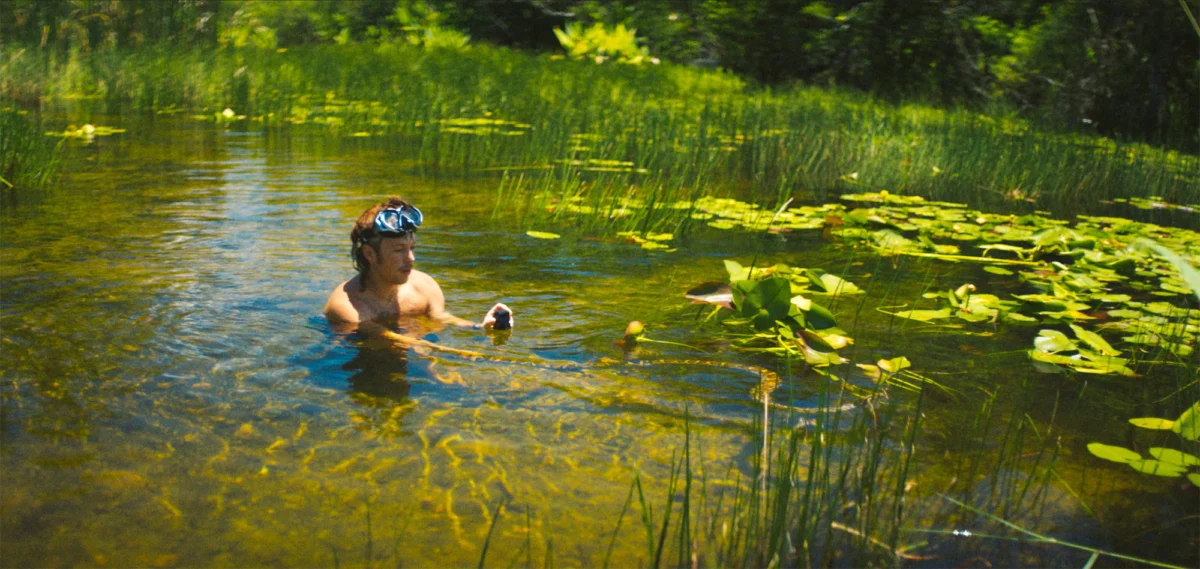
Oscilloscope Labs has officially unveiled the trailer for The Python Hunt, a compelling new documentary film slated for release on May 8th, 2026. Directed by American filmmaker Xander Robin, the film plunges viewers deep into the Florida Everglades, chronicling the intense human drama and ecological urgency surrounding the state’s annual invasive Burmese python removal competition. The documentary garnered significant attention on the festival circuit throughout 2025, premiering at the SXSW Film Festival where it secured a Special Jury Prize, before continuing its acclaimed run at prestigious events such as Beyond Fest, Sitges, Miami, Nashville, and Philadelphia, among numerous other local film festivals.
The film’s premise centers on the Florida government’s annual invitation to the public to participate in a large-scale contest aimed at mitigating the severe environmental impact of the invasive Burmese python. For ten nights, an eclectic assembly of participants—ranging from seasoned "gladesmen" to amateur enthusiasts—ventures into the unforgiving swamp. Here, they confront the treacherous terrain, the elusive nocturnal creatures, and, often, their own personal motivations and psychological limits. A particularly evocative quote from the trailer describes the event as "The Burning Man of snake hunting: it brings the wrong kind of attention to this problem," hinting at the complex ethical and public perception issues the film explores. While The Python Hunt features undeniable "impressive moments of snake spectacle," its true power, as critics have noted, lies in the "human drama that emerges from the larger-than-life personalities" drawn to this unique and perilous endeavor. The anticipation surrounding the film is palpable, with one review provocatively suggesting, "The Python Hunt is a documentary that might do for the Burmese Python what Jaws did 50 years ago for the Great White Shark," a comparison that underscores its potential to ignite widespread discussion and perhaps even alarm about the issue.
An Ecological Crisis Unfolds: The Burmese Python Threat
The existence of Florida’s annual python hunt is a direct response to one of the most pressing ecological crises facing the state: the unchecked proliferation of the Burmese python (Python bivittatus) in the Everglades. These formidable constrictors are not native to Florida and represent a classic example of an invasive species wreaking havoc on a delicate ecosystem. Their initial introduction is largely attributed to the exotic pet trade, with many pythons either escaping or being irresponsibly released into the wild by owners who could no longer care for them. The devastating impact of Hurricane Andrew in 1992, which destroyed a python breeding facility, is also widely cited as a significant contributor to the establishment of a wild breeding population.

Since their initial establishment, Burmese pythons have thrived in the warm, humid climate of South Florida, finding an abundant food supply and few natural predators. Their population has exploded, with estimates suggesting tens of thousands, possibly even hundreds of thousands, inhabiting the Everglades. These apex predators consume a wide range of native wildlife, including raccoons, opossums, bobcats, deer, and even alligators and various bird species, pushing several native populations to the brink. Studies by the U.S. Geological Survey and the University of Florida have documented severe declines—up to 90-99% in some areas—of small and medium-sized mammals in areas where pythons are prevalent. This dramatic disruption of the food web threatens the entire ecological balance of the Everglades, a UNESCO World Heritage Site and a critical wetland system for biodiversity. The economic implications are also substantial, impacting tourism, conservation efforts, and the overall health of an ecosystem vital for Florida’s natural infrastructure. The Florida Fish and Wildlife Conservation Commission (FWC) and the South Florida Water Management District (SFWMD) have been at the forefront of managing this crisis, recognizing that passive measures are insufficient to curb the pythons’ devastating spread.
The Florida Python Challenge: A Call to Arms
In an attempt to combat this escalating ecological threat, the Florida government, primarily through the FWC, initiated the annual Python Challenge (now often referred to simply as the Python Hunt). The program serves multiple objectives: to directly reduce the python population, to raise public awareness about the invasive species problem, and to gather valuable data for scientific research into python behavior, distribution, and effective removal methods. The first major statewide challenge was held in 2013, attracting hundreds of participants and setting a precedent for public involvement in conservation.
The challenge typically runs for a specific period, often ten days to two weeks, during which registered participants, both amateur and professional, are encouraged to humanely capture and euthanize Burmese pythons from designated areas within the Everglades and surrounding habitats. Participants must undergo mandatory online training to learn how to identify pythons, understand their biology, and, critically, how to humanely euthanize them in accordance with FWC guidelines. Rules are strict, prohibiting the use of firearms for python killing and emphasizing safety for both hunters and native wildlife. Prizes are often awarded for the most pythons removed, the longest python, or other categories, providing an incentive for participation. Past challenges have seen thousands of participants from various states and even other countries, collectively removing hundreds, and sometimes over a thousand, pythons. For instance, the 2020 Python Challenge resulted in the removal of 801 pythons, while the 2023 event saw over 1,000 removed by more than 1,000 participants. These figures, while significant, are often acknowledged by officials as only a fraction of the total python population, underscoring the immense scale of the problem and the continuous effort required. The "ten grueling nights" depicted in The Python Hunt accurately reflect the arduous conditions faced by participants, who often navigate dense sawgrass, cypress swamps, and muddy trails in extreme heat and humidity, contending with mosquitoes, alligators, and other formidable aspects of the Everglades wilderness, all under the cloak of darkness when pythons are most active.
Director Xander Robin’s Vision: Humanity in the Swamp
Director Xander Robin brings a unique and introspective lens to The Python Hunt, moving beyond mere spectacle to explore the diverse human elements at play within this unusual conservation effort. In a statement released by Oscilloscope Labs, Robin articulated his motivation: "The Python Hunt is about the thousands of other people who showed up with the same idea, from amateurs convinced they could fix an unsolvable problem of our own making, to the gladesmen who watched wildlife disappear long before the pythons arrived. Out there, everyone has a theory about what’s really happening; about the snakes, about the state, even about the ecosystem itself." This quote highlights the film’s ambition to delve into the various perspectives and ideologies surrounding the python invasion, reflecting the complex relationship between humanity and the natural world.

Robin’s directorial approach emphasizes the personalities and narratives of the hunters themselves. He was drawn to how "each of their perspectives could be convincing," suggesting a nuanced portrayal that avoids simplistic hero/villain archetypes. The film aims to capture the deep-seated desires and motivations that drive individuals to participate in such a challenging and dangerous activity. Whether it’s a sense of environmental duty, the thrill of the hunt, a connection to the land, or even the allure of "slithering glory," the documentary seeks to unearth the psychological underpinnings of this unique subculture. Filming in the Everglades presented its own set of formidable challenges, as Robin noted spending "long days & nights together in one of the most beautiful and maddening places on earth." This immersive experience likely contributed to the raw and authentic portrayal of both the environment and its human inhabitants. Robin’s previous works, including the critically acclaimed Are We Not Cats and Omniboat: A Fast Boat Fantasia, as well as the series "Chillin Island," showcase a filmmaker adept at exploring idiosyncratic characters and unusual situations, making him particularly suited to unpack the layered complexities of The Python Hunt. The film is produced by Xander Robin, Lance Oppenheim, Lauren Cioffi, and Melissa Oppenheim, a team dedicated to bringing this compelling narrative to the screen.
Critical Acclaim and Controversial Comparisons
The early reception for The Python Hunt on the film festival circuit has been overwhelmingly positive, marked by its Special Jury Prize win at SXSW and subsequent screenings at numerous prestigious festivals globally. Critics have lauded the film for its immersive cinematography, its ability to capture the raw intensity of the hunt, and its insightful exploration of the human psyche against the backdrop of an ecological battleground. However, the most striking aspect of the film’s early buzz is the comparison drawn by one reviewer: "The Python Hunt is a documentary that might do for the Burmese Python what Jaws did 50 years ago for the Great White Shark." This statement, while attention-grabbing, carries significant implications.
The Jaws comparison immediately evokes thoughts of heightened public awareness and perhaps, an amplified sense of fear or sensationalism surrounding pythons. While increased awareness about invasive species is a positive outcome, there’s a delicate balance between education and potentially misrepresenting the actual threat or inciting undue alarm. The film’s own trailer hints at this complexity with the quote, "The Burning Man of snake hunting: it brings the wrong kind of attention to this problem." This suggests the documentary itself grapples with the ethical dimensions of the hunt, acknowledging that the spectacle might overshadow the serious ecological imperative. The "wrong kind of attention" could refer to attracting individuals who are ill-prepared, disrespectful of the environment, or motivated purely by sensationalism rather than genuine conservation. The film’s challenge, therefore, is to balance the inherent drama of the hunt with the objective reality of the ecological crisis, ensuring that the human stories serve to illuminate, rather than obscure, the profound environmental stakes. Discussions surrounding the film will undoubtedly touch upon these nuances, prompting audiences to consider the efficacy and ethics of such public involvement in wildlife management.
The Broader Battle Against Invasive Species
The Python Hunt transcends its immediate narrative to become a powerful microcosm of the global struggle against invasive species. Florida, with its subtropical climate, extensive coastline, and bustling ports, is particularly vulnerable to the introduction and establishment of non-native plants and animals. The Burmese python is just one, albeit prominent, example in a long list that includes lionfish, iguanas, tegus, various invasive plants like Lygodium microphyllum (Old World climbing fern), and countless others. These species collectively pose an existential threat to native biodiversity, disrupt ecosystem functions, and incur billions of dollars annually in control and damage costs worldwide.

The film provides a critical look at one state’s innovative, if sometimes controversial, approach to tackling such a challenge. Beyond public hunts, a multi-faceted strategy is typically employed by wildlife agencies. This includes the use of detection dogs trained to sniff out pythons, the deployment of "Judas snakes" (pythons tagged with GPS trackers to lead researchers to breeding aggregations), advanced trapping technologies, and ongoing research into potential biological controls or genetic solutions, though these are often fraught with ethical and practical complexities. The role of documentaries like The Python Hunt in environmental advocacy cannot be overstated. By bringing these issues to a wider audience, they can foster greater public understanding, generate support for conservation initiatives, and encourage responsible practices, such as preventing the release of exotic pets into the wild. As the world faces accelerating biodiversity loss, films that illuminate the human dimensions of ecological crises become increasingly vital tools for public discourse and, ultimately, for shaping future conservation policy. The long-term outlook for the Everglades remains precarious, but the continuous efforts, informed by science and amplified by public engagement through mediums like The Python Hunt, offer a glimmer of hope for preserving this irreplaceable natural treasure.
Conclusion: A Cinematic Glimpse into Florida’s Environmental Frontier
As The Python Hunt prepares for its theatrical release on May 8th, 2026, it stands poised to offer a profound cinematic exploration of a uniquely Floridian phenomenon that resonates with broader global ecological concerns. Director Xander Robin’s documentary promises to be more than just a thrilling account of snake hunting; it is an intimate character study set against the backdrop of a critical environmental battle. By focusing on the "human drama" and the "larger-than-life personalities" of the participants, the film provides a multifaceted view of an issue often reduced to simple headlines.
The film’s journey through the festival circuit and its critical acclaim underscore its power to provoke thought and conversation. Whether it truly achieves the Jaws-like impact on public perception of Burmese pythons remains to be seen, but its potential to significantly elevate awareness about invasive species and the ongoing struggles within the Everglades is undeniable. Through its unflinching portrayal of the challenges faced by hunters and the ecosystem alike, The Python Hunt serves as a poignant reminder of humanity’s complex and often contradictory relationship with the natural world. It invites audiences to consider not only the immediate threat posed by these invasive predators but also the ethical dilemmas, personal motivations, and collective responsibilities inherent in our efforts to preserve and protect the planet’s most vulnerable ecosystems. The upcoming release by Oscilloscope Labs will undoubtedly mark a significant moment in environmental documentary filmmaking, offering both a gripping narrative and a crucial call to reflection on one of Florida’s most urgent conservation challenges.