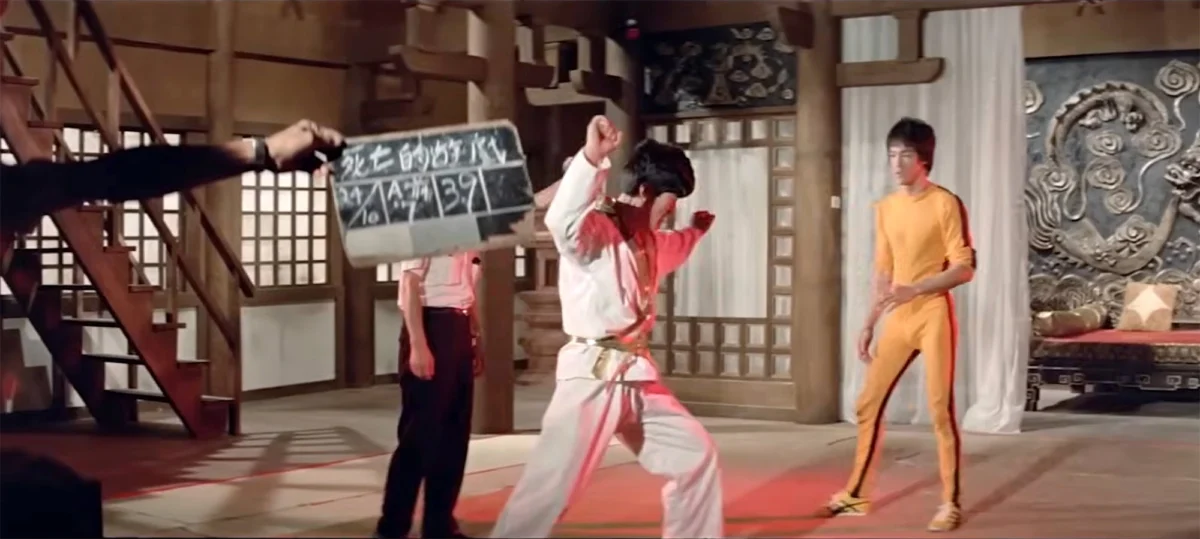
Asymmetry Films has officially released the first trailer for Broken Rhythm: Bruce Lee’s Game of Death, a new documentary promising an in-depth exploration into the profound artistic vision and tragic incompleteness of martial arts legend Bruce Lee’s final cinematic project. The film is slated for its world premiere at the 2026 NYC Independent Film Festival, offering audiences a rare opportunity to delve into the unfulfilled ambition behind Game of Death, a project that has long captivated and confounded film historians and fans alike. The documentary aims to shed new light on Lee’s original intent, drawing on the approximately 23 minutes of footage he personally directed and filmed in 1972 before his untimely death in 1973, which stands in stark contrast to the significantly altered and commercially driven 1978 release.
The Genesis of a Legend: Bruce Lee’s Vision for Game of Death
Bruce Lee’s career, though tragically short, irrevocably altered the landscape of martial arts cinema and global popular culture. By the early 1970s, Lee had already achieved unprecedented stardom with films like The Big Boss (1971), Fist of Fury (1972), and Way of the Dragon (1972), which he also wrote and directed. These projects established him not merely as an unparalleled martial artist, but as a formidable creative force capable of directing and choreographing groundbreaking action sequences. His philosophical approach to martial arts, Jeet Kune Do, emphasized adaptability, efficiency, and personal expression, principles he sought to embed deeply within his cinematic work.
Game of Death was conceived by Lee as his most ambitious and personal project to date, intended to be a vehicle for his philosophical ideas on martial arts and life itself. The core concept revolved around a protagonist, Hai Tien (played by Lee), who must ascend a multi-tiered pagoda, confronting a different martial arts master on each level, each representing a distinct fighting style or philosophical challenge. This narrative structure was designed to showcase the superiority of Jeet Kune Do’s adaptability over rigid, traditional forms, culminating in a profound statement on self-mastery and the ultimate meaning of victory. Lee had meticulously planned the film, sketching out character designs, fight choreography, and even costume details, intending to push the boundaries of cinematic storytelling and martial arts exposition. Filming began in 1972, with Lee directing key sequences that would become iconic, including his encounters with formidable opponents like Dan Inosanto, Ji Han-jae, and the towering Kareem Abdul-Jabbar. These sequences, characterized by their raw intensity, innovative camera work, and Lee’s unparalleled physical prowess, were meant to be the heart of his magnum opus. The original vision was far more complex and symbolic than what eventually reached screens, with Lee aiming for a meditation on the human condition rather than a straightforward action flick.

The Unfinished Masterpiece and Its Controversial Completion
Bruce Lee’s sudden death on July 20, 1973, at the age of 32, left Game of Death tragically incomplete. The approximately 23-40 minutes of footage he had personally shot and directed in 1972 became a tantalizing fragment of what might have been, fueling decades of speculation and fascination among fans and scholars. The void left by his passing was immense, and the desire to complete Game of Death eventually led to a controversial posthumous production.
In 1978, five years after Lee’s death, Golden Harvest, the studio behind many of Lee’s films, released a version of Game of Death directed by Robert Clouse. This iteration bore little resemblance to Lee’s original vision. To construct a feature-length film, Clouse employed various stand-ins, archival footage from Lee’s previous movies, and even egregious tactics such as superimposing Lee’s face onto other actors and using footage of his actual funeral. The plot was entirely rewritten, turning the philosophical journey into a generic revenge narrative. The climactic pagoda sequences, while featuring some of Lee’s original fight footage, were heavily recontextualized and truncated. This version, while a commercial success due to Lee’s enduring popularity, was widely panned by critics and disappointed many fans who recognized the profound compromises made to Lee’s artistic integrity. It presented a fragmented and often disrespectful portrayal of the artist, prioritizing spectacle over substance and posthumously altering his intended legacy. The original article notes producer André Morgan’s involvement in both versions, highlighting his unique position to shed light on these complex decisions.
Broken Rhythm: Recontextualizing a Legacy
Broken Rhythm: Bruce Lee’s Game of Death aims to rectify these historical distortions and offer a fresh perspective on Lee’s original vision. Directed by indie filmmaker Alan Canvan, known for his dedication to preserving Lee’s authentic work through projects like The Game of Death Redux, the documentary promises a meticulous examination of the 1972 footage. Canvan’s previous efforts, which sought to re-edit the available original footage into a more coherent representation of Lee’s concept, underscore his commitment to this historical undertaking. Producer André Morgan, whose unique involvement spanned both Lee’s original 1972 production and the subsequent 1978 completion, serves as a crucial guide through the intricate timeline. His insights are expected to illuminate the creative, financial, and logistical compromises that ultimately reshaped Lee’s intended narrative.
The documentary features extensive interviews with many individuals involved in the original production, offering invaluable first-hand accounts and "fresh perspectives on his artistic intent." These interviews are critical to understanding not only the technical challenges of filming but also the philosophical underpinnings Lee sought to convey. The film’s overarching goal is to "recontextualize Lee’s legacy while exploring how his work grapples with enduring existential questions of life, death, identity, and the pursuit of artistic immortality." This ambitious scope suggests a film that transcends mere historical recounting, positioning Lee not just as a martial arts icon, but as a profound philosophical filmmaker whose work continues to resonate with universal themes. The title itself, Broken Rhythm, likely alludes to the disruption of Lee’s creative flow and the fragmented nature of his final work, a metaphor for an artist whose life and career were cut tragically short.

A Timeline of Game of Death‘s Enduring Mystery
The journey of Game of Death from ambitious concept to fragmented legend is a testament to Bruce Lee’s lasting impact and the enduring fascination with his unfinished work.
- 1971-1972: Bruce Lee achieves international stardom with a series of martial arts films, cementing his reputation as a groundbreaking actor and director.
- Late 1972: Lee begins production on Game of Death, filming pivotal sequences in a multi-tiered pagoda set. He designs complex fight choreography and costumes, intending the film to be a philosophical statement on martial arts and life. Key footage involves fights with Dan Inosanto, Ji Han-jae, and Kareem Abdul-Jabbar.
- Early 1973: Production on Game of Death is temporarily halted as Lee is called to Hollywood to film Enter the Dragon, a co-production with Warner Bros. and Golden Harvest. This decision, driven by the opportunity for broader international appeal, would inadvertently seal Game of Death‘s fate as an unfinished project.
- July 20, 1973: Bruce Lee dies suddenly in Hong Kong, leaving approximately 23-40 minutes of Game of Death footage completed, but without a cohesive narrative framework.
- 1978: Golden Harvest releases a "completed" version of Game of Death, directed by Robert Clouse. This version utilizes some of Lee’s original footage but relies heavily on body doubles, archival clips, and a completely rewritten plot, sparking significant controversy and criticism for its perceived disrespect to Lee’s artistic vision.
- 1999-2000: John Little’s documentary, Bruce Lee: A Warrior’s Journey, is released. This groundbreaking film restores nearly all of Lee’s original Game of Death footage (approximately 40 minutes) in a reconstructed sequence, providing the most accurate glimpse into his original concept available to the public at the time. This documentary significantly fueled renewed interest in Lee’s true vision.
- 2000s-Present: Various fan edits and scholarly analyses emerge, attempting to reconstruct Lee’s original intentions, further solidifying Game of Death‘s place as a pivotal, albeit incomplete, work in cinematic history. Alan Canvan’s The Game of Death Redux is a notable example from this period.
- April 19, 2026: Asymmetry Films releases the official trailer for Broken Rhythm: Bruce Lee’s Game of Death, announcing its premiere at the NYC Independent Film Festival.
The Broader Impact and Implications
The release of Broken Rhythm: Bruce Lee’s Game of Death holds significant implications for both Bruce Lee’s legacy and the field of documentary filmmaking. For decades, Lee has been celebrated primarily as a martial arts icon, his physical prowess often overshadowing his intellectual depth and artistic aspirations. This documentary, by focusing on his role as a visionary actor, writer, and director, promises to broaden public understanding of his contributions. It seeks to elevate the discourse surrounding his work, moving beyond the sensationalism of his death and the controversy of the 1978 film to examine his profound philosophical engagements with life, death, and identity.
The project also highlights the critical role of documentary cinema in historical preservation and re-evaluation. By meticulously analyzing existing footage, conducting in-depth interviews, and piecing together fragmented narratives, documentaries like Broken Rhythm can offer crucial correctives to historical records. They provide platforms for previously unheard voices and overlooked details, allowing for a more nuanced and accurate understanding of cultural phenomena. In an era where media consumption is often superficial, such detailed examinations serve as vital anchors to historical truth and artistic intent.
Furthermore, the documentary’s premiere at the NYC Independent Film Festival underscores the festival’s commitment to showcasing diverse and thought-provoking cinema. Independent film festivals often serve as crucial launching pads for projects that might not fit conventional commercial molds but offer immense cultural or historical value. For Broken Rhythm, this platform provides an ideal setting to reach an audience of cinephiles, historians, and dedicated fans eager for a deeper dive into one of cinema’s most enduring mysteries. The festival environment also fosters critical discussion and engagement, which is essential for a film that seeks to recontextualize such a significant historical figure. The documentary’s exploration of "creative, financial, and logistical compromises" also offers valuable insights into the complex realities of film production, particularly when dealing with posthumous projects and the pressures of commercial viability versus artistic integrity. It serves as a cautionary tale and a testament to the challenges faced by artists whose visions are left incomplete.

Concluding Thoughts: An Invitation to Rediscover Bruce Lee
Broken Rhythm: Bruce Lee’s Game of Death is poised to be more than just a historical account; it is an invitation to rediscover Bruce Lee, not merely as the "kung fu icon," but as the visionary artist he truly was. The trailer suggests a compelling narrative, meticulously researched and passionately presented, that will undoubtedly spark renewed interest and debate. For anyone intrigued by cinematic history, the complexities of artistic legacy, and the enduring power of a singular vision, this documentary offers a compelling reason to engage. Its premiere at the NYC Independent Film Festival this summer presents a unique opportunity for audiences to witness a fresh, comprehensive re-examination of one of cinema’s most legendary unfinished works. As the documentary promises to "shed light on the creative, financial, and logistical compromises that reshaped Lee’s original vision," it will undoubtedly re-engage discussions about the true measure of an artist’s legacy when their work is completed by others. The project stands as a testament to the enduring fascination with Bruce Lee’s genius and the perpetual quest to understand the full scope of his artistic ambition.