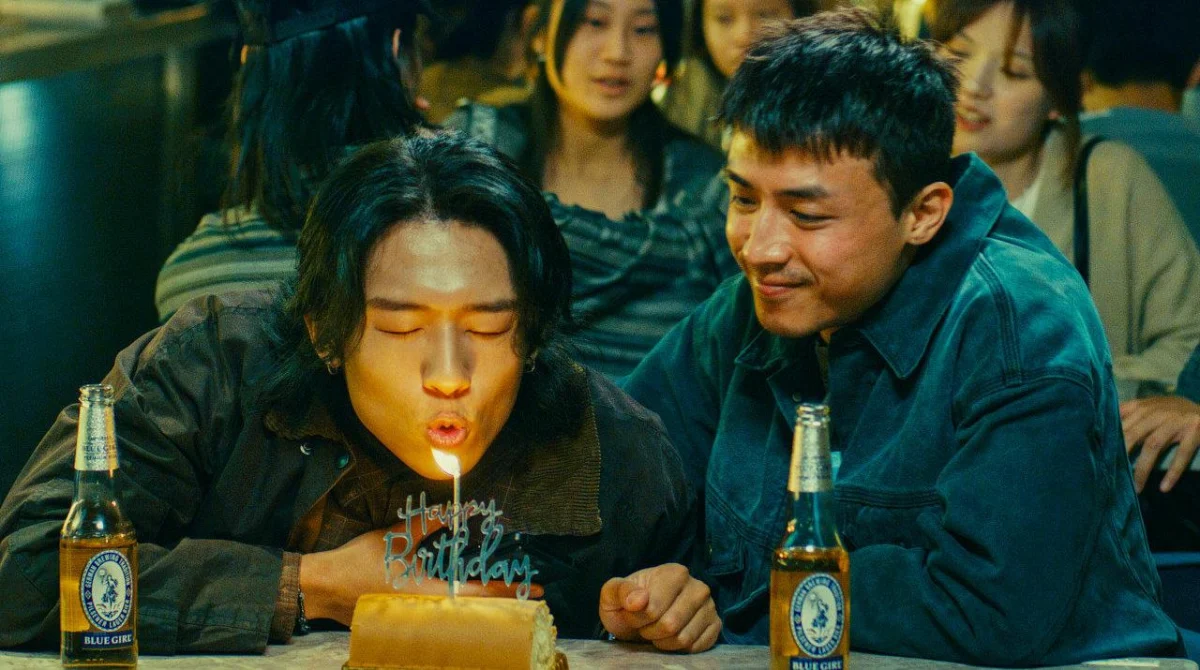
Herman Yau’s latest social drama, "We’re Nothing At All," a film that masterfully blends poignant social commentary with understated action elements, has made its mark on the Hong Kong cinematic landscape. Premiering on the opening day of this year’s Hong Kong Film Festival, the film saw an immediate theatrical release, where it has since garnered respectable box office returns, accumulating approximately US$500,000 over its initial two-week run. This performance indicates a sustained audience interest in Yau’s mature and socially conscious storytelling, a departure from some of his more commercially driven blockbusters.
A Prolific Career Rooted in Hong Kong Cinema
Herman Yau, a directorial force born in China’s Guangdong province in 1961, boasts an astonishingly prolific career spanning nearly four decades. With an impressive filmography of 86 completed features and two more currently in production, Yau has cemented his status as one of Hong Kong’s most experienced and successful directors of recent decades. His directorial output is characterized by its breadth and ambition, encompassing not only grand-scale, big-budget productions but also intimate, character-driven narratives. Yau is renowned for franchises like the immensely popular "Troublesome Night" series (1997-1999), as well as the impactful "Shockwave" and "White Storm" franchises. These high-profile projects have undoubtedly contributed to his financial stability, allowing him the creative freedom to pursue more personal projects.
Despite his success with commercial ventures, Yau has consistently demonstrated an exceptional ability to deliver powerful cinematic experiences even with more modest budgets. He himself has often expressed a preference for this approach, finding it conducive to impactful storytelling. This dedication to personal vision is evident in films such as "Whispers and Moans" (2007) and "Sara" (2015), which tackle complex social issues with sensitivity and depth. "We’re Nothing At All" clearly falls into this category of Yau’s more personal endeavors. The film’s genesis, reportedly written, financed, and produced almost single-handedly by Yau, underscores his deep commitment to its subject matter. This level of independent production is increasingly necessary in Hong Kong, where securing investment for films addressing "difficult" or unconventional themes can be a significant challenge. The film’s creation process itself is a testament to Yau’s unwavering dedication to bringing important social narratives to the screen.
The Catalyst: A Real-Life Tragedy Transposed to Hong Kong
The narrative of "We’re Nothing At All" is inspired by a real-life event that tragically unfolded on Valentine’s Day in 1998, in the Chinese metropolis of Wuhan. Yau has skillfully transposed this harrowing incident to the bustling backdrop of Hong Kong. The film opens on the morning of another Valentine’s Day, depicting a typical double-decker bus journey through the city. Audiences are introduced to the ordinary rhythm of life as passengers board and disembark, creating a sense of normalcy that is shattered in an instant. The bus abruptly explodes and is consumed by flames shortly after turning onto Hei Fai Street, a devastating act that initially appears to be the prelude to one of Yau’s signature action spectacles.
However, the film quickly pivots from an action-thriller premise to a profound social drama. The immediate aftermath of the explosion plunges the city into shock and bewilderment, leaving the police force baffled by the seemingly inexplicable nature of the catastrophe. In response, forensic specialist Lung (portrayed by Patrick Tam), a former officer who was dishonorably discharged from the police force several years prior, is brought back into service. Tasked with unraveling the mystery, Lung and his team meticulously examine the scattered human remains, a grim and arduous process aimed at piecing together the events that led to this horrific incident. The investigation, characterized by its forensic precision, forms the initial investigative framework of the film.
Unraveling the Core Tragedy: Beyond Suspense
While the initial stages of the film employ suspenseful elements, "We’re Nothing At All" deliberately shifts its focus away from conventional thriller tropes. The film eschews a prolonged period of mystery for the audience, revealing the perpetrators and the motive for the bombing relatively early on. This narrative choice is even foreshadowed by the film’s poignant tagline: "A couple, on a beautiful day, ended their unbeautiful lives." The tragic decision to involve numerous innocent lives in their demise is presented not as an act of malice, but as the devastating consequence of profound personal despair.
The film posits that the couple’s sexual orientation, while significant to understanding their circumstances, is not the primary driver of the act itself. Instead, their identity as a gay couple becomes a crucial lens through which to comprehend the societal pressures and personal tragedies that culminated in this spectacular double suicide. These underlying circumstances are gradually revealed through a series of flashbacks, a narrative device that, while ambitious, largely succeeds in conveying the emotional weight of their story. The film’s structure, interweaving the present-day investigation with the past lives of the couple, creates a compelling, albeit at times challenging, viewing experience. One minor narrative weakness identified by some critics is a somewhat forced subplot involving Officer Lung and his girlfriend, a storyline that perhaps could have been streamlined to maintain the overall thematic focus.
A Bold Portrayal of Marginalization and Love
The casting of Anson Kong and Ansonbean (the stage name of Anson Chan), both prominent teen idols, as the gay couple represents a courageous and significant artistic choice by Herman Yau. Their willingness to embrace these roles speaks volumes about their artistic integrity and the evolving social landscape of Hong Kong, where openly portraying homosexuality remains a sensitive issue. However, the film’s exploration extends far beyond their sexuality, delving deeply into the pervasive issue of class struggle.
Kong and Chan’s characters, Fai and Ike respectively, are depicted as individuals positioned at the lowest rung of the social ladder. Fai, a construction worker, faces constant exploitation, his rightful wages withheld by his employer. Ike, a street performer, endures persistent harassment from law enforcement. The immense pressure they face is exacerbated by the threat of losing the modest apartment they eventually share. The performances of Kong and Chan are uniformly lauded as heartbreakingly authentic. They imbue their characters with a devotion and intensity that captivates the audience, portraying a love that is both tender and resilient in the face of overwhelming adversity. Their chemistry on screen is palpable, making their tragic fate all the more impactful.
Stellar Supporting Performances and Gritty Realism
Beyond the central performances, the film benefits from a strong ensemble cast. Patrick Tam delivers another compelling performance as the seasoned forensic specialist Lung, showcasing his established talent as a leading actor in Hong Kong’s commercial cinema. Wong You-nam, who also appears in the concurrently released "Ciao UFO," makes a notable impact as Lung’s dedicated assistant, providing a grounded presence within the investigative team.
The depiction of police work in "We’re Nothing At All" is notable for its almost documentary-like precision. Cinematographers Mandy Ngai and Derek Siu employ a deliberately sober and unadorned visual style, capturing a Hong Kong that is far from the glitzy metropolis often portrayed on screen. This commitment to gritty realism extends to the film’s production design, helmed by Fion Li, and costume design, by Chun Yan-so. Their previous collaboration with Herman Yau on "White Storm 2" (2019) demonstrates their capacity for creating immersive worlds, and here, they further reinforce the film’s authentic portrayal of everyday life and its challenges.
A Shifting Cinematic Tide in Hong Kong
"We’re Nothing At All" arrives at a time when Hong Kong cinema is experiencing a discernible shift towards more serious and less ostentatious storytelling. This trend is exemplified by recent critically acclaimed films such as "Still Human," "The Last Dance," and "The Way We Talk." These productions, while perhaps lacking the high-octane action or elaborate set pieces of earlier eras, resonate with audiences by offering compelling narratives that are deeply rooted in social commentary. The success of "We’re Nothing At All" and similar films suggests a growing appetite for cinema that engages with contemporary issues, providing thought-provoking entertainment that is both meaningful and impactful, perhaps even more so because of, rather than in spite of, its social conscience. The film stands as a poignant reminder of the struggles faced by marginalized communities and the devastating consequences of societal neglect, all delivered through the masterful hand of a seasoned filmmaker unafraid to tackle difficult truths.