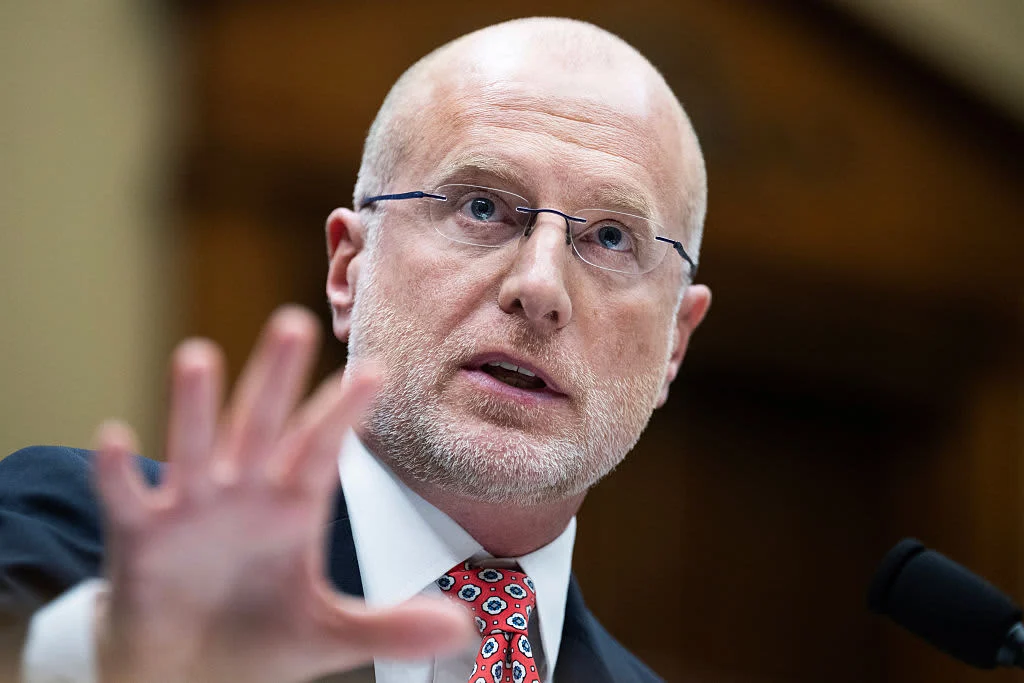
In a significant development for the global media landscape, Brendan Carr, Chairman of the Federal Communications Commission (FCC), has indicated that Paramount’s bid to acquire Warner Bros. Discovery (WBD) presents a "cleaner" regulatory profile than the previously considered offer from Netflix. Speaking on the sidelines of the Mobile World Congress in Barcelona, Spain, Carr expressed optimism regarding the transaction’s approval timeline, suggesting that the merger could receive the green light "pretty quickly." The endorsement from the nation’s top communications regulator marks a pivotal moment in a high-stakes bidding war that has seen the future of Hollywood’s most storied assets hang in the balance.
Carr’s comments come as the media industry grapples with a period of intense consolidation, driven by the escalating costs of streaming content and the steady decline of traditional linear television. According to Carr, the earlier proposal by Netflix to acquire WBD’s studio and streaming assets raised substantial competition concerns that would have likely resulted in a protracted and difficult legal battle with federal regulators. "There’s a lot of concerns when Netflix was the potential buyer there," Carr noted during a wide-ranging discussion with CNBC. "That particular combination raised a lot of competition concerns. Netflix would have a very difficult path getting regulatory approval."
By contrast, the Paramount Skydance offer, which values WBD at $31 per share, is viewed by the FCC Chair as a more palatable arrangement for both consumers and the market at large. The revised bid, an increase from a previous $30-per-share offer, was deemed "superior" by the WBD board last week, effectively ending Netflix’s pursuit of the company. Netflix had initially sought to acquire WBD’s production studios and streaming infrastructure for $27.75 per share but ultimately withdrew, citing the new Paramount offer as making the deal "no longer financially attractive."
A Chronology of the Media Mega-Merger
The path to this current juncture has been defined by a series of aggressive maneuvers and shifting alliances. To understand the significance of Carr’s endorsement, it is necessary to trace the timeline of events that led to the Paramount-WBD agreement.
The saga began in late 2025, following a period of financial volatility for Warner Bros. Discovery. Despite the success of its Max streaming platform, the company remained burdened by significant debt stemming from the 2022 merger of Discovery Inc. and WarnerMedia. In December 2025, rumors surfaced that Netflix was in talks to acquire WBD’s content library and studio operations, a move that would have given the streaming giant control over iconic franchises such as Harry Potter, DC Comics, and Game of Thrones.
By January 2026, Netflix formalized its bid, offering $27.75 per share. However, the proposal immediately drew fire from antitrust advocates and industry veterans. Director James Cameron was among the high-profile figures who sent scathing letters to lawmakers, warning that a Netflix-WBD tie-up would lead to a "hollowing out" of the theatrical industry and a reduction in the diversity of films produced in Hollywood.
In February 2026, Paramount Global—which had recently completed its own merger with Skydance Media under the leadership of David Ellison—entered the fray. Backed by substantial capital from Gulf state sovereign wealth funds, Paramount Skydance proposed an all-cash acquisition of the entirety of WBD, including its embattled linear cable networks. On February 26, 2026, the WBD board officially pivoted to the Paramount offer, triggering a $2.8 billion breakup fee payable to Netflix, which Paramount agreed to cover as part of the transaction.
Financial Mechanics and Breakup Fees
The financial structure of the Paramount-WBD deal is designed to mitigate the risks associated with such a massive consolidation. At $31 per share, the deal represents a significant premium over WBD’s recent trading price, offering shareholders a clear exit strategy amid a turbulent market.
A critical component of the agreement is the $7 billion breakup fee that Paramount has committed to pay if the deal fails to gain regulatory clearance. This "reverse break fee" is one of the largest in the history of the media industry, serving as a testament to Paramount’s confidence in the regulatory process. Furthermore, Paramount’s immediate payment of the $2.8 billion fee owed to Netflix demonstrated a high level of liquidity and a desire to clear the decks for a smooth transition.
The funding for the acquisition is equally noteworthy. Approximately $24 billion of the deal’s financing is sourced from sovereign wealth funds in the Gulf region. While this provides the necessary capital to absorb WBD’s debt and fund future content production, it has also raised questions regarding the Committee on Foreign Investment in the United States (CFIUS). Regulators will likely scrutinize whether the involvement of foreign state-backed funds poses any national security concerns, particularly regarding CNN, one of the world’s most influential news organizations.
Regulatory Hurdles: Horizontal vs. Vertical Integration
While Chairman Carr has signaled a "minimal role" for the FCC, the deal must still navigate the Department of Justice (DOJ) and potentially the Federal Trade Commission (FTC). The distinction between the Netflix bid and the Paramount bid lies in the nature of the integration.

The Netflix-WBD proposal was viewed largely as a vertical integration of content and distribution that would have created an unprecedented streaming monopoly. Combining Netflix’s 260 million global subscribers with WBD’s HBO Max would have given a single entity dominant control over the "pipes" of modern entertainment.
The Paramount-WBD deal, however, is characterized as a "horizontal consolidation." It brings together two traditional media conglomerates that operate across film studios, cable networks, and broadcast television. "I think there’s some real consumer benefits that can emerge from it," Carr stated, suggesting that the merger could stabilize the struggling linear television ecosystem.
Unlike the Netflix offer, which sought to cherry-pick the studio assets while leaving the "decaying" cable networks behind, Paramount’s bid includes WBD’s entire portfolio: CNN, TBS, TNT, and Discovery. This comprehensive approach is viewed by some analysts as more sustainable, as it allows for the bundling of sports rights and news content into a unified streaming and cable offering.
Political Reactions and Antitrust Scrutiny
The political climate surrounding the merger is complex and divided along ideological lines. Former President Donald Trump, who has previously expressed skepticism regarding media consolidation, initially called the potential Netflix-WBD deal a "problem" due to the market share it would afford Netflix. However, he later softened his stance, indicating that the matter should be left to the DOJ.
On the other end of the political spectrum, Democratic Senator Elizabeth Warren has emerged as a vocal critic of the Paramount-WBD merger. In a statement released shortly after the board’s decision, Warren labeled the deal an "antitrust disaster" that threatens to result in higher prices and fewer choices for American families. Warren and other progressives argue that the consolidation of news and sports under one corporate umbrella could stifle editorial independence and limit competition for advertising dollars.
Market analysts at Raymond James have countered these concerns, arguing that the Paramount-WBD deal is "meaningfully easier" to justify than the Netflix alternative. "There are new challenges with this deal around news, cable networks, and international linear networks, but we still feel the WBD/PSKY deal is more palatable all-in," the analysts wrote. They further noted that Paramount’s political standing with the current administration appears stronger than Netflix’s, which has faced criticism over its data privacy practices and tax structures.
Impact on the Theatrical Industry and Streaming Services
One of the primary concerns raised by industry stakeholders is the impact on Hollywood’s production output. Under the terms of the deal, Paramount has pledged to maintain a robust theatrical slate, promising to release at least 30 films annually—15 from each of the primary studio divisions. This commitment is intended to assuage fears that the merger would lead to a reduction in film production or a pivot toward "streaming-only" releases.
In the streaming sector, the implications are even more profound. Paramount executives have confirmed plans to merge Paramount+ with HBO Max into a single, comprehensive service. This new platform would combine HBO’s prestige dramas, Warner Bros.’ blockbuster films, and Paramount’s deep library of television procedurals and live sports (including the NFL and March Madness).
Paren Knadjian, a partner at the advisory firm EisnerAmper, suggests that while the deal may be "cleaner" than Netflix’s, it is far from a "done deal." He points to the concentration of intellectual property (IP) as a potential sticking point. "I think the biggest thing we’re going to focus on is the concentration of intellectual property under one roof," Knadjian told CNBC. "What power does that give this new entity in terms of the ability to charge more?"
Conclusion and Future Outlook
The endorsement from FCC Chairman Brendan Carr provides a significant tailwind for Paramount and Warner Bros. Discovery as they move toward the formal regulatory review process. By framing the deal as a "cleaner" alternative to a Netflix-led monopoly, Carr has set the stage for a narrative centered on market stability and consumer benefit.
However, the road ahead remains fraught with potential complications. The sheer size of the transaction, coupled with the involvement of foreign sovereign wealth and the consolidation of major news and sports assets, ensures that the merger will be one of the most closely watched corporate events of the decade. As the DOJ begins its review, the media industry will be looking for signs of whether the government will demand significant concessions—such as the divestiture of certain cable networks—in exchange for approval.
For now, the Paramount-WBD merger represents a bold bet on the future of integrated media. If successful, it will create a titan capable of competing with the likes of Disney and Netflix, fundamentally reshaping how audiences consume news, sports, and entertainment in the 21st century. The coming months will determine whether this "cleaner" path leads to a swift conclusion or a protracted battle over the soul of American media.