The Evolving Challenge of Content Discovery on Netflix
Netflix, a titan in the streaming industry, currently boasts a global subscriber base exceeding 260 million and a content library that, in most regions, features over 8,000 distinct titles spanning movies, television series, documentaries, and interactive experiences. This immense volume, while a testament to its content strategy, simultaneously presents a paradox of choice for many viewers. The platform’s sophisticated recommendation algorithm, powered by advanced machine learning, aims to personalize content suggestions based on individual viewing habits, ratings, and genre preferences. However, even the most advanced algorithms can sometimes fall short of satisfying a viewer’s precise, momentary desire for a very specific type of content—for instance, "Gritty 1970s Crime Dramas" or "Independent Sci-Fi Films with Strong Female Leads." This is where Netflix genre codes, colloquially known as "secret codes," assume their critical role. These alphanumeric identifiers allow users to circumvent the standard search interface, which often defaults to broader categories, and instead navigate to highly granular classifications that might otherwise remain undiscovered. The 2026 update ensures that this powerful tool remains current and comprehensive, reflecting the continuous influx of new content and the evolving landscape of genre classifications.
A Deep Dive into Netflix Category Codes: How They Work
At its core, a Netflix category code is a numerical identifier assigned to a specific genre, sub-genre, or thematic collection within the platform’s internal metadata system. When appended to a specific Netflix URL structure (e.g., www.netflix.com/browse/genre/XXXXX), these codes act as direct links, instantly filtering the entire library to display only titles tagged with that particular classification. This functionality contrasts sharply with the typical browsing experience, which relies on a limited set of main categories visible on the user interface and personalized "rows" curated by the algorithm. The ability to input these codes manually grants users an unprecedented degree of control over their content exploration, transforming a potentially overwhelming selection into a highly tailored viewing pathway.
The sheer volume of these codes – over 2,200 in the 2026 compilation – underscores the intricate categorization Netflix employs internally. While the company does not publicly promote these codes as an official discovery feature, their continued existence and functionality suggest a tacit acknowledgment of their utility, particularly for power users and those with highly specific viewing tastes. The internal tagging system allows for a level of granularity that would be impractical to expose directly through the primary user interface without overwhelming the average viewer. For example, a broad category like "Comedies" (with 145 sub-categories listed in the updated guide) can be broken down into "Dark Comedies," "Slapstick Comedies," "Romantic Comedies," "Stand-up Comedy," and many more, each with its own unique code. This level of detail empowers viewers to pinpoint exactly what they are in the mood for, significantly enhancing the user experience.
Historical Context: The Genesis and Evolution of "Secret Codes"
The concept of "secret" Netflix codes emerged organically from the platform’s early days of streaming. As Netflix transitioned from its DVD-by-mail service to a streaming-first model in the late 2000s and early 2010s, its content library began to grow exponentially. Early adopters and tech-savvy users soon discovered that manipulating the URL in their web browsers could reveal hidden genre pages. This discovery quickly spread through online forums and enthusiast communities, leading to the first rudimentary compilations of these codes. What began as a niche "hack" rapidly evolved into a widely shared resource, with dedicated websites and communities emerging to catalog and update these lists.
Netflix itself has never officially endorsed or developed a user-facing feature based on these numerical codes. Its strategy has consistently leaned towards a highly personalized, algorithm-driven recommendation system designed to anticipate user preferences and reduce the cognitive load of decision-making. However, the persistence and popularity of these "secret codes" highlight a distinct segment of the user base that prefers active, directed discovery over passive algorithmic suggestions. The ongoing maintenance and updates, such as the 2026 list, reflect the continuous effort by independent aggregators to keep pace with Netflix’s dynamic content catalog and internal classification adjustments. This unofficial but invaluable resource bridges a gap between Netflix’s curated experience and the user’s desire for granular control.
Supporting Data: The Scale of Netflix’s Content and User Engagement
The necessity of tools like the 2026 category codes is rooted in the sheer scale of Netflix’s operations. In 2023, Netflix reportedly spent approximately $17 billion on content, a figure that includes both original productions and licensed titles. This massive investment translates into a constantly refreshed and expanded library. The challenge for users is not a lack of options, but rather the efficient navigation of those options. Studies on online browsing behavior often indicate that users spend a significant amount of time searching for content before making a selection, and a portion of users abandon the search altogether if they cannot quickly find something appealing. For a platform like Netflix, where subscriber retention is paramount, facilitating efficient content discovery directly impacts user satisfaction and engagement metrics.
The existence of over 2,200 distinct codes implies a remarkably granular internal taxonomy, far more detailed than the handful of top-level genres presented on the main interface. For example, within the "Horror & Thrillers" category, which itself contains 277 sub-categories in the 2026 update, one might find codes for "Teen Scream," "Supernatural Horror," "Psychological Thrillers," and "Slasher Films," each catering to very specific tastes. Similarly, "Dramas" (218 sub-categories) can be broken down into "Legal Dramas," "Biographical Dramas," "Medical Dramas," and "Social Issue Dramas," among others. This level of specificity is invaluable for viewers who have exhausted the more prominent offerings or are looking for something very particular.
Enhancing Discovery Beyond Codes: Dedicated Hubs and Personalized Recommendations
While the numerical category codes offer unparalleled specificity, Netflix has also introduced other features aimed at improving content discovery. The article highlights several, including dedicated URL lists tailored to viewing preferences and "hubs" for specific cinematic universes, creator portfolios, or television networks. These features, though more officially integrated into the Netflix UI, serve a similar purpose: to group related content in a digestible manner.
For instance, the "Recently Added" page, accessible via code 1592210, remains a highly useful, though often overlooked, tool for tracking new arrivals. However, for a truly dynamic and comprehensive overview, external resources often provide more real-time updates, underscoring the complementary nature of official and unofficial discovery methods.
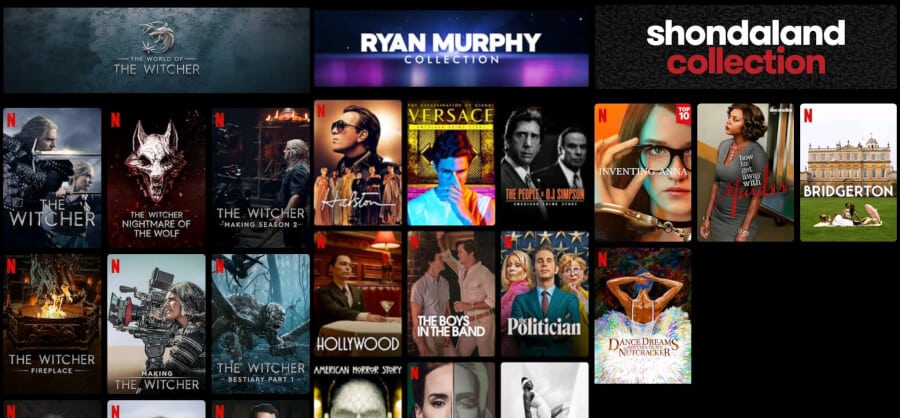
Netflix’s introduction of "hubs" for popular franchises like The Witcher, or collections dedicated to prolific creators such as Ryan Murphy and Shondaland, represents a strategic move to capitalize on the success of their original content and creator partnerships. These hubs allow fans to immerse themselves fully in a particular universe or body of work, offering a curated experience that transcends traditional genre boundaries. Similarly, "Network Collections" can consolidate content from specific broadcasters or studios, providing a familiar framework for viewers accustomed to traditional television programming. These initiatives demonstrate Netflix’s ongoing efforts to diversify its discovery pathways, catering to different user preferences, whether they seek broad thematic groupings or hyper-specific sub-genres.
Another powerful, personalized discovery method involves leveraging the "More Like This" functionality. While typically found as a tab within the Netflix app, manually generating an extensive list of similar titles via a specific URL structure (www.netflix.com/browse/similars/INSERT_TITLE_ID) offers a deeper dive. By extracting a title’s unique ID from its URL, users can unlock a full page of customized suggestions. This method taps into Netflix’s sophisticated recommendation engine, providing suggestions that share thematic elements, tonal qualities, or genre characteristics with a beloved show or movie. It’s a hybrid approach, combining user-initiated action with algorithmic intelligence, offering a more expansive set of choices than the limited "More Like This" row typically displayed within the app.
Seasonal and Temporary Categories: Responding to Cultural Moments
Netflix also frequently activates temporary, seasonal categories to align with cultural events, holidays, or popular trends. These dynamic collections, while not always tied to a static numerical code, serve a crucial role in topical content curation. Examples include Halloween-themed horror collections, festive Christmas movie hubs, or summer blockbusters lists. Because these rotate, dedicated external guides are often necessary to track their availability and specific content. This responsiveness to real-world calendars and cultural moments highlights Netflix’s agility in presenting relevant content, further enriching the discovery experience for users looking for timely viewing options.
Implications for User Experience and the Streaming Landscape
The continued relevance of Netflix’s secret genre codes, even in 2026, speaks volumes about the enduring human desire for control and specificity in an age of overwhelming digital choice. For users, these codes offer empowerment, transforming a passive browsing experience into an active hunt for desired content. This can significantly reduce "decision fatigue" and improve overall satisfaction with the service, potentially contributing to higher engagement and lower churn rates. In a fiercely competitive streaming market, where platforms vie for subscriber attention and loyalty, effective content discovery is not merely a convenience but a critical differentiator.
Industry analysts often point to content discovery as a key battleground. While Netflix invests heavily in AI-driven personalization, the existence and popularity of these codes suggest that a segment of its audience still values manual, granular search capabilities. Competitors like Amazon Prime Video, Disney+, and Max also grapple with similar challenges in organizing their vast libraries. While each platform employs its own blend of algorithmic recommendations and curated collections, the Netflix codes represent a unique, user-driven solution that has proven remarkably resilient.
The future of content discovery on streaming platforms may well lie in a hybrid approach: sophisticated algorithms that learn and adapt, combined with powerful, user-accessible tools that allow for specific, intentional searching. The 2026 update to Netflix’s category codes is not just a list; it’s a testament to the ongoing evolution of how we interact with digital entertainment, ensuring that even as libraries grow, the perfect movie or show is always within reach for those who know how to look. The ability to bypass the generalized algorithm and delve into these specific categories provides a profound sense of agency, transforming the act of finding something to watch from a potentially frustrating chore into an exciting journey of discovery.
Conclusion: Empowering the Viewer in a Content-Rich Era
The 2026 update to Netflix’s secret genre and category codes reaffirms their enduring value in enhancing the streaming experience. By offering a comprehensive, searchable compendium of over 2,200 specific identifiers, this guide empowers users to navigate Netflix’s colossal library with unprecedented precision. From unearthing obscure sub-genres to quickly locating new additions or specific thematic collections, these codes serve as a powerful complement to Netflix’s own algorithmic recommendations and curated hubs. They cater to a fundamental user need: the ability to efficiently find exactly what one wants to watch, even within a sea of thousands of titles. As the streaming wars continue to intensify, providing such tools for refined content discovery will remain crucial for platforms aiming to deliver superior user satisfaction and maintain a competitive edge. The ultimate beneficiary is the viewer, now equipped with an enriched toolkit to unlock new corners of Netflix and maximize their entertainment journey. The journey through Netflix’s vast digital archives has become more navigable, more personalized, and ultimately, more rewarding.