



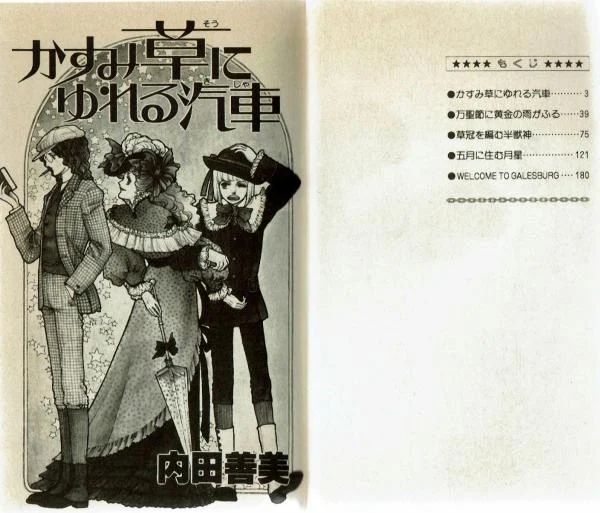
Yoshimi Uchida’s "Steam Train Swaying in Gypsophila," a collection of short stories lauded for its artistic merit and significant contribution to the shoujo manga genre, offers a profound exploration of youthful dreams, burgeoning adulthood, and the inevitable loss of innocence. Though often categorized as a minor work within Uchida’s extensive bibliography, this volume stands as a testament to her innovative approach, pushing the boundaries of shoujo manga by infusing it with a psychological depth and artistic sensibility that resonated with a broader readership. The collection, published in the 1980s, transports readers to the seemingly idyllic, yet complex, American Midwest, specifically the city of Galesburg, Illinois, serving as a poignant backdrop for narratives that explore universal themes of love, sacrifice, friendship, and the bittersweet passage of time.
A Tapestry of Youthful Endeavors in Galesburg
The eponymous story, "Steam Train Swaying in Gypsophila," introduces the reader to the intertwined lives of young citizens in Galesburg, whose paths cross with an unacknowledged intimacy. At its core is the story of Oscar, a young boy grappling with unrequited feelings. He reluctantly aids his crush, Sophie, in her pursuit of Mr. McDougall, an aspiring journalist whose ambition outweighs his talent. This narrative thread highlights the awkwardness and intensity of adolescent infatuation, set against the backdrop of a seemingly ordinary town.
Another compelling tale, "A Golden Shower on All Saints’ Day," delves into the supernatural and the profound bonds of family. Leon, a traveler, finally reunites with his long-lost sister, Alice. However, their reunion is fraught with peril as Leon must confront a Halloween curse, ultimately requiring him to make the ultimate sacrifice to ensure Alice’s safety. This story explores themes of familial duty, redemption, and the dark side of folklore, blending elements of fantasy with emotional resonance.
"The Faunus Weaving Flower Crowns" shifts the focus to a group of friends embarking on an ambitious and perilous expedition. Their journey to explore Native American ruins becomes a profound lesson in the value of youth and good health, as they confront the realities of their own mortality and the fragility of life. This narrative underscores the transition from carefree youth to a more somber understanding of the world’s challenges.
Finally, "Moon and Stars in May" features Giuseppe, a daring barnstormer aviator. His stop in Galesburg is not merely a refueling point but a moment of reckoning as he prepares for an audacious transatlantic flight. His plans are complicated by a past love, a woman who remained in Galesburg, and who harbored a quiet disbelief in his return. This encounter forces Giuseppe to confront the personal cost of his ambitions and the unfulfilled promises of adulthood, marking a significant turning point in his journey.
Expanding the Horizons of Shoujo Manga
While Yoshimi Uchida may not have been formally affiliated with the influential Year 24 Group—a cohort of female manga artists who revolutionized shoujo manga in the 1970s—her work exhibits a comparable dedication to imbuing the genre with unprecedented psychological depth. Uchida’s artistic contributions demonstrably broadened the appeal of shoujo manga, extending its readership beyond its traditional elementary school demographic to encompass young adults and even older audiences. This expansion was facilitated by her sophisticated thematic explorations and nuanced character portrayals.
The aesthetic sensibilities of "Steam Train Swaying in Gypsophila" align with the prevailing trends in the Japanese comic book industry of the 1980s, particularly its penchant for romanticized historical settings. Uchida situates her narratives within an idealized vision of a Western nation, utilizing Galesburg, Illinois, as her canvas. It is important to note that while Galesburg is a real location, Uchida’s depiction prioritizes atmospheric and thematic resonance over strict historical accuracy. This approach is reminiscent of other pioneering shoujo mangaka who employed European settings to evoke a sense of romanticism and historical grandeur. For instance, Riyoko Ikeda’s evocative portrayal of Paris in "The Rose of Versailles" and Moto Hagio’s reimagining of Germany in "The Heart of Thomas" similarly utilized historical locales as symbolic backdrops rather than literal representations. Uchida’s choice of Galesburg, therefore, serves as a carefully curated stage for her characters’ emotional journeys, allowing for a heightened sense of drama and introspection.
Artistic Influences and a Mature Aesthetic
The character design in "Steam Train Swaying in Gypsophila" harkens back to the golden age of shoujo manga, characterized by large, expressive, and often sparkling eyes, as well as androgynous features that allowed readers to project their own emotions onto the characters. However, Uchida distinguished herself from her contemporaries through a unique blend of influences, most notably drawing inspiration from the Pre-Raphaelite Brotherhood of painters. This influence is particularly evident in the beautifully rendered illustrated covers that precede each short story, showcasing a romantic and often melancholic aesthetic.
Furthermore, Uchida applied this artistic sensibility to her depiction of male characters. While retaining some of the traditionally soft and delicate features common in shoujo, she often incorporated more dramatic and pronounced lines to emphasize their physical forms and inner turmoil. This juxtaposition of traditionally feminine and masculine artistic elements created a compelling visual language that contributed to the series’ appeal to a more mature audience. This sophisticated visual storytelling, combined with her thematic explorations, likely allowed Uchida’s work to resonate with viewers who were also engaging with arthouse cinema. The influence of Luchino Visconti’s "Death in Venice" is frequently cited as a significant reference point, suggesting Uchida’s engagement with cinematic narratives that explore themes of beauty, mortality, and the complexities of the human psyche.
The Inevitable March Towards Adulthood
Beyond its captivating visuals, "Steam Train Swaying in Gypsophila" is underpinned by a consistent thematic thread: the pervasive and often melancholic loss of innocence that accompanies the transition from childhood to adulthood. Despite the bucolic settings and seemingly straightforward narratives, each story subtly underscores this universal experience.
For Oscar, the loss of innocence manifests as the dawning realization of his own youthful limitations within a world populated by adults and their complex relationships. His childish crush on Sophie is confronted by the realities of adult motivations and desires, forcing him to perceive the world with a newfound, albeit disquieting, maturity.
Leon’s journey in "A Golden Shower on All Saints’ Day" marks a profound rite of passage. His acceptance of the role of older brother, and the subsequent sacrifice required to protect Alice, signifies a definitive step away from youthful carefree existence and into the realm of adult responsibility and selflessness.
The young explorers in "The Faunus Weaving Flower Crowns" experience a similar loss of innocence, albeit through a different lens. Their expedition, initially a pursuit of adventure and knowledge, culminates in their admission to higher education and the looming prospect of military service in a distant war. This transition from the pursuit of learning to the potential for conflict highlights the abrupt and often harsh realities that can interrupt the innocence of youth.
Giuseppe’s narrative in "Moon and Stars in May" offers a more introspective exploration of this theme. His reunion with a past love in Galesburg, a woman who never believed he would return and who consequently embarked on her own journey of adulthood without him, forces him to confront the consequences of his ambitions. This encounter serves as a stark reminder that while he chased grand adventures, life—and the potential for love and partnership—continued to unfold for those he left behind, marking a significant realization of his own lost opportunities and the irreversible passage of time.
Legacy and Enduring Resonance
Yoshimi Uchida’s "Steam Train Swaying in Gypsophila" possesses a remarkable ability to evoke the sweet memories of childhood while simultaneously confronting readers with the bittersweet sting of unfulfilled dreams and broken promises. The fictional events meticulously crafted within the collection transcend their narrative boundaries, transforming into relatable life experiences for the reader. Uchida masterfully navigates the delicate balance between nostalgia and disillusionment, offering a poignant and enduring commentary on the human condition.
The collection’s enduring appeal lies in its ability to tap into the universal experience of growing up. By grounding her fantastical and romanticized narratives in the tangible emotional landscape of youth, Uchida creates stories that resonate deeply with audiences across generations. The stories serve not merely as entertainment but as reflections on the inevitable transformations that shape our lives, the sacrifices we make, and the lingering echoes of the paths not taken.
The publication of "Steam Train Swaying in Gypsophila" in the 1980s occurred during a period of significant evolution for the shoujo manga genre. Following the groundbreaking work of artists like the Year 24 Group, there was a growing demand for more complex and mature storytelling within shoujo. Uchida’s contribution, with its sophisticated character development, nuanced emotional exploration, and unique artistic influences, firmly established her as an artist who understood and catered to this evolving readership. Her work demonstrated that shoujo manga could effectively address profound themes and artistic sensibilities, appealing to a diverse audience seeking depth and substance in their reading material. The collection’s critical reception and continued appreciation by manga scholars and fans alike underscore its status as a significant work that not only enriched the shoujo genre but also left an indelible mark on the broader landscape of manga storytelling.